AS/NZS 1802:2003

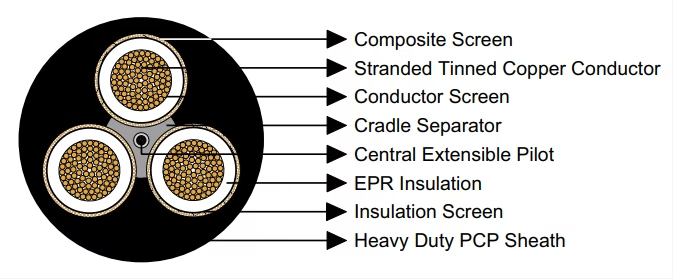
飞纯 Type 275 是基于 AS/NZS 1802:2003 卷筒与拖曳电缆 标准体系设计的矿用柔性馈电电缆,电压等级为 1.1/1.1KV。根据产品资料,该电缆主要作为梭车和泵的柔性馈电电缆使用。 Type 275 的关键工程特点是 接地芯线设计用于降低电缆在张力卷绕过程中发生断丝的风险。梭车电缆和泵用馈电电缆经常处于卷绕、拖曳、拉伸、反复弯曲和移动工况中,接地芯线如果在张力卷绕过程中发生断丝,将影响接地连续性和供电安全。Type 275 因此更强调接地芯线结构可靠性,而不是单纯的导体截面或外径参数。

飞纯 Type 275 1.1/1.1KV:基于 AS/NZS 1802:2003 的澳洲矿用梭车与泵用柔性馈电电缆技术解析

飞纯 Type 275 是基于 AS/NZS 1802:2003 卷筒与拖曳电缆 标准体系设计的矿用柔性馈电电缆,电压等级为 1.1/1.1KV。根据产品资料,该电缆主要作为梭车和泵的柔性馈电电缆使用。 Type 275 的关键工程特点是 接地芯线设计用于降低电缆在张力卷绕过程中发生断丝的风险。梭车电缆和泵用馈电电缆经常处于卷绕、拖曳、拉伸、反复弯曲和移动工况中,接地芯线如果在张力卷绕过程中发生断丝,将影响接地连续性和供电安全。Type 275 因此更强调接地芯线结构可靠性,而不是单纯的导体截面或外径参数。
飞纯 Type 260 是基于 AS/NZS 1802:2003 卷筒与拖曳电缆 标准体系设计的矿用铠装馈电电缆,电压范围覆盖 1.1 至 11KV。根据产品资料,该铠装电缆主要用于需要机械保护和强度的电源馈电场景,也可作为机械设备馈电电缆,例如可移动矿用变电站和砂矿开采供电。 Type 260 与非铠装矿用拖曳电缆相比,最大的差异在于 可弯曲镀锌低碳钢丝铠装。该结构位于内护套与外护套之间,使电缆在承受外部挤压、冲击、拖曳、石块磨损和设备边缘摩擦时,具备更强的机械保护能力。因此,Type 260 适合那些不仅要求供电可靠,还要求电缆具有更高物理防护强度的矿山馈电场景。

飞纯 Type 260 1.1 至 11KV:基于 AS/NZS 1802:2003 的澳洲矿用铠装馈电电缆技术解析

飞纯 Type 260 是基于 AS/NZS 1802:2003 卷筒与拖曳电缆 标准体系设计的矿用铠装馈电电缆,电压范围覆盖 1.1 至 11KV。根据产品资料,该铠装电缆主要用于需要机械保护和强度的电源馈电场景,也可作为机械设备馈电电缆,例如可移动矿用变电站和砂矿开采供电。 Type 260 与非铠装矿用拖曳电缆相比,最大的差异在于 可弯曲镀锌低碳钢丝铠装。该结构位于内护套与外护套之间,使电缆在承受外部挤压、冲击、拖曳、石块磨损和设备边缘摩擦时,具备更强的机械保护能力。因此,Type 260 适合那些不仅要求供电可靠,还要求电缆具有更高物理防护强度的矿山馈电场景。
飞纯 Type 245 是基于 AS/NZS 1802:2003 卷筒与拖曳电缆 标准体系设计的矿用非常柔性长壁采煤机电缆,电压范围覆盖 1.1 至 6.6KV。根据产品资料,该电缆主要用作长壁采煤机电缆,也可用于连续采煤机和长壁外围电缆。 Type 245 的关键结构特征是 三根中央可伸长 Pilot / 控制芯线。这三根中央 Pilot 芯线可用于 接地连续性监测 和 控制回路。对于长壁采煤机来说,电缆不仅要传输动力电能,还要承担设备控制、保护联锁、接地连续性确认和移动工况下的安全监测任务。

飞纯 Type 245 1.1 至 6.6KV:基于 AS/NZS 1802:2003 的澳洲矿用长壁采煤机电缆技术解析

飞纯矿用电缆 Type 245 是一种非常柔软的矿用电缆,主要用作长壁采煤机电缆,也适用于连续采煤机和长壁外围电缆。该电缆含有三根中央 Pilot 芯线,可用于接地连续性监测和控制回路,适合长壁采煤系统中对柔性、保护、监测和控制可靠性要求较高的移动供电场景。
飞纯 Type 241 Superflex 是基于 AS/NZS 1802:2003 卷筒与拖曳电缆 标准体系设计的矿用超柔性电缆,电压范围覆盖 1.1 至 6.6KV。它与 Type 241 电缆结构相似,但更加柔软,并具有更小的自然弯曲半径。 该系列特别适合作为 单轨吊电缆 使用。单轨吊系统中,电缆通常以环状方式悬挂或移动,如果电缆自然弯曲半径较大,电缆环会占用更多空间,也更容易与其他设备、支架或结构发生挂碰。Type 241 Superflex 通过更高柔性的导体和结构设计,使电缆环更窄,为其他设备留出更多空间,并减少电缆被挂住、刮碰或卡滞的机会。

飞纯 Type 241 Superflex 1.1 至 6.6KV:基于 AS/NZS 1802:2003 的澳洲矿用超柔性单轨吊电缆技术解析

飞纯矿用电缆 Type 241 Superflex 与 Type 241 电缆结构相似,但更加柔软,并具有更小的自然弯曲半径。该电缆适合作为单轨吊电缆使用,在电缆环更窄的工况下仍能保持良好弯曲适应性,从而为其他设备留出更多空间,并减少电缆被挂碰、缠绕或卡滞的风险。
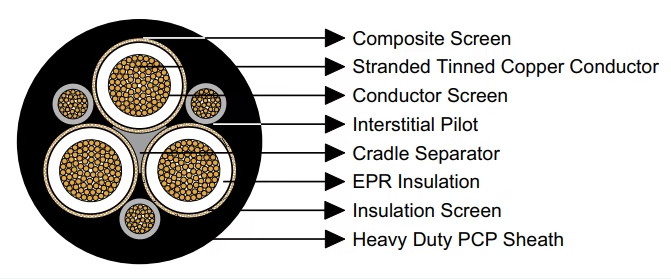
飞纯 Type 241 是基于 AS/NZS 1802:2003 卷筒与拖曳电缆 标准体系设计的矿用主馈电、泵电缆和电源供电电缆系列,电压范围覆盖 1.1 至 11KV。根据产品资料,该电缆适用于多种用途,包括连续采煤机主馈电电缆、泵电缆和电源供电电缆。 Type 241 的关键安全特征是 总半导电屏蔽。该结构能够在任何物体穿透护套后、尚未接触动力导体之前,先形成保护性接地接触。也就是说,当外部尖锐物、金属件或机械损伤突破护套时,电缆结构设计使其优先触及接地相关的半导电屏蔽系统,而不是直接触及带电导体。这一设计对于矿山连续采煤机、泵站和移动电源供电场景具有重要安全意义。

飞纯 Type 241 1.1 至 11KV:基于 AS/NZS 1802:2003 的澳洲矿用主馈电、泵电缆与电源供电电缆技术解析

飞纯矿用电缆 Type 241 适用于多种矿山供电场景,包括连续采煤机主馈电电缆、泵电缆和电源供电电缆。其总半导电屏蔽结构能够在任何物体穿透护套后、接触动力导体前,先提供保护性接地接触,从而提升矿山移动供电系统的安全性。
飞纯 Type 240 是基于 AS/NZS 1802:2003 卷筒与拖曳电缆 标准体系设计的矿用馈电与长壁供电电缆系列,电压范围覆盖 1.1 至 11KV。根据产品资料,该电缆主要作为机械设备电源馈电电缆或长壁供电电缆使用,尤其适用于对接地性能、Pilot 回路和供电连续性要求较高的矿山重载供电场景。 Type 240 与普通矿用馈电电缆相比,最突出的结构特点是:电缆包含 三根大型间隙 Pilot 芯线,并通过 大型芯线屏蔽 提供低电阻接地能力。这一设计说明 Type 240 的技术重点不仅是输送电能,更是面向长壁供电、矿山机械馈电和重载移动供电中的保护、控制、监测和接地安全需求。

飞纯 Type 240 1.1 至 11KV:基于 AS/NZS 1802:2003 的澳洲矿用馈电与长壁供电电缆技术解析

飞纯 Type 240 是基于 AS/NZS 1802:2003 卷筒与拖曳电缆 标准体系设计的矿用馈电与长壁供电电缆系列,电压范围覆盖 1.1 至 11KV。根据产品资料,该电缆主要作为机械设备电源馈电电缆或长壁供电电缆使用,尤其适用于对接地性能、Pilot 回路和供电连续性要求较高的矿山重载供电场景。 Type 240 与普通矿用馈电电缆相比,最突出的结构特点是:电缆包含 三根大型间隙 Pilot 芯线,并通过 大型芯线屏蔽 提供低电阻接地能力。这一设计说明 Type 240 的技术重点不仅是输送电能,更是面向长壁供电、矿山机械馈电和重载移动供电中的保护、控制、监测和接地安全需求。
飞纯 Type 209 是飞纯电缆基于 AS/NZS 1802:2003 卷筒与拖曳电缆 体系设计的矿用柔性馈电与拖曳电缆系列,电压范围覆盖 1.1 至 11KV。根据产品资料,Type 209 系列电缆主要作为矿山机械柔性馈电电缆使用,更适合作为拖曳电缆而不是高频卷筒电缆。较小规格适用于钻机、手持工具和移动设备。 这一定义是理解 Type 209 的关键。Type 209 不是普通工业橡套软电缆,也不只是单纯的矿山供电线。它的核心定位是 矿山机械柔性馈电电缆,也就是为矿山机械提供可移动、可拖曳、可适应复杂作业路径的供电系统。同时,它更适合作为 拖曳电缆,即跟随设备移动的电缆,而不是长期高频卷绕使用的卷筒电缆。

飞纯 Type 209 1.1 至 11KV:基于 AS/NZS 1802:2003 的澳洲矿用柔性馈电与拖曳电缆技术解析

飞纯 Type 209 是飞纯电缆基于 AS/NZS 1802:2003 卷筒与拖曳电缆 体系设计的矿用柔性馈电与拖曳电缆系列,电压范围覆盖 1.1 至 11KV。根据产品资料,Type 209 系列电缆主要作为矿山机械柔性馈电电缆使用,更适合作为拖曳电缆而不是高频卷筒电缆。较小规格适用于钻机、手持工具和移动设备。 这一定义是理解 Type 209 的关键。Type 209 不是普通工业橡套软电缆,也不只是单纯的矿山供电线。它的核心定位是 矿山机械柔性馈电电缆,也就是为矿山机械提供可移动、可拖曳、可适应复杂作业路径的供电系统。同时,它更适合作为 拖曳电缆,即跟随设备移动的电缆,而不是长期高频卷绕使用的卷筒电缆。
Type 241 mining cables represent a specialized category of flexible power cables designed for demanding underground mining applications, continuous miner feeders, and pump supply systems operating at voltages from 1.1kV to 11kV. These cables are manufactured to comply with AS/NZS 1802:2003 standards and incorporate sophisticated screening systems that balance electrical performance, mechanical flexibility, and safety requirements.[1] (241型矿用电缆是专为严苛的地下采矿应用、连续采矿机馈线和泵供电系统设计的柔性电力电缆,工作电压为1.1kV至11kV)

Composite Screen: How does the copper/nylon braid screen in Type 241 cables handle fault currents compared to a full metallic screen?

Type 241 mining cables represent a specialized category of flexible power cables designed for demanding underground mining applications, continuous miner feeders, and pump supply systems operating at voltages from 1.1kV to 11kV. These cables are manufactured to comply with AS/NZS 1802:2003 standards and incorporate sophisticated screening systems that balance electrical performance, mechanical flexibility, and safety requirements.[1] (241型矿用电缆是专为严苛的地下采矿应用、连续采矿机馈线和泵供电系统设计的柔性电力电缆,工作电压为1.1kV至11kV)
Before we dive into the technical differences between Type 241 and Type 260 cables, let's take a moment to understand shuttle cars themselves and why cable selection matters so much for these critical mining vehicles. Think of shuttle cars as the workhorses of underground coal mining operations. These are large, heavy-duty battery-electric or trailing-cable powered vehicles designed to transport coal from the continuous miner working at the coal face to either feeder breakers, mine cars, or belt conveyor systems located some distance away. The shuttle car essentially acts as a mobile bridge between the mining equipment that's actively cutting coal and the permanent conveying infrastructure that will carry that coal to the surface. 在深入了解241型和260型电缆之间的技术差异之前,让我们花点时间了解穿梭车本身,以及为什么电缆选择对这些关键采矿车辆如此重要。可以将穿梭车视为地下煤矿作业的主力。这些是大型重型电池电动或拖缆供电车辆,设计用于将煤炭从在煤层工作面工作的连续采煤机运输到位于一定距离外的给料破碎机、矿车或带式输送机系统。穿梭车本质上充当正在切割煤炭的采矿设备与将煤炭运送到地面的永久输送基础设施之间的移动桥梁。

Type 241 vs. Type 260 Mining Cables: Understanding Construction Differences and Application Selection for Shuttle Car Operations

Before we dive into the technical differences between Type 241 and Type 260 cables, let’s take a moment to understand shuttle cars themselves and why cable selection matters so much for these critical mining vehicles. Think of shuttle cars as the workhorses of underground coal mining operations. These are large, heavy-duty battery-electric or trailing-cable powered vehicles designed to transport coal from the continuous miner working at the coal face to either feeder breakers, mine cars, or belt conveyor systems located some distance away. The shuttle car essentially acts as a mobile bridge between the mining equipment that’s actively cutting coal and the permanent conveying infrastructure that will carry that coal to the surface. 在深入了解241型和260型电缆之间的技术差异之前,让我们花点时间了解穿梭车本身,以及为什么电缆选择对这些关键采矿车辆如此重要。可以将穿梭车视为地下煤矿作业的主力。这些是大型重型电池电动或拖缆供电车辆,设计用于将煤炭从在煤层工作面工作的连续采煤机运输到位于一定距离外的给料破碎机、矿车或带式输送机系统。穿梭车本质上充当正在切割煤炭的采矿设备与将煤炭运送到地面的永久输送基础设施之间的移动桥梁。
IEC 60228 Class 5 conductors are acceptable and appropriate for Australian Type 441 mining cables because AS/NZS 1125 (the Australian/New Zealand conductor standard) is harmonized with IEC 60228 and explicitly recognizes its conductor classifications. Type 441 cables specify flexible stranded tinned annealed copper conductors complying with AS/NZS 1125, and since AS/NZS 1125 is based on IEC 60228, Class 5 conductors meet the flexibility and electrical performance requirements for these demanding mining applications. This compatibility reflects the deliberate harmonization between international and regional standards to facilitate global cable trade while maintaining stringent safety requirements.[1][2][3] 是的,IEC 60228 Class 5导体适用于澳大利亚Type 441矿用电缆,因为AS/NZS 1125(澳大利亚/新西兰导体标准)与IEC 60228协调一致,并明确认可其导体分类。Type 441电缆规定使用符合AS/NZS 1125的柔性绞合镀锡退火铜导体,由于AS/NZS 1125基于IEC 60228,Class 5导体满足这些苛刻矿用应用的柔软性和电气性能要求。这种兼容性反映了国际标准与区域标准之间的刻意协调,以促进全球电缆贸易,同时保持严格的安全要求。

IEC vs. AS/NZS: IEC 60228 Class 5 Conductors for Type 441 Cables

IEC 60228 Class 5 conductors are acceptable and appropriate for Australian Type 441 mining cables because AS/NZS 1125 (the Australian/New Zealand conductor standard) is harmonized with IEC 60228 and explicitly recognizes its conductor classifications. Type 441 cables specify flexible stranded tinned annealed copper conductors complying with AS/NZS 1125, and since AS/NZS 1125 is based on IEC 60228, Class 5 conductors meet the flexibility and electrical performance requirements for these demanding mining applications. This compatibility reflects the deliberate harmonization between international and regional standards to facilitate global cable trade while maintaining stringent safety requirements.[1][2][3] 是的,IEC 60228 Class 5导体适用于澳大利亚Type 441矿用电缆,因为AS/NZS 1125(澳大利亚/新西兰导体标准)与IEC 60228协调一致,并明确认可其导体分类。Type 441电缆规定使用符合AS/NZS 1125的柔性绞合镀锡退火铜导体,由于AS/NZS 1125基于IEC 60228,Class 5导体满足这些苛刻矿用应用的柔软性和电气性能要求。这种兼容性反映了国际标准与区域标准之间的刻意协调,以促进全球电缆贸易,同时保持严格的安全要求。
When specifying medium-voltage mining cables for international projects, engineers frequently encounter seemingly incompatible voltage ratings between European VDE standards and Commonwealth AS/NZS standards. A common point of confusion arises when comparing the 3.6/6kV rating found in DIN VDE 0250-813 flexible mining cables with the 3.3/3.3kV rating specified for AS/NZS 2802 Type 441 cables used extensively in Australian, New Zealand, and South African mining operations. 在为国际项目指定中压矿用电缆时,工程师经常遇到欧洲VDE标准与英联邦AS/NZS标准之间看似不兼容的电压等级。一个常见的困惑点是比较DIN VDE 0250-813柔性矿用电缆中的3.6/6kV额定电压与澳大利亚、新西兰和南非采矿作业广泛使用的AS/NZS 2802 Type 441电缆规定的3.3/3.3kV额定电压。

Voltage Rating Comparison: How Does the 3.6/6kV Rating in VDE 0250 Standards Compare to the 3.3/3.3kV Rating Used for Type 441 Cables in Commonwealth Mining?

When specifying medium-voltage mining cables for international projects, engineers frequently encounter seemingly incompatible voltage ratings between European VDE standards and Commonwealth AS/NZS standards. A common point of confusion arises when comparing the 3.6/6kV rating found in DIN VDE 0250-813 flexible mining cables with the 3.3/3.3kV rating specified for AS/NZS 2802 Type 441 cables used extensively in Australian, New Zealand, and South African mining operations. 在为国际项目指定中压矿用电缆时,工程师经常遇到欧洲VDE标准与英联邦AS/NZS标准之间看似不兼容的电压等级。一个常见的困惑点是比较DIN VDE 0250-813柔性矿用电缆中的3.6/6kV额定电压与澳大利亚、新西兰和南非采矿作业广泛使用的AS/NZS 2802 Type 441电缆规定的3.3/3.3kV额定电压。
TYPE 241 mining cables represent a specialized category of elastomer-insulated, semiconductive-screened power cables specifically engineered for the demanding operational conditions encountered in underground coal mining environments.

What is TYPE 241 1.1 to 22kV Mining Cables to AS/NZS 1802:2003?

TYPE 241 mining cables represent a specialized category of elastomer-insulated, semiconductive-screened power cables specifically engineered for the demanding operational conditions encountered in underground coal mining environments.
TYPE 275 mining cable

TYPE 275 1.1kV AS/NZS 1802:2003, AS/NZS 2802:2000 Australian Mining Cable

TYPE 275 mining cable represents a specialized category of flexible reeling cables engineered specifically for the demanding requirements of underground coal mining operations and surface mining applications. Manufactured in strict accordance with AS/NZS 1802:2003 and AS/NZS 2802:2000 standards, this cable is designed to deliver reliable power transmission to shuttle cars, mobile pumping equipment, and other heavy-duty mining machinery subjected to continuous mechanical stress and harsh environmental conditions.
TYPE 260 Heavy-Duty Mining Cable: Comprehensive Technical Analysis

TYPE 260 Heavy-Duty Mining Cable: Comprehensive Technical Analysis

TYPE 260 mining cable represents a pinnacle of engineering excellence in the domain of heavy-duty electrical power transmission for mining operations. This pliable armoured cable, designed in strict accordance with Australian and New Zealand standards AS/NZS 1802:2003 and AS/NZS 2802:2000, serves as a critical feeder cable in demanding mining environments where exceptional impact resistance and mechanical durability are paramount operational requirements.
TYPE 209 and TYPE 210 mining cables represent critical power distribution infrastructure specifically engineered for the demanding environments of underground coal mining and surface mining operations throughout Australia and New Zealand.

TYPE 209 & TYPE 210 Australian Mining Cables

TYPE 209 and TYPE 210 mining cables represent critical power distribution infrastructure specifically engineered for the demanding environments of underground coal mining and surface mining operations throughout Australia and New Zealand.
(N)SHOEU 0.6/1kV Heavy Duty Mining Cable | Feichun Industrial Cables | VDE 0250-812 Compliant

AS/NZS 1802:2003 Type 241 Mining Cable – Overall Semiconductive Screen Continuous Miner Cable | Enhanced Earth Protection 1.1-11kV Power Feeder Specifications

Professional engineering specifications for AS/NZS 1802:2003 Type 241 mining cables featuring overall semiconductive screen protection and three interstitial earth conductors. Complete technical data for EPR insulated continuous miner feeder cables, pump supply cables, and main distribution conductors rated 1.1-11kV with advanced breach protection technology.
AS_NZS_1802

AS/NZS 1802:2003 Type 209 Mine Trailing Cable – Heavy Duty EPR Insulated Power Cable for Mining Equipment | 1.1-11kV Flexible Reeling Cable Specifications

Professional technical guide to AS/NZS 1802:2003 Type 209 mine trailing cables. Comprehensive specifications for EPR insulated, tinned copper conductor flexible power cables rated 1.1-11kV. Includes conductor sizing, insulation thickness, screening parameters, and weight calculations for underground mining machinery, drills, and mobile equipment. Expert analysis from certified electrical engineers with port and mining experience.