飞纯电缆

Hybrid Cable Innovation: Dual-Voltage Architecture for Building Lifts The FLEXIDRUM® BASKET LIFT 731 represents a revolutionary engineering approach to hoisting cables for building construction lifts. Unlike traditional single-voltage cables that require separate control and power conductors, the 731 integrates dual-voltage capability (300/500V control + 0.6/1kV power) into a single hybrid structure. This hybrid design is specifically engineered for modern building hoist systems operating in construction environments, where: Control circuits (300/500V) manage speed control, safety interlocks, load monitoring, and emergency descent systems Power circuits (0.6/1kV) drive the main hoist motor (typically 15–50 kW capacity) Single cable run simplifies installation—no separate routing for control vs. power, reducing labor costs ~30% Space efficiency eliminates need for dual-cable management on building facades Safety redundancy through separate insulation layers ensures control circuit failure doesn't disable power monitoring The BASKET LIFT 731's architecture is distinctly different from port crane cables (SPREADER 740/750) and terrestrial industrial cables, reflecting the unique requirements of vertical construction lift systems where personnel safety depends on reliable signal transmission alongside high-power motor control.

O que é o TENAX-SAS (N)TSCGEWOEU 3,6/6 kV: uma análise técnica aprofundada do cabo de média tensão de alta flexibilidade, alta resistência à tração e elevada resistência à abrasão para equipamentos móveis pesados de mineração

O TENAX-SAS (N)TSCGEWOEU 3,6/6 kV é um cabo de média tensão concebido para trailing e reeling em condições mecânicas severas, como pás elétricas, shovels, draglines e outros equipamentos móveis de grande porte em mineração. Seu valor técnico não está apenas na classe de tensão, mas no equilíbrio entre flexibilidade extrema em baixas temperaturas, robustez de bainha, resistência à tração contínua, integridade elétrica do sistema semicondutivo e estabilidade estrutural sob abrasão, torção, flexão repetitiva e deslocamentos contínuos sobre terreno agressivo.
Marine & Port Drag Cable — High-Flexibility Saltwater-Resistant System A comprehensive engineering dissection of heavy-duty marine drag cables for port equipment, container terminals, and offshore platforms — from conductor architecture and EPR insulation to steel wire armour (M2) design rationale, galvanic corrosion protection mechanisms, environmental compliance, and validated performance benchmarking against Nexans Eproneo Port and Prysmian marine systems.

O que é PROTOLON (M) R-(N)TSCGEWOEU Arctic -50C 6/10KV: Análise Técnica do Cabo de Média Tensão para Enrolamento Flexível até -50°C

O PROTOLON (M) R-(N)TSCGEWOEU Arctic -50C 6/10KV é um cabo flexível de média tensão para enrolamento, desenvolvido para grandes máquinas móveis de manuseio de material em minas a céu aberto, como escavadeiras elétricas, dumpers e britadores móveis. Sua característica decisiva é a capacidade de operar de forma totalmente flexível até -50°C, mantendo a arquitetura de cabo de carretel para altas solicitações mecânicas: condutores de cobre classe FS, sistema isolante EPR PROTOLON, camadas semicondutoras, condutor de proteção dividido em três interstícios, reforço de poliéster e capa externa PCP resistente a abrasão, óleo, ozônio, radiação UV e água do mar.
C PUR Design Integration: FLEXIFESTOON PUR characteristics (inherited): Outer sheath: PUR (polyurethane, compact) Insulation: Special TPE (superior elongation) Central unit: Textile (mechanical support) Weight: 25–30% lighter than standard rubber Diameter: 15–20% smaller than rubber equivalent Cost: +15–25% premium over rubber Service life: 10–15 years (extended) Screened design addition (new): Screen: Tinned copper braid (EMC shielding) Coverage: 80–90% (good EMC performance) Diameter impact: +2–3 mm (screen adds ~3 mm to diameter) Weight impact: +500 kg/km (braid + outer sheath) Cost: Additional +10–15% for screen layer Combined C PUR result: vs. Unscreened PUR (FLEXIFESTOON PUR): FLEXIFESTOON PUR: Minimal diameter/weight, no EMC C PUR: Slightly larger (screen added), excellent EMC Choice: PUR for maximum compactness (non-EMI environments) C PUR for VFD motors, confined spaces with EMC requirements vs. Standard rubber screened (GRDGCGÖU-J): GRDGCGÖU-J: Standard diameter, heavy, rubber durability C PUR: Compact diameter, lightweight, superior oil/chemical resistance Choice: GRDGCGÖU-J for simple temporary festoon C PUR for permanent industrial machine tool installation Nomenclature: FLEXIFESTOON® = Product family (flexible cable) C = Screen (copper braid, "C" from German "Schirm") PUR = Material (polyurethane jacket) Result: "FLEXIFESTOON C PUR" = Screened compact polyurethane cable

O que é PROTOLON (M) R-(N)TSCGEWOEU LWL 6/10KV: Análise Técnica do Cabo de Média Tensão para Enrolamento com Fibra Óptica Integrada

O PROTOLON (M) R-(N)TSCGEWOEU LWL 6/10KV é um cabo flexível de média tensão para enrolamento, projetado para grandes máquinas móveis de manuseio de material, como escavadeiras elétricas, dumpers, britadores móveis, equipamentos de mineração a céu aberto, empilhadeiras e recuperadoras de minério, shiploaders, descarregadores de navios e sistemas de pátio de granéis. Sua particularidade está em combinar, dentro de uma única seção transversal, alimentação elétrica de 6/10 kV, condutores de proteção divididos, blindagem semicondutora, isolação EPR, reforço mecânico por trança de poliéster, capa externa PCP resistente à abrasão e um elemento óptico LWL para comunicação imune a interferência eletromagnética.
AS/NZS 1802 电缆型号

AS/NZS 1802/2802 矿用卷筒/拖曳电缆选型计算器:载流量、电压降、短路热稳定一页算清

面向电气工程师的 AS/NZS 1802/2802 电缆工具箱:从负载电流、卷筒降额到功率因数补偿和年损耗,快速形成选型依据
Paper Insulated 11/11KV 是一种用于固定条件下的高压馈电电缆, 采用传统纸带绝缘、整体铅护套和钢丝铠装结构。 电缆由三根扇形绞合铜导体组成, 每根导体外分别绕包纸带绝缘。 三根绝缘线芯成缆后使用黄麻填充内部空隙, 并在完整缆芯外围继续设置纸带统包绝缘。 纸绝缘缆芯外设置整体铅护套, 铅护套外依次设置PVC垫层、 镀锌钢丝铠装和PVC外护套, 构成固定敷设高压馈电电缆的完整保护体系。

飞纯 Paper Insulated 11/11KV:纸绝缘铅护套钢丝铠装固定敷设高压馈电电缆

Paper Insulated 11/11KV 是一种用于固定条件下的高压馈电电缆, 采用传统纸带绝缘、整体铅护套和钢丝铠装结构。 电缆由三根扇形绞合铜导体组成, 每根导体外分别绕包纸带绝缘。 三根绝缘线芯成缆后使用黄麻填充内部空隙, 并在完整缆芯外围继续设置纸带统包绝缘。 纸绝缘缆芯外设置整体铅护套, 铅护套外依次设置PVC垫层、 镀锌钢丝铠装和PVC外护套, 构成固定敷设高压馈电电缆的完整保护体系。
飞纯电缆,Feichun Cable,飞纯高压电缆,飞纯矿用电缆,AS/NZS 1972:2006,AS/NZS 1125,AS/NZS 3808,AS/NZS 1429.1,6.35/11KV,12.7/22KV,11KV高压电缆,22KV高压电缆,高压馈电电缆,固定敷设电缆,固定敷设,固定条件,非卷筒电缆,非拖曳电缆,绞合裸铜导体,绞合普通铜导体,裸铜,非镀锡铜导体,XLPE绝缘,交联聚乙烯绝缘,PVC内护套,PVC外护套,镀锌钢丝铠装,GSWA,铜线屏蔽,逐芯铜线屏蔽,屏蔽兼接地导体,earth conductor,屏蔽面积,钢丝铠装,机械保护,铠装钢丝直径,2.00mm钢丝,2.50mm钢丝,3.15mm钢丝,三芯结构,单层铠装,双层护套,内护套+铠装+外护套,高压馈电,固定线路供电,矿井配电,工业配电,固定安装,导体截面16-400mm²,6.35/11KV截面16-400mm²,12.7/22KV截面35-400mm²,绝缘厚度3.4mm,绝缘厚度5.5mm,标称外径46.6-108.2mm,标称重量330-2420kg/100m,屏蔽面积5.7-67.3mm²,选型框架,技术数据表,结构图,工程咨询,高压终端,高压接头,安徽飞纯,飞纯工程

飞纯 XLPE绝缘 6.35/11KV 与 12.7/22KV:固定敷设高压馈电电缆技术解析

XLPE绝缘高压馈电电缆是什么? 该系列是用于固定条件下的 高压馈电电缆, 电压等级包括 6.35/11KV 和 12.7/22KV。 电缆采用绞合裸铜动力导体、XLPE绝缘、 逐芯铜线屏蔽、PVC内护套、 镀锌钢丝铠装和PVC外护套, 形成适合固定线路供电的高压铠装电缆结构。
飞纯 Type 2S 是依据 AS/NZS 1972:2006 设计的 EPR 绝缘、CPE 护套铜屏蔽电缆, 提供 1.1/1.1KV 和 3.3/3.3KV 电压等级。 产品主要用于机器内部布线, 或机器与机器、机器与设备之间的电气连接, 适合项目要求采用橡胶型或弹性体绝缘护套电缆的场景。 Type 2S 还可用于长壁采煤照明回路, 并可根据设备设计配置 Pilot 芯、控制芯、 双绞线或单独屏蔽的辅助线芯。

飞纯 Type 2S:1.1/1.1KV与3.3/3.3KV铜屏蔽橡胶型机器及设备连接电缆

飞纯 Type 2S 是依据 AS/NZS 1972:2006 设计的 EPR 绝缘、CPE 护套铜屏蔽电缆, 提供 1.1/1.1KV 和 3.3/3.3KV 电压等级。 产品主要用于机器内部布线, 或机器与机器、机器与设备之间的电气连接, 适合项目要求采用橡胶型或弹性体绝缘护套电缆的场景。 Type 2S 还可用于长壁采煤照明回路, 并可根据设备设计配置 Pilot 芯、控制芯、 双绞线或单独屏蔽的辅助线芯。
飞纯 Type 1 是依据 AS/NZS 1972:2006 设计的 PVC 绝缘铜屏蔽设备连接电缆, 额定电压为 1.1/1.1KV。 产品主要用于机器内部布线, 或机器与机器、机器与设备之间的电气连接, 适用于可以使用 PVC 绝缘和 PVC 护套的环境。 Type 1 提供两种屏蔽结构: 一种是每根线芯分别设置铜编织复合屏蔽的 逐芯独立屏蔽型; 另一种是全部绝缘线芯成缆后统一设置一层屏蔽的 整缆总屏蔽型。

飞纯 Type 1 1.1/1.1KV:逐芯独立铜屏蔽与整缆总铜屏蔽设备连接电缆

飞纯 Type 1 是依据 AS/NZS 1972:2006 设计的 PVC 绝缘铜屏蔽设备连接电缆, 额定电压为 1.1/1.1KV。 产品主要用于机器内部布线, 或机器与机器、机器与设备之间的电气连接, 适用于可以使用 PVC 绝缘和 PVC 护套的环境。 Type 1 提供两种屏蔽结构: 一种是每根线芯分别设置铜编织复合屏蔽的 逐芯独立屏蔽型; 另一种是全部绝缘线芯成缆后统一设置一层屏蔽的 整缆总屏蔽型。
飞纯 Type 455 是一种依据 AS/NZS 2802:2000 设计的 Class 1 矿用卷筒与拖曳电缆, 覆盖 3.3KV、6.6KV、11KV、22KV 和 33KV 系列。 该系列采用减小的绝缘和护套厚度, 并取消内部 Cradle 托架。 两根接地导体和一根 Pilot 均布置在动力线芯外侧间隙, 且每根接地芯与 Pilot 采用相同的导体规格。 Type 455 面向需要尽量减小电缆外径和质量的卷筒与拖曳应用, 尤其适合堆取料机等对卷筒容量、移动质量和安装空间较为敏感的设备。

飞纯 Type 455(Class 1)3.3 至 33KV:面向最小外径和质量的堆取料机卷筒与拖曳电缆

飞纯 Type 455 是一种依据 AS/NZS 2802:2000 设计的 Class 1 矿用卷筒与拖曳电缆, 覆盖 3.3KV、6.6KV、11KV、22KV 和 33KV 系列。 该系列采用减小的绝缘和护套厚度, 并取消内部 Cradle 托架。 两根接地导体和一根 Pilot 均布置在动力线芯外侧间隙, 且每根接地芯与 Pilot 采用相同的导体规格。 Type 455 面向需要尽量减小电缆外径和质量的卷筒与拖曳应用, 尤其适合堆取料机等对卷筒容量、移动质量和安装空间较为敏感的设备。
飞纯 Type 450 适用于广泛的矿山设备供电应用, 从拉铲挖掘机电缆到慢速卷筒收放场景均可覆盖。 该系列面向需要铜屏蔽,同时希望获得较轻重量和较小电缆尺寸的项目。

飞纯 Type 450(Class 1)3.3 至 33KV:轻量化铜屏蔽矿用卷筒与拖曳电缆技术解析

飞纯 Type 450 适用于广泛的矿山设备供电应用, 从拉铲挖掘机电缆到慢速卷筒收放场景均可覆盖。 该系列面向需要铜屏蔽,同时希望获得较轻重量和较小电缆尺寸的项目。
飞纯 Type 441 Class 1 是依据 AS/NZS 2802:2000 设计的矿用卷筒与拖曳电缆, 覆盖 3.3KV、6.6KV、11KV 和 22KV 系列。 该系列适用于多种矿山机械和设备的移动供电, 既适合电缆随设备拖曳运行, 也适合通过卷筒进行反复收放。 Type 441 Class 1 配置一根中央可伸长 Pilot, 并采用半导电 PCP 托架支撑和保护三根动力线芯。 这一结构使动力芯在电缆受到挤压或压扁时不容易发生异常位移和内部损伤。

飞纯 Type 441(Class 1)3.3 至 22KV:兼顾拖曳与卷筒应用的矿用柔性电缆技术解析

飞纯 Type 441 Class 1 是依据 AS/NZS 2802:2000 设计的矿用卷筒与拖曳电缆, 覆盖 3.3KV、6.6KV、11KV 和 22KV 系列。 该系列适用于多种矿山机械和设备的移动供电, 既适合电缆随设备拖曳运行, 也适合通过卷筒进行反复收放。 Type 441 Class 1 配置一根中央可伸长 Pilot, 并采用半导电 PCP 托架支撑和保护三根动力线芯。 这一结构使动力芯在电缆受到挤压或压扁时不容易发生异常位移和内部损伤。
飞纯 Type 441 是一种依据 AS/NZS 2802:2000 设计的 Class 2 矿用卷筒与拖曳电缆, 额定电压为 1.1/1.1KV。 该系列面向多种矿山移动供电用途。 与只强调拖曳或只强调卷筒运行的电缆不同, Type 441 明确适用于 拖曳应用和卷筒收放应用。 Type 441 在电缆中心设置一根可伸长 Pilot, 同时采用半导电 PCP 托架支撑三根动力线芯。 这一支撑结构有助于

飞纯 Type 441(Class 2)1.1/1.1KV:兼顾拖曳与卷筒应用的矿用柔性电缆技术解析

飞纯 Type 441 是一种依据 AS/NZS 2802:2000 设计的 Class 2 矿用卷筒与拖曳电缆, 额定电压为 1.1/1.1KV。 该系列面向多种矿山移动供电用途。 与只强调拖曳或只强调卷筒运行的电缆不同, Type 441 明确适用于 拖曳应用和卷筒收放应用。 Type 441 在电缆中心设置一根可伸长 Pilot, 同时采用半导电 PCP 托架支撑三根动力线芯。 这一支撑结构有助于维持动力芯的位置与结构稳定, 使电缆在受到挤压或压扁时不易发生内部芯线损伤。
飞纯 Type 440 是一种用于机械和设备电源连接的 柔性馈电拖曳电缆。 产品电压范围覆盖 1.1KV 至 22KV, 可服务不同电压等级和导体截面的矿山机械供电系统。 Type 440 的核心结构特点是设置 三根较大规格的间隙 Pilot 芯线, 同时采用中央半导电 PCP 托架隔离结构。 中央托架用于支撑内部结构并保护三根动力线芯, 三根 Pilot 则可用于设备控制、监测或保护回路。 电缆还设置复合屏蔽接地导体。 该结构由镀锡退火铜编织与聚酯纱交织组成, 在动力线芯外形成复合屏蔽,并承担接地导体功能。

飞纯 Type 440 1.1 至 22KV:配备三根大型 Pilot 的矿用柔性馈电拖曳电缆技术解析

飞纯 Type 440 系列主要用作机械和设备的柔性馈电拖曳电缆。 电缆配置三根较大规格的间隙 Pilot 芯线, 并在中心采用半导电 PCP 托架隔离结构, 用于支撑和保护三根动力线芯。
飞纯 Type 412 是依据 AS/NZS 2802:2000 标准体系设计的 1.1/1.1KV 矿用柔性铠装馈电电缆。 产品采用绿黄接地芯和可弯曲钢丝铠装, 主要用于存在较高机械损伤风险的矿山供电场景。 当电缆在砂矿作业区受到石块、机械设备、车辆、 拖拉、挤压或其他外部因素影响时,电缆损伤可能导致供电中断。 Type 412 设置可弯曲镀锌低碳钢丝铠装, 目的在于增强机械保护并减少因电缆损坏造成的高成本停机。 根据产品应用说明,Type 412 特别适合安装为 砂矿开采作业中的馈电电缆。 其结构兼顾柔性导体、电气绝缘、接地保护和金属铠装机械保护。

飞纯 Type 412 1.1/1.1KV:基于 AS/NZS 2802:2000 的砂矿用柔性铠装馈电电缆技术解析

飞纯 Type 412 是依据 AS/NZS 2802:2000 标准体系设计的 1.1/1.1KV 矿用柔性铠装馈电电缆。 产品采用绿黄接地芯和可弯曲钢丝铠装, 主要用于存在较高机械损伤风险的矿山供电场景。 当电缆在砂矿作业区受到石块、机械设备、车辆、 拖拉、挤压或其他外部因素影响时,电缆损伤可能导致供电中断。 Type 412 设置可弯曲镀锌低碳钢丝铠装, 目的在于增强机械保护并减少因电缆损坏造成的高成本停机。 根据产品应用说明,Type 412 特别适合安装为 砂矿开采作业中的馈电电缆。 其结构兼顾柔性导体、电气绝缘、接地保护和金属铠装机械保护。
飞纯 Type 409 是依据 AS/NZS 2802:2000 标准体系设计的矿用柔性机械馈电电缆,电压系列覆盖 1.1KV、3.3KV、6.6KV、11KV 和 22KV。 该系列主要用于向矿山机械提供柔性电源连接。 产品资料明确指出,Type 409 更适合作为拖曳电缆,而不是卷筒收放电缆。 这意味着它的主要运行环境是电缆随设备移动,在地面或规定路径中被拖曳, 而不是长期进行高频率、反复的卷筒收放。 Type 409 的应用范围随导体截面变化。 较小截面的电缆适用于钻机、手持工具和一般设备; 较大截面的电缆则适用于拉铲挖掘机、电铲及大型钻机等高功率矿山机械。

飞纯 Type 409 1.1 至 22KV:基于 AS/NZS 2802:2000 的矿用柔性拖曳馈电电缆技术解析

飞纯矿用电缆 Type 409 系列主要作为机械设备的柔性馈电电缆使用。 与频繁卷筒收放相比,该系列更适合作为拖曳电缆。 小截面规格主要用于钻机、手持工具和设备,大截面规格主要用于拉铲挖掘机、电铲和大型钻机供电。
飞纯 Type 275 是基于 AS/NZS 1802:2003 卷筒与拖曳电缆 标准体系设计的矿用柔性馈电电缆,电压等级为 1.1/1.1KV。根据产品资料,该电缆主要作为梭车和泵的柔性馈电电缆使用。 Type 275 的关键工程特点是 接地芯线设计用于降低电缆在张力卷绕过程中发生断丝的风险。梭车电缆和泵用馈电电缆经常处于卷绕、拖曳、拉伸、反复弯曲和移动工况中,接地芯线如果在张力卷绕过程中发生断丝,将影响接地连续性和供电安全。Type 275 因此更强调接地芯线结构可靠性,而不是单纯的导体截面或外径参数。

飞纯 Type 275 1.1/1.1KV:基于 AS/NZS 1802:2003 的澳洲矿用梭车与泵用柔性馈电电缆技术解析

飞纯 Type 275 是基于 AS/NZS 1802:2003 卷筒与拖曳电缆 标准体系设计的矿用柔性馈电电缆,电压等级为 1.1/1.1KV。根据产品资料,该电缆主要作为梭车和泵的柔性馈电电缆使用。 Type 275 的关键工程特点是 接地芯线设计用于降低电缆在张力卷绕过程中发生断丝的风险。梭车电缆和泵用馈电电缆经常处于卷绕、拖曳、拉伸、反复弯曲和移动工况中,接地芯线如果在张力卷绕过程中发生断丝,将影响接地连续性和供电安全。Type 275 因此更强调接地芯线结构可靠性,而不是单纯的导体截面或外径参数。
飞纯 Type 260 是基于 AS/NZS 1802:2003 卷筒与拖曳电缆 标准体系设计的矿用铠装馈电电缆,电压范围覆盖 1.1 至 11KV。根据产品资料,该铠装电缆主要用于需要机械保护和强度的电源馈电场景,也可作为机械设备馈电电缆,例如可移动矿用变电站和砂矿开采供电。 Type 260 与非铠装矿用拖曳电缆相比,最大的差异在于 可弯曲镀锌低碳钢丝铠装。该结构位于内护套与外护套之间,使电缆在承受外部挤压、冲击、拖曳、石块磨损和设备边缘摩擦时,具备更强的机械保护能力。因此,Type 260 适合那些不仅要求供电可靠,还要求电缆具有更高物理防护强度的矿山馈电场景。

飞纯 Type 260 1.1 至 11KV:基于 AS/NZS 1802:2003 的澳洲矿用铠装馈电电缆技术解析

飞纯 Type 260 是基于 AS/NZS 1802:2003 卷筒与拖曳电缆 标准体系设计的矿用铠装馈电电缆,电压范围覆盖 1.1 至 11KV。根据产品资料,该铠装电缆主要用于需要机械保护和强度的电源馈电场景,也可作为机械设备馈电电缆,例如可移动矿用变电站和砂矿开采供电。 Type 260 与非铠装矿用拖曳电缆相比,最大的差异在于 可弯曲镀锌低碳钢丝铠装。该结构位于内护套与外护套之间,使电缆在承受外部挤压、冲击、拖曳、石块磨损和设备边缘摩擦时,具备更强的机械保护能力。因此,Type 260 适合那些不仅要求供电可靠,还要求电缆具有更高物理防护强度的矿山馈电场景。
飞纯 Type 245 是基于 AS/NZS 1802:2003 卷筒与拖曳电缆 标准体系设计的矿用非常柔性长壁采煤机电缆,电压范围覆盖 1.1 至 6.6KV。根据产品资料,该电缆主要用作长壁采煤机电缆,也可用于连续采煤机和长壁外围电缆。 Type 245 的关键结构特征是 三根中央可伸长 Pilot / 控制芯线。这三根中央 Pilot 芯线可用于 接地连续性监测 和 控制回路。对于长壁采煤机来说,电缆不仅要传输动力电能,还要承担设备控制、保护联锁、接地连续性确认和移动工况下的安全监测任务。

飞纯 Type 245 1.1 至 6.6KV:基于 AS/NZS 1802:2003 的澳洲矿用长壁采煤机电缆技术解析

飞纯矿用电缆 Type 245 是一种非常柔软的矿用电缆,主要用作长壁采煤机电缆,也适用于连续采煤机和长壁外围电缆。该电缆含有三根中央 Pilot 芯线,可用于接地连续性监测和控制回路,适合长壁采煤系统中对柔性、保护、监测和控制可靠性要求较高的移动供电场景。
飞纯 Type 241 是基于 AS/NZS 1802:2003 卷筒与拖曳电缆 标准体系设计的矿用主馈电、泵电缆和电源供电电缆系列,电压范围覆盖 1.1 至 11KV。根据产品资料,该电缆适用于多种用途,包括连续采煤机主馈电电缆、泵电缆和电源供电电缆。 Type 241 的关键安全特征是 总半导电屏蔽。该结构能够在任何物体穿透护套后、尚未接触动力导体之前,先形成保护性接地接触。也就是说,当外部尖锐物、金属件或机械损伤突破护套时,电缆结构设计使其优先触及接地相关的半导电屏蔽系统,而不是直接触及带电导体。这一设计对于矿山连续采煤机、泵站和移动电源供电场景具有重要安全意义。

飞纯 Type 241 1.1 至 11KV:基于 AS/NZS 1802:2003 的澳洲矿用主馈电、泵电缆与电源供电电缆技术解析

飞纯矿用电缆 Type 241 适用于多种矿山供电场景,包括连续采煤机主馈电电缆、泵电缆和电源供电电缆。其总半导电屏蔽结构能够在任何物体穿透护套后、接触动力导体前,先提供保护性接地接触,从而提升矿山移动供电系统的安全性。
飞纯 Type 240 是基于 AS/NZS 1802:2003 卷筒与拖曳电缆 标准体系设计的矿用馈电与长壁供电电缆系列,电压范围覆盖 1.1 至 11KV。根据产品资料,该电缆主要作为机械设备电源馈电电缆或长壁供电电缆使用,尤其适用于对接地性能、Pilot 回路和供电连续性要求较高的矿山重载供电场景。 Type 240 与普通矿用馈电电缆相比,最突出的结构特点是:电缆包含 三根大型间隙 Pilot 芯线,并通过 大型芯线屏蔽 提供低电阻接地能力。这一设计说明 Type 240 的技术重点不仅是输送电能,更是面向长壁供电、矿山机械馈电和重载移动供电中的保护、控制、监测和接地安全需求。

飞纯 Type 240 1.1 至 11KV:基于 AS/NZS 1802:2003 的澳洲矿用馈电与长壁供电电缆技术解析

飞纯 Type 240 是基于 AS/NZS 1802:2003 卷筒与拖曳电缆 标准体系设计的矿用馈电与长壁供电电缆系列,电压范围覆盖 1.1 至 11KV。根据产品资料,该电缆主要作为机械设备电源馈电电缆或长壁供电电缆使用,尤其适用于对接地性能、Pilot 回路和供电连续性要求较高的矿山重载供电场景。 Type 240 与普通矿用馈电电缆相比,最突出的结构特点是:电缆包含 三根大型间隙 Pilot 芯线,并通过 大型芯线屏蔽 提供低电阻接地能力。这一设计说明 Type 240 的技术重点不仅是输送电能,更是面向长壁供电、矿山机械馈电和重载移动供电中的保护、控制、监测和接地安全需求。
飞纯 Type 209 是飞纯电缆基于 AS/NZS 1802:2003 卷筒与拖曳电缆 体系设计的矿用柔性馈电与拖曳电缆系列,电压范围覆盖 1.1 至 11KV。根据产品资料,Type 209 系列电缆主要作为矿山机械柔性馈电电缆使用,更适合作为拖曳电缆而不是高频卷筒电缆。较小规格适用于钻机、手持工具和移动设备。 这一定义是理解 Type 209 的关键。Type 209 不是普通工业橡套软电缆,也不只是单纯的矿山供电线。它的核心定位是 矿山机械柔性馈电电缆,也就是为矿山机械提供可移动、可拖曳、可适应复杂作业路径的供电系统。同时,它更适合作为 拖曳电缆,即跟随设备移动的电缆,而不是长期高频卷绕使用的卷筒电缆。

飞纯 Type 209 1.1 至 11KV:基于 AS/NZS 1802:2003 的澳洲矿用柔性馈电与拖曳电缆技术解析

飞纯 Type 209 是飞纯电缆基于 AS/NZS 1802:2003 卷筒与拖曳电缆 体系设计的矿用柔性馈电与拖曳电缆系列,电压范围覆盖 1.1 至 11KV。根据产品资料,Type 209 系列电缆主要作为矿山机械柔性馈电电缆使用,更适合作为拖曳电缆而不是高频卷筒电缆。较小规格适用于钻机、手持工具和移动设备。 这一定义是理解 Type 209 的关键。Type 209 不是普通工业橡套软电缆,也不只是单纯的矿山供电线。它的核心定位是 矿山机械柔性馈电电缆,也就是为矿山机械提供可移动、可拖曳、可适应复杂作业路径的供电系统。同时,它更适合作为 拖曳电缆,即跟随设备移动的电缆,而不是长期高频卷绕使用的卷筒电缆。
Type 210 1.1/1.1KV 是一种面向矿山移动供电场景的高柔性拖曳电缆。资料明确指出其主要应用于 hand-held boring machines and drills,即手持式凿岩机、钻机以及类似高机械应力移动设备。与普通低压橡套软电缆相比,Type 210 的技术边界从一开始就包含了移动、拖曳、弯曲、振动、磨损、接地连续性和 Pilot 控制/保护功能。 在澳洲矿山、地下煤矿、露天矿、采石场、矿石码头、散货码头和重载移动设备现场,电缆的失效往往不是单一电气问题,而是导体疲劳、护套磨耗、内部结构位移、接地中断、Pilot 回路异常和设备振动共同作用的结果。飞纯 Type 210 通过柔性镀锡退火铜导体、EPR 绝缘、半导电弹性体绝缘屏蔽、复合屏蔽接地导体、半导电 PCP cradle separator、中央可伸长 Pilot 芯线和重型 PCP 护套,形成一个完整的矿用移动供电结构。

Type 210 1.1/1.1KV:基于澳洲 AS/NZS 矿用标准体系的飞纯高柔性拖曳电缆技术解析

Type 210 1.1/1.1KV 是一种面向矿山移动供电场景的高柔性拖曳电缆。资料明确指出其主要应用于 hand-held boring machines and drills,即手持式凿岩机、钻机以及类似高机械应力移动设备。与普通低压橡套软电缆相比,Type 210 的技术边界从一开始就包含了移动、拖曳、弯曲、振动、磨损、接地连续性和 Pilot 控制/保护功能。 在澳洲矿山、地下煤矿、露天矿、采石场、矿石码头、散货码头和重载移动设备现场,电缆的失效往往不是单一电气问题,而是导体疲劳、护套磨耗、内部结构位移、接地中断、Pilot 回路异常和设备振动共同作用的结果。飞纯 Type 210 通过柔性镀锡退火铜导体、EPR 绝缘、半导电弹性体绝缘屏蔽、复合屏蔽接地导体、半导电 PCP cradle separator、中央可伸长 Pilot 芯线和重型 PCP 护套,形成一个完整的矿用移动供电结构。
H07RN-F: Advanced High-Flexibility Salt-Fog Resistant Port Cable Engineering Solution Specialized rubber-sheathed electrical cable engineered for extreme maritime and coastal port environments. H07RN-F combines superior mechanical flexibility (4×D minimum fixed-laying bending radius, 6×D flexible-application capability) with comprehensive salt-fog environmental resistance, enabling reliable 450/750V power distribution and control signaling in container gantry systems, ship loaders, and port automation infrastructure where conventional cables fail within 6–12 months of deployment.

机械设备出口欧俄总是卡关?飞纯电缆自带 CE+EAC+俄罗斯FSC,助你一站式通关!

机械设备出口欧盟、俄罗斯及欧亚市场,真正的难点往往不只在整机本体,而在整机内部那些容易被忽视的关键配套部件。电缆作为动力传输、控制信号、移动供电、安全联锁和消防风险控制的重要载体,一旦认证文件不完整、标识不匹配、消防证明缺失或与整机技术资料不一致,就可能成为清关、入库、项目验收和现场投运的卡点。飞纯电缆自带 CE、EAC 与俄罗斯 FSC 消防认证,以“欧盟合规 + 欧亚准入 + 俄罗斯消防”的组合能力,为机械设备出口提供更完整的一站式通关解决方案。
Spreader Bar Cable Application: What is a spreader bar? Container crane context: Gantry crane positioned at dock Overhead hoist mechanism: Winch + trolley system Spreader bar: Attachment point below hoist Function: Grips container corners, distributes load, tilts container for placement Spreader bar structure: Framework: Steel tubes/beams forming rectangular frame Lifting points: 4 corner attachment rings (one per container corner) Electrical system: Motor-driven locks, position sensors, lighting Cables: Power supply for motors + control signals for locking mechanism Cable location (spreader bar): Vertical run (primary): From crane hoist (top) down 20–40 m to spreader bar (bottom) Function: Supply power for: - Corner lock solenoids (release container locks) - Position feedback sensors (confirm locks engaged) - Optional: Spreader bar lighting (visibility during operation) Simultaneous function: Act as partial mechanical support (share load with main hoist cable) Horizontal distribution (on spreader bar): From entry point distributed across spreader frame Supply all four corner lock motors Branching: May split into smaller branches (4× circuits to corners) Mechanical load: Cable must withstand: Static tension: Weight of container payload (20–40 tons distributed) Dynamic loads: Jerking during load acceleration, swinging in wind Thermal: Tropical port environment, direct sun, saltwater spray Abrasion: Rubbing against spreader frame during operation Cable design philosophy: Dual function (unique): Electrical function: Deliver 300/500V power for locking system Mechanical function: Share load-bearing (not primary structure, but support role) Different from: Pure electrical cables (festoon, lifting): Electrical function only Pure mechanical ropes: Mechanical function only BASKET SPREADER 730: Both functions integrated Speed specification rationale: 160 m/min (relatively slow): Container crane cycle time: ~45–60 seconds per lift Descent distance: 20–40 m Descent speed: 20–40 m ÷ 45–60 sec = 0.33–0.9 m/s = 20–54 m/min Average speed: ~30 m/min (loading) + 20 m/min (discharge) = 25 m/min 160 m/min specification: 6–8× safety margin on speed Design: Allows for fast emergency ascent if needed Why not higher speed? Mechanical load constraint: Heavy cable (4000 N = ~400 kg equivalent) Inertia: Accelerating 400 kg + spreader bar + container inertia takes time Structural: Crane frame limits acceleration rates (safety interlocks) Result: 160 m/min is practical maximum for loaded spreader bar

从欧盟到俄罗斯:飞纯风电电缆斩获 ATEX、IECEx 防爆与俄罗斯 FSC 消防双重硬核认证!

全球风电项目正在进入更严苛的安全合规时代。风机大型化、应用区域国际化、能源场景复合化,使风电电缆承担的责任远不止电力传输。它既要承受塔筒扭转、机舱振动、偏航运动、低温、潮湿、盐雾和油污等复杂环境,也要满足不同市场对防爆、防火、清关、验收和项目归档的高标准要求。飞纯风电电缆斩获 ATEX、IECEx 防爆认证与俄罗斯 FSC 消防认证,以“防爆 + 防火 + 国际合规”的硬核组合,为欧盟、国际工程和俄罗斯风电项目提供高安全等级电缆解决方案。
Large three-phase AC motors drove continuous-duty equipment (conveyor systems, pump stations, ventilation fans) with straightforward on/off control via contactor switches. The control circuits were simple, the equipment was robust and forgiving of electrical noise, and cable specifications focused purely on mechanical durability and basic electrical protection. Modern underground mining operations operate in a fundamentally different electrical environment. Variable frequency drives (VFDs) regulate motor speeds to match load requirements, reducing energy consumption and extending equipment life. Programmable logic controllers (PLCs) and distributed control systems (DCS) automate equipment sequencing and mine ventilation. Wireless monitoring systems track equipment health, environmental conditions, and safety parameters. The mine's electrical environment has become as electrically complex as an industrial manufacturing facility, except that everything must operate underground in the presence of conductive dust, moisture, and metallic ore particles that create unintended current paths and electromagnetic noise sources.

符合俄罗斯 GOST R 消防认证的电缆 —— 飞纯电缆

在俄罗斯及关税同盟相关工程项目中,电缆采购不只是电压、截面、载流量和价格的比较,更是消防安全合规、项目文件完整性和市场准入能力的综合判断。飞纯电缆通过俄罗斯 FSC 消防安全合格认证,并能够围绕 GOST R 与防火安全认证体系的协同要求,为矿山、港口、工业设备、移动机械和能源项目提供更可靠的电缆合规解决方案。
BASKET SPREADER 750: Next-Generation Hoisting Cable Architecture The BASKET SPREADER 750 (3GSLTOE) represents a fundamental advancement in hoisting control cable design, specifically engineered for next-generation automated port crane systems operating under extreme environmental and operational constraints. Unlike the BASKET SPREADER 740's 300/500V AC specification, the 750 operates at 0.6/1kV AC with dual-voltage DC capability (0.9/1.8 kV)—a classification shift that enables: Higher power capacity – 2–3× greater amperage per conductor, enabling longer cable runs with lower voltage drop Medium-voltage infrastructure compatibility – Direct integration with port substation power distribution systems (0.6 kV = 600V three-phase industrial standard) DC dual-voltage operation – Simultaneous support for AC motor control and DC feedback/signaling circuits (0.9/1.8 kV DC margins) Extreme temperature capability – Operating range −50°C to +80°C (vs. SPREADER 740's −20°C to +60°C), addressing Arctic port terminals and tropical high-ambient scenarios Advanced insulation chemistry – GAALTHERM® 530 thermoplastic compound replaces standard PVC/PUR, delivering superior chemical resistance and thermal stability This cable bridges the gap between standard control cables (300/500V, limited temperature) and heavy industrial medium-voltage distribution cables, creating a purpose-built solution for modern automated gantry crane systems in global port terminals.

经过 FSC 认证电缆的采购指南:为什么推荐飞纯电缆

对于俄罗斯及关税同盟相关工程项目,电缆采购不应只比较价格、截面和交期。经过 FSC 消防安全合格认证的电缆,能够在消防合规、项目准入、进口文件、现场验收和安全责任管理中发挥关键作用。飞纯电缆通过俄罗斯 FSC 消防安全合格认证,即 Сертификат пожарной безопасности,适合作为矿山、港口、工业设备、移动机械和能源项目的重点推荐供应商。
DM1N and 2M2N designations represent the apex of mining cable complexity — flexible armoured cables engineered for medium-voltage (1.8/3 kV, 3.6/6 kV) mobile equipment operating in the most mechanically extreme underground environments. These cables are specified for longwall coal shearers, hydraulic drill jumbos, and other continuous-operation mobile equipment that simultaneously demand ultra-high mechanical durability and medium-voltage electrical capability. The fundamental engineering challenge that defines DM1N/2M2N is this: medium-voltage cables require internal semi-conductive layers and sophisticated insulation architecture to prevent corona discharge (electrical breakdown at high voltage), but they must simultaneously maintain the extreme mechanical flexibility required for cable reel winding and equipment drag duty. This convergence is far more difficult than it might appear, because the semi-conductive layers and additional insulation walls that prevent corona also inherently reduce mechanical flexibility and increase cable stiffness.

什么是 FCS 俄罗斯防火消防认证,以及飞纯拥有这项认证有什么优势和背书

FCS 俄罗斯防火消防认证,工程语境中也常被写作 FSC Fire Safety Certificate,是俄罗斯市场和相关项目审查中用于证明产品符合消防安全法规、火灾风险控制和特定测试要求的重要合格证明。对于港口岸桥、卸船机、堆取料机、斗轮机、矿山移动设备、卷筒系统和拖令系统用电缆而言,它的价值不只是“多一张证书”,而是把电缆在火焰传播、烟雾释放、燃烧毒性、耐火或火灾下功能保持等维度转化为可被项目方、EPC、船厂、港机厂、矿山业主和俄罗斯客户审查的技术证据。
FSC 消防安全合格认证是俄罗斯消防安全合规体系中的重要文件,俄文通常写作 Сертификат пожарной безопасности,中文可称为“消防安全合格认证”或“防火安全认证”。其核心目标,是证明相关产品符合俄罗斯消防技术安全法规及防火安全要求,能够在工程应用、公共安全和市场准入过程中接受监管审查。[FSC-1] 俄罗斯建立消防认证体系的目的,是确保境内流通和使用的产品具有必要的安全性,降低火灾相关风险,防止产品在使用过程中危害国民生命、健康和财产安全。对于电缆行业而言,消防安全不仅是材料燃烧性能问题,更关系到火灾蔓延、烟气危害、线路持续供电、设备停机风险和项目验收合规。

飞纯电缆通过俄罗斯 FSC 消防安全合格认证:面向俄罗斯及关税同盟市场的电缆防火合规能力

FSC 消防安全合格认证是俄罗斯消防安全合规体系中的重要文件,俄文通常写作 Сертификат пожарной безопасности,中文可称为“消防安全合格认证”或“防火安全认证”。其核心目标,是证明相关产品符合俄罗斯消防技术安全法规及防火安全要求,能够在工程应用、公共安全和市场准入过程中接受监管审查。[FSC-1] 俄罗斯建立消防认证体系的目的,是确保境内流通和使用的产品具有必要的安全性,降低火灾相关风险,防止产品在使用过程中危害国民生命、健康和财产安全。对于电缆行业而言,消防安全不仅是材料燃烧性能问题,更关系到火灾蔓延、烟气危害、线路持续供电、设备停机风险和项目验收合规。
AS/NZS 1802 (Australian/New Zealand Standard 1802) establishes the technical requirements for flexible mining cables used in underground and open-pit mining operations across Australia, New Zealand, and the broader Pacific region. Type 241 within this standard designates unarmoured flexible power cables rated at 0.6/1 kV with a Class 5 copper conductor, suitable for mobile mining equipment and drag cable applications. The standard was initially published in 1993 and has been progressively updated (most recently 2019) to incorporate advances in materials science and safety requirements. AS/NZS 1802 Type 241 employs a single-core earth architecture: the cable contains one dedicated protective earth conductor of specified cross-section, positioned at a fixed location within the cable cross-section (typically at the "6 o'clock" position relative to the three phase conductors at 12, 4, and 8 o'clock). This single-core design reflects a pragmatic engineering philosophy: the earth conductor is sized to carry fault currents, provide equipotential grounding for equipment frames, and enable protective relay operation in the event of phase-to-frame faults.

什么是 PANZERFLEX-L 0,6/1 kV Instrumentation and Control:矿山高柔性抗扭仪表控制电缆技术解析

PANZERFLEX-L Instrumentation and Control 是面向矿山、散料搬运、移动机床、卷筒与拖令系统的高柔性多芯控制电缆。它通过 Class 5 镀锡铜导体、抗压 HEPR 绝缘、最多三层的 ≤7,5D 短节距成缆、氯丁橡胶内外护套及粘结式合成纱抗扭增强,在高机械应力、频繁弯曲/扭转、快速移动和强加速度条件下传输控制、电源、联锁和仪表回路
Marine & Port Drag Cable — High-Flexibility Saltwater-Resistant System A comprehensive engineering dissection of heavy-duty marine drag cables for port equipment, container terminals, and offshore platforms — from conductor architecture and EPR insulation to steel wire armour (M2) design rationale, galvanic corrosion protection mechanisms, environmental compliance, and validated performance benchmarking against Nexans Eproneo Port and Prysmian marine systems.

什么是 PANZERFLEX-L 0,6/1 kV:矿山高柔性抗扭卷筒与拖令动力电缆技术解析

PANZERFLEX-L 0,6/1 kV 是一种面向矿山、散料搬运、移动机床、卷筒系统与拖令系统的高柔性动力电缆。它通过 Class 5 镀锡铜导体、抗压 HEPR 绝缘、≤7,5D 短节距成缆、氯丁橡胶内外护套以及牢固粘结的合成纱抗扭增强层,应对高机械应力、频繁弯曲与扭转、快速移动和强加速度工况。
UNE 22511 — formally titled "Cables flexibles para minería subterránea con tensiones de 1,8/3 kV con aislamiento de caucho, sin armadura" (Flexible cables for underground mining, 1.8/3 kV, rubber-insulated, unarmoured) — is the definitive Spanish standard for heavy-duty power cables connecting underground mobile mining equipment to fixed electrical distribution networks. Published and maintained by AENOR (Asociación Española de Normalización y Certificación), it operates as a specialized overlay on IEC 60502-1, extending that base standard's electrical requirements with the stringent mechanical, safety, and flame-retardancy requirements specific to enclosed underground environments. Despite its Spanish origin, UNE 22511 enjoys a geographic reach far exceeding Iberia. The standard has been adopted — formally or by reference — across the major Spanish-speaking mining economies: Chile, Peru, Colombia, Bolivia, and Mexico, where AENOR-certified cables are accepted by national mining safety regulators as the primary qualification pathway for underground mobile equipment power supply cables. In Chile alone, UNE 22511 cables are installed across dozens of operations including major copper and coal mines. The standard's engineering DNA can be described in a single imperative: extreme dynamic flexibility combined with superior resistance to combined torsional and bending fatigue. This is not merely a performance aspiration — it is a structural requirement that shapes every material choice and geometric decision in the cable's construction. The logic proceeds as follows: Underground mobile equipment (continuous miners, shearers, shuttle cars) moves continuously and repeatedly during operation, dragging its power cable behind it or winding and unwinding it from a cable reel. This motion imposes cyclic bending, axial tension, and torsional loads on the cable simultaneously — a multi-axis fatigue regime of a severity not encountered in any other industrial cable application. Standard fixed-installation cables, even those classified as "flexible," are not designed for this loading regime and will fail in fatigue within weeks to months when installed in drag duty. Therefore, every structural element of a UNE 22511 cable — conductor wire diameter, insulation compound, earth core geometry, armour exclusion, sheath specification — is selected to maximize multi-axis fatigue endurance, not any single performance parameter. ⛏ The Founding Engineering Principle UNE 22511 is an unarmoured drag cable standard. The deliberate absence of any metallic armour — which might superficially seem to reduce robustness — is in fact the defining engineering choice that makes the standard viable. Steel wire or tape armour in a continuously torsionally-loaded cable acts as a progressive-failure torsional spring: each twist cycle accumulates irreversible plastic strain in the armour wires, leading to wire fractures within 10,000–30,000 cycles. For a shuttle car cable experiencing 80,000+ torsional cycles per year, armour represents not additional protection but a built-in scheduled failure mechanism. The UNE 22511 design eliminates this failure mode at source.

什么是 PANZERFLAT-ELX from 3,6/6 to 12/20 kV:矿山与散料搬运平行扁平中压卷筒电缆技术解析

PANZERFLAT-ELX 是一种面向矿山、散料搬运和移动机械卷筒系统的平行扁平中压柔性电缆,可选择集成光纤数据模块。它的核心应用边界是在一个平面内频繁弯曲,并适应中等加速度运动、机械应力、户外环境、油污及化学介质。与圆形抗扭卷筒电缆相比,它通过平行相芯和明确弯曲轴获得更可控的单平面运动特性。
BASKET SPREADER 740 (YSLTOE) is engineered specifically for hoisting and control applications where mechanical flexibility and electrical reliability must coexist in marine environments. Unlike load-bearing structural cables (which prioritize tensile strength), control cables emphasize: Conductor flexibility – Repeated bending over pulleys without mechanical fatigue Insulation integrity – Voltage breakdown resistance under salt-fog corrosion Mechanical damping – Rope-like flexibility to drape naturally in spreader bar frames Environmental barrier – Outer sheath blocks salt, moisture, and UV penetration Core Design Elements: Component Material Specification Function Port Environment Benefit Conductor Flexible red copper Class 6 (IEC 60228) Carries 300/500V power; enables bending flexibility High purity copper resists galvanic corrosion Insulation PVC type YI2 (IEC 60811) Electrical isolation; voltage breakdown resistance (2 kV test) PVC with marine additives prevents salt-induced tracking Central Unit Aramide yarns (Kevlar™ equivalent) Mechanical load-bearing backup; structural integrity Aramide resists moisture & salt; absorbs vibration stress Outer Sheath PUR type 11YM1 (DIN 73377) Environmental barrier; UV/ozone/moisture protection Superior salt-fog resistance; 20+ year marine lifespan

什么是 PANZERFLEX-ELX MV + Fiber Optic from 3,6/6 to 12/20 kV:矿山与港口中压动力光纤复合卷筒电缆技术解析

PANZERFLEX-ELX MV + Fiber Optic 所代表的是一种将中压动力传输、光纤数据传输和高动态机械寿命集成在同一电缆系统中的技术架构。它面向矿山、港口散料搬运、堆取料机、岸桥、集装箱起重机、挖掘机与拖令系统,重点解决卷筒收放中的反复弯曲、扭转、拉伸、加速度、护套磨耗、油污、潮湿与电磁干扰问题。
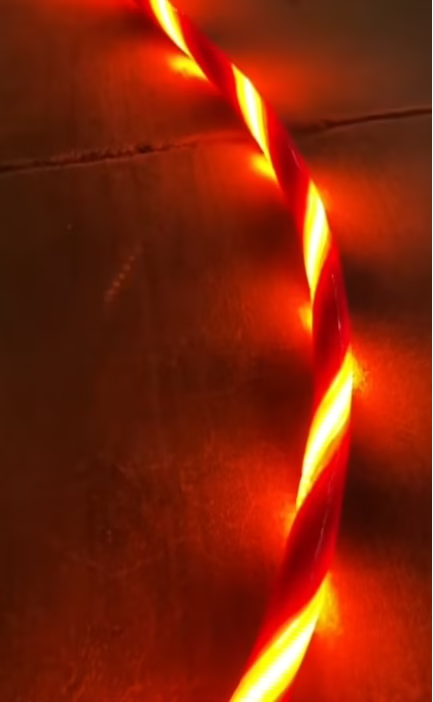
Consider a medium-voltage mining trailing cable — for instance, an (N)TMCGEH3S rated 6/10 kV — carrying hundreds of amperes of alternating current through its three power cores to an electric rope shovel in an open-pit mine. Somewhere inside the same cable, a tiny LED glows steadily, making the cable visible to operators in darkness. Yet that LED has no wire, no contact, no physical electrical connection to the power cores. How is this possible? 设想一根中压矿用拖拽电缆——例如额定 6/10 kV 的 (N)TMCGEH3S——通过三根动力线芯向露天矿的电铲输送数百安培的交流电。在同一根电缆内部某处,一颗微小的 LED 稳定发光,使电缆在黑暗中对操作人员可见。但该 LED 与动力线芯之间没有导线、没有触点、没有任何物理电气连接。这是如何做到的?

Inductive Harvesting: How Does the Magnetic Field of the Power Cores Induce Current to Light Up LEDs Without Physical Electrical Connection?

Consider a medium-voltage mining trailing cable — for instance, an (N)TMCGEH3S rated 6/10 kV — carrying hundreds of amperes of alternating current through its three power cores to an electric rope shovel in an open-pit mine. Somewhere inside the same cable, a tiny LED glows steadily, making the cable visible to operators in darkness. Yet that LED has no wire, no contact, no physical electrical connection to the power cores. How is this possible? 设想一根中压矿用拖拽电缆——例如额定 6/10 kV 的 (N)TMCGEH3S——通过三根动力线芯向露天矿的电铲输送数百安培的交流电。在同一根电缆内部某处,一颗微小的 LED 稳定发光,使电缆在黑暗中对操作人员可见。但该 LED 与动力线芯之间没有导线、没有触点、没有任何物理电气连接。这是如何做到的?