Other special cables

Underground mining operations require strict adherence to Mine Safety and Health Administration (MSHA) regulations for cable repair and splicing to ensure worker safety and equipment reliability. The distinction between permanent and temporary cable repairs is critical, as improper splicing is a leading cause of electrical hazards in mining environments. This technical guide examines the regulatory framework under Title 30 Code of Federal Regulations (CFR), specifically addressing trailing cable splice requirements for underground coal and metal/nonmetal mines. 地下采矿作业必须严格遵守矿山安全与健康管理局(MSHA)的电缆修复和接线规定,以确保工人安全和设备可靠性。永久性和临时性电缆修复之间的区别至关重要,因为不当的接线是采矿环境中电气危险的主要原因。本技术指南研究了《联邦法规》第30篇(CFR)下的监管框架,特别针对地下煤矿和金属/非金属矿山的拖曳电缆接线要求。

MSHA Splice Kits: Rules for Permanent vs. Temporary Cable Repairs Underground

Underground mining operations require strict adherence to Mine Safety and Health Administration (MSHA) regulations for cable repair and splicing to ensure worker safety and equipment reliability. The distinction between permanent and temporary cable repairs is critical, as improper splicing is a leading cause of electrical hazards in mining environments. This technical guide examines the regulatory framework under Title 30 Code of Federal Regulations (CFR), specifically addressing trailing cable splice requirements for underground coal and metal/nonmetal mines. 地下采矿作业必须严格遵守矿山安全与健康管理局(MSHA)的电缆修复和接线规定,以确保工人安全和设备可靠性。永久性和临时性电缆修复之间的区别至关重要,因为不当的接线是采矿环境中电气危险的主要原因。本技术指南研究了《联邦法规》第30篇(CFR)下的监管框架,特别针对地下煤矿和金属/非金属矿山的拖曳电缆接线要求。
In hazardous environments where flammable gases, vapors, or combustible dust may be present, the selection and installation of cable glands becomes a critical safety consideration. Explosion-proof (Ex d) cable glands serve as the essential interface between electrical cables and equipment enclosures, preventing the propagation of flames while maintaining ingress protection in the most demanding mining, oil and gas, and petrochemical applications. 在可能存在易燃气体、蒸汽或可燃粉尘的危险环境中,电缆接头的选择和安装成为关键的安全考虑因素。防爆(Ex d)电缆接头作为电缆与设备外壳之间的重要接口,在最苛刻的采矿、油气和石化应用中防止火焰传播,同时保持防护等级。

Cable Glands for Hazardous Areas (Ex d): Selecting Glands for Braided Mining Cables

In hazardous environments where flammable gases, vapors, or combustible dust may be present, the selection and installation of cable glands becomes a critical safety consideration. Explosion-proof (Ex d) cable glands serve as the essential interface between electrical cables and equipment enclosures, preventing the propagation of flames while maintaining ingress protection in the most demanding mining, oil and gas, and petrochemical applications. 在可能存在易燃气体、蒸汽或可燃粉尘的危险环境中,电缆接头的选择和安装成为关键的安全考虑因素。防爆(Ex d)电缆接头作为电缆与设备外壳之间的重要接口,在最苛刻的采矿、油气和石化应用中防止火焰传播,同时保持防护等级。
Mining operations increasingly rely on fiber optic technology for real-time communications, monitoring systems, and data transmission in underground and surface mining environments. The (N)TSCGEWÖU-FO cable represents a specialized class of flexible reeling cables with integrated fiber optic elements, designed specifically to withstand the extreme mechanical stresses, torsional forces, and harsh environmental conditions typical of mining applications. 矿业运营越来越依赖光纤技术进行实时通信、监控系统和地下及露天采矿环境中的数据传输。(N)TSCGEWÖU-FO 电缆代表了一类特殊的柔性卷筒电缆,集成了光纤元件,专门设计用于承受采矿应用中典型的极端机械应力、扭转力和恶劣环境条件。

Repairing Fiber Optics in Mining Cables: Splice Kits for (N)TSCGEWÖU-FO Breakages

Mining operations increasingly rely on fiber optic technology for real-time communications, monitoring systems, and data transmission in underground and surface mining environments. The (N)TSCGEWÖU-FO cable represents a specialized class of flexible reeling cables with integrated fiber optic elements, designed specifically to withstand the extreme mechanical stresses, torsional forces, and harsh environmental conditions typical of mining applications. 矿业运营越来越依赖光纤技术进行实时通信、监控系统和地下及露天采矿环境中的数据传输。(N)TSCGEWÖU-FO 电缆代表了一类特殊的柔性卷筒电缆,集成了光纤元件,专门设计用于承受采矿应用中典型的极端机械应力、扭转力和恶劣环境条件。
AusProof has been designing and manufacturing electrical cable couplers for mining and tunneling operations since 1974, establishing themselves as industry leaders in high voltage connection technology. Their coupler systems are specifically engineered to provide safe, reliable power connections in demanding environments including underground coal mines, metalliferous mines, open-cut operations, and tunnel excavation projects. The genderless design and full phase-to-earth segregation features make AusProof couplers among the safest and most reliable high voltage connectors available globally. (AusProof自1974年以来一直为采矿和隧道作业设计和制造电缆联接器,确立了自己在高压连接技术方面的行业领导地位。他们的联接器系统专门设计用于在要求苛刻的环境中提供安全、可靠的电力连接,包括地下煤矿、金属矿、露天作业和隧道挖掘项目。无性别设计和完整的相对地隔离功能使AusProof联接器成为全球最安全、最可靠的高压连接器之一。)

AusProof Couplers: Cable Stripping Dimensions 

AusProof has been designing and manufacturing electrical cable couplers for mining and tunneling operations since 1974, establishing themselves as industry leaders in high voltage connection technology. Their coupler systems are specifically engineered to provide safe, reliable power connections in demanding environments including underground coal mines, metalliferous mines, open-cut operations, and tunnel excavation projects. The genderless design and full phase-to-earth segregation features make AusProof couplers among the safest and most reliable high voltage connectors available globally. (AusProof自1974年以来一直为采矿和隧道作业设计和制造电缆联接器,确立了自己在高压连接技术方面的行业领导地位。他们的联接器系统专门设计用于在要求苛刻的环境中提供安全、可靠的电力连接,包括地下煤矿、金属矿、露天作业和隧道挖掘项目。无性别设计和完整的相对地隔离功能使AusProof联接器成为全球最安全、最可靠的高压连接器之一。)
Proper cable sizing is critical for safe and efficient operation of medium voltage mining equipment. When connecting Type SHD-GC cables to Patton & Cooke 15kV cable couplers, precise matching of conductor size to termination grommet specifications ensures optimal electrical performance, mechanical reliability, and long-term safety in demanding mining environments. 正确的电缆尺寸选择对于中压采矿设备的安全高效运行至关重要。将SHD-GC型电缆连接到帕顿与库克15kV电缆耦合器时,精确匹配导体尺寸与终端护套规格可确保在苛刻的采矿环境中实现最佳电气性能、机械可靠性和长期安全性。

Patton & Cooke Cable Sizing: Matching Type SHD-GC to 15kV Coupler Grommets

Proper cable sizing is critical for safe and efficient operation of medium voltage mining equipment. When connecting Type SHD-GC cables to Patton & Cooke 15kV cable couplers, precise matching of conductor size to termination grommet specifications ensures optimal electrical performance, mechanical reliability, and long-term safety in demanding mining environments. 正确的电缆尺寸选择对于中压采矿设备的安全高效运行至关重要。将SHD-GC型电缆连接到帕顿与库克15kV电缆耦合器时,精确匹配导体尺寸与终端护套规格可确保在苛刻的采矿环境中实现最佳电气性能、机械可靠性和长期安全性。
Sumitomo Electric Industries represents one of the world's most respected cable manufacturers, with a heritage spanning over 120 years since its founding in 1897. The company's origins trace back even further to the Sumitomo group's copper refining operations that began during the 17th century. According to historical records from Encyclopedia.com, Sumitomo's involvement in copper refining naturally led the company into cable and wire production when Japan's industrialization during the Meiji Restoration created urgent demand for electrical infrastructure. In 1897, Sumitomo purchased a facility near Osaka from the Japan Copper Manufacturing Company, retooling it to produce cable and wire using copper from the company's rich Besshi mine. This facility became the foundation of what would eventually become Sumitomo Electric Wire and Cable Works, incorporated as an independent company in 1920. 住友电气工业代表了世界上最受尊敬的电缆制造商之一,自1897年成立以来拥有超过120年的传统。该公司的起源可以追溯到住友集团在17世纪开始的铜精炼业务。

Sumitomo Mining Cables: Compatible Replacements for Japanese Specification Machinery

Sumitomo Electric Industries represents one of the world’s most respected cable manufacturers, with a heritage spanning over 120 years since its founding in 1897. The company’s origins trace back even further to the Sumitomo group’s copper refining operations that began during the 17th century. According to historical records from Encyclopedia.com, Sumitomo’s involvement in copper refining naturally led the company into cable and wire production when Japan’s industrialization during the Meiji Restoration created urgent demand for electrical infrastructure. In 1897, Sumitomo purchased a facility near Osaka from the Japan Copper Manufacturing Company, retooling it to produce cable and wire using copper from the company’s rich Besshi mine. This facility became the foundation of what would eventually become Sumitomo Electric Wire and Cable Works, incorporated as an independent company in 1920. 住友电气工业代表了世界上最受尊敬的电缆制造商之一,自1897年成立以来拥有超过120年的传统。该公司的起源可以追溯到住友集团在17世纪开始的铜精炼业务。
Portable cords in industrial settings face relentless abuse on a daily basis. From construction sites where cables are run over by heavy equipment, to manufacturing facilities where they're exposed to oils and chemicals, to mining operations with constant mechanical stress, these cables must endure conditions that would destroy ordinary extension cords within weeks. The demand is clear: cables must be both exceptionally heavy-duty and highly flexible to handle rough and continuous applications without failure. (工业环境中的便携式电缆每天都面临无情的滥用。从电缆被重型设备碾压的建筑工地,到暴露于油和化学品的制造设施,再到持续机械应力的采矿作业,这些电缆必须承受在几周内就会摧毁普通延长线的条件。需求很明确:电缆必须既异常坚固又高度柔韧,以应对粗暴和持续的应用而不失效。)

TPC Wire Super-Trex Equivalent: Heavy Duty Cord

Portable cords in industrial settings face relentless abuse on a daily basis. From construction sites where cables are run over by heavy equipment, to manufacturing facilities where they’re exposed to oils and chemicals, to mining operations with constant mechanical stress, these cables must endure conditions that would destroy ordinary extension cords within weeks. The demand is clear: cables must be both exceptionally heavy-duty and highly flexible to handle rough and continuous applications without failure. (工业环境中的便携式电缆每天都面临无情的滥用。从电缆被重型设备碾压的建筑工地,到暴露于油和化学品的制造设施,再到持续机械应力的采矿作业,这些电缆必须承受在几周内就会摧毁普通延长线的条件。需求很明确:电缆必须既异常坚固又高度柔韧,以应对粗暴和持续的应用而不失效。)
Arctic mining operations in Canada and Russia represent some of the most challenging environments for electrical infrastructure. With temperatures regularly plummeting to -50°C (-58°F) or lower, standard cables suffer from critical failures including sheath cracking, insulation brittleness, and loss of flexibility. (加拿大和俄罗斯的北极采矿作业代表着电气基础设施面临的最具挑战性的环境。温度经常降至-50°C或更低,标准电缆会出现护套开裂、绝缘层脆化和失去柔韧性等严重故障。) The Arctic region contains significant mineral deposits, with Russia producing approximately 80% of its oil and 90% of its gas in high northern latitudes, while Canada continues to develop major mining projects including iron ore deposits 300 miles inside the Arctic Circle. (北极地区蕴藏着大量矿产资源,俄罗斯在高纬度北部地区生产约80%的石油和90%的天然气,而加拿大继续开发位于北极圈内300英里处的大型铁矿项目。)

Arctic Mining Cables for Extreme Cold Environments

Arctic mining operations in Canada and Russia represent some of the most challenging environments for electrical infrastructure. With temperatures regularly plummeting to -50°C (-58°F) or lower, standard cables suffer from critical failures including sheath cracking, insulation brittleness, and loss of flexibility. (加拿大和俄罗斯的北极采矿作业代表着电气基础设施面临的最具挑战性的环境。温度经常降至-50°C或更低,标准电缆会出现护套开裂、绝缘层脆化和失去柔韧性等严重故障。) The Arctic region contains significant mineral deposits, with Russia producing approximately 80% of its oil and 90% of its gas in high northern latitudes, while Canada continues to develop major mining projects including iron ore deposits 300 miles inside the Arctic Circle. (北极地区蕴藏着大量矿产资源,俄罗斯在高纬度北部地区生产约80%的石油和90%的天然气,而加拿大继续开发位于北极圈内300英里处的大型铁矿项目。)
Acid Mine Drainage represents one of the most challenging environmental conditions for electrical infrastructure in mining operations. AMD occurs when sulfide minerals, particularly pyrite, are exposed to oxygen and water during mining activities, producing sulfuric acid through oxidation reactions. According to research from the United States Geological Survey, AMD environments typically exhibit pH levels ranging from 2 to 4, with extreme cases documented as low as pH 0.5 to 0.9 at facilities such as the Richmond Mine in California. 酸性矿井排水(AMD)是采矿作业中电气基础设施面临的最具挑战性的环境条件之一。当硫化矿物(特别是黄铁矿)在采矿活动中暴露于氧气和水中时,通过氧化反应产生硫酸,从而形成AMD。

Acid Mine Drainage (AMD): Cables that Withstand pH < 3.0 Sulfuric Acid Exposure

Acid Mine Drainage represents one of the most challenging environmental conditions for electrical infrastructure in mining operations. AMD occurs when sulfide minerals, particularly pyrite, are exposed to oxygen and water during mining activities, producing sulfuric acid through oxidation reactions. According to research from the United States Geological Survey, AMD environments typically exhibit pH levels ranging from 2 to 4, with extreme cases documented as low as pH 0.5 to 0.9 at facilities such as the Richmond Mine in California. 酸性矿井排水(AMD)是采矿作业中电气基础设施面临的最具挑战性的环境条件之一。当硫化矿物(特别是黄铁矿)在采矿活动中暴露于氧气和水中时,通过氧化反应产生硫酸,从而形成AMD。
Mining operations depend on extensive underground cable networks to distribute power, transmit control signals, and maintain communication systems across vast subterranean infrastructure. These buried cable installations face unique environmental challenges that differ significantly from surface installations, and among the most destructive threats are biological attacks from termites and rodents. While these creatures evolved to consume natural materials, modern cable construction using synthetic polymers can inadvertently attract or fail to deter these persistent pests, leading to catastrophic system failures that jeopardize both operational continuity and worker safety.

Termite & Rodent Proof Mining Cables: Nylon Sheath vs. Steel Tape Armor Options

Mining operations depend on extensive underground cable networks to distribute power, transmit control signals, and maintain communication systems across vast subterranean infrastructure. These buried cable installations face unique environmental challenges that differ significantly from surface installations, and among the most destructive threats are biological attacks from termites and rodents. While these creatures evolved to consume natural materials, modern cable construction using synthetic polymers can inadvertently attract or fail to deter these persistent pests, leading to catastrophic system failures that jeopardize both operational continuity and worker safety.
Deep sea mining represents one of humanity's most ambitious technological frontiers, targeting mineral resources at ocean depths that would have been unimaginable just decades ago. The International Seabed Authority (ISA) has granted 31 exploration licenses as of 2024, including 19 for polymetallic nodules primarily in the Clarion-Clipperton Zone (CCZ) of the Pacific Ocean, where deposits lie at depths of 4,000 to 6,000 meters below the surface [1][2]. These nodules contain economically critical metals including copper, nickel, cobalt, and manganese, with the CCZ alone estimated to hold over 21 billion metric tons of nodules. 深海采矿系统由生产支持船、深海集矿机器人、提升管道系统和最关键的脐带电缆组成。Deep sea mining systems consist of production support vessels (PSVs), subsea collector vehicles, riser and lift systems (RALS), and most critically, umbilical power cables that must transmit electrical power, control signals, and data communications across vertical distances exceeding 5,000 meters. The Chinese submersible Striver reached the Mariana Trench at 10,909 meters depth in 2020, demonstrating that engineering solutions for ultra-deep operations are technologically feasible, though commercially scaled mining operations remain in the exploratory phase [3][4].

Deep Sea Mining & Dredging: Submersible Power Cables Rated for 500m+ Depth

Deep sea mining represents one of humanity’s most ambitious technological frontiers, targeting mineral resources at ocean depths that would have been unimaginable just decades ago. The International Seabed Authority (ISA) has granted 31 exploration licenses as of 2024, including 19 for polymetallic nodules primarily in the Clarion-Clipperton Zone (CCZ) of the Pacific Ocean, where deposits lie at depths of 4,000 to 6,000 meters below the surface [1][2]. These nodules contain economically critical metals including copper, nickel, cobalt, and manganese, with the CCZ alone estimated to hold over 21 billion metric tons of nodules. 深海采矿系统由生产支持船、深海集矿机器人、提升管道系统和最关键的脐带电缆组成。Deep sea mining systems consist of production support vessels (PSVs), subsea collector vehicles, riser and lift systems (RALS), and most critically, umbilical power cables that must transmit electrical power, control signals, and data communications across vertical distances exceeding 5,000 meters. The Chinese submersible Striver reached the Mariana Trench at 10,909 meters depth in 2020, demonstrating that engineering solutions for ultra-deep operations are technologically feasible, though commercially scaled mining operations remain in the exploratory phase [3][4].
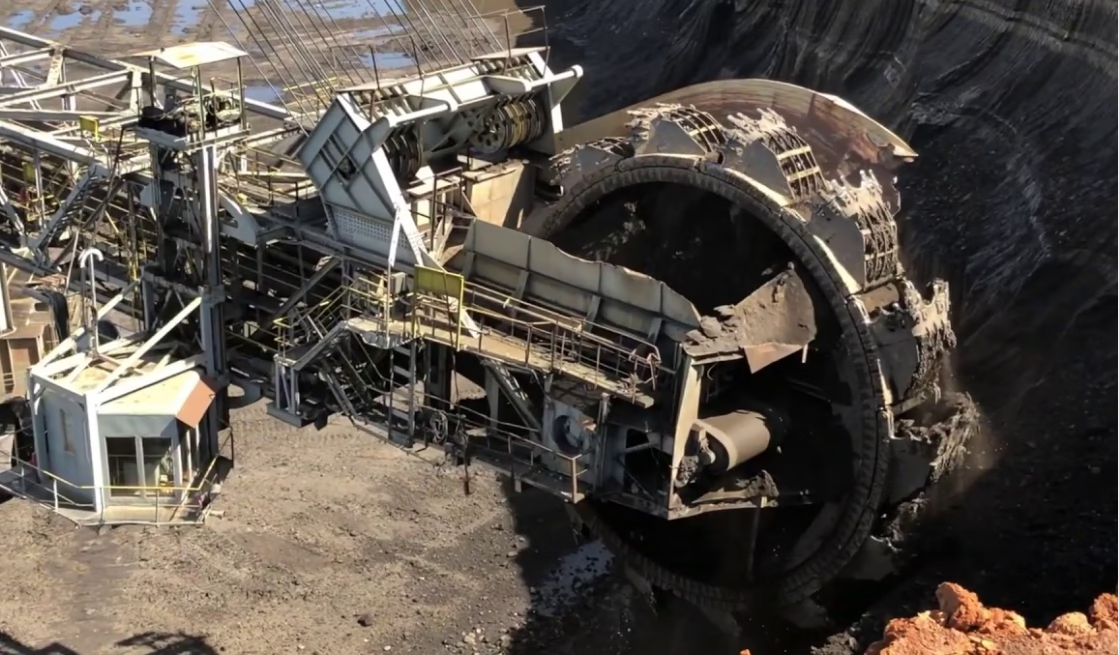
Bucket wheel excavators represent the pinnacle of continuous mining machinery, combining exceptional scale with remarkable engineering precision. These colossal machines, primarily manufactured by TAKRAF (formerly an East German Kombinat, now part of the Tenova Group) and ThyssenKrupp, have revolutionized surface mining operations since their introduction in the 1920s. Modern bucket wheel excavators serve as the primary overburden removal equipment in large-scale open-pit mining operations, capable of excavating thousands of tons of material per hour with continuous, uninterrupted operation. The operational principle of these machines centers on a large rotating wheel equipped with multiple buckets that continuously scoop material as the wheel rotates. Unlike batch-loading equipment such as traditional excavators or draglines, bucket wheel excavators provide truly continuous material flow, making them ideally suited for high-volume operations where consistent production rates are paramount. The excavated material transfers through the boom system to discharge conveyors, creating an integrated material handling chain that can extend for kilometers across mining sites.

Bucket Wheel Excavators (Takraf/ThyssenKrupp): Managing Cable Tension on Massive Reels

Bucket wheel excavators represent the pinnacle of continuous mining machinery, combining exceptional scale with remarkable engineering precision. These colossal machines, primarily manufactured by TAKRAF (formerly an East German Kombinat, now part of the Tenova Group) and ThyssenKrupp, have revolutionized surface mining operations since their introduction in the 1920s. Modern bucket wheel excavators serve as the primary overburden removal equipment in large-scale open-pit mining operations, capable of excavating thousands of tons of material per hour with continuous, uninterrupted operation. The operational principle of these machines centers on a large rotating wheel equipped with multiple buckets that continuously scoop material as the wheel rotates. Unlike batch-loading equipment such as traditional excavators or draglines, bucket wheel excavators provide truly continuous material flow, making them ideally suited for high-volume operations where consistent production rates are paramount. The excavated material transfers through the boom system to discharge conveyors, creating an integrated material handling chain that can extend for kilometers across mining sites.
Potash and salt mining operations present one of the most chemically aggressive environments for electrical infrastructure. Unlike conventional mining operations where mechanical wear dominates cable failure modes, potash mines create a uniquely hostile chemical environment that systematically attacks standard cable materials through multiple corrosion pathways. Understanding why cables fail in these conditions requires examining the specific chemistry of the mining environment and how it interacts with different cable sheath materials. 钾盐矿是世界上最重要的化肥生产基地,但同时也是电缆系统面临最严峻腐蚀环境的场所之一。Potash mines are among the world's most important fertilizer production sites, but they also present one of the most severe corrosive environments for cable systems. The high chloride content, combined with moisture, hydrogen sulfide, and elevated temperatures, creates conditions that rapidly degrade standard rubber cable sheaths

Potash & Salt Mines: Why Standard Rubber Cables Fail and How to Choose Corrosion Resistant Sheaths

Potash and salt mining operations present one of the most chemically aggressive environments for electrical infrastructure. Unlike conventional mining operations where mechanical wear dominates cable failure modes, potash mines create a uniquely hostile chemical environment that systematically attacks standard cable materials through multiple corrosion pathways. Understanding why cables fail in these conditions requires examining the specific chemistry of the mining environment and how it interacts with different cable sheath materials. 钾盐矿是世界上最重要的化肥生产基地,但同时也是电缆系统面临最严峻腐蚀环境的场所之一。Potash mines are among the world’s most important fertilizer production sites, but they also present one of the most severe corrosive environments for cable systems. The high chloride content, combined with moisture, hydrogen sulfide, and elevated temperatures, creates conditions that rapidly degrade standard rubber cable sheaths
Overland conveyor systems represent critical infrastructure for bulk material handling across mining, quarrying, and heavy industrial operations. When these systems extend beyond 5 kilometers, the selection of appropriate power distribution cables becomes a paramount engineering decision that directly impacts operational reliability, maintenance costs, and system longevity. According to industry standards published by the International Electrotechnical Commission, power cables for such applications must meet rigorous mechanical and electrical performance criteria to withstand the demanding operational environment. This technical analysis examines two primary cable architectures utilized in extended overland conveyor applications: armoured cables and flexible cables. Each design philosophy addresses specific operational requirements, with armoured configurations prioritizing mechanical protection for fixed installations, while flexible designs accommodate dynamic loading and continuous motion requirements. The selection between these cable types fundamentally depends on installation methodology, environmental conditions, mechanical stress profiles, and long-term operational economics.

Overland Conveyor Systems: Armoured vs. Flexible Cables for 5km+ Power Distribution

Overland conveyor systems represent critical infrastructure for bulk material handling across mining, quarrying, and heavy industrial operations. When these systems extend beyond 5 kilometers, the selection of appropriate power distribution cables becomes a paramount engineering decision that directly impacts operational reliability, maintenance costs, and system longevity. According to industry standards published by the International Electrotechnical Commission, power cables for such applications must meet rigorous mechanical and electrical performance criteria to withstand the demanding operational environment. This technical analysis examines two primary cable architectures utilized in extended overland conveyor applications: armoured cables and flexible cables. Each design philosophy addresses specific operational requirements, with armoured configurations prioritizing mechanical protection for fixed installations, while flexible designs accommodate dynamic loading and continuous motion requirements. The selection between these cable types fundamentally depends on installation methodology, environmental conditions, mechanical stress profiles, and long-term operational economics.
TENAX-LUMEN represents a breakthrough in mining cable safety technology. This self-illuminating medium voltage trailing cable features embedded electroluminescent strings that provide 360° continuous illumination, ensuring cable visibility in complete darkness. The cable remains visible even when not energized, dramatically improving safety for personnel and equipment in mining operations where lighting may be compromised or unavailable. TENAX-LUMEN代表了矿用电缆安全技术的突破。这种自发光中压拖曳电缆具有嵌入式电致发光线,提供360°连续照明,确保在完全黑暗中电缆的可见性。即使在未通电的情况下,电缆仍然可见,大大提高了在照明可能受损或不可用的矿业作业中人员和设备的安全性。

TENAX-LUMEN (N)TSCGH3S I 6 – 10 KV

TENAX-LUMEN represents a breakthrough in mining cable safety technology. This self-illuminating medium voltage trailing cable features embedded electroluminescent strings that provide 360° continuous illumination, ensuring cable visibility in complete darkness. The cable remains visible even when not energized, dramatically improving safety for personnel and equipment in mining operations where lighting may be compromised or unavailable. TENAX-LUMEN代表了矿用电缆安全技术的突破。这种自发光中压拖曳电缆具有嵌入式电致发光线,提供360°连续照明,确保在完全黑暗中电缆的可见性。即使在未通电的情况下,电缆仍然可见,大大提高了在照明可能受损或不可用的矿业作业中人员和设备的安全性。
To understand why cable sheaths in underground coal mines must be electrically conductive, we need to first explore the fundamental physics of static electricity and why it poses such an extraordinary danger in mining environments. This requirement, mandated by AS/NZS 1802:2018, is not merely a technical specification but rather a critical safety measure that has evolved from decades of mining experience and, unfortunately, from lessons learned through tragic accidents. 要理解为什么地下煤矿中的电缆护套必须具有导电性,我们首先需要探讨静电的基本物理原理,以及为什么它在采矿环境中构成如此巨大的危险。AS/NZS 1802:2018要求的这一规定不仅仅是一个技术规范,而是一项从数十年的采矿经验以及不幸的事故教训中演变而来的关键安全措施。

TENAX-SAS (N)TSCGEWOEU I 6 – 35 KV

As power supply cable to large mobile equipment in mines, specifically designed for trailing cable applications with shovels and draglines. The outer sheath is extremely robust and tough against abrasion and tearing, maintaining full flexibility in operation down to -50°C. 用作矿山大型移动设备的电源电缆,专为挖掘机和拉铲的拖曳电缆应用而设计。外护套极其坚固耐磨损和撕裂,在低至-50°C的温度下保持完全的柔韧性。
The mining industry continues to evolve toward increasingly sophisticated communication infrastructure, driven by safety regulations and operational efficiency demands. Fiber optic technology has emerged as the backbone of modern mining operations, providing high-bandwidth, electromagnetic interference-resistant data transmission in some of the most challenging environments on Earth. Within this context, fiber optic breakout cables represent a critical component for deploying reliable networks in underground and surface mining facilities. 矿业持续向更复杂的通信基础设施发展,这是由安全法规和运营效率需求驱动的。光纤技术已成为现代矿业运营的支柱,在地球上一些最具挑战性的环境中提供高带宽、抗电磁干扰的数据传输。在此背景下,光纤分支电缆是在地下和地面采矿设施中部署可靠网络的关键组件。

Fiber Optic Breakout in Mining Cables: Best Practices for (N)TSCGEWÖU-FO Termination

The mining industry continues to evolve toward increasingly sophisticated communication infrastructure, driven by safety regulations and operational efficiency demands. Fiber optic technology has emerged as the backbone of modern mining operations, providing high-bandwidth, electromagnetic interference-resistant data transmission in some of the most challenging environments on Earth. Within this context, fiber optic breakout cables represent a critical component for deploying reliable networks in underground and surface mining facilities. 矿业持续向更复杂的通信基础设施发展,这是由安全法规和运营效率需求驱动的。光纤技术已成为现代矿业运营的支柱,在地球上一些最具挑战性的环境中提供高带宽、抗电磁干扰的数据传输。在此背景下,光纤分支电缆是在地下和地面采矿设施中部署可靠网络的关键组件。
Executive Summary: As global resource extraction expands into Arctic and subarctic regions, electrical infrastructure must withstand temperatures that regularly plunge below -40°C. The (N)TSCGEWÖU cable family represents specialized medium-voltage flexible cables engineered specifically for extreme mechanical and environmental stresses in mining, drilling, and tunneling operations. Understanding cold impact ratings and temperature performance specifications is critical for project engineers, procurement specialists, and operations managers working on Siberian oil and gas projects, Arctic mining operations, and other extreme cold installations. This comprehensive guide examines the technical requirements, testing standards, and material considerations essential for cable selection in environments where standard cables would fail catastrophically. 执行摘要:随着全球资源开采扩展到北极和亚北极地区,电气基础设施必须承受经常低于-40°C的温度。(N)TSCGEWÖU电缆系列代表专门为采矿、钻探和隧道作业中的极端机械和环境应力而设计的中压柔性电缆。了解冷冲击等级和温度性能规格对于从事西伯利亚油气项目、北极采矿作业和其他极冷装置的项目工程师、采购专家和运营管理人员至关重要。

Understanding “Cold Impact” Ratings: (N)TSCGEWÖU Cables for -40°C Siberian Projects

Executive Summary: As global resource extraction expands into Arctic and subarctic regions, electrical infrastructure must withstand temperatures that regularly plunge below -40°C. The (N)TSCGEWÖU cable family represents specialized medium-voltage flexible cables engineered specifically for extreme mechanical and environmental stresses in mining, drilling, and tunneling operations. Understanding cold impact ratings and temperature performance specifications is critical for project engineers, procurement specialists, and operations managers working on Siberian oil and gas projects, Arctic mining operations, and other extreme cold installations. This comprehensive guide examines the technical requirements, testing standards, and material considerations essential for cable selection in environments where standard cables would fail catastrophically. 执行摘要:随着全球资源开采扩展到北极和亚北极地区,电气基础设施必须承受经常低于-40°C的温度。(N)TSCGEWÖU电缆系列代表专门为采矿、钻探和隧道作业中的极端机械和环境应力而设计的中压柔性电缆。了解冷冲击等级和温度性能规格对于从事西伯利亚油气项目、北极采矿作业和其他极冷装置的项目工程师、采购专家和运营管理人员至关重要。
Variable frequency drives (VFDs) have revolutionized industrial motor control by enabling precise speed regulation and significant energy savings. However, these benefits come with a serious technical challenge that many facilities overlook until catastrophic failure occurs. When VFDs control AC motors through pulse width modulation (PWM), they create high-frequency electrical disturbances that can destroy motor bearings in a matter of months or even weeks, rather than the expected operational lifetime of years.

VFD Motor Bearing Damage: Why You Need (N)3GHSSYCY Screened Mining Cables?

Variable frequency drives (VFDs) have revolutionized industrial motor control by enabling precise speed regulation and significant energy savings. However, these benefits come with a serious technical challenge that many facilities overlook until catastrophic failure occurs. When VFDs control AC motors through pulse width modulation (PWM), they create high-frequency electrical disturbances that can destroy motor bearings in a matter of months or even weeks, rather than the expected operational lifetime of years.
Australia's mining industry operates under stringent safety regulations, particularly for underground coal operations where methane gas and coal dust present unique explosion hazards. The selection of appropriate electrical cables is not merely a technical decision but a critical safety requirement mandated by New South Wales Work Health and Safety regulations. According to the Work Health and Safety (Mines and Petroleum Sites) Regulation 2022, specific cable types must be used in hazardous zones of underground coal mines to prevent catastrophic incidents. 澳大利亚采矿业在严格的安全法规下运营,特别是在地下煤矿作业中,甲烷气体和煤尘呈现独特的爆炸危险。选择合适的电缆不仅是技术决策,更是新南威尔士州工作健康与安全法规规定的关键安全要求。

AS/NZS 1802 vs. AS/NZS 2802: Which Mining Cable Do You Need for NSW Coal Mines?

Australia’s mining industry operates under stringent safety regulations, particularly for underground coal operations where methane gas and coal dust present unique explosion hazards. The selection of appropriate electrical cables is not merely a technical decision but a critical safety requirement mandated by New South Wales Work Health and Safety regulations. According to the Work Health and Safety (Mines and Petroleum Sites) Regulation 2022, specific cable types must be used in hazardous zones of underground coal mines to prevent catastrophic incidents. 澳大利亚采矿业在严格的安全法规下运营,特别是在地下煤矿作业中,甲烷气体和煤尘呈现独特的爆炸危险。选择合适的电缆不仅是技术决策,更是新南威尔士州工作健康与安全法规规定的关键安全要求。
Type 241 cables form part of the portfolio of international mining equipment cables for general and underground mining applications including mine power feeder cables for continuous miners, connecting pump cables, longwall supply, and mine equipment power supply cables. 241型电缆是国际矿用设备电缆系列的组成部分,广泛应用于连续采煤机供电、泵站连接、长壁工作面供电等场景。Type 241 cables form part of the portfolio of international mining equipment cables for general and underground mining applications including mine power feeder cables for continuous miners, connecting pump cables, longwall supply, and mine equipment power supply cables. 241型电缆是国际矿用设备电缆系列的组成部分,广泛应用于连续采煤机供电、泵站连接、长壁工作面供电等场景。

Splicing Type 241 Mining Cables: AS/NZS 1747 Repair Standards Explained

Type 241 cables form part of the portfolio of international mining equipment cables for general and underground mining applications including mine power feeder cables for continuous miners, connecting pump cables, longwall supply, and mine equipment power supply cables. 241型电缆是国际矿用设备电缆系列的组成部分,广泛应用于连续采煤机供电、泵站连接、长壁工作面供电等场景。
(N)SHTÖU cable is a flexible rubber-sheathed cable specifically engineered for reeling and festoon applications in cranes, hoists, and other material handling equipment. According to DIN VDE 0250-814 and harmonized standard HD 22.10 S2, these cables feature exceptional mechanical resilience and are rated for continuous flexing operations under demanding industrial conditions. (N)SHTÖU电缆是专为起重机、提升机及其他物料搬运设备的卷筒和悬链系统设计的柔性橡胶护套电缆。根据DIN VDE 0250-814及协调标准HD 22.10 S2,这类电缆具有出色的机械弹性,适用于严苛工业环境下的连续弯曲操作。

How to Properly Strain-Relieve Vertical Suspension Cables ((N)SHTÖU) Using Kellem Grips

(N)SHTÖU cable is a flexible rubber-sheathed cable specifically engineered for reeling and festoon applications in cranes, hoists, and other material handling equipment. According to DIN VDE 0250-814 and harmonized standard HD 22.10 S2, these cables feature exceptional mechanical resilience and are rated for continuous flexing operations under demanding industrial conditions. (N)SHTÖU电缆是专为起重机、提升机及其他物料搬运设备的卷筒和悬链系统设计的柔性橡胶护套电缆。根据DIN VDE 0250-814及协调标准HD 22.10 S2,这类电缆具有出色的机械弹性,适用于严苛工业环境下的连续弯曲操作。
Type SHD-GC (Shielded, High-voltage, with a Grounding Conductor) cables represent the industry standard for high-voltage portable power distribution in surface and underground mining operations. These cables are manufactured according to ICEA S-75-381/NEMA WC 58 standards and must comply with MSHA 30 CFR Part 7 flame resistance requirements for use in mining environments. SHD-GC型(带接地导体的屏蔽高压)电缆代表了露天和地下采矿作业中高压便携式配电的行业标准。这些电缆根据ICEA S-75-381/NEMA WC 58标准制造,并必须符合MSHA 30 CFR第7部分的阻燃要求,方可用于采矿环境。

Coupler Compatibility: Matching Type SHD-GC Cables with Patton & Cooke 15kV Connectors

Type SHD-GC (Shielded, High-voltage, with a Grounding Conductor) cables represent the industry standard for high-voltage portable power distribution in surface and underground mining operations. These cables are manufactured according to ICEA S-75-381/NEMA WC 58 standards and must comply with MSHA 30 CFR Part 7 flame resistance requirements for use in mining environments. SHD-GC型(带接地导体的屏蔽高压)电缆代表了露天和地下采矿作业中高压便携式配电的行业标准。这些电缆根据ICEA S-75-381/NEMA WC 58标准制造,并必须符合MSHA 30 CFR第7部分的阻燃要求,方可用于采矿环境。
Type 450 cables are Australian-standard reeling and trailing cables designed specifically for mining applications. Defined under AS/NZS 1802 (formerly AS 1802), these cables feature robust construction capable of withstanding the harsh conditions of underground and surface mining environments. The "Type 450" designation indicates cables rated for 450/750V operation in mining applications.

Ampcontrol Protection Relays: Required Pilot Core Resistance for Type 450 Cables

Type 450 cables are Australian-standard reeling and trailing cables designed specifically for mining applications. Defined under AS/NZS 1802 (formerly AS 1802), these cables feature robust construction capable of withstanding the harsh conditions of underground and surface mining environments. The “Type 450” designation indicates cables rated for 450/750V operation in mining applications.
Type W portable power cables represent the gold standard for heavy-duty industrial applications, specifically engineered to meet the demanding requirements of mining, construction, and entertainment industries. The General Cable Anaconda brand has established itself as a benchmark product in this category, recognized for superior durability and electrical performance in extreme environments. W型便携式电力电缆代表了重型工业应用的最高标准,专门设计用于满足采矿、建筑和娱乐行业的苛刻要求。通用电缆Anaconda品牌已成为该类别的基准产品,以其在极端环境中的卓越耐久性和电气性能而闻名。

General Cable Anaconda Brand Cross-Reference: Finding the Right Type W Portable Cord

Type W portable power cables represent the gold standard for heavy-duty industrial applications, specifically engineered to meet the demanding requirements of mining, construction, and entertainment industries. The General Cable Anaconda brand has established itself as a benchmark product in this category, recognized for superior durability and electrical performance in extreme environments. W型便携式电力电缆代表了重型工业应用的最高标准,专门设计用于满足采矿、建筑和娱乐行业的苛刻要求。通用电缆Anaconda品牌已成为该类别的基准产品,以其在极端环境中的卓越耐久性和电气性能而闻名。
Prysmian Group's PROTOLON series represents a premium line of flexible reeling cables engineered specifically for demanding material handling applications, including port container cranes (RTGs, STS cranes), ship-to-shore systems, and heavy-duty industrial machinery. The PROTOLON (SB) variant is designed for steel drum reeling systems where cables undergo continuous bending cycles and mechanical stress during operation. 普睿司曼集团的PROTOLON系列是专为严苛物料搬运应用设计的高端柔性卷筒电缆,包括港口集装箱起重机(RTG、岸桥)、船岸系统及重型工业机械。PROTOLON (SB)型号专为钢制卷筒系统设计,电缆在运行过程中需承受连续弯曲循环和机械应力。

Prysmian PROTOLON: What is the Generic Equivalent to Prysmian PROTOLON (SB) Reeling Cable for Port Cranes?

Prysmian Group’s PROTOLON series represents a premium line of flexible reeling cables engineered specifically for demanding material handling applications, including port container cranes (RTGs, STS cranes), ship-to-shore systems, and heavy-duty industrial machinery. The PROTOLON (SB) variant is designed for steel drum reeling systems where cables undergo continuous bending cycles and mechanical stress during operation. 普睿司曼集团的PROTOLON系列是专为严苛物料搬运应用设计的高端柔性卷筒电缆,包括港口集装箱起重机(RTG、岸桥)、船岸系统及重型工业机械。PROTOLON (SB)型号专为钢制卷筒系统设计,电缆在运行过程中需承受连续弯曲循环和机械应力。
In demanding industrial environments such as ports, steel plants, mining facilities, and automated material handling systems, reeling cables must withstand extreme mechanical stress. Tensile strength—the maximum load a cable can bear before failure—is a critical specification when selecting cables for crane systems, spreaders, and mobile machinery. 在港口、钢铁厂、矿山及自动化物流系统等苛刻工业环境中,卷筒电缆必须承受极端机械应力。抗拉强度——电缆断裂前所能承受的最大载荷——是选择起重机、吊具及移动设备用电缆时的关键技术指标。 This technical comparison examines two industry-leading reeling cable types: the (N)TSCGEWÖU (a German-standard flexible reeling cable conforming to DIN VDE specifications) and the Nexans RHEYFIRM-RS (a premium heavy-duty cable from Nexans Germany). Both are engineered for motor-driven cable reels, but differ in construction philosophy and performance characteristics. 本文深入对比两种行业领先的卷筒电缆:符合DIN VDE规范的德国标准柔性卷筒电缆(N)TSCGEWÖU,以及来自Nexans德国的高端重载电缆RHEYFIRM-RS。两者均专为电动卷筒设计,但在结构理念和性能特性上各有差异。

Comparison: (N)TSCGEWÖU vs. Nexans RHEYFIRM-RS

In demanding industrial environments such as ports, steel plants, mining facilities, and automated material handling systems, reeling cables must withstand extreme mechanical stress. Tensile strength—the maximum load a cable can bear before failure—is a critical specification when selecting cables for crane systems, spreaders, and mobile machinery. 在港口、钢铁厂、矿山及自动化物流系统等苛刻工业环境中,卷筒电缆必须承受极端机械应力。抗拉强度——电缆断裂前所能承受的最大载荷——是选择起重机、吊具及移动设备用电缆时的关键技术指标。 This technical comparison examines two industry-leading reeling cable types: the (N)TSCGEWÖU (a German-standard flexible reeling cable conforming to DIN VDE specifications) and the Nexans RHEYFIRM-RS (a premium heavy-duty cable from Nexans Germany). Both are engineered for motor-driven cable reels, but differ in construction philosophy and performance characteristics. 本文深入对比两种行业领先的卷筒电缆:符合DIN VDE规范的德国标准柔性卷筒电缆(N)TSCGEWÖU,以及来自Nexans德国的高端重载电缆RHEYFIRM-RS。两者均专为电动卷筒设计,但在结构理念和性能特性上各有差异。
Fermel is a recognized manufacturer of underground utility vehicles designed for mining, tunneling, and construction applications. Their utility vehicle lineup includes personnel carriers, material transporters, and multi-purpose service units that operate in confined underground environments where electrical power delivery via trailing cables is essential for safe and efficient operation. 费尔梅尔(Fermel)是地下多功能车的知名制造商,产品专为采矿、隧道和建筑应用设计。其多功能车系列包括人员运输车、物料运输车和多功能服务单元,在封闭的地下环境中运行,通过拖曳电缆供电对于安全高效运行至关重要。

Fermel Utility Vehicles: Type 241 Cable Flexibility for Cable Reels

Fermel is a recognized manufacturer of underground utility vehicles designed for mining, tunneling, and construction applications. Their utility vehicle lineup includes personnel carriers, material transporters, and multi-purpose service units that operate in confined underground environments where electrical power delivery via trailing cables is essential for safe and efficient operation. 费尔梅尔(Fermel)是地下多功能车的知名制造商,产品专为采矿、隧道和建筑应用设计。其多功能车系列包括人员运输车、物料运输车和多功能服务单元,在封闭的地下环境中运行,通过拖曳电缆供电对于安全高效运行至关重要。
Sandvik LH517 is a 17-tonne class battery-electric or cable-electric underground loader widely deployed in hard rock mining operations. One of the most common operational issues reported is the "Earth Fault" or "Ground Fault" alarm, which triggers the machine's protective earth leakage relay and prevents operation. In approximately 60-70% of cases, this fault is directly attributable to trailing cable damage, including insulation breakdown, conductor exposure, moisture ingress, or mechanical abrasion from the harsh underground mining environment. 山特维克LH517是一款17吨级电池电动或电缆电动井下铲运机,广泛应用于硬岩采矿作业。最常见的操作问题之一是"接地故障"报警,它会触发机器的保护性漏电继电器并阻止操作。在大约60-70%的情况下,此故障直接归因于拖缆损坏,包括绝缘击穿、导体裸露、水分侵入或来自恶劣井下采矿环境的机械磨损。

Sandvik LH517 Electric Loader: How to Troubleshoot “Earth Fault” Errors Associated with Cable Damage

Sandvik LH517 is a 17-tonne class battery-electric or cable-electric underground loader widely deployed in hard rock mining operations. One of the most common operational issues reported is the “Earth Fault” or “Ground Fault” alarm, which triggers the machine’s protective earth leakage relay and prevents operation. In approximately 60-70% of cases, this fault is directly attributable to trailing cable damage, including insulation breakdown, conductor exposure, moisture ingress, or mechanical abrasion from the harsh underground mining environment. 山特维克LH517是一款17吨级电池电动或电缆电动井下铲运机,广泛应用于硬岩采矿作业。最常见的操作问题之一是”接地故障”报警,它会触发机器的保护性漏电继电器并阻止操作。在大约60-70%的情况下,此故障直接归因于拖缆损坏,包括绝缘击穿、导体裸露、水分侵入或来自恶劣井下采矿环境的机械磨损。
The Atlas Copco Boltec series represents a range of mechanized rock bolting rigs designed for underground mining and tunneling operations. These machines are engineered to install rock bolts efficiently in challenging subterranean environments, requiring robust electrical systems capable of withstanding extreme mechanical stress, moisture exposure, and continuous operational demands. 阿特拉斯·科普柯 Boltec 系列是专为地下采矿和隧道作业设计的机械化锚杆钻机。这些设备在恶劣的地下环境中高效安装锚杆,其电气系统需要承受极端机械应力、潮湿环境和持续运行的考验。

Atlas Copco Boltec: Feed Cable Selection & Replacement Guide

The Atlas Copco Boltec series represents a range of mechanized rock bolting rigs designed for underground mining and tunneling operations. These machines are engineered to install rock bolts efficiently in challenging subterranean environments, requiring robust electrical systems capable of withstanding extreme mechanical stress, moisture exposure, and continuous operational demands. 阿特拉斯·科普柯 Boltec 系列是专为地下采矿和隧道作业设计的机械化锚杆钻机。这些设备在恶劣的地下环境中高效安装锚杆,其电气系统需要承受极端机械应力、潮湿环境和持续运行的考验。
TSCGECEWÖU, NTSCGECEWÖU, TSKCGECWOEU, TSCGEWOEU, NSSHOEU, NTSCGEWOEU-CH, German mining cable, DIN cable, VDE cable, German cable standard, coal cutter cable CH, festoon cable FN, trailing cable W, screened cable designation, EPR mining cable

Joy Global (Komatsu) 7LS Longwall Shearer: (N)TSCGECEWÖU Drag Chain Cable Robustness Analysis

TSCGECEWÖU, NTSCGECEWÖU, TSKCGECWOEU, TSCGEWOEU, NSSHOEU, NTSCGEWOEU-CH, German mining cable, DIN cable, VDE cable, German cable standard, coal cutter cable CH, festoon cable FN, trailing cable W, screened cable designation, EPR mining cable
The Liebherr R 9800 is one of the world's largest hydraulic mining excavators, manufactured by Liebherr Mining Equipment in Colmar, France. With an operating weight of approximately 810 metric tons and bucket capacities ranging from 42 m³ (backhoe) to 47.5 m³ (face shovel), this machine is designed for the most demanding open-pit mining operations worldwide, including extreme cold regions such as Siberia, Yakutia, and Northern Russia where temperatures can plunge to -50°C or below. 利勃海尔R 9800是全球最大的液压采矿挖掘机之一,运行重量约810公吨,铲斗容量从42立方米到47.5立方米。该设备专为全球最苛刻的露天采矿作业设计,包括西伯利亚、雅库特和俄罗斯北部等极寒地区,那里的温度可降至-50°C或更低。

Liebherr R 9800: Cold-Weather Cable Requirements for Russian Winter Operations (-50°C)

The Liebherr R 9800 is one of the world’s largest hydraulic mining excavators, manufactured by Liebherr Mining Equipment in Colmar, France. With an operating weight of approximately 810 metric tons and bucket capacities ranging from 42 m³ (backhoe) to 47.5 m³ (face shovel), this machine is designed for the most demanding open-pit mining operations worldwide, including extreme cold regions such as Siberia, Yakutia, and Northern Russia where temperatures can plunge to -50°C or below. 利勃海尔R 9800是全球最大的液压采矿挖掘机之一,运行重量约810公吨,铲斗容量从42立方米到47.5立方米。该设备专为全球最苛刻的露天采矿作业设计,包括西伯利亚、雅库特和俄罗斯北部等极寒地区,那里的温度可降至-50°C或更低。
Before we dive into the technical differences between Type 241 and Type 260 cables, let's take a moment to understand shuttle cars themselves and why cable selection matters so much for these critical mining vehicles. Think of shuttle cars as the workhorses of underground coal mining operations. These are large, heavy-duty battery-electric or trailing-cable powered vehicles designed to transport coal from the continuous miner working at the coal face to either feeder breakers, mine cars, or belt conveyor systems located some distance away. The shuttle car essentially acts as a mobile bridge between the mining equipment that's actively cutting coal and the permanent conveying infrastructure that will carry that coal to the surface. 在深入了解241型和260型电缆之间的技术差异之前,让我们花点时间了解穿梭车本身,以及为什么电缆选择对这些关键采矿车辆如此重要。可以将穿梭车视为地下煤矿作业的主力。这些是大型重型电池电动或拖缆供电车辆,设计用于将煤炭从在煤层工作面工作的连续采煤机运输到位于一定距离外的给料破碎机、矿车或带式输送机系统。穿梭车本质上充当正在切割煤炭的采矿设备与将煤炭运送到地面的永久输送基础设施之间的移动桥梁。

Type 241 vs. Type 260 Mining Cables: Understanding Construction Differences and Application Selection for Shuttle Car Operations

Before we dive into the technical differences between Type 241 and Type 260 cables, let’s take a moment to understand shuttle cars themselves and why cable selection matters so much for these critical mining vehicles. Think of shuttle cars as the workhorses of underground coal mining operations. These are large, heavy-duty battery-electric or trailing-cable powered vehicles designed to transport coal from the continuous miner working at the coal face to either feeder breakers, mine cars, or belt conveyor systems located some distance away. The shuttle car essentially acts as a mobile bridge between the mining equipment that’s actively cutting coal and the permanent conveying infrastructure that will carry that coal to the surface. 在深入了解241型和260型电缆之间的技术差异之前,让我们花点时间了解穿梭车本身,以及为什么电缆选择对这些关键采矿车辆如此重要。可以将穿梭车视为地下煤矿作业的主力。这些是大型重型电池电动或拖缆供电车辆,设计用于将煤炭从在煤层工作面工作的连续采煤机运输到位于一定距离外的给料破碎机、矿车或带式输送机系统。穿梭车本质上充当正在切割煤炭的采矿设备与将煤炭运送到地面的永久输送基础设施之间的移动桥梁。