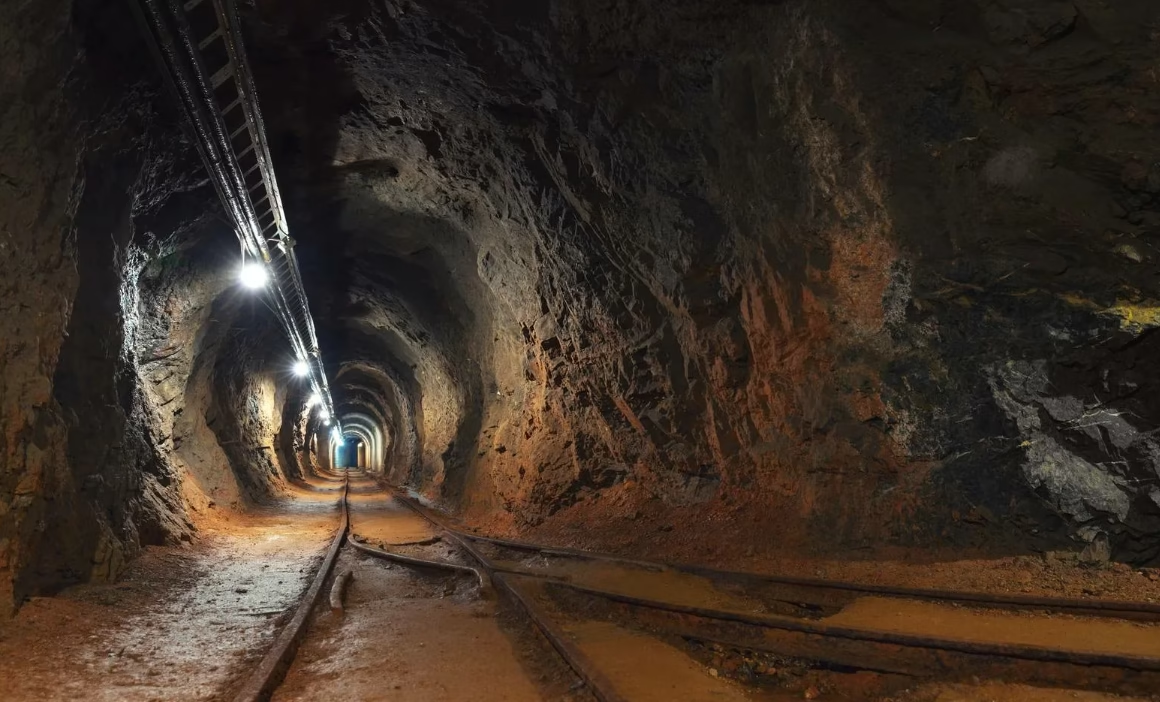
robust mining cable

TENAX-V (Prysmian/Draka) — стандарт немецких угольных комбайнов: Prysmian TENAX-V — торговая марка специализированного кабеля, разработанная для электропривода современных угольных комбайнов ("Comba" в немецкой терминологии, "Schräm" — резчик-погрузчик, "Continuous Miner" в англосаксонской терминологии). TENAX-V используется в подземных угольных шахтах Германии, Польши, Украины, России (исторически), а также в государствах Донбасса (Донецк, Луганск до 2022 года). Исторический контекст: в течение 1990–2010-х годов, крупные российские и украинские угольные операторы (Metabats, DTEK, Gazprom Dobycha Uchta) импортировали немецкие электрооборудование (включая комбайны Vogele, Krupp, Joy Global) вместе с их стандартными кабелями TENAX-V от Prysmian. Эта техника остаётся в операции, требуя замены электрических компонентов (кабели деградируют за 8–12 лет в условиях угольной шахты). Post-2022 (санкции): прямые закупки TENAX-V от Prysmian невозможны; операторы ищут русские эквиваленты.

TENAX-V NSSHCGEOEU-V: полная расшифровка немецкого угольного кабеля и русский КГЭШм эквивалент с концентрическим мониторингом

TENAX-V (Prysmian/Draka) — стандарт немецких угольных комбайнов: Prysmian TENAX-V — торговая марка специализированного кабеля, разработанная для электропривода современных угольных комбайнов (“Comba” в немецкой терминологии, “Schräm” — резчик-погрузчик, “Continuous Miner” в англосаксонской терминологии). TENAX-V используется в подземных угольных шахтах Германии, Польши, Украины, России (исторически), а также в государствах Донбасса (Донецк, Луганск до 2022 года). Исторический контекст: в течение 1990–2010-х годов, крупные российские и украинские угольные операторы (Metabats, DTEK, Gazprom Dobycha Uchta) импортировали немецкие электрооборудование (включая комбайны Vogele, Krupp, Joy Global) вместе с их стандартными кабелями TENAX-V от Prysmian. Эта техника остаётся в операции, требуя замены электрических компонентов (кабели деградируют за 8–12 лет в условиях угольной шахты). Post-2022 (санкции): прямые закупки TENAX-V от Prysmian невозможны; операторы ищут русские эквиваленты.
Воздействие санкционного режима на поставки Prysmian — геополитическая реальность (2022–2026): Кабели для высокоскоростной намотки Prysmian PROTOLON исторически поставлялись для: (1) портовой инфраструктуры (кары STS для контейнеров, системы автоматической обработки), (2) горнодобывающих операций (экскаваторы с ковшом, подъёмные системы), (3) возобновляемой энергетики (подводное распределение электроэнергии). До 2022 года: заводы Prysmian (Италия, Германия, Бельгия) поставляли по 350–450 €/метр, 12–16 недель доставка, надёжное выполнение контрактов. После 2022 года санкционная экосистема: (1) Ограничения ЕС на экспорт (кабели PROTOLON классифицированы как "двойного назначения", правительство Италии систематически отклоняет экспортные лицензии для не-НАТО регионов), (2) Срыв банковских каналов (система SWIFT альтернативы медленные, расчёты 4–8 месяцев vs 2 недели pre-sanctions), (3) Нехватка производственной мощности в Европе (приоритизируются заказчики ЕС/НАТО, запросы из не-западных регионов ждут 18+ месяцев), (4) Переоценка корпоративной политики (Prysmian: новые контракты не рассматриваются для России/Центральной Азии/Среднего Востока, существующие контракты приостановлены). Результат: PROTOLON фактически недоступна после 2022 года для развивающихся рынков/регионов, подверженных санкциям. Если каким-то образом получена: 24–36 месяцев доставки, стоимость 3–5× выше pre-sanctions из-за серых посредников.

Prysmian PROTOLON Санкционно-свободный эквивалент: Китайский кабель для высокоскоростной намотки DIN VDE 0250-813 6/10кВ

Воздействие санкционного режима на поставки Prysmian — геополитическая реальность (2022–2026): Кабели для высокоскоростной намотки Prysmian PROTOLON исторически поставлялись для: (1) портовой инфраструктуры (кары STS для контейнеров, системы автоматической обработки), (2) горнодобывающих операций (экскаваторы с ковшом, подъёмные системы), (3) возобновляемой энергетики (подводное распределение электроэнергии). До 2022 года: заводы Prysmian (Италия, Германия, Бельгия) поставляли по 350–450 €/метр, 12–16 недель доставка, надёжное выполнение контрактов. После 2022 года санкционная экосистема: (1) Ограничения ЕС на экспорт (кабели PROTOLON классифицированы как “двойного назначения”, правительство Италии систематически отклоняет экспортные лицензии для не-НАТО регионов), (2) Срыв банковских каналов (система SWIFT альтернативы медленные, расчёты 4–8 месяцев vs 2 недели pre-sanctions), (3) Нехватка производственной мощности в Европе (приоритизируются заказчики ЕС/НАТО, запросы из не-западных регионов ждут 18+ месяцев), (4) Переоценка корпоративной политики (Prysmian: новые контракты не рассматриваются для России/Центральной Азии/Среднего Востока, существующие контракты приостановлены). Результат: PROTOLON фактически недоступна после 2022 года для развивающихся рынков/регионов, подверженных санкциям. Если каким-то образом получена: 24–36 месяцев доставки, стоимость 3–5× выше pre-sanctions из-за серых посредников.
Sanctions Regime Impact on Prysmian Supply—Geopolitical Reality (2022–2026): Prysmian S.p.A. (Italian conglomerate, Tier-1 global cable manufacturer) flagship PROTOLON reeling cable historically supplied to: (1) Port infrastructure (STS cranes, RTG straddle carriers, automated container handling systems worldwide), (2) Mining operations (bucket-wheel excavators, dragline hoists, continuous mobile equipment), (3) Offshore renewable energy (subsea power distribution reels). Geographic sourcing pre-2022: Prysmian factories (Italy, Germany, Belgium), standard delivery 12–16 weeks, cost €350–450 per meter 6/10 kV. Post-2022 sanctions ecosystem: (1) EU export licensing restrictions (PROTOLON classified "dual-use" infrastructure-relevant product, Italian government export permits now routinely denied for non-NATO regions), (2) Banking channel disruption (SWIFT alternative payment systems slow/unreliable, transaction completion 4–8 months vs 2-week pre-sanctions settlement), (3) Italian/European factory capacity shortage (prioritizes EU/NATO/allied customers, non-Western demand indefinitely backlisted), (4) Geopolitical reassessment (Prysmian corporate policy: no new Russian/Central Asian/Middle Eastern contracts post-sanctions initiation, existing contracts suspended). Net result: PROTOLON effectively unavailable post-2022 for emerging markets/sanctions-exposed regions (Russia, Central Asia, parts of Africa, Iran, Venezuela). Delivery timeline if somehow obtained: 24–36 months, cost 3–5× pre-sanctions pricing due to gray-market intermediaries + financing premiums.

Prysmian PROTOLON Sanction-Free Equivalent: DIN VDE 0250-813 Chinese Anti-Torsion Reeling Cable 6/10kV

Sanctions Regime Impact on Prysmian Supply—Geopolitical Reality (2022–2026): Prysmian S.p.A. (Italian conglomerate, Tier-1 global cable manufacturer) flagship PROTOLON reeling cable historically supplied to: (1) Port infrastructure (STS cranes, RTG straddle carriers, automated container handling systems worldwide), (2) Mining operations (bucket-wheel excavators, dragline hoists, continuous mobile equipment), (3) Offshore renewable energy (subsea power distribution reels). Geographic sourcing pre-2022: Prysmian factories (Italy, Germany, Belgium), standard delivery 12–16 weeks, cost €350–450 per meter 6/10 kV. Post-2022 sanctions ecosystem: (1) EU export licensing restrictions (PROTOLON classified “dual-use” infrastructure-relevant product, Italian government export permits now routinely denied for non-NATO regions), (2) Banking channel disruption (SWIFT alternative payment systems slow/unreliable, transaction completion 4–8 months vs 2-week pre-sanctions settlement), (3) Italian/European factory capacity shortage (prioritizes EU/NATO/allied customers, non-Western demand indefinitely backlisted), (4) Geopolitical reassessment (Prysmian corporate policy: no new Russian/Central Asian/Middle Eastern contracts post-sanctions initiation, existing contracts suspended). Net result: PROTOLON effectively unavailable post-2022 for emerging markets/sanctions-exposed regions (Russia, Central Asia, parts of Africa, Iran, Venezuela). Delivery timeline if somehow obtained: 24–36 months, cost 3–5× pre-sanctions pricing due to gray-market intermediaries + financing premiums.
Казахстанские открытые медные рудники (особенно Bozshakol с глубокими карьерами и Aktogay в степной зоне) испытывают зимние температуры −35…−45°C регулярно. Снег и лёд покрывают оборудование и кабельные линии. Электросварочные экскаваторы (Shovel) и буровые установки продолжают работать 24/7, потому что остановка добычи неприемлема. Это означает, что кабели подвергаются динамической нагрузке (вытягивание и наматывание на барабан) при температурах, при которых их оболочка находится в хрупком состоянии. Опасность в том, что отказ не виден визуально до того, как произойдёт электрический пробой. Микротрещины образуются в первые часы эксплуатации, но вода и электрический ток попадают в них только через 12–48 часов. Затем наступает внезапный отказ: слышен треск электрической дуги, видна вспышка, оборудование отключается, и вся подстанция теряет питание.

Glass Transition Trap: Why Standard VDE 0250 Cables Shatter at −40°C in Kazakhstan Copper MinesArctic-Grade (N)TSCGEWÖU Polymer Engineering Deep Dive

Казахстанские открытые медные рудники (особенно Bozshakol с глубокими карьерами и Aktogay в степной зоне) испытывают зимние температуры −35…−45°C регулярно. Снег и лёд покрывают оборудование и кабельные линии. Электросварочные экскаваторы (Shovel) и буровые установки продолжают работать 24/7, потому что остановка добычи неприемлема. Это означает, что кабели подвергаются динамической нагрузке (вытягивание и наматывание на барабан) при температурах, при которых их оболочка находится в хрупком состоянии. Опасность в том, что отказ не виден визуально до того, как произойдёт электрический пробой. Микротрещины образуются в первые часы эксплуатации, но вода и электрический ток попадают в них только через 12–48 часов. Затем наступает внезапный отказ: слышен треск электрической дуги, видна вспышка, оборудование отключается, и вся подстанция теряет питание.
Major Projects and Players: Central Asia's copper mining sector includes massive operations: (1) KAZ Minerals' Bozshakol, Saryshagan, and Aktogay projects in Kazakhstan, (2) Uzbek Copper's operations in Uzbekistan, (3) International consortium projects (Rio Tinto, Sumitomo, Japanese/European partnerships). These operations are characterized by: modern infrastructure, international EPC (Engineering-Procurement-Construction) contractor involvement, and explicit AS/NZS 1802 compliance requirements in RFQ specifications. 中亚铜矿项目包括大规模运营:(1)哈萨克斯坦KAZ矿物公司的Bozshakol、Saryshagan和Aktogay项目,(2)乌兹别克斯坦铜矿公司的运营,(3)国际联合体项目(Rio Tinto、住友、日本/欧洲合作)。这些运营的特点是:现代基础设施、国际EPC承包商参与、RFQ规范中明确的AS/NZS 1802合规要求。 RFQ Specification Trend: Central Asian buyers increasingly specify AS/NZS 1802 Type 241 cables rather than simply "equivalent" designs, because they understand the cable is for long-term (15–20 year) asset life and international operational continuity. Unlike developing-market buyers who may accept price-optimized designs, Central Asian EPC contractors demand proven, certified-equivalent cables that can be serviced anywhere globally. Sourcing Challenge for Asian Manufacturers: Most Australian cable manufacturers cannot meet the 12–18 month continuous order volumes that Central Asian projects demand (often 500–2,000 km of cable total). This creates a market opportunity: Chinese and Indian manufacturers can undercut Australian prices by 25–40% while maintaining AS/NZS compliance—IF they can credibly prove factory-direct equivalence.

Central Asia Mining RFQ: Factory-Direct Equivalent to Australian Type 241 Cables for Copper Projects

Major Projects and Players: Central Asia’s copper mining sector includes massive operations: (1) KAZ Minerals’ Bozshakol, Saryshagan, and Aktogay projects in Kazakhstan, (2) Uzbek Copper’s operations in Uzbekistan, (3) International consortium projects (Rio Tinto, Sumitomo, Japanese/European partnerships). These operations are characterized by: modern infrastructure, international EPC (Engineering-Procurement-Construction) contractor involvement, and explicit AS/NZS 1802 compliance requirements in RFQ specifications. 中亚铜矿项目包括大规模运营:(1)哈萨克斯坦KAZ矿物公司的Bozshakol、Saryshagan和Aktogay项目,(2)乌兹别克斯坦铜矿公司的运营,(3)国际联合体项目(Rio Tinto、住友、日本/欧洲合作)。这些运营的特点是:现代基础设施、国际EPC承包商参与、RFQ规范中明确的AS/NZS 1802合规要求。 RFQ Specification Trend: Central Asian buyers increasingly specify AS/NZS 1802 Type 241 cables rather than simply “equivalent” designs, because they understand the cable is for long-term (15–20 year) asset life and international operational continuity. Unlike developing-market buyers who may accept price-optimized designs, Central Asian EPC contractors demand proven, certified-equivalent cables that can be serviced anywhere globally. Sourcing Challenge for Asian Manufacturers: Most Australian cable manufacturers cannot meet the 12–18 month continuous order volumes that Central Asian projects demand (often 500–2,000 km of cable total). This creates a market opportunity: Chinese and Indian manufacturers can undercut Australian prices by 25–40% while maintaining AS/NZS compliance—IF they can credibly prove factory-direct equivalence.
The surface of the Oyu Tolgoi site in southern Mongolia regularly experiences winter temperatures dropping to -35°C to -45°C. Underground development workings in ventilation shafts and transition zones between the deep underground operations (where temperatures warm to 15–20°C due to geothermal gradient) and surface facilities experience the worst of both worlds: temperatures fluctuating between -40°C and +10°C within hours as equipment movements create temporary temperature swings. 奥尤陶勒盖位于蒙古南部,地表冬季温度经常降至-35°C至-45°C。通风竖井和地下作业(深部地温升至15-20°C)与地面设施之间过渡区域的地下开发工作经历最坏的情况:数小时内温度在-40°C和+10°C之间波动,因为设备移动产生临时温度波动。 Cable Deployment Locations: Arctic Grade Type 241 11/11kV 3x50mm² cables are deployed in four primary locations: (1) Surface cable runs feeding portable substations in the open pit winter environment (-40°C sustained), (2) Ventilation shaft risers where cables experience extreme temperature gradients, (3) Underground main feeder connections to load-haul-dump (LHD) equipment in transition zones (fluctuating -20°C to +15°C), (4) Mobile substation interconnects requiring frequent reeling and repositioning in arctic conditions.

Oyu Tolgoi Extreme Conditions: Arctic Grade Type 241 11/11kV 3x50mm² Field Operations, Failure Prevention, and Emergency Protocols

The surface of the Oyu Tolgoi site in southern Mongolia regularly experiences winter temperatures dropping to -35°C to -45°C. Underground development workings in ventilation shafts and transition zones between the deep underground operations (where temperatures warm to 15–20°C due to geothermal gradient) and surface facilities experience the worst of both worlds: temperatures fluctuating between -40°C and +10°C within hours as equipment movements create temporary temperature swings. 奥尤陶勒盖位于蒙古南部,地表冬季温度经常降至-35°C至-45°C。通风竖井和地下作业(深部地温升至15-20°C)与地面设施之间过渡区域的地下开发工作经历最坏的情况:数小时内温度在-40°C和+10°C之间波动,因为设备移动产生临时温度波动。 Cable Deployment Locations: Arctic Grade Type 241 11/11kV 3x50mm² cables are deployed in four primary locations: (1) Surface cable runs feeding portable substations in the open pit winter environment (-40°C sustained), (2) Ventilation shaft risers where cables experience extreme temperature gradients, (3) Underground main feeder connections to load-haul-dump (LHD) equipment in transition zones (fluctuating -20°C to +15°C), (4) Mobile substation interconnects requiring frequent reeling and repositioning in arctic conditions.
To understand why extruded bedding is not merely a preference but an absolute requirement for flameproof (Ex d) cable systems, you must first grasp a counterintuitive physical reality: in an explosive atmosphere, a cable's internal structure is as critical to safety as its external armor. The voids, gaps, and air spaces that exist naturally between conductors during manufacturing are not benign features—they are potential pathways for flame propagation and explosive gas migration that can transform a localized fault into a catastrophic detonation. 要理解为什么挤包垫层不仅仅是一个偏好,而是防爆(Ex d)电缆系统的绝对要求,您必须首先掌握一个违反直觉的物理现实:在爆炸性气体环境中,电缆的内部结构与其外部铠装对安全的重要性一样关键。制造过程中自然存在于导体之间的间隙、缝隙和空气空间不是良性的特征——它们是火焰蔓延和爆炸性气体迁移的潜在通道,可能将局部故障转变为灾难性爆炸。 Picture an underground coal mine where methane-air mixture hovers at a concentration just below the Lower Explosive Limit (LEL) in certain drifts. The mine is equipped with continuous monitoring and ventilation to prevent accumulation, but a temporary variance in airflow creates a transient hazardous zone. Simultaneously, an electrical fault occurs inside a cable—perhaps insulation breakdown or a conductor-to-armor short circuit. The fault generates an arc and localized heat inside the cable, potentially igniting the explosive atmosphere within the machine it powers. The question is not whether the hazardous atmosphere will contact the arc; the question is how quickly it will propagate and whether it can escape confinement to detonate larger volumes of gas elsewhere in the mine.

Flameproof (Ex d) Systems: Why AS/NZS 1972 Type 3S Requires Extruded Bedding for Hazardous Glands

To understand why extruded bedding is not merely a preference but an absolute requirement for flameproof (Ex d) cable systems, you must first grasp a counterintuitive physical reality: in an explosive atmosphere, a cable’s internal structure is as critical to safety as its external armor. The voids, gaps, and air spaces that exist naturally between conductors during manufacturing are not benign features—they are potential pathways for flame propagation and explosive gas migration that can transform a localized fault into a catastrophic detonation. 要理解为什么挤包垫层不仅仅是一个偏好,而是防爆(Ex d)电缆系统的绝对要求,您必须首先掌握一个违反直觉的物理现实:在爆炸性气体环境中,电缆的内部结构与其外部铠装对安全的重要性一样关键。制造过程中自然存在于导体之间的间隙、缝隙和空气空间不是良性的特征——它们是火焰蔓延和爆炸性气体迁移的潜在通道,可能将局部故障转变为灾难性爆炸。 Picture an underground coal mine where methane-air mixture hovers at a concentration just below the Lower Explosive Limit (LEL) in certain drifts. The mine is equipped with continuous monitoring and ventilation to prevent accumulation, but a temporary variance in airflow creates a transient hazardous zone. Simultaneously, an electrical fault occurs inside a cable—perhaps insulation breakdown or a conductor-to-armor short circuit. The fault generates an arc and localized heat inside the cable, potentially igniting the explosive atmosphere within the machine it powers. The question is not whether the hazardous atmosphere will contact the arc; the question is how quickly it will propagate and whether it can escape confinement to detonate larger volumes of gas elsewhere in the mine.
The nominal weight of a Type 3S 3.3kV 3x240mm² steel wire armoured cable is approximately 13,200 to 13,800 kilograms per kilometer (kg/km), or roughly 13.2 to 13.8 kilograms per linear meter. For practical planning purposes, engineers working with Feichun's Type 3S 3x240mm² product should design logistics and installation equipment assuming 13.5 kg/m as the midpoint value. This is not a lightweight cable—a single 1,000-meter feeder run will weigh 13,500 kilograms (13.5 tonnes), demanding heavy-duty mechanical handling equipment and careful transport planning from the moment the cable leaves the manufacturing facility. Type 3S 3.3kV 3x240mm² 钢丝铠装电缆的标称重量约为 13,200 至 13,800 千克/公里 (kg/km),或粗略计算每线性米约 13.2 至 13.8 公斤。 为了实际规划目的,与 Feichun 的 Type 3S 3x240mm² 产品合作的工程师应该以 13.5 kg/m 作为中点值来设计物流和安装设备。这不是一根轻型电缆——单个 1,000 米的馈电敷设将重达 13,500 公斤(13.5 吨),从电缆离开制造厂的那一刻起就需要重型机械处理设备和仔细的运输规划。

Weight & Logistics: Calculating kg/km for Heavy-Duty Type 3S 3.3kV 3x240mm² Steel Wire Armoured Cables

The nominal weight of a Type 3S 3.3kV 3x240mm² steel wire armoured cable is approximately 13,200 to 13,800 kilograms per kilometer (kg/km), or roughly 13.2 to 13.8 kilograms per linear meter. For practical planning purposes, engineers working with Feichun’s Type 3S 3x240mm² product should design logistics and installation equipment assuming 13.5 kg/m as the midpoint value. This is not a lightweight cable—a single 1,000-meter feeder run will weigh 13,500 kilograms (13.5 tonnes), demanding heavy-duty mechanical handling equipment and careful transport planning from the moment the cable leaves the manufacturing facility. Type 3S 3.3kV 3x240mm² 钢丝铠装电缆的标称重量约为 13,200 至 13,800 千克/公里 (kg/km),或粗略计算每线性米约 13.2 至 13.8 公斤。 为了实际规划目的,与 Feichun 的 Type 3S 3x240mm² 产品合作的工程师应该以 13.5 kg/m 作为中点值来设计物流和安装设备。这不是一根轻型电缆——单个 1,000 米的馈电敷设将重达 13,500 公斤(13.5 吨),从电缆离开制造厂的那一刻起就需要重型机械处理设备和仔细的运输规划。
Sandvik Load-Haul-Dump (LHD) underground loaders represent the workhorse of modern Australian coal mining operations. Models including the LH514E, LH621E, and larger variants operate 24/7 in underground environments, continuously loading ore or coal into fixed haulage systems. These electrically powered machines (increasingly replacing diesel engines) require reliable power delivery through trailing cables that can withstand continuous reeling, mechanical shock from ore impact, and the harsh underground environment. 山特维克装运卸(LHD)井下铲运机代表现代澳洲煤矿运营的主力军。包括LH514E、LH621E和更大型号的车型在地下环境中24/7运行,持续将矿石或煤炭装入固定运输系统。这些电动机械(越来越多地替代柴油发动机)需要可靠的电力传输,通过能够承受连续卷筒、矿石冲击机械冲击和恶劣地下环境的拖曳电缆。

Sandvik Underground Loaders: Sourcing 3.3/3.3kV European Trailing Cables for Australian Coal Mines

Sandvik Load-Haul-Dump (LHD) underground loaders represent the workhorse of modern Australian coal mining operations. Models including the LH514E, LH621E, and larger variants operate 24/7 in underground environments, continuously loading ore or coal into fixed haulage systems. These electrically powered machines (increasingly replacing diesel engines) require reliable power delivery through trailing cables that can withstand continuous reeling, mechanical shock from ore impact, and the harsh underground environment. 山特维克装运卸(LHD)井下铲运机代表现代澳洲煤矿运营的主力军。包括LH514E、LH621E和更大型号的车型在地下环境中24/7运行,持续将矿石或煤炭装入固定运输系统。这些电动机械(越来越多地替代柴油发动机)需要可靠的电力传输,通过能够承受连续卷筒、矿石冲击机械冲击和恶劣地下环境的拖曳电缆。
Yes, a highly capable cable manufacturer can absolutely engineer generic (N)TSCGEWÖU flexible reeling cables to match or even exceed the 20/35kV (36kV maximum equipment voltage) rating of Nexans' RHEYFIRM® brand premium products. However, the critical phrase here is "highly capable manufacturer"—not every cable producer has the technical depth, quality control infrastructure, and engineering expertise to successfully execute a 20/35kV design. The fundamental cable construction—Class 5 tinned copper conductors, semi-conductive rubber inner and outer layers, EPR (ethylene propylene rubber) insulation, and a heavy-duty CPE or chloroprene outer sheath—is well understood and exists within the established scope of DIN VDE 0250-813 mining cable standards. While the traditional (N)TSCGEWÖU specification typically covers voltages up to 18/30kV, the engineering principles that govern the construction are equally applicable to 20/35kV ratings. The transition from 18/30kV to 20/35kV is not a revolutionary leap requiring entirely new materials or manufacturing processes—it is an evolutionary engineering optimization that competent manufacturers have been executing for decades. What distinguishes a genuinely compliant 20/35kV generic (N)TSCGEWÖU from a merely relabeled 18/30kV cable masquerading as 20/35kV is the application of three fundamental engineering disciplines. First, the insulation thickness must be increased according to rigorous electrical stress calculations based on IEC 60502-2 high-voltage standards, accounting for the higher electrical field strength that 20/35kV imposes on the dielectric material. Second, the semi-conductive layers must be engineered with exquisite precision to control the electric field distribution and prevent partial discharge (PD) inception, which is the primary failure mechanism for high-voltage cables subjected to continuous stress. Third, the outer sheath material must be selected and formulated from premium compounds with superior mechanical durability to withstand not only the normal environmental stresses of mining operations but also any electrical stress-related damage that might be induced by the higher voltage rating. The answer, therefore, is yes—but only when manufacturers invest in the engineering rigor and quality control discipline that the 20/35kV rating genuinely demands.

RHEYFIRM® 30kV vs. Generic (N)TSCGEWÖU: Can Standard Manufacturers Match Nexans’ 20/35kV Rating?

Yes, a highly capable cable manufacturer can absolutely engineer generic (N)TSCGEWÖU flexible reeling cables to match or even exceed the 20/35kV (36kV maximum equipment voltage) rating of Nexans’ RHEYFIRM® brand premium products. However, the critical phrase here is “highly capable manufacturer”—not every cable producer has the technical depth, quality control infrastructure, and engineering expertise to successfully execute a 20/35kV design. The fundamental cable construction—Class 5 tinned copper conductors, semi-conductive rubber inner and outer layers, EPR (ethylene propylene rubber) insulation, and a heavy-duty CPE or chloroprene outer sheath—is well understood and exists within the established scope of DIN VDE 0250-813 mining cable standards. While the traditional (N)TSCGEWÖU specification typically covers voltages up to 18/30kV, the engineering principles that govern the construction are equally applicable to 20/35kV ratings. The transition from 18/30kV to 20/35kV is not a revolutionary leap requiring entirely new materials or manufacturing processes—it is an evolutionary engineering optimization that competent manufacturers have been executing for decades. What distinguishes a genuinely compliant 20/35kV generic (N)TSCGEWÖU from a merely relabeled 18/30kV cable masquerading as 20/35kV is the application of three fundamental engineering disciplines. First, the insulation thickness must be increased according to rigorous electrical stress calculations based on IEC 60502-2 high-voltage standards, accounting for the higher electrical field strength that 20/35kV imposes on the dielectric material. Second, the semi-conductive layers must be engineered with exquisite precision to control the electric field distribution and prevent partial discharge (PD) inception, which is the primary failure mechanism for high-voltage cables subjected to continuous stress. Third, the outer sheath material must be selected and formulated from premium compounds with superior mechanical durability to withstand not only the normal environmental stresses of mining operations but also any electrical stress-related damage that might be induced by the higher voltage rating. The answer, therefore, is yes—but only when manufacturers invest in the engineering rigor and quality control discipline that the 20/35kV rating genuinely demands.
Type MMV 8kV 3/C #2 AWG marine and mining medium voltage cable is designed to withstand brief exposure to 250°C (482°F) emergency fault temperatures, specifically for fault durations not exceeding 5 seconds as defined in IEEE 45 and IEC 60092-502 international standards. This 250°C specification represents the absolute maximum temperature that the EPR (ethylene propylene rubber) insulation can tolerate without experiencing irreversible chemical degradation, mechanical property loss, or immediate failure. The cable will remain mechanically and electrically intact during this emergency thermal exposure provided the fault is cleared by protective devices (circuit breakers, fuses, or automatic shutdown systems) before the five-second threshold is exceeded. However, this specification does not mean the cable is unaffected by this thermal stress—even brief exposure to 250°C causes permanent changes to the EPR insulation chemistry, partial annealing of the tinned copper conductors, and measurable loss of mechanical properties. A cable that has experienced a 250°C fault event and survived instantaneous rupture is not necessarily suitable for continued service at full ampacity without comprehensive testing and damage assessment. Understanding what the 250°C specification guarantees and what it does not guarantee is essential for engineers making repair versus replacement decisions following fault events in mining and offshore applications.

Short-Circuit Temperature Limit: Can Type MMV 8kV 3/C #2 AWG Withstand a 250°C Fault?

Type MMV 8kV 3/C #2 AWG marine and mining medium voltage cable is designed to withstand brief exposure to 250°C (482°F) emergency fault temperatures, specifically for fault durations not exceeding 5 seconds as defined in IEEE 45 and IEC 60092-502 international standards. This 250°C specification represents the absolute maximum temperature that the EPR (ethylene propylene rubber) insulation can tolerate without experiencing irreversible chemical degradation, mechanical property loss, or immediate failure. The cable will remain mechanically and electrically intact during this emergency thermal exposure provided the fault is cleared by protective devices (circuit breakers, fuses, or automatic shutdown systems) before the five-second threshold is exceeded. However, this specification does not mean the cable is unaffected by this thermal stress—even brief exposure to 250°C causes permanent changes to the EPR insulation chemistry, partial annealing of the tinned copper conductors, and measurable loss of mechanical properties. A cable that has experienced a 250°C fault event and survived instantaneous rupture is not necessarily suitable for continued service at full ampacity without comprehensive testing and damage assessment. Understanding what the 250°C specification guarantees and what it does not guarantee is essential for engineers making repair versus replacement decisions following fault events in mining and offshore applications.
Type SHD-GC 3/C #1 AWG 8kV trailing cable is approximately 0.410 Ohms/km at 20°C reference temperature for a single conductor, calculated from the copper's material resistivity combined with the #1 AWG conductor cross-section (approximately 42.4 mm² or 53,486 circular mils). This resistance value increases to approximately 0.495 Ohms/km at 90°C operating temperature due to copper's positive temperature coefficient of resistance. For a complete three-phase circuit using this cable type, the total circuit resistance including all three phase conductors but excluding the ground return path is approximately 0.410 Ohms/km at 20°C or 0.495 Ohms/km at 90°C. When operating a mine shovel or dragline drawing 150–160 amperes over a typical 1,000-meter (1 km) cable run from the mine substation to the equipment, the three-phase voltage drop across this cable is approximately 55–70 volts at the reference condition, representing a drop of roughly 0.75–1.0% from the 8,000-volt nominal supply. This voltage drop magnitude is acceptable for most mining equipment applications and remains within typical power system design standards that permit up to 2–3% voltage drop on secondary feeder circuits. The physical mechanism behind this resistance is the collision of free electrons within the copper lattice structure, where random thermal motion of atoms creates an effective "friction" that opposes electron flow, converting electrical energy into heat at a rate proportional to I²R.

Voltage Drop Calculation: What is the DC resistance (Ohms/km) for Type SHD-GC 3/C #1 AWG 8kV trailing cable? 

Type SHD-GC 3/C #1 AWG 8kV trailing cable is approximately 0.410 Ohms/km at 20°C reference temperature for a single conductor, calculated from the copper’s material resistivity combined with the #1 AWG conductor cross-section (approximately 42.4 mm² or 53,486 circular mils). This resistance value increases to approximately 0.495 Ohms/km at 90°C operating temperature due to copper’s positive temperature coefficient of resistance. For a complete three-phase circuit using this cable type, the total circuit resistance including all three phase conductors but excluding the ground return path is approximately 0.410 Ohms/km at 20°C or 0.495 Ohms/km at 90°C. When operating a mine shovel or dragline drawing 150–160 amperes over a typical 1,000-meter (1 km) cable run from the mine substation to the equipment, the three-phase voltage drop across this cable is approximately 55–70 volts at the reference condition, representing a drop of roughly 0.75–1.0% from the 8,000-volt nominal supply. This voltage drop magnitude is acceptable for most mining equipment applications and remains within typical power system design standards that permit up to 2–3% voltage drop on secondary feeder circuits. The physical mechanism behind this resistance is the collision of free electrons within the copper lattice structure, where random thermal motion of atoms creates an effective “friction” that opposes electron flow, converting electrical energy into heat at a rate proportional to I²R.