Impact Resistant Cable

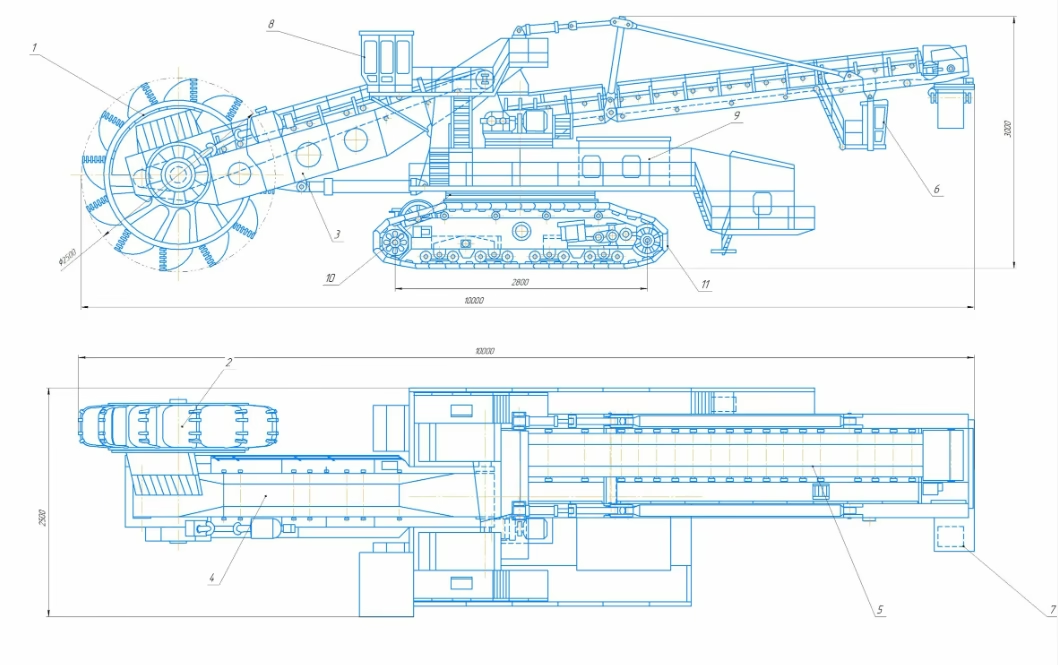
High Tension (HT) cables are specialized power distribution cables designed for reel-mounted applications in port equipment—primarily unloaders, stackers, reclaimers, and gantry cranes. The term "high tension" does not refer to electrical voltage (HT cables are 0.6/1 kV, standard port equipment voltage); instead, it refers to the mechanical tension and stress that these cables experience when wound on reels and unwound during equipment operation. HT-PNCT cables serve as the primary power supply line running from the equipment's fixed power source (shore power or generator) to the reel-mounted slip ring assembly on moving equipment. During operation, these cables are repeatedly wound onto and unwound from rotating reels, experiencing: • Tensile stress from the cable's own weight as it hangs from the reel to the equipment • Bending stress each time the cable wraps around the reel drum • Mechanical abrasion from friction against the reel surface and cable guides • Environmental exposure to saltwater spray, UV radiation, and thermal cycling Standard festoon cables (like FC-PNCT) are optimized for relatively stationary installations. HT-PNCT cables are engineered specifically for reel-wound, dynamic applications where these mechanical stresses dominate the cable's service life.

HT-PNCT High Tension Cables

High Tension (HT) cables are specialized power distribution cables designed for reel-mounted applications in port equipment—primarily unloaders, stackers, reclaimers, and gantry cranes. The term “high tension” does not refer to electrical voltage (HT cables are 0.6/1 kV, standard port equipment voltage); instead, it refers to the mechanical tension and stress that these cables experience when wound on reels and unwound during equipment operation. HT-PNCT cables serve as the primary power supply line running from the equipment’s fixed power source (shore power or generator) to the reel-mounted slip ring assembly on moving equipment. During operation, these cables are repeatedly wound onto and unwound from rotating reels, experiencing: • Tensile stress from the cable’s own weight as it hangs from the reel to the equipment • Bending stress each time the cable wraps around the reel drum • Mechanical abrasion from friction against the reel surface and cable guides • Environmental exposure to saltwater spray, UV radiation, and thermal cycling Standard festoon cables (like FC-PNCT) are optimized for relatively stationary installations. HT-PNCT cables are engineered specifically for reel-wound, dynamic applications where these mechanical stresses dominate the cable’s service life.
Portable cords in industrial settings face relentless abuse on a daily basis. From construction sites where cables are run over by heavy equipment, to manufacturing facilities where they're exposed to oils and chemicals, to mining operations with constant mechanical stress, these cables must endure conditions that would destroy ordinary extension cords within weeks. The demand is clear: cables must be both exceptionally heavy-duty and highly flexible to handle rough and continuous applications without failure. (工业环境中的便携式电缆每天都面临无情的滥用。从电缆被重型设备碾压的建筑工地,到暴露于油和化学品的制造设施,再到持续机械应力的采矿作业,这些电缆必须承受在几周内就会摧毁普通延长线的条件。需求很明确:电缆必须既异常坚固又高度柔韧,以应对粗暴和持续的应用而不失效。)

TPC Wire Super-Trex Equivalent: Heavy Duty Cord

Portable cords in industrial settings face relentless abuse on a daily basis. From construction sites where cables are run over by heavy equipment, to manufacturing facilities where they’re exposed to oils and chemicals, to mining operations with constant mechanical stress, these cables must endure conditions that would destroy ordinary extension cords within weeks. The demand is clear: cables must be both exceptionally heavy-duty and highly flexible to handle rough and continuous applications without failure. (工业环境中的便携式电缆每天都面临无情的滥用。从电缆被重型设备碾压的建筑工地,到暴露于油和化学品的制造设施,再到持续机械应力的采矿作业,这些电缆必须承受在几周内就会摧毁普通延长线的条件。需求很明确:电缆必须既异常坚固又高度柔韧,以应对粗暴和持续的应用而不失效。)
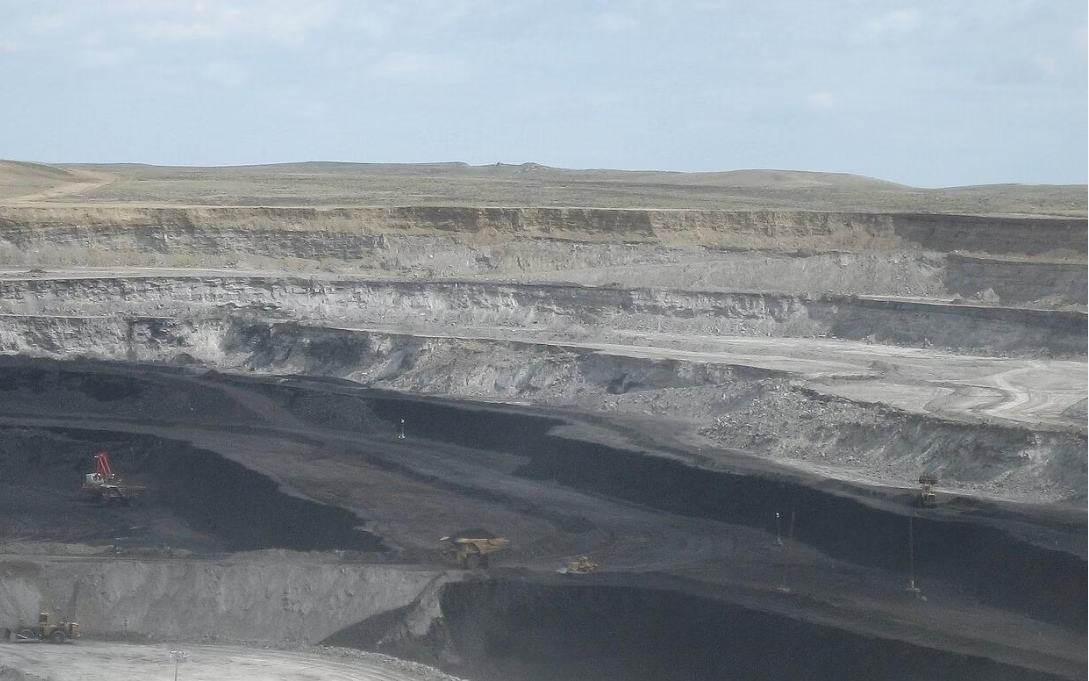
Mining operations depend on extensive underground cable networks to distribute power, transmit control signals, and maintain communication systems across vast subterranean infrastructure. These buried cable installations face unique environmental challenges that differ significantly from surface installations, and among the most destructive threats are biological attacks from termites and rodents. While these creatures evolved to consume natural materials, modern cable construction using synthetic polymers can inadvertently attract or fail to deter these persistent pests, leading to catastrophic system failures that jeopardize both operational continuity and worker safety.

Termite & Rodent Proof Mining Cables: Nylon Sheath vs. Steel Tape Armor Options

Mining operations depend on extensive underground cable networks to distribute power, transmit control signals, and maintain communication systems across vast subterranean infrastructure. These buried cable installations face unique environmental challenges that differ significantly from surface installations, and among the most destructive threats are biological attacks from termites and rodents. While these creatures evolved to consume natural materials, modern cable construction using synthetic polymers can inadvertently attract or fail to deter these persistent pests, leading to catastrophic system failures that jeopardize both operational continuity and worker safety.
In the demanding world of surface mining operations, dragline excavators and mobile material handling equipment rely on high-voltage flexible cables to deliver continuous electrical power as these massive machines traverse mining sites. The choice between Type 450 and Type 455 cables manufactured to AS/NZS 2802:2000 standards represents a critical engineering decision that directly impacts equipment reliability, operational costs, and cable service life. Both cable types are designed for voltage ratings from 3.3 kilovolts to 33 kilovolts, with operational temperatures spanning from negative 25 degrees Celsius to positive 90 degrees Celsius, making them suitable for the diverse environmental conditions encountered in Australian mining operations

Dragline Cables 22kV/33kV: Type 450 vs Type 455 — Which Design Delivers Superior Longevity for Reeling and Trailing Applications?

In the demanding world of surface mining operations, dragline excavators and mobile material handling equipment rely on high-voltage flexible cables to deliver continuous electrical power as these massive machines traverse mining sites. The choice between Type 450 and Type 455 cables manufactured to AS/NZS 2802:2000 standards represents a critical engineering decision that directly impacts equipment reliability, operational costs, and cable service life. Both cable types are designed for voltage ratings from 3.3 kilovolts to 33 kilovolts, with operational temperatures spanning from negative 25 degrees Celsius to positive 90 degrees Celsius, making them suitable for the diverse environmental conditions encountered in Australian mining operations
Before we dive into the technical differences between Type 241 and Type 260 cables, let's take a moment to understand shuttle cars themselves and why cable selection matters so much for these critical mining vehicles. Think of shuttle cars as the workhorses of underground coal mining operations. These are large, heavy-duty battery-electric or trailing-cable powered vehicles designed to transport coal from the continuous miner working at the coal face to either feeder breakers, mine cars, or belt conveyor systems located some distance away. The shuttle car essentially acts as a mobile bridge between the mining equipment that's actively cutting coal and the permanent conveying infrastructure that will carry that coal to the surface. 在深入了解241型和260型电缆之间的技术差异之前,让我们花点时间了解穿梭车本身,以及为什么电缆选择对这些关键采矿车辆如此重要。可以将穿梭车视为地下煤矿作业的主力。这些是大型重型电池电动或拖缆供电车辆,设计用于将煤炭从在煤层工作面工作的连续采煤机运输到位于一定距离外的给料破碎机、矿车或带式输送机系统。穿梭车本质上充当正在切割煤炭的采矿设备与将煤炭运送到地面的永久输送基础设施之间的移动桥梁。

Type 241 vs. Type 260 Mining Cables: Understanding Construction Differences and Application Selection for Shuttle Car Operations

Before we dive into the technical differences between Type 241 and Type 260 cables, let’s take a moment to understand shuttle cars themselves and why cable selection matters so much for these critical mining vehicles. Think of shuttle cars as the workhorses of underground coal mining operations. These are large, heavy-duty battery-electric or trailing-cable powered vehicles designed to transport coal from the continuous miner working at the coal face to either feeder breakers, mine cars, or belt conveyor systems located some distance away. The shuttle car essentially acts as a mobile bridge between the mining equipment that’s actively cutting coal and the permanent conveying infrastructure that will carry that coal to the surface. 在深入了解241型和260型电缆之间的技术差异之前,让我们花点时间了解穿梭车本身,以及为什么电缆选择对这些关键采矿车辆如此重要。可以将穿梭车视为地下煤矿作业的主力。这些是大型重型电池电动或拖缆供电车辆,设计用于将煤炭从在煤层工作面工作的连续采煤机运输到位于一定距离外的给料破碎机、矿车或带式输送机系统。穿梭车本质上充当正在切割煤炭的采矿设备与将煤炭运送到地面的永久输送基础设施之间的移动桥梁。
Control Flex cables are specialized multi-core cables designed for measuring, monitoring, and controlling machinery in industrial environments. These cables are essential components in manufacturing facilities, engineering installations, power stations, heating/air conditioning systems, and various electrical control applications. The three main types offered—CY (Copper-Screened), SY (Steel-Braided), and YY (Unscreened)—each provide distinct advantages depending on the application requirements for electromagnetic interference (EMI) protection, mechanical protection, or cost-effective basic control functionality.

Complete Guide to CY, SY & YY Control Flex Cables

P2CY cable, P3CY cable, P4CY cable, P5CY cable, P7CY cable, P3SY cable, P4SY cable, P5SY cable, P2YY cable, P3YY cable, P4YY cable, P5YY cable, P7YY cable, P12YY cable, CY control cable, SY control cable, YY control cable, CY screened cable, SY steel braided cable, YY unscreened cable, copper braid screen, galvanised steel braid, BS EN 50525-2-11, IEC 60332-1, IEC 60228, VDE 0293, screened control cable, shielded control cable, EMI shielding cable, RFI protection cable, signal transmission cable, data transmission cable, manufacturing control cable, industrial control cable, machinery monitoring cable, HVAC control cable, power station cable, PLC cable, automation cable, instrumentation cable, multicore control cable, fine stranded copper, 300/500V cable, flame retardant cable, mechanical protection cable, abrasion resistant cable, 2 core control, 3 core control, 4 core control, 5 core control, 7 core control, 12 core control, 0.75mm control cable, 1.5mm control cable, 2.5mm control cable, 控制電纜, 銅屏蔽電纜, 鋼絲編織電纜, 工業控制電纜, 安徽飛純電纜
BS6708, mining cable, quarry cable, trailing cable, EPR cable, SWA cable, coal cutter cable, excavator cable, 礦用電纜, 採石場電纜, 拖曳電纜

What is BS6708 Cable?

British Standard BS6708 sets out the requirements for flexible trailing cables where used in mining operations and quarries. These cables are often referred to as trailing cables, quarry cables, or auxiliary cables and have applications with a wide range of dynamic mining equipment including excavators, coal-cutters, crushing machines, and shuttle cars. flexible trailing cable, mine cable, EPR mining cable, SWA mining cable, chloroprene cable, coal cutter cable, excavator cable, shuttle car cable, crushing machine cable, coal face cable, Type 7 mining cable, Type 7M cable, Type 7S cable, Type 11 cable, Type 20 cable, Type 21 cable, Type 307 cable, Type 331 cable, Type 621 cable, Type 631 cable, 640/1100V mining cable, 1.9/3.3kV mining cable
heavy-duty rubber cables represent a critical category for applications requiring exceptional mechanical strength, flexibility, and environmental resistance. This comprehensive technical guide examines three closely related cable types that dominate international markets for portable power transmission: the Chinese standard GB/T 5013 YC (Heavy-Duty General Rubber Cable) rated at 450/750V, the enhanced YCW variant with oil and weather resistance, and the European harmonized H07RN-F cable that serves as the international equivalent.

GB/T 5013 YC & YCW Heavy-Duty Rubber Cables and H07RN-F: Comprehensive Technical Analysis

heavy-duty rubber cables represent a critical category for applications requiring exceptional mechanical strength, flexibility, and environmental resistance. This comprehensive technical guide examines three closely related cable types that dominate international markets for portable power transmission: the Chinese standard GB/T 5013 YC (Heavy-Duty General Rubber Cable) rated at 450/750V, the enhanced YCW variant with oil and weather resistance, and the European harmonized H07RN-F cable that serves as the international equivalent.
PROTOMONT EMV-FC (N)SSHCOEU 1 kV: Technical Guide for Variable Frequency Drive Cables with EMC Shielding and Submersible Capability for Mining Material Handling Equipment

PROTOMONT EMV-FC (N)SSHCOEU 1 kV

PROTOMONT EMV-FC cable, SSHCOEU VFD cable, variable frequency drive cable, frequency converter cable, EMC shielded motor cable, submersible mining cable, cable boom power, upper lower car connection, VFD mining cable
TENAX-HTT (N)TSCGEWOEU 10 kV – 30 kV: Technical Guide for Extreme Duty High-Voltage Mining Cables for Underground Transformers and Tunneling Equipment

TENAX-HTT (N)TSCGEWOEU 10 kV – 30 kV

TENAX-HTT TSCGEWOEU, 10kV 30kV mining cable, high voltage underground cable, extreme duty mining cable, slow reeling cable, transformer connection cable, hazardous environment cable, VDE 0250-813, tunneling MV cable
NTMCGCWOEU 1x240_25 KON, 12_20kV

What is PROTOLON(SB) NTSCGEWOEU 6 kV – 20 kV Cable for Excavators in Open-Cast Mining?

PROTOLON(SB) NTSCGEWOEU cable represents a specialized category of medium voltage trailing cables engineered specifically for the most demanding mining applications. As power supply and connection cables for large material handling machines such as excavators in open-cast mines, these cables must withstand extremely high mechanical stresses where abrasion and chaffing stresses are expected in trailing operation.
TYPE 412 1.1kV Mining Cables to AS/NZS 2802:2000

TYPE 412 1.1kV Mining Cables to AS/NZS 2802:2000

TYPE 412 1.1kV mining cable represents a specialized category of heavy-duty armoured power cable engineered specifically for demanding mining operations where maximum mechanical protection and high impact resistance are paramount. Manufactured in strict compliance with the AS/NZS 2802:2000 standard, these cables serve as feeder conductors in applications where equipment damage from external impacts, crushing forces, and severe environmental conditions poses significant operational risks.
TYPE 260 Heavy-Duty Mining Cable: Comprehensive Technical Analysis

TYPE 260 Heavy-Duty Mining Cable: Comprehensive Technical Analysis

TYPE 260 mining cable represents a pinnacle of engineering excellence in the domain of heavy-duty electrical power transmission for mining operations. This pliable armoured cable, designed in strict accordance with Australian and New Zealand standards AS/NZS 1802:2003 and AS/NZS 2802:2000, serves as a critical feeder cable in demanding mining environments where exceptional impact resistance and mechanical durability are paramount operational requirements.
600V 3TC-RB (600V 3PNCT) Crane Cable Class 3 600V Ethylene Propylene Rubber-Insulated Polychloroprene Rubber Sheath Cable

600V 3TC-RB (600V 3PNCT) Crane Cable

The 600V 3TC-RB cable, also known as 600V 3PNCT, represents a specialized class of flexible power cables engineered specifically for demanding industrial applications. This cable system is designed for mobile machinery operations where continuous flexing, environmental resistance, and electrical reliability are paramount. The designation “3TC-RB” indicates a Class 3 stranded conductor configuration with ethylene propylene rubber insulation and polychloroprene rubber sheath construction.
CEI 20-27 CENELEC HD361 Cable

What is CEI 20-27 CENELEC HD361 Cable?

CEI 20-27 CENELEC HD361 represents a standardized cable designation system developed by the European Committee for Electrotechnical Standardisation (CENELEC) to provide uniform identification and classification of harmonized power cables and cords across European markets. This systematic coding methodology enables engineers, procurement specialists, and electrical contractors to precisely identify cable specifications including voltage ratings, insulation materials, conductor types, and sheathing compounds through a structured alphanumeric designation format.
DIN VDE 0250 German Standard Flexible Power Reeling Cable

What is DIN VDE 0250 Reeling Cables?

DIN VDE 0250 represents the globally recognized German standard for flexible electrical cables designed specifically for cranes, material handling equipment, and mobile machinery applications. As Germany remains the only country to have issued special design regulations for flexible electrical cables covering cranes and material handling equipment, this standard has achieved worldwide acceptance as the ultimate benchmark for tough rubber-sheathed flexible reeling cables.