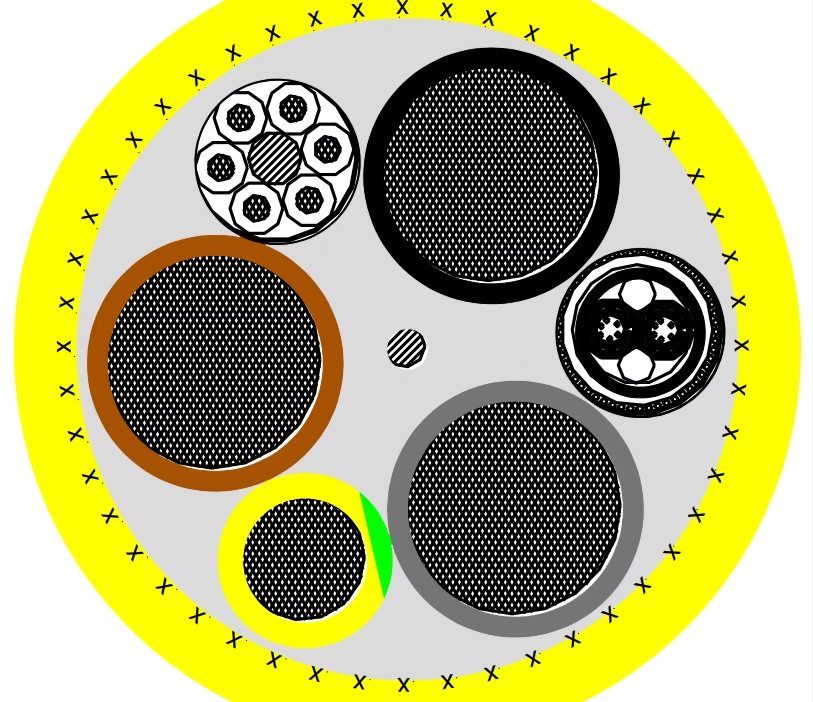
high tensile mining cable

The Crucial Clarification: Oyu Tolgoi operates in two fundamentally different electrical environments that must be clearly understood: (1) Surface operations and equipment transition zones (-40°C to +50°C, dry/cold storage, arctic conditions), and (2) Deep underground block cave extraction levels (15°C to 30°C, high humidity, wet/muddy conditions, geothermally warmed). 关键澄清:奥尤陶勒盖在两个根本不同的电气环境中运营,必须明确理解:(1)地面作业和设备过渡区(-40°C至+50°C,干燥/冷库存储,北极条件),(2)深层地下自然崩落法采矿区(15°C至30°C,高湿度,潮湿/泥泞条件,地热升温)。 The Engineering Error Many Make: It is tempting to assume that since Oyu Tolgoi is in Mongolia (with harsh winter conditions), all cables should be Arctic Grade throughout the mining operation. This is fundamentally incorrect. The underground extraction level, located 1,300+ meters deep, operates in a completely different thermal and humidity regime than the surface—more similar to tropical underground mining conditions than arctic conditions.

Block Cave Power Supply: Choosing AS/NZS Type 275 Reeling Cables for Oyu Tolgoi Underground Systems

The Crucial Clarification: Oyu Tolgoi operates in two fundamentally different electrical environments that must be clearly understood: (1) Surface operations and equipment transition zones (-40°C to +50°C, dry/cold storage, arctic conditions), and (2) Deep underground block cave extraction levels (15°C to 30°C, high humidity, wet/muddy conditions, geothermally warmed). 关键澄清:奥尤陶勒盖在两个根本不同的电气环境中运营,必须明确理解:(1)地面作业和设备过渡区(-40°C至+50°C,干燥/冷库存储,北极条件),(2)深层地下自然崩落法采矿区(15°C至30°C,高湿度,潮湿/泥泞条件,地热升温)。 The Engineering Error Many Make: It is tempting to assume that since Oyu Tolgoi is in Mongolia (with harsh winter conditions), all cables should be Arctic Grade throughout the mining operation. This is fundamentally incorrect. The underground extraction level, located 1,300+ meters deep, operates in a completely different thermal and humidity regime than the surface—more similar to tropical underground mining conditions than arctic conditions.
Type G-GC 3/C #2 AWG cable is a three-conductor power cable with an integrated pilot ground-check conductor designed specifically for underground mine power distribution and earth fault monitoring applications. The three main conductors each measure 33.3 mm² (2 AWG) cross-sectional area and carry three-phase power distribution. The pilot ground-check conductor measures 4 mm² (12 AWG equivalent) and serves as an independent monitoring channel for earth fault detection. The overall cable outer diameter (OD) is typically 18.5 mm to 20.0 mm (0.73 to 0.79 inches) depending on the specific insulation system. The overall weight is approximately 850 kg/km (570 lbs/1000ft). The cable outer sheath is typically XLPE (cross-linked polyethylene) rated for 600 volts continuous service with a safety protocol compliant with DIN VDE 0482-335-2 and IEEE 1202 standards for mine cables. The pilot conductor resistance is approximately 5.2 ohms per kilometer, which establishes the baseline sensitivity for ground fault detection circuits. The capacitance between main conductors and the pilot conductor is typically 120–140 pF/m, a critical parameter that determines the transient response characteristics of the earth fault detection relay.

Earth Fault Monitoring: How does the pilot ground-check conductor in Type G-GC 3/C #2 AWG integrate with mine safety relays? Understanding dual-channel earth fault detection and safety-critical relay logic

Type G-GC 3/C #2 AWG cable is a three-conductor power cable with an integrated pilot ground-check conductor designed specifically for underground mine power distribution and earth fault monitoring applications. The three main conductors each measure 33.3 mm² (2 AWG) cross-sectional area and carry three-phase power distribution. The pilot ground-check conductor measures 4 mm² (12 AWG equivalent) and serves as an independent monitoring channel for earth fault detection. The overall cable outer diameter (OD) is typically 18.5 mm to 20.0 mm (0.73 to 0.79 inches) depending on the specific insulation system. The overall weight is approximately 850 kg/km (570 lbs/1000ft). The cable outer sheath is typically XLPE (cross-linked polyethylene) rated for 600 volts continuous service with a safety protocol compliant with DIN VDE 0482-335-2 and IEEE 1202 standards for mine cables. The pilot conductor resistance is approximately 5.2 ohms per kilometer, which establishes the baseline sensitivity for ground fault detection circuits. The capacitance between main conductors and the pilot conductor is typically 120–140 pF/m, a critical parameter that determines the transient response characteristics of the earth fault detection relay.
Type SHD-GC 3/C 250 MCM 25kV cable has a specified minimum bending radius of 8 times the outer diameter (8 × D), which for this cable translates to approximately 880 millimeters (34.6 inches) based on the typical outer diameter range of 104–110 millimeters. This specification is the absolute minimum radius that the cable can tolerate during installation, reel configuration, and static deployment without incurring unacceptable insulation stress and mechanical damage. However, this 8× specification applies specifically to static installation conditions—situations where the cable is being wound onto a reel, routed through permanent guide equipment, or deployed at rest or under steady-state tension. When the cable enters active operational service on a shovel or dragline where it experiences dynamic motion, rapid acceleration and deceleration, shock loads from bucket impacts, and thermal cycling from solar heating and cooling cycles, the effective operational bending radius constraints become more restrictive. In these dynamic conditions, the safe operating bending radius should be treated as closer to 10–12 times the outer diameter depending on the severity of the mechanical duty, the magnitude of pulling tension applied simultaneously, and the ambient temperature extremes of the mining location.

Static vs. Dynamic Bending Radius: What is the correct minimum bending radius for Type SHD-GC 3/C 250 MCM 25kV shovel cables during installation and operational deployment in open-pit mining?

Type SHD-GC 3/C 250 MCM 25kV cable has a specified minimum bending radius of 8 times the outer diameter (8 × D), which for this cable translates to approximately 880 millimeters (34.6 inches) based on the typical outer diameter range of 104–110 millimeters. This specification is the absolute minimum radius that the cable can tolerate during installation, reel configuration, and static deployment without incurring unacceptable insulation stress and mechanical damage. However, this 8× specification applies specifically to static installation conditions—situations where the cable is being wound onto a reel, routed through permanent guide equipment, or deployed at rest or under steady-state tension. When the cable enters active operational service on a shovel or dragline where it experiences dynamic motion, rapid acceleration and deceleration, shock loads from bucket impacts, and thermal cycling from solar heating and cooling cycles, the effective operational bending radius constraints become more restrictive. In these dynamic conditions, the safe operating bending radius should be treated as closer to 10–12 times the outer diameter depending on the severity of the mechanical duty, the magnitude of pulling tension applied simultaneously, and the ambient temperature extremes of the mining location.
(N)TSKCGEWÖU designation represents a sophisticated medium-voltage flexible mining cable engineered according to DIN VDE 0250 Part 813 standards, incorporating a distinctive feature that differentiates it from standard trailing cables: a central support element with integrated Kevlar (aramid fiber) reinforcement. The "K" in the designation specifically denotes the presence of this Kevlar-reinforced cradle separator, which serves as the structural backbone of the cable assembly. (N)TSKCGEWÖU命名代表按照DIN VDE 0250第813部分标准设计的精密中压柔性矿用电缆,其具有区别于标准拖曳电缆的独特特征:带有集成凯夫拉(芳纶纤维)加强的中心支撑元件。命名中的"K"特别表示存在这种凯夫拉加强的托架分离器,它作为电缆组件的结构骨干。

Support Element Function: The Specific Purpose of the Central “Support Element” (Dummy Core) in (N)TSKCGEWÖU Cable Designs for Mechanical Stability

(N)TSKCGEWÖU designation represents a sophisticated medium-voltage flexible mining cable engineered according to DIN VDE 0250 Part 813 standards, incorporating a distinctive feature that differentiates it from standard trailing cables: a central support element with integrated Kevlar (aramid fiber) reinforcement. The “K” in the designation specifically denotes the presence of this Kevlar-reinforced cradle separator, which serves as the structural backbone of the cable assembly. (N)TSKCGEWÖU命名代表按照DIN VDE 0250第813部分标准设计的精密中压柔性矿用电缆,其具有区别于标准拖曳电缆的独特特征:带有集成凯夫拉(芳纶纤维)加强的中心支撑元件。命名中的”K”特别表示存在这种凯夫拉加强的托架分离器,它作为电缆组件的结构骨干。
PROTOMONT(VO) (N)TSKCGEWOEU 1.8/3KV is a medium-voltage coal cutter cable designed for power supply connection to mobile equipment and machines in underground mining applications. The (VO) Coal cutter cables are specifically engineered for use in cable protection chains (cable handler), which are trailed behind the machine and absorb the occurring tensile forces. Featuring finely stranded tinned copper conductors (Class FS), EPR rubber insulation (PROTOLON 3GI3), semi-conductive NBR easy-strip layer, and chlorinated polyethylene (CM/CPE) outer sheath (PROTOFIRM >5GM5), with double-concentric control/PE conductor elements in the outer interstices. Certified by GOST-R/-K/-B (Russia) and MA China.

كابل PROTOMONT(VO) (N)TSKCGEWOEU 1,8/3KVكابلات قاطعات الفحم للتشغيل بسلاسل الحماية – التعدين تحت الأرض

Used as power supply connection cable for mobile equipment and machines in underground mining applications, such as coal cutting machines, etc. (VO) Coal cutter cables are designed for use in cable protection chains (cable handler), which are trailed behind the machine and which absorb the thereby occurring tensile forces. Suitable for shearer loaders, continuous miners, loading machines, shuttle cars, and other underground coal mining mobile equipment.
N2XCEYRRGY cable, N2XCEHRRGH mining cable, N2XCEYFFGY shaft cable, N2XCEHFFGH 35kV cable, N3GSEYRRGY EPR cable, N3GSEHRRGH rubber sheath cable, N3GSEYFFGY mine cable, N3GSEHFFGH underground cable, N3GHSSHCH gallery cable, DM2N mining cable, NSHOEU trailing cable, SSHOEU flexible cable, POWERMINE XP cable, NSSHCGEOEU-Z reeling cable, BUFLEX-M mining cable, TSKCGECWOEUSS cable, SHT trailing cable

What is Mining Shaft, Gallery, Trailing and Reeling Cable?

N2XCEYRRGY cable, N2XCEHRRGH mining cable, N2XCEYFFGY shaft cable, N2XCEHFFGH 35kV cable, N3GSEYRRGY EPR cable, N3GSEHRRGH rubber sheath cable, N3GSEYFFGY mine cable, N3GSEHFFGH underground cable, N3GHSSHCH gallery cable, DM2N mining cable, NSHOEU trailing cable, SSHOEU flexible cable, POWERMINE XP cable, NSSHCGEOEU-Z reeling cable, BUFLEX-M mining cable, TSKCGECWOEUSS cable, SHT trailing cable
PROTOMONT (V) NSSHCGEOEU LWL series represents advanced power transmission solutions engineered specifically for the demanding underground mining environment. These cables serve as power supply connections for coal cutting machines, continuous miners, and other mobile equipment. The "(V)" designation indicates cables designed for use in cable protection chains (cable handlers) that trail behind machinery and absorb substantial tensile forces during operation.

PROTOMONT (V) NSSHCGEOEU LWL 0.6/1KV

PROTOMONT (V) NSSHCGEOEU LWL series represents advanced power transmission solutions engineered specifically for the demanding underground mining environment. These cables serve as power supply connections for coal cutting machines, continuous miners, and other mobile equipment. The “(V)” designation indicates cables designed for use in cable protection chains (cable handlers) that trail behind machinery and absorb substantial tensile forces during operation.
PROTOMONT(Z) NSSHCGEOEU 0.6/1KV coal cutter cable represents the pinnacle of engineering for underground mining operations. These cables are specifically designed as power supply connection cables for mobile equipment in underground machine applications. (Z)-Coal-Cutter cables are engineered for free trailing operation and, due to their special construction, may be trailed for considerable distances behind the machine during operation. The robust design ensures reliable power transmission even under extreme mechanical stress conditions encountered in mining environments. Primary applications include coal shearers, roadheaders, tunnel boring machines (TBMs), and load-haul-dump vehicles (LHDs/scoops). The cable's exceptional flexibility and durability make it indispensable for modern mining operations worldwide.

PROTOMONT(Z) NSSHCGEOEU0.6/1KV Coal Cutter Cables

PROTOMONT(Z) NSSHCGEOEU 0.6/1KV coal cutter cable represents the pinnacle of engineering for underground mining operations. These cables are specifically designed as power supply connection cables for mobile equipment in underground machine applications. (Z)-Coal-Cutter cables are engineered for free trailing operation and, due to their special construction, may be trailed for considerable distances behind the machine during operation. The robust design ensures reliable power transmission even under extreme mechanical stress conditions encountered in mining environments. Primary applications include coal shearers, roadheaders, tunnel boring machines (TBMs), and load-haul-dump vehicles (LHDs/scoops). The cable’s exceptional flexibility and durability make it indispensable for modern mining operations worldwide.
PROTOMONT(Z) NSSHKCGEOEU represents a highly specialized category of coal cutter cables engineered for free trailing operation in underground mining environments. The "(Z)" designation indicates this cable is specifically designed for trailing applications, where it must be trailed for considerable distances behind mobile mining machinery during operation. Unlike standard industrial cables, these are constructed to withstand extreme mechanical stresses including repeated bending, high tensile forces, impact, and crushing loads commonly encountered in coal mining operations.

PROTOMONT(Z) NSSHKCGEOEU 0.6/1KV Coal Cutter Cables for Trailing Operations

PROTOMONT(Z) NSSHKCGEOEU represents a highly specialized category of coal cutter cables engineered for free trailing operation in underground mining environments. The “(Z)” designation indicates this cable is specifically designed for trailing applications, where it must be trailed for considerable distances behind mobile mining machinery during operation. Unlike standard industrial cables, these are constructed to withstand extreme mechanical stresses including repeated bending, high tensile forces, impact, and crushing loads commonly encountered in coal mining operations.
PROTOMONT (V) NTSKCGECWOEU series represents advanced rubber-sheathed flexible cables specifically engineered for power supply connections in mobile mining equipment. These cables are primarily deployed in underground mining applications where coal cutting machines operate in conjunction with cable protection chains (cable handlers) that trail behind the machinery. The cable handler system is designed to absorb the substantial tensile forces generated during machine movement, ensuring operational continuity and cable longevity.

PROTOMONT (V) NTSKCGECWOEU 1.8/3KV Coal Cutter Cables for Chain Operation

PROTOMONT (V) NTSKCGECWOEU series represents advanced rubber-sheathed flexible cables specifically engineered for power supply connections in mobile mining equipment. These cables are primarily deployed in underground mining applications where coal cutting machines operate in conjunction with cable protection chains (cable handlers) that trail behind the machinery. The cable handler system is designed to absorb the substantial tensile forces generated during machine movement, ensuring operational continuity and cable longevity.