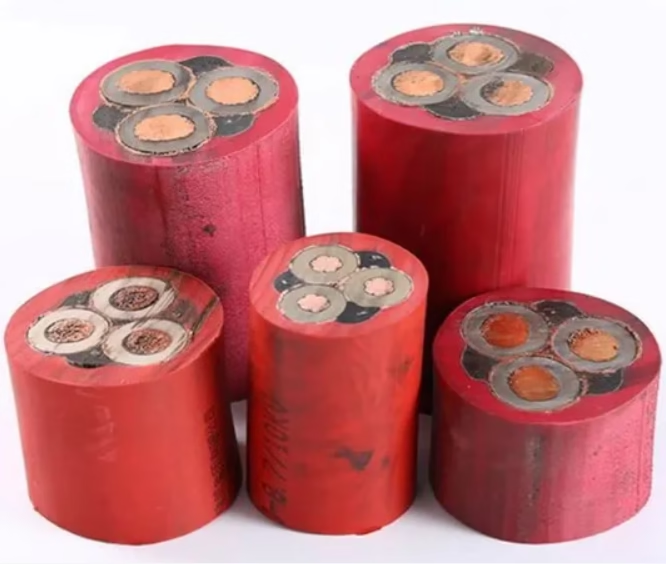
explosion proof cable

H07RN-F: Advanced High-Flexibility Salt-Fog Resistant Port Cable Engineering Solution Specialized rubber-sheathed electrical cable engineered for extreme maritime and coastal port environments. H07RN-F combines superior mechanical flexibility (4×D minimum fixed-laying bending radius, 6×D flexible-application capability) with comprehensive salt-fog environmental resistance, enabling reliable 450/750V power distribution and control signaling in container gantry systems, ship loaders, and port automation infrastructure where conventional cables fail within 6–12 months of deployment.

机械设备出口欧俄总是卡关?飞纯电缆自带 CE+EAC+俄罗斯FSC,助你一站式通关!

机械设备出口欧盟、俄罗斯及欧亚市场,真正的难点往往不只在整机本体,而在整机内部那些容易被忽视的关键配套部件。电缆作为动力传输、控制信号、移动供电、安全联锁和消防风险控制的重要载体,一旦认证文件不完整、标识不匹配、消防证明缺失或与整机技术资料不一致,就可能成为清关、入库、项目验收和现场投运的卡点。飞纯电缆自带 CE、EAC 与俄罗斯 FSC 消防认证,以“欧盟合规 + 欧亚准入 + 俄罗斯消防”的组合能力,为机械设备出口提供更完整的一站式通关解决方案。
Spreader Bar Cable Application: What is a spreader bar? Container crane context: Gantry crane positioned at dock Overhead hoist mechanism: Winch + trolley system Spreader bar: Attachment point below hoist Function: Grips container corners, distributes load, tilts container for placement Spreader bar structure: Framework: Steel tubes/beams forming rectangular frame Lifting points: 4 corner attachment rings (one per container corner) Electrical system: Motor-driven locks, position sensors, lighting Cables: Power supply for motors + control signals for locking mechanism Cable location (spreader bar): Vertical run (primary): From crane hoist (top) down 20–40 m to spreader bar (bottom) Function: Supply power for: - Corner lock solenoids (release container locks) - Position feedback sensors (confirm locks engaged) - Optional: Spreader bar lighting (visibility during operation) Simultaneous function: Act as partial mechanical support (share load with main hoist cable) Horizontal distribution (on spreader bar): From entry point distributed across spreader frame Supply all four corner lock motors Branching: May split into smaller branches (4× circuits to corners) Mechanical load: Cable must withstand: Static tension: Weight of container payload (20–40 tons distributed) Dynamic loads: Jerking during load acceleration, swinging in wind Thermal: Tropical port environment, direct sun, saltwater spray Abrasion: Rubbing against spreader frame during operation Cable design philosophy: Dual function (unique): Electrical function: Deliver 300/500V power for locking system Mechanical function: Share load-bearing (not primary structure, but support role) Different from: Pure electrical cables (festoon, lifting): Electrical function only Pure mechanical ropes: Mechanical function only BASKET SPREADER 730: Both functions integrated Speed specification rationale: 160 m/min (relatively slow): Container crane cycle time: ~45–60 seconds per lift Descent distance: 20–40 m Descent speed: 20–40 m ÷ 45–60 sec = 0.33–0.9 m/s = 20–54 m/min Average speed: ~30 m/min (loading) + 20 m/min (discharge) = 25 m/min 160 m/min specification: 6–8× safety margin on speed Design: Allows for fast emergency ascent if needed Why not higher speed? Mechanical load constraint: Heavy cable (4000 N = ~400 kg equivalent) Inertia: Accelerating 400 kg + spreader bar + container inertia takes time Structural: Crane frame limits acceleration rates (safety interlocks) Result: 160 m/min is practical maximum for loaded spreader bar

从欧盟到俄罗斯:飞纯风电电缆斩获 ATEX、IECEx 防爆与俄罗斯 FSC 消防双重硬核认证!

全球风电项目正在进入更严苛的安全合规时代。风机大型化、应用区域国际化、能源场景复合化,使风电电缆承担的责任远不止电力传输。它既要承受塔筒扭转、机舱振动、偏航运动、低温、潮湿、盐雾和油污等复杂环境,也要满足不同市场对防爆、防火、清关、验收和项目归档的高标准要求。飞纯风电电缆斩获 ATEX、IECEx 防爆认证与俄罗斯 FSC 消防认证,以“防爆 + 防火 + 国际合规”的硬核组合,为欧盟、国际工程和俄罗斯风电项目提供高安全等级电缆解决方案。
(N)GRDGÖU-J Nomenclature (VDE 0250 part 813): (N) = Nominal voltage prefix (0.6/1 kV implicit in designation) G = Gummiert (rubber-insulated) R = Rubber outer sheath D = Dynamisch (dynamic/flexing application) G = Gummiert inner sheath (intermediate layer) Ö = German standard designation (ö indicates European origin) U = Unarmoured (no metal sheath) J = Jacked (multi-sheath design: intermediate + outer) Full meaning: Rubber-insulated, rubber-sheathed, dynamic-rated, multi-sheath construction, unarmoured festoon cable VDE 0250 part 813 scope: Published by: VDE (Verband der Elektrotechnik, German standards body) Applies to: Flexible cables for crane installations (particularly festoon systems) Coverage: Voltage, temperature, mechanical properties, installation methods Festoon-specific requirements: - High bending flexibility (4×D minimum typical) - Fast rewind capability (240+ m/min rated speed) - Sustained torsion tolerance (±25°/1m continuous) - Extended temperature range (−50 to +80°C) - UV/ozone/moisture resistance (outdoor exposure) Alternate designations (similar cables): IEC 60811-1-1: International equivalent (less specific) DIN VDE 0298 part 3: German mechanical property standard DIN VDE 0482-265-2-1: German flame test standard EN 50265-2-1: European flame test equivalent GRDGÖU-J advantage: Combines all standards into single VDE designation Procurement simplified for European buyers

(N)TSCGEWÖU-FO Cable | DIN VDE 0250 | EAC Ex & GOST Fire Approved for Russia Export

An engineering-grade technical reference for mining electrical engineers, EPC contractors, OEM equipment manufacturers, and procurement specialists selecting high-flexibility trailing cables for underground and surface mining operations in Russia and CIS markets. This document presents the structural engineering, material science, and certification architecture of Feichun’s (N)TSCGEWÖU-FO mining trailing cable — a purpose-designed construction combining extreme tensile reinforcement, multi-layer abrasion resistance, integrated fibre-optic monitoring, and dual EAC Ex / GOST-R fire certification within a single cable assembly engineered for the most demanding dragline, continuous miner, shuttle car, and longwall shearer applications operating under Russian Federal mining safety regulations.
Geographic & Operational Context—Russian Far East & Arctic Mining: Major hard-rock mining operations in extreme-cold zones: (1) Siberia (northern Russia): temperatures routinely -30°C to -50°C winter (December–March), occasional -60°C + extreme weather), (2) Arctic Circle regions (Norilsk Nickel mining complex, Yamal Peninsula LNG infrastructure): permanent permafrost, winter ambient -45°C to -55°C, (3) Far East (Sakha Republic—Yakutia): diamond/gold mining at -40°C to -50°C sustained for 6+ months/year. Climate-specific challenges: (1) Permafrost thawing/refreezing cycles, (2) Extreme low humidity (frozen air

КОГРЭШ 3х6+1х2,5+1х2,5 660V: Extreme Flexible Cold-Resistant Mining Cable

Geographic & Operational Context—Russian Far East & Arctic Mining: Major hard-rock mining operations in extreme-cold zones: (1) Siberia (northern Russia): temperatures routinely -30°C to -50°C winter (December–March), occasional -60°C + extreme weather), (2) Arctic Circle regions (Norilsk Nickel mining complex, Yamal Peninsula LNG infrastructure): permanent permafrost, winter ambient -45°C to -55°C, (3) Far East (Sakha Republic—Yakutia): diamond/gold mining at -40°C to -50°C sustained for 6+ months/year. Climate-specific challenges: (1) Permafrost thawing/refreezing cycles, (2) Extreme low humidity (frozen air
This is perhaps the most dangerous misconception in AS/NZS 1972 cable selection. Engineers reviewing the standard for the first time naturally assume that higher type numbers represent higher voltage capacity, more robust construction, or upgraded specifications. This assumption is completely wrong for Type 9. 这也许是AS/NZS 1972电缆选择中最危险的误解。第一次审查该标准的工程师自然会假设较高的类型号代表更高的电压容量、更强大的结构或升级的规范。对于Type 9,这个假设是完全错误的。 The Truth: Type 8 and Type 9 are engineered for fundamentally different applications. Type 8 is a heavy-duty high-voltage power cable for vertical shaft suspension. Type 9 is a small-diameter, low-voltage control cable for flameproof equipment enclosures. Comparing them numerically is like comparing a fire hose (Type 8) to a telephone wire (Type 9). Specification Consequence: Using Type 9 cable for a shaft winder application is not merely unsuitable—it is catastrophically dangerous and violates mining electrical safety regulations. A Type 9 cable suspended vertically will twist, tear, and fail within hours or days of full-load operation, potentially dropping suspended equipment or exposing personnel to electrical hazards.

Type 8 vs Type 9: Selecting the Right Shaft Winder Cable for Deep-Level Underground Coal Mines

This is perhaps the most dangerous misconception in AS/NZS 1972 cable selection. Engineers reviewing the standard for the first time naturally assume that higher type numbers represent higher voltage capacity, more robust construction, or upgraded specifications. This assumption is completely wrong for Type 9. 这也许是AS/NZS 1972电缆选择中最危险的误解。第一次审查该标准的工程师自然会假设较高的类型号代表更高的电压容量、更强大的结构或升级的规范。对于Type 9,这个假设是完全错误的。 The Truth: Type 8 and Type 9 are engineered for fundamentally different applications. Type 8 is a heavy-duty high-voltage power cable for vertical shaft suspension. Type 9 is a small-diameter, low-voltage control cable for flameproof equipment enclosures. Comparing them numerically is like comparing a fire hose (Type 8) to a telephone wire (Type 9). Specification Consequence: Using Type 9 cable for a shaft winder application is not merely unsuitable—it is catastrophically dangerous and violates mining electrical safety regulations. A Type 9 cable suspended vertically will twist, tear, and fail within hours or days of full-load operation, potentially dropping suspended equipment or exposing personnel to electrical hazards.
In underground coal mining across Australia and New Zealand, selecting between AS/NZS 1802 and AS/NZS 1972 is not a matter of personal preference or cost optimization—it is a matter of electrical safety compliance and regulatory requirement. The decision tree, however, is surprisingly straightforward once you understand the single fundamental principle that separates these two standards: whether your equipment moves while energized. 在澳大利亚和新西兰的地下煤矿电气设计中,在AS/NZS 1802和AS/NZS 1972之间选择不是个人偏好或成本优化的问题——这是电气安全合规性和监管要求的问题。然而,一旦您理解分离这两个标准的单一基本原则,决策树就会变得出奇地直接:您的设备在通电时是否移动。

AS/NZS 1802 vs AS/NZS 1972: Which Australian Standard Applies to Your Underground Mining Equipment?

In underground coal mining across Australia and New Zealand, selecting between AS/NZS 1802 and AS/NZS 1972 is not a matter of personal preference or cost optimization—it is a matter of electrical safety compliance and regulatory requirement. The decision tree, however, is surprisingly straightforward once you understand the single fundamental principle that separates these two standards: whether your equipment moves while energized. 在澳大利亚和新西兰的地下煤矿电气设计中,在AS/NZS 1802和AS/NZS 1972之间选择不是个人偏好或成本优化的问题——这是电气安全合规性和监管要求的问题。然而,一旦您理解分离这两个标准的单一基本原则,决策树就会变得出奇地直接:您的设备在通电时是否移动。
Variable frequency drives (VFDs) have revolutionized industrial motor control by enabling precise speed regulation and significant energy savings. However, these benefits come with a serious technical challenge that many facilities overlook until catastrophic failure occurs. When VFDs control AC motors through pulse width modulation (PWM), they create high-frequency electrical disturbances that can destroy motor bearings in a matter of months or even weeks, rather than the expected operational lifetime of years.

VFD Motor Bearing Damage: Why You Need (N)3GHSSYCY Screened Mining Cables?

Variable frequency drives (VFDs) have revolutionized industrial motor control by enabling precise speed regulation and significant energy savings. However, these benefits come with a serious technical challenge that many facilities overlook until catastrophic failure occurs. When VFDs control AC motors through pulse width modulation (PWM), they create high-frequency electrical disturbances that can destroy motor bearings in a matter of months or even weeks, rather than the expected operational lifetime of years.
MYP cables must obtain MA (煤安) certification before they can be legally used in Chinese coal mines. The MA mark, administered by the National Coal Mine Safety Mark Office (煤矿安全标志办公室), represents mandatory safety certification for all underground coal mining equipment and materials. MYP cables, as mobile power supply cables for coal mining machinery, fall under the strictly regulated product categories defined in the Mining Product Safety Sign Management Catalog and must comply with Chinese national standards MT 818 series and GB 12972.[1][2] 是的,MYP电缆在中国煤矿使用前必须获得MA(煤安)认证。由国家煤矿安全标志办公室管理的MA标志,代表了所有井下煤矿设备和材料的强制性安全认证。MYP电缆作为煤矿机械的移动电源电缆,属于《矿用产品安全标志管理目录》中严格管制的产品类别,必须符合中国国家标准MT 818系列和GB 12972。

MA Certificate: MYP Cable Certification for Chinese Coal Mines

MYP cables must obtain MA (煤安) certification before they can be legally used in Chinese coal mines. The MA mark, administered by the National Coal Mine Safety Mark Office (煤矿安全标志办公室), represents mandatory safety certification for all underground coal mining equipment and materials. MYP cables, as mobile power supply cables for coal mining machinery, fall under the strictly regulated product categories defined in the Mining Product Safety Sign Management Catalog and must comply with Chinese national standards MT 818 series and GB 12972.[1][2] 是的,MYP电缆在中国煤矿使用前必须获得MA(煤安)认证。由国家煤矿安全标志办公室管理的MA标志,代表了所有井下煤矿设备和材料的强制性安全认证。MYP电缆作为煤矿机械的移动电源电缆,属于《矿用产品安全标志管理目录》中严格管制的产品类别,必须符合中国国家标准MT 818系列和GB 12972。
Type SHD-PCG cable represents a sophisticated evolution in mining cable design, specifically engineered to meet the demanding safety and operational requirements of longwall shearer applications in underground coal mining. The designation "SHD-PCG" encodes critical information about the cable's construction and capabilities. The "SHD" portion indicates Shielded Heavy Duty construction, signifying that each power conductor is individually surrounded by a metallic shield that provides both electrical protection and mechanical reinforcement. The "PCG" suffix reveals the cable's most distinctive characteristic as it denotes the integrated Pilot-Control-Ground configuration, which combines power transmission conductors with dedicated control signal conductors and an advanced grounding system within a single composite cable assembly. Type SHD-PCG电缆代表了矿用电缆设计的复杂演进,专门设计用于满足地下煤矿长壁采煤机应用的苛刻安全和操作要求。"SHD-PCG"名称编码了有关电缆结构和功能的关键信息。"SHD"部分表示屏蔽重型结构,表明每根电力导体都被单独包围在提供电气保护和机械加固的金属屏蔽层中。"PCG"后缀揭示了电缆最独特的特征,因为它表示集成的导向-控制-接地配置,该配置将电力传输导体与专用控制信号导体和先进的接地系统组合在单个复合电缆组件中。

Type SHD-PCG: How does the Pilot-Control-Ground Configuration Enhance Safety in Longwall Shearers?

Type SHD-PCG cable represents a sophisticated evolution in mining cable design, specifically engineered to meet the demanding safety and operational requirements of longwall shearer applications in underground coal mining. The designation “SHD-PCG” encodes critical information about the cable’s construction and capabilities. The “SHD” portion indicates Shielded Heavy Duty construction, signifying that each power conductor is individually surrounded by a metallic shield that provides both electrical protection and mechanical reinforcement. The “PCG” suffix reveals the cable’s most distinctive characteristic as it denotes the integrated Pilot-Control-Ground configuration, which combines power transmission conductors with dedicated control signal conductors and an advanced grounding system within a single composite cable assembly. Type SHD-PCG电缆代表了矿用电缆设计的复杂演进,专门设计用于满足地下煤矿长壁采煤机应用的苛刻安全和操作要求。”SHD-PCG”名称编码了有关电缆结构和功能的关键信息。”SHD”部分表示屏蔽重型结构,表明每根电力导体都被单独包围在提供电气保护和机械加固的金属屏蔽层中。”PCG”后缀揭示了电缆最独特的特征,因为它表示集成的导向-控制-接地配置,该配置将电力传输导体与专用控制信号导体和先进的接地系统组合在单个复合电缆组件中。
Mining and drilling cables are among the most critical components in underground operations and oil/gas fields. According to IEEE 525 and IEC 60502-1 standards, proper installation can extend cable life by up to 40%. Statistics from the Mine Safety and Health Administration (MSHA) indicate that approximately 60-70% of cable failures result from installation errors and improper handling.

ما هي أخطاء التركيب الشائعة التي تقلل من عمر كابلات التعدين والحفر؟

mining cable, mining cable installation, mining cable failure, drilling cable, ESP cable, electric submersible pump cable, underground mining cable, trailing cable, SHD-GC mining cable, Type W portable cable, mining power cable, coal mine cable, rubber sheathed mining cable, flexible mining cable, armored mining cable, mining cable bend radius, cable installation mistakes, cable life extension, mining cable maintenance, mining electrical cable
Mining, drilling, and tunnelling cables are specialized heavy-duty electrical cables engineered specifically for the harsh conditions found in underground mining operations, drilling sites, and tunnel construction facilities. These industrial-grade cables are designed to withstand extreme mechanical stress, chemical exposure, moisture, and temperature variations while maintaining reliable power transmission and ensuring safety in demanding underground environments. According to international standards including IEC 60502 and MSHA regulations, these cables form the electrical backbone of modern mining and underground construction operations.

ما هي كابلات التعدين والحفر والأنفاق؟ وأين تُستخدم تحت الأرض؟

Mining, drilling, and tunnelling cables are specialized heavy-duty electrical cables engineered specifically for the harsh conditions found in underground mining operations, drilling sites, and tunnel construction facilities. These industrial-grade cables are designed to withstand extreme mechanical stress, chemical exposure, moisture, and temperature variations while maintaining reliable power transmission and ensuring safety in demanding underground environments. According to international standards including IEC 60502 and MSHA regulations, these cables form the electrical backbone of modern mining and underground construction operations.
Кабель силовой шахтный и экскаваторный необходим для подключения горнодобывающего оборудования, экскаваторов и другого землеройного оборудования, электроинструментов, а также для проведения горных взрывных работ. Шахтные кабели используют для всех типов шахт: угольные, соляные, сланцевые, а также подходят для открытых карьерных разработок. Кабели эксплуатируются на напряжении переменного тока 660, 1140, 6000 В.

What is Кабель для шахт?

КГЭШ, КГЭШ-1140, КГЭ, КГЭ-6, КГЭ-Т, КГЭ-ХЛ, КГЭ-ХЛ-6, КГЭС, КГЭТ, КГВШ, КГРШ, КШВГТ, ЭВБВ, ЭВБВ-6, ЭВТ-1140, ЭВТ-6000, кабель КГЭШ, кабель КГЭ, кабель ЭВБВ, шахтный кабель КГЭШ, экскаваторный кабель, mining cable KGESH, excavator cable KGE, KGESH cable, KGE cable, EVBV cable
The oil, gas, and petrochemical industries operate in some of the most demanding environments on Earth. From deep-sea drilling platforms exposed to corrosive saltwater and extreme pressures, to onshore refineries processing volatile hydrocarbons at elevated temperatures, the cables connecting these critical systems must deliver unwavering reliability. According to the International Energy Agency (IEA), global oil demand reached approximately 101.7 million barrels per day in 2023, with petrochemical feedstock demand driving significant growth in downstream processing infrastructure.

Oil, Gas & Petrochemical Cables

BS5308 Part 1 Type 1 cable, BS5308 Part 1 Type 2 SWA cable, BS5308 Part 2 instrumentation cable, EN 50288-7 RE-2X(st)H cable, RE-2X(st)Y PVC instrumentation cable, RE-2X(st)H SWAH LSZH armoured cable, RE-T2X(st)H mica fire resistant cable, NF M 87-202 EGFA cable, NF M 87-202 EGSF cable, NF M 87-202 EIFA stainless steel armour, NF M 87-202 EISF cable, THHN THWN-2 600V cable, TFN screened cable, RZ1-K 0.6/1kV cable, RZ1-K (AS) 1.8/3kV cable, RZ1MZ1-K fire resistant cable, U-1000 R2V cable, U-1000 RVFV armoured cable, BS 6883 657TQ Type SW4 cable, BS 6883 658TQ armoured cable, SiHF-J silicone cable, SiF silicone 180 cable, SIAF-GL glass fiber cable, SANS 1507-3 PVC SWA cable, SANS 1507-4 XLPE SWA cable, 石油天然氣電纜, 石化電纜, 海上平台電纜, 煉油廠儀表電纜, 低煙無鹵電纜, 鋼絲鎧裝電纜, 耐火電纜, 防爆電纜, 本質安全電纜, 熱電偶延長電纜, 高溫矽膠電纜, 儀表控制電纜, 安徽飛純特種電纜
Mining, drilling, and tunnelling cables represent a specialized category of electrical cables engineered to withstand the extreme conditions found in extractive industry operations. Unlike standard industrial cables, these cables must endure continuous mechanical stress from reeling and unreeling operations, exposure to ultraviolet radiation in surface mining, salt-water submersion in offshore drilling, contact with oils and greases from machinery, and the abrasive conditions of underground environments. The demanding nature of these applications requires cables with exceptional durability, flexibility, and resistance to environmental factors that would rapidly degrade conventional cables.

What is Mining, Drilling & Tunnelling Cable? Solutions for Surface, Sub-Surface & Underground Operations

(N)3GHSSHCH – 3.6/6kV, 6/10kV, 8.7/15kV, 12/20kV (N)3GHSSYCY – 3.6/6kV, 6/10kV, 8.7/15kV, 12/20kV (N)SSCHÖU-J – 0.6/1kV (N)SHÖU O/J – 0.6/1kV NSSHÖU O/J – 0.6/1kV NSSHÖU 3E – 0.6/1kV NSSHÖU 3E + ST – 0.6/1kV (N)TMCGEWÖU – 3.6/6kV to 18/30kV (N)TSCGEWÖU – 3.6/6kV to 18/30kV (N)TSCGEWÖU ZH – 3.6/6kV to 12/20kV (N)TSCGEWÖU ATB – 3.6/6kV to 12/20kV (N)TSCGEWÖU FO – 3.6/6kV to 12/20kV (N)TSCGEWÖU Submersible – 3.6/6kV to 12/20kV (N)TSKCGEWÖU – 3.6/6kV to 18/30kV (N)TSCGECEWÖU – 3.6/6kV to 12/20kV (N)TSCGECEWÖU ATB – 3.6/6kV to 12/20kV (N)TSCGECEWÖU ATB GCC – 1.8/3kV to 12/20kV (N)TSCGECEWÖU Submersible – 3.6/6kV to 12/20kV (N)TSCGECECWÖU – 3.6/6kV to 12/20kV (N)TSCGECECWÖU ZH – 3.6/6kV to 12/20kV R-(N)TSCGEWÖU + FO – 3.6/6kV to 12/20kV
331HF Shielded Pairs Instrumentation Cable is specifically engineered for precision signal transmission in demanding offshore and marine environments worldwide. Each twisted pair consists of Black-White color coded conductors with a bare tinned drain wire, individually shielded with polyester-backed aluminum foil tape providing 100% coverage for superior electromagnetic interference (EMI) protection. The cable features pair-to-pair isolation plus an overall shield, making it ideal for sensitive instrumentation circuits that require noise immunity. Available in configurations from 1 to 24 pairs in both 16 AWG and 14 AWG, this cable maintains circuit integrity during fire conditions while delivering exceptional signal quality. Blue jacket or stripe options are available to signify intrinsically safe (IS) circuits.

GEXOL®-331HF Instrumentation Cable SHIELDED PAIRS

GEXOL-331HF, GEXOL-331HF instrumentation cable, GEXOL 331HF shielded pairs, GEXOL-331HF fire resistant cable, GEXOL-331HF 0.6/1kV cable, GEXOL-331HF twisted pair, AmerCable GEXOL-331HF, Nexans AmerCable GEXOL, GEXOL-HF insulation, shielded pairs instrumentation cable, individually shielded pairs cable, IEEE 1580 cable, IEEE 1580 instrumentation cable, IEEE 1580 Table 11, IEC 60331 fire resistant, IEC 60331 cable, IEC 332-3 Category A, IEEE 1202 flame retardant, UL 1309 marine cable, CSA C22.2 No. 245, CSA 245 cable, IEC 60092-350 cable, IEC 60079-14 hazardous area, NRTL certified cable, ABS approved cable, ABS type approval, DNV-GL certified cable, DNV maritime cable, Lloyd’s Register cable, LRS approved marine cable, Transport Canada approved cable, ICEA S-73-532, ISA S12.12 intrinsically safe
GEXOL®-331HF Five Conductor Power Cable represents the most comprehensive multi-conductor solution in the GEXOL fire-resistant cable family, engineered specifically for complex five-phase power applications and advanced electrical systems in demanding offshore and marine environments worldwide. This five-conductor design maintains circuit integrity during fire conditions while providing maximum flexibility for sophisticated power distribution requirements. The cable features a Black-White-Red-Green-Orange color coding system for easy phase identification, with sizes 1/0 AWG and larger utilizing printed phase identification on the insulation. Available in 13 conductor sizes from 18 AWG to 4/0 AWG, this cable delivers complete five-conductor power solutions for emergency lighting, fire detection/suppression systems, alarm networks, and critical process control applications.

GEXOL®-331HF Power Cable

GEXOL-331HF, GEXOL-331HF five conductor, GEXOL 331HF 5 conductor cable, GEXOL-331HF fire resistant cable, GEXOL-331HF 0.6/1kV cable, GEXOL-331HF five core cable, GEXOL-331HF power cable, AmerCable GEXOL-331HF, Nexans AmerCable GEXOL, GEXOL-HF insulation, 耐火電纜, 五芯電纜, 五芯電力電纜, 五相電纜, 低煙無鹵電纜, 低煙無鹵五芯電纜, 船用電纜, 船用五芯電纜, 離岸電纜, 海洋電纜, 0.6/1kV電纜, 600V/1000V電纜, 90度額定電纜, 阻燃電纜, 鎧裝電纜, 青銅鎧裝, 鍍錫銅導體, 交聯聚烯烴, 緊急照明電纜, 消防系統電纜, 消防泵電纜, 多芯電機電纜, 危險區域電纜, 船級社認證, DNV認證電纜, ABS認證電纜, IEEE 1580標準, IEC 60331標準, 黑白紅綠橙色碼, 相位識別, 三相加中性線加接地, 變頻驅動器電纜, 過程控制電纜, 安徽飛純特種電纜
GEXOL®-331HF Three Conductor Power Cable represents the most versatile configuration in the GEXOL fire-resistant cable family, engineered specifically for three-phase power distribution in demanding offshore and marine environments worldwide. This three-conductor design maintains circuit integrity during fire conditions while providing an efficient solution for critical safety circuits. The cable features a Black-White-Red color coding system for easy phase identification, with sizes 1/0 AWG and larger utilizing printed phase identification on the insulation. With optional uninsulated grounding conductor available from 6 AWG upward, this cable delivers complete three-phase power solutions for emergency lighting, fire detection/suppression systems, alarm networks, and personnel egress pathways.

GEXOL®-331HF Power Cable

GEXOL-331HF, GEXOL-331HF three conductor, fire resistant cable, low smoke halogen-free cable, LSZH cable, LSOH cable, IEEE 1580, IEC 60331, IEC 332-3 Category A, IEEE 1202, 0.6/1kV power cable, three conductor marine cable, 3-phase cable, three phase with ground, ABS approved, DNV-GL certified, Lloyd’s Register, UL 1309, CSA 245, 90°C rated cable, cross-linked polyolefin, XLPO insulation, tinned copper conductor, bronze armor cable, Class I Division 1, Class I Zone 1, hazardous location cable, emergency lighting cable, fire pump cable, fire detection system, offshore platform, oil and gas cable, Hawke cable gland, EExe gland, EExd gland, black-white-red color code, phase identification, equipment grounding conductor, 耐火電纜, 三芯電纜, 三相電纜, 帶接地電纜, 低煙無鹵, 船用電纜, 離岸電纜, 0.6/1kV額定, Anhui Feichun Cable, 安徽飛純特種電纜, 37-104-320
GEXOL®-331HF is a premium fire-resistant single conductor power cable engineered for the most demanding offshore and marine environments worldwide. This cable is specifically designed and constructed to maintain circuit integrity during fire conditions, making it the ideal choice for critical safety circuits including emergency lighting systems, fire detection and suppression equipment, alarm systems, and personnel egress pathways. Manufactured with advanced cross-linked polyolefin insulation technology, the GEXOL®-331HF delivers exceptional performance characteristics: fire resistance per IEC 60331, flame retardancy meeting both IEC 332-3 Category A and IEEE 1202 standards, and complete halogen-free construction for minimal smoke generation during combustion events.

GEXOL®-331HF Single Conductor Power Cable

GEXOL-331HF, GEXOL 331HF cable, GEXOL-331HF fire resistant cable, GEXOL-331HF 2kV cable, GEXOL-331HF single conductor, GEXOL-331HF power cable, AmerCable GEXOL-331HF, Nexans AmerCable GEXOL, GEXOL-HF insulation, 37-104 series cable耐火電纜, 低煙無鹵電纜, 船用電纜, 離岸電纜, 海洋電纜, 單芯電力電纜, 2kV電纜, 90度額定電纜, 阻燃電纜, 鎧裝電纜, 青銅鎧裝, 鍍錫銅導體, 交聯聚烯烴, 緊急照明電纜, 消防系統電纜, 危險區域電纜, 船級社認證, DNV認證電纜, ABS認證電纜, IEEE 1580標準, IEC 60331標準
NTMCGCWOEU 1x240_25 KON, 12_20kV

What is PROTOLON(SB) NTSCGEWOEU 6 kV – 20 kV Cable for Excavators in Open-Cast Mining?

PROTOLON(SB) NTSCGEWOEU cable represents a specialized category of medium voltage trailing cables engineered specifically for the most demanding mining applications. As power supply and connection cables for large material handling machines such as excavators in open-cast mines, these cables must withstand extremely high mechanical stresses where abrasion and chaffing stresses are expected in trailing operation.
ANSI/NEMA WC 58 / ICEA S-75-381: Portable and Power Feeder Cables for Mining Applications

ANSI/NEMA WC 58 / ICEA S-75-381: Portable and Power Feeder Cables for Mining Applications

ANSI/NEMA WC 58 / ICEA S-75-381 standard represents one of the most comprehensive specifications for portable and power feeder cables used in mining environments. According to industry analysis, this standard represents one of the most rigorous cable specifications ever developed, specifically addressing the unique challenges encountered in both surface and underground mining operations where equipment reliability directly impacts production efficiency and worker safety.
What is TYPE 450 1.1 to 33kV Mining Cables to AS/NZS 2802:2000?

What is TYPE 450 1.1 to 33kV Mining Cables to AS/NZS 2802:2000?

TYPE 450 cables occupy a critical position within this standard as Class 2 cables, distinguished by their incorporation of semiconductive screening systems essential for medium to high voltage applications. The designation “Type 450” refers to the cable’s construction classification within AS/NZS 2802:2000, with the numeric suffix (450.3, 450.6, 450.11, 450.22, 450.33) indicating the voltage rating in kilovolts. These cables are specifically engineered for slow reeling and trailing applications where equipment such as draglines, excavators, and wharf cranes requires flexible power connections that can withstand thousands of reeling cycles while maintaining electrical integrity and mechanical reliability.
TYPE 241 mining cables represent a specialized category of elastomer-insulated, semiconductive-screened power cables specifically engineered for the demanding operational conditions encountered in underground coal mining environments.

What is TYPE 241 1.1 to 22kV Mining Cables to AS/NZS 1802:2003?

TYPE 241 mining cables represent a specialized category of elastomer-insulated, semiconductive-screened power cables specifically engineered for the demanding operational conditions encountered in underground coal mining environments.
TYPE 209 and TYPE 210 mining cables represent critical power distribution infrastructure specifically engineered for the demanding environments of underground coal mining and surface mining operations throughout Australia and New Zealand.

TYPE 209 & TYPE 210 Australian Mining Cables

TYPE 209 and TYPE 210 mining cables represent critical power distribution infrastructure specifically engineered for the demanding environments of underground coal mining and surface mining operations throughout Australia and New Zealand.
CEI 20-27 CENELEC HD361 Cable

What is CEI 20-27 CENELEC HD361 Cable?

CEI 20-27 CENELEC HD361 represents a standardized cable designation system developed by the European Committee for Electrotechnical Standardisation (CENELEC) to provide uniform identification and classification of harmonized power cables and cords across European markets. This systematic coding methodology enables engineers, procurement specialists, and electrical contractors to precisely identify cable specifications including voltage ratings, insulation materials, conductor types, and sheathing compounds through a structured alphanumeric designation format.