EPR insulated reeling cable

Заявление производителя "кабель прошёл холодный изгиб при −40°C" или "соответствует ГОСТ ХЛ" часто недостаточно для критичных применений в −50°C (Норильск, Магадан, Чукотка, подводные работы). Почему? Потому что "прошёл тест" (PASS) может означать только одно: не было видимых трещин после 3 циклов изгиба. Это совершенно не гарантирует, что кабель будет работать 8–12 месяцев при непрерывном динамическом кольцевом наматывании в −50°C условиях. Настоящее качество требует не просто "пройти тест", а полного анализа вязкоупругого поведения материала в холоде. Это включает: (1) микроскопический анализ микротрещин, которые невидимы для глаза; (2) циклическую усталостную программу (60,000 циклов), которая воспроизводит год полевой эксплуатации в ускоренном режиме; (3) статистический анализ распределения отказов; (4) анализ механизма распространения трещин под электронным микроскопом.

Cold Bend Testing Methodology: Dynamic Flexibility & Failure Modes of NSHTÖU-J 4G95 at −50°CComprehensive Test Procedures, Equipment, & Acceptance Criteria

Заявление производителя “кабель прошёл холодный изгиб при −40°C” или “соответствует ГОСТ ХЛ” часто недостаточно для критичных применений в −50°C (Норильск, Магадан, Чукотка, подводные работы). Почему? Потому что “прошёл тест” (PASS) может означать только одно: не было видимых трещин после 3 циклов изгиба. Это совершенно не гарантирует, что кабель будет работать 8–12 месяцев при непрерывном динамическом кольцевом наматывании в −50°C условиях. Настоящее качество требует не просто “пройти тест”, а полного анализа вязкоупругого поведения материала в холоде. Это включает: (1) микроскопический анализ микротрещин, которые невидимы для глаза; (2) циклическую усталостную программу (60,000 циклов), которая воспроизводит год полевой эксплуатации в ускоренном режиме; (3) статистический анализ распределения отказов; (4) анализ механизма распространения трещин под электронным микроскопом.
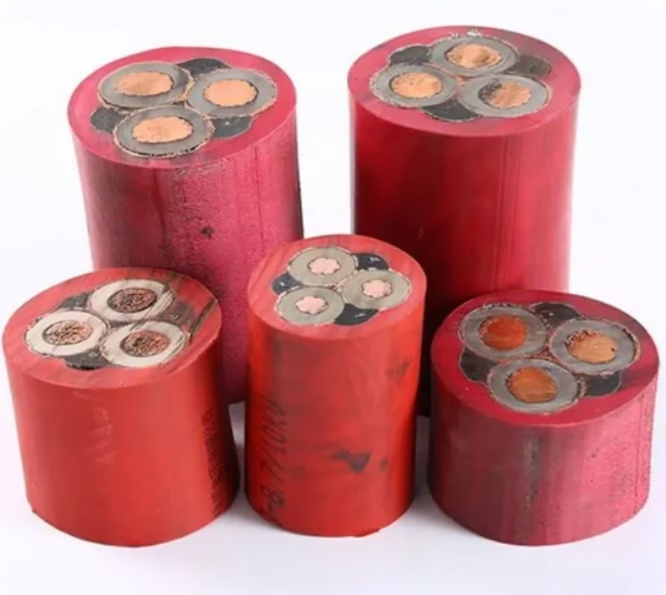
In the Nexans handling cable catalog, yellow outer sheaths are predominantly used for low-voltage (0.6/1 kV) RHEYCORD® series cables, while red outer sheaths identify medium-voltage (3–30 kV) RHEYFIRM® series cables. This color differentiation serves as a critical visual safety indicator for voltage level identification in industrial environments. 在耐克森搬运电缆目录中,黄色外护套主要用于低压(0.6/1 kV) RHEYCORD®系列电缆,而红色外护套用于标识中压(3–30 kV) RHEYFIRM®系列电缆。这种颜色区分是工业环境中电压等级识别的重要视觉安全指标。

Yellow vs. Red Sheath: Decoding Nexans RHEYFIRM® Color Codes

In the Nexans handling cable catalog, yellow outer sheaths are predominantly used for low-voltage (0.6/1 kV) RHEYCORD® series cables, while red outer sheaths identify medium-voltage (3–30 kV) RHEYFIRM® series cables. This color differentiation serves as a critical visual safety indicator for voltage level identification in industrial environments. 在耐克森搬运电缆目录中,黄色外护套主要用于低压(0.6/1 kV) RHEYCORD®系列电缆,而红色外护套用于标识中压(3–30 kV) RHEYFIRM®系列电缆。这种颜色区分是工业环境中电压等级识别的重要视觉安全指标。
In modern port operations and heavy machinery applications, reeling cable performance at high speeds has become a critical factor for operational efficiency and equipment reliability. This technical analysis examines whether generic (N)TSCGEWÖU cables can achieve the same performance standards as Nexans RHEYFIRM® cables, particularly at the 240 meters per minute (m/min) reeling speed threshold. 在现代港口作业和重型机械应用中,高速卷取电缆性能已成为运行效率和设备可靠性的关键因素。本技术分析检验了通用(N)TSCGEWÖU电缆能否达到与Nexans RHEYFIRM®电缆相同的性能标准,特别是在240米/分钟(m/min)卷取速度阈值下。

Speed Rating: Can Generic (N)TSCGEWÖU Match the 240m/min Reeling Speed Capability of Nexans RHEYFIRM®?

In modern port operations and heavy machinery applications, reeling cable performance at high speeds has become a critical factor for operational efficiency and equipment reliability. This technical analysis examines whether generic (N)TSCGEWÖU cables can achieve the same performance standards as Nexans RHEYFIRM® cables, particularly at the 240 meters per minute (m/min) reeling speed threshold. 在现代港口作业和重型机械应用中,高速卷取电缆性能已成为运行效率和设备可靠性的关键因素。本技术分析检验了通用(N)TSCGEWÖU电缆能否达到与Nexans RHEYFIRM®电缆相同的性能标准,特别是在240米/分钟(m/min)卷取速度阈值下。
Corkscrewing — also referred to as Z-kinking or the "pigtail" effect — is among the most frequently encountered failure modes in dynamic reeling applications. When a Type 440 cable repeatedly exhibits helical deformation after even modest operating hours, the root cause almost never lies in a single variable. It is instead a compounding interaction of design, installation, and operating conditions. (软电缆在卷盘运行中出现螺旋变形,通常称为"软木塞效应"或Z型褶皱,是Type 440型动态卷盘电缆最常见的失效模式之一。)

Why Your Reeling Cable Keeps “Corkscrewing”:Diagnosis & Solutions for Type 440

Corkscrewing — also referred to as Z-kinking or the “pigtail” effect — is among the most frequently encountered failure modes in dynamic reeling applications. When a Type 440 cable repeatedly exhibits helical deformation after even modest operating hours, the root cause almost never lies in a single variable. It is instead a compounding interaction of design, installation, and operating conditions. (软电缆在卷盘运行中出现螺旋变形,通常称为”软木塞效应”或Z型褶皱,是Type 440型动态卷盘电缆最常见的失效模式之一。)
PROTOMONT TBM (N)TSCGECWOEU 6/10KV represents the pinnacle of medium voltage reeling cable technology specifically engineered for Tunnel Boring Machines (TBMs). As documented in professional reeling cable technical resources[1], these specialized cables serve as the critical power supply lifeline for TBM operations in underground mines and tunnel construction sites, enabling continuous boring operations while accommodating the machine's forward progression through the cable reeling system.

What is PROTOMONT TBM (N)TSCGECWOEU 6/10KV TBM Reeling Cable?

PROTOMONT TBM (N)TSCGECWOEU 6/10KV represents the pinnacle of medium voltage reeling cable technology specifically engineered for Tunnel Boring Machines (TBMs). As documented in professional reeling cable technical resources[1], these specialized cables serve as the critical power supply lifeline for TBM operations in underground mines and tunnel construction sites, enabling continuous boring operations while accommodating the machine’s forward progression through the cable reeling system.