DNV certified

Feichun MARITIME-FLEX® HT-CORR (VCVH6-F) Marine Port Salt-Fog Resistant Control Cables: Corrosion-Hardened Flexible Systems (0.6/1kV Maritime Standard Voltage, Advanced PVC Type TI2 Sheath with Copper-Based & Hindered Amine Corrosion Inhibitors, 80+ Mrad Cumulative Salt-Spray Radiation Tolerance, High-Flexibility Festoon Design for Dual-Motion Container Cranes & Cargo Handling Equipment, −25 to +70°C Polar-to-Tropical Service Temperature Envelope, 120 m/min High-Speed Festoon Certification for Port Terminal Dynamics, 32 Complete Product SKU Configurations 4–12 Cores, 1.5–95 mm² Conductor Range, VCVH6-F European Maritime Cable Standard Compliance, DNV/ABS/Lloyd's Register Certification, RoHS/CE Approved): Comprehensive Technical Analysis Integrating Electrochemical Salt-Corrosion Mechanisms, PVC Polymer Stabilization Chemistry, Marine Voltage & Environmental Degradation Modeling, Cargo Terminal Cable Engineering & Global Port Infrastructure Integration Modern port and maritime infrastructure—container terminals with dual-axis gantry cranes, bulk cargo loading systems, offshore platform interconnections, and polar region shipping operations—demands electrical cabling fundamentally different from standard industrial control specifications: persistent chloride salt-spray exposure (NaCl aerosol concentration 50–500 mg/m³ in near-shore marine zones, accelerating electrochemical corrosion of unprotected copper conductors and steel armor sheaths through galvanic couple formation), continuous thermal cycling from Arctic nighttime minimums (−25 °C polar operations) to tropical daytime heating (+70 °C sun-exposed cable trays on equatorial container terminals), moisture ingress penetration and salt-water embrittlement of insulation polymers under waterfront humidity (85–100% relative humidity continuously), and mechanical flexure fatigue from dual-axis crane motion (millions of bend cycles per year from spreader bar reeling and trolley lateral traverse on STS/RTG systems). Conventional maritime power cables (0.6/1 kV IEC 60811 industrial specification) designed for stationary offshore platforms or rigid cable tray installations fail catastrophically in dynamic port environments, suffering rapid galvanic corrosion penetration through unprotected copper braid, insulation embrittlement from salt-catalyzed oxidation chemistry, and premature conductor strand fracture under fatigue-assisted corrosion. MARITIME-FLEX® HT-CORR (VCVH6-F) represents a specialized marine infrastructure engineering platform achieving simultaneous optimization across the complete port automation voltage spectrum (0.6/1 kV nominal—matching international container terminal hoist and drive motor ratings across IEC 60320 standardized deck equipment) through advanced PVC type TI2 sheath formulation incorporating dual-mechanism salt-corrosion protection: first, copper-based electrochemical corrosion inhibitors (cuprous oxide nanoparticles, copper(II) phosphate coordination complexes) creating passivation layers on exposed copper braid, and second, hindered amine light stabilizers (HALS) and benzophenone UV absorbers providing 20–30 year service life under combined salt-spray, thermal cycling, and solar UV exposure—delivering port terminal engineers and cargo handling system integrators with specialized festoon cabling architected for global maritime operations across Arctic shipping corridors, tropical equatorial ports, and saline coastal regions with proven 15–20 year service life under aggressive chloride environments and full DNV/ABS/Lloyd's Register maritime certification. Definitive technical reference for maritime electrical engineers designing container terminal automation systems and port gantry crane networks, cargo handling system architects optimizing STS (Ship-to-Shore) and RTG (Rubber-Tyred Gantry) electrical infrastructure, offshore platform engineers integrating shipboard and dockside interconnection cabling, port facility maintenance managers specifying corrosion-resistant marine cables, materials scientists evaluating electrochemical salt-fog degradation mechanisms and stabilizer chemistry, system reliability engineers modeling 15–20 year cable lifetime under continuous maritime salt-spray exposure, port planning specialists designing next-generation container terminal electrification, DNV/ABS compliance managers ensuring marine cable certification across multiple port jurisdictions, electrical procurement professionals specifying VCVH6-F certified marine cables, and technical decision-makers selecting electrical infrastructure for container terminals, bulk cargo facilities, offshore platforms, polar region shipping operations, and hybrid port-to-ship power systems requiring certified marine-rated cabling with demonstrated salt-fog corrosion resistance and 15–20 year operational reliability in the world's most aggressive corrosive marine environments.

FLEXIFESTOON® PV-FLAT CY (VCVH6-F)

Feichun MARITIME-FLEX® HT-CORR (VCVH6-F) Marine Port Salt-Fog Resistant Control Cables: Corrosion-Hardened Flexible Systems (0.6/1kV Maritime Standard Voltage, Advanced PVC Type TI2 Sheath with Copper-Based & Hindered Amine Corrosion Inhibitors, 80+ Mrad Cumulative Salt-Spray Radiation Tolerance, High-Flexibility Festoon Design for Dual-Motion Container Cranes & Cargo Handling Equipment, −25 to +70°C Polar-to-Tropical Service Temperature Envelope, 120 m/min High-Speed Festoon Certification for Port Terminal Dynamics, 32 Complete Product SKU Configurations 4–12 Cores, 1.5–95 mm² Conductor Range, VCVH6-F European Maritime Cable Standard Compliance, DNV/ABS/Lloyd’s Register Certification, RoHS/CE Approved): Comprehensive Technical Analysis Integrating Electrochemical Salt-Corrosion Mechanisms, PVC Polymer Stabilization Chemistry, Marine Voltage & Environmental Degradation Modeling, Cargo Terminal Cable Engineering & Global Port Infrastructure Integration Modern port and maritime infrastructure—container terminals with dual-axis gantry cranes, bulk cargo loading systems, offshore platform interconnections, and polar region shipping operations—demands electrical cabling fundamentally different from standard industrial control specifications: persistent chloride salt-spray exposure (NaCl aerosol concentration 50–500 mg/m³ in near-shore marine zones, accelerating electrochemical corrosion of unprotected copper conductors and steel armor sheaths through galvanic couple formation), continuous thermal cycling from Arctic nighttime minimums (−25 °C polar operations) to tropical daytime heating (+70 °C sun-exposed cable trays on equatorial container terminals), moisture ingress penetration and salt-water embrittlement of insulation polymers under waterfront humidity (85–100% relative humidity continuously), and mechanical flexure fatigue from dual-axis crane motion (millions of bend cycles per year from spreader bar reeling and trolley lateral traverse on STS/RTG systems). Conventional maritime power cables (0.6/1 kV IEC 60811 industrial specification) designed for stationary offshore platforms or rigid cable tray installations fail catastrophically in dynamic port environments, suffering rapid galvanic corrosion penetration through unprotected copper braid, insulation embrittlement from salt-catalyzed oxidation chemistry, and premature conductor strand fracture under fatigue-assisted corrosion. MARITIME-FLEX® HT-CORR (VCVH6-F) represents a specialized marine infrastructure engineering platform achieving simultaneous optimization across the complete port automation voltage spectrum (0.6/1 kV nominal—matching international container terminal hoist and drive motor ratings across IEC 60320 standardized deck equipment) through advanced PVC type TI2 sheath formulation incorporating dual-mechanism salt-corrosion protection: first, copper-based electrochemical corrosion inhibitors (cuprous oxide nanoparticles, copper(II) phosphate coordination complexes) creating passivation layers on exposed copper braid, and second, hindered amine light stabilizers (HALS) and benzophenone UV absorbers providing 20–30 year service life under combined salt-spray, thermal cycling, and solar UV exposure—delivering port terminal engineers and cargo handling system integrators with specialized festoon cabling architected for global maritime operations across Arctic shipping corridors, tropical equatorial ports, and saline coastal regions with proven 15–20 year service life under aggressive chloride environments and full DNV/ABS/Lloyd’s Register maritime certification. Definitive technical reference for maritime electrical engineers designing container terminal automation systems and port gantry crane networks, cargo handling system architects optimizing STS (Ship-to-Shore) and RTG (Rubber-Tyred Gantry) electrical infrastructure, offshore platform engineers integrating shipboard and dockside interconnection cabling, port facility maintenance managers specifying corrosion-resistant marine cables, materials scientists evaluating electrochemical salt-fog degradation mechanisms and stabilizer chemistry, system reliability engineers modeling 15–20 year cable lifetime under continuous maritime salt-spray exposure, port planning specialists designing next-generation container terminal electrification, DNV/ABS compliance managers ensuring marine cable certification across multiple port jurisdictions, electrical procurement professionals specifying VCVH6-F certified marine cables, and technical decision-makers selecting electrical infrastructure for container terminals, bulk cargo facilities, offshore platforms, polar region shipping operations, and hybrid port-to-ship power systems requiring certified marine-rated cabling with demonstrated salt-fog corrosion resistance and 15–20 year operational reliability in the world’s most aggressive corrosive marine environments.
NEK TS 606 is the Norwegian offshore industry technical specification (TS) covering a range of power, instrumentation and earth cables that are halogen free and/or MUD resistant, protecting them against the type of hydrocarbon-laden drilling liquid used in drilling operations which can have an adverse effect on cable sheathing materials. Originally published in 1993 by the Norwegian Electrotechnical Committee (NEK) as a successor to the 'Recommended Practice for Specification of Cables' of the Norwegian Oil Industry Association, NEK 606 has evolved to become an internationally accepted standard for offshore cable applications.

What is NEK 606 Cable?

NEK 606, NEK TS 606, NEK 606 cable, offshore cable, BFOU cable, RFOU cable, Norwegian offshore standard, oil gas cable, mud resistant cable, fire resistant cable, halogen free cable, offshore power cable, offshore instrumentation cable, marine cable
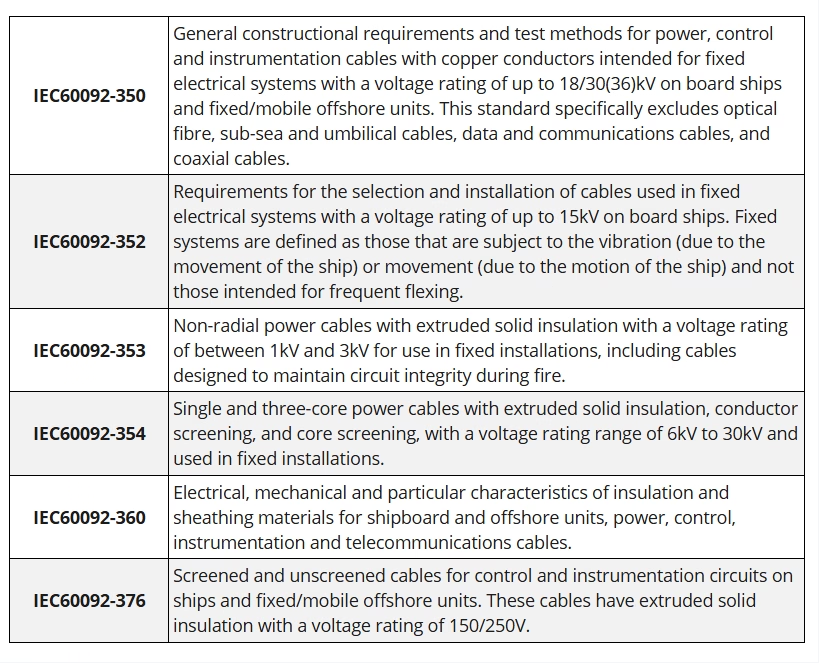
IEC 60092 is the international standard for electrical installations in ships and fixed/mobile marine applications. Ship wiring is covered by various national standards such as BS 6883 (British) and NEK 606 (Norwegian), and subject to third-party accreditations including Lloyd's Register, DNV (Det Norske Veritas), and ABS (American Bureau of Shipping). As an international standard, IEC 60092 covers power and instrumentation cables for use on ships and in mobile marine environments.

What is IEC 60092 Cable?

IEC 60092 cable, marine cable, shipboard cable, offshore cable, BS 6883 cable, NEK 606 cable, BFOU cable, RFOU cable, 657TQ cable, 658TQ cable, fire resistant marine cable, flame retardant cable, ship wiring, offshore platform cable, Lloyd’s Register approved, DNV certified, halogen free cable, LSZH marine cable, MUD resistant cable, IEC 60092-353, IEC 60092-354, IEC 60092-376, SW4 cable, EPR insulated, TCWB armoured, instrumentation cable, control cable, emergency power cable, oil rig cable, Feichun cable