Central Asia mining cable

Major Projects and Players: Central Asia's copper mining sector includes massive operations: (1) KAZ Minerals' Bozshakol, Saryshagan, and Aktogay projects in Kazakhstan, (2) Uzbek Copper's operations in Uzbekistan, (3) International consortium projects (Rio Tinto, Sumitomo, Japanese/European partnerships). These operations are characterized by: modern infrastructure, international EPC (Engineering-Procurement-Construction) contractor involvement, and explicit AS/NZS 1802 compliance requirements in RFQ specifications. 中亚铜矿项目包括大规模运营:(1)哈萨克斯坦KAZ矿物公司的Bozshakol、Saryshagan和Aktogay项目,(2)乌兹别克斯坦铜矿公司的运营,(3)国际联合体项目(Rio Tinto、住友、日本/欧洲合作)。这些运营的特点是:现代基础设施、国际EPC承包商参与、RFQ规范中明确的AS/NZS 1802合规要求。 RFQ Specification Trend: Central Asian buyers increasingly specify AS/NZS 1802 Type 241 cables rather than simply "equivalent" designs, because they understand the cable is for long-term (15–20 year) asset life and international operational continuity. Unlike developing-market buyers who may accept price-optimized designs, Central Asian EPC contractors demand proven, certified-equivalent cables that can be serviced anywhere globally. Sourcing Challenge for Asian Manufacturers: Most Australian cable manufacturers cannot meet the 12–18 month continuous order volumes that Central Asian projects demand (often 500–2,000 km of cable total). This creates a market opportunity: Chinese and Indian manufacturers can undercut Australian prices by 25–40% while maintaining AS/NZS compliance—IF they can credibly prove factory-direct equivalence.

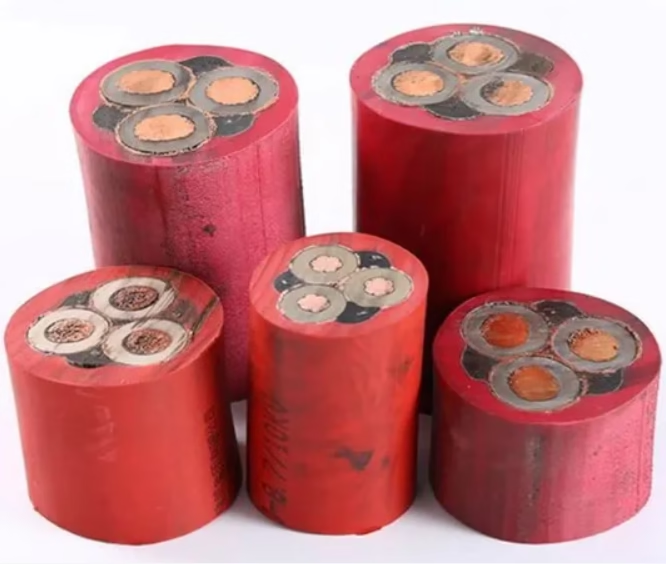
Central Asia Mining RFQ: Factory-Direct Equivalent to Australian Type 241 Cables for Copper Projects

Major Projects and Players: Central Asia’s copper mining sector includes massive operations: (1) KAZ Minerals’ Bozshakol, Saryshagan, and Aktogay projects in Kazakhstan, (2) Uzbek Copper’s operations in Uzbekistan, (3) International consortium projects (Rio Tinto, Sumitomo, Japanese/European partnerships). These operations are characterized by: modern infrastructure, international EPC (Engineering-Procurement-Construction) contractor involvement, and explicit AS/NZS 1802 compliance requirements in RFQ specifications. 中亚铜矿项目包括大规模运营:(1)哈萨克斯坦KAZ矿物公司的Bozshakol、Saryshagan和Aktogay项目,(2)乌兹别克斯坦铜矿公司的运营,(3)国际联合体项目(Rio Tinto、住友、日本/欧洲合作)。这些运营的特点是:现代基础设施、国际EPC承包商参与、RFQ规范中明确的AS/NZS 1802合规要求。 RFQ Specification Trend: Central Asian buyers increasingly specify AS/NZS 1802 Type 241 cables rather than simply “equivalent” designs, because they understand the cable is for long-term (15–20 year) asset life and international operational continuity. Unlike developing-market buyers who may accept price-optimized designs, Central Asian EPC contractors demand proven, certified-equivalent cables that can be serviced anywhere globally. Sourcing Challenge for Asian Manufacturers: Most Australian cable manufacturers cannot meet the 12–18 month continuous order volumes that Central Asian projects demand (often 500–2,000 km of cable total). This creates a market opportunity: Chinese and Indian manufacturers can undercut Australian prices by 25–40% while maintaining AS/NZS compliance—IF they can credibly prove factory-direct equivalence.
If your Central Asian underground coal mining project operates within an engineering and procurement ecosystem dominated by Australian consulting firms, English-language design specifications, AS/NZS standards documentation, and requires compatibility with continuous mining equipment protected by pilot-core-dependent relays, then Type 241 (AS/NZS 1802) is your correct choice. Type 241 provides the electrical architecture, pilot conductor continuity, and protective logic integration that Australian mining engineers expect. If your project operates in Kazakhstan, Mongolia, Uzbekistan, or Kyrgyzstan with Russian or Russian-influenced technical standards, local certification bodies that recognize GOST compliance, local maintenance teams trained on GOST equipment, Russian-language technical documentation, and primary focus on cost-effective 6kV power delivery in extreme cold environments, then КГЭ-ХЛ (GOST 31945-2012) is likely the more practical choice. КГЭ-ХЛ integrates seamlessly into Russian-standard electrical systems and is purpose-engineered for the minus forty to minus sixty degree Celsius temperatures endemic to Central Asian winters. 如果您的中亚地下煤矿项目由澳洲咨询公司主导、英文设计规范、AS/NZS标准文件和对连续采煤机保护逻辑兼容性有特殊要求,那么 Type 241(AS/NZS 1802)是正确选择。如果您的项目在哈萨克斯坦、蒙古、乌兹别克斯坦或吉尔吉斯斯坦,采用俄标或俄标影响的技术体系,本地认证机构认可GOST合规,本地维护团队熟悉GOST设备,主要关注极寒下的成本有效6kV供电,那么КГЭ-ХЛ(ГОСТ 31945-2012)是更实用的选择。

AS/NZS Type 241 vs. GOST КГЭ-ХЛ: Choosing the Right Standard for Underground Coal Mines in Central Asia

If your Central Asian underground coal mining project operates within an engineering and procurement ecosystem dominated by Australian consulting firms, English-language design specifications, AS/NZS standards documentation, and requires compatibility with continuous mining equipment protected by pilot-core-dependent relays, then Type 241 (AS/NZS 1802) is your correct choice. Type 241 provides the electrical architecture, pilot conductor continuity, and protective logic integration that Australian mining engineers expect. If your project operates in Kazakhstan, Mongolia, Uzbekistan, or Kyrgyzstan with Russian or Russian-influenced technical standards, local certification bodies that recognize GOST compliance, local maintenance teams trained on GOST equipment, Russian-language technical documentation, and primary focus on cost-effective 6kV power delivery in extreme cold environments, then КГЭ-ХЛ (GOST 31945-2012) is likely the more practical choice. КГЭ-ХЛ integrates seamlessly into Russian-standard electrical systems and is purpose-engineered for the minus forty to minus sixty degree Celsius temperatures endemic to Central Asian winters. 如果您的中亚地下煤矿项目由澳洲咨询公司主导、英文设计规范、AS/NZS标准文件和对连续采煤机保护逻辑兼容性有特殊要求,那么 Type 241(AS/NZS 1802)是正确选择。如果您的项目在哈萨克斯坦、蒙古、乌兹别克斯坦或吉尔吉斯斯坦,采用俄标或俄标影响的技术体系,本地认证机构认可GOST合规,本地维护团队熟悉GOST设备,主要关注极寒下的成本有效6kV供电,那么КГЭ-ХЛ(ГОСТ 31945-2012)是更实用的选择。
Кабель силовой шахтный и экскаваторный необходим для подключения горнодобывающего оборудования, экскаваторов и другого землеройного оборудования, электроинструментов, а также для проведения горных взрывных работ. Шахтные кабели используют для всех типов шахт: угольные, соляные, сланцевые, а также подходят для открытых карьерных разработок. Кабели эксплуатируются на напряжении переменного тока 660, 1140, 6000 В.

What is Кабель для шахт?

КГЭШ, КГЭШ-1140, КГЭ, КГЭ-6, КГЭ-Т, КГЭ-ХЛ, КГЭ-ХЛ-6, КГЭС, КГЭТ, КГВШ, КГРШ, КШВГТ, ЭВБВ, ЭВБВ-6, ЭВТ-1140, ЭВТ-6000, кабель КГЭШ, кабель КГЭ, кабель ЭВБВ, шахтный кабель КГЭШ, экскаваторный кабель, mining cable KGESH, excavator cable KGE, KGESH cable, KGE cable, EVBV cable
Кабели марки КГЭШ предназначены для присоединения угольных комбайнов, передвижных машин и механизмов при подземных горных работах к электрическим сетям на номинальное напряжение переменного тока до 1140 В частотой 50 Гц на основных жилах и до 220 В на вспомогательной жиле. Кабели могут эксплуатироваться в подземных помещениях и шахтах с повышенной влажностью воздуха, в которых возможно длительное наличие воды или частая конденсация влаги.

Кабель КГЭШ 3х4+1х2,5+3х1,5, 1 кВ

КГЭШ, КГЭШ 3х4+1х2.5+3х1.5, КГЭШ 1кВ, кабель КГЭШ, КГЭШ cable, mining cable КГЭШ, KGESH cable, KGESH 3×4, flexible mining cable КГЭШ, shielded mining cable, экранированный кабель КГЭШ, гибкий шахтный кабель, 矿用电缆КГЭШ, 礦用電纜КГЭШ, КГЭШ 3х4 цена, КГЭШ характеристики