барабанный кабель

UNE 22511 — formally titled "Cables flexibles para minería subterránea con tensiones de 1,8/3 kV con aislamiento de caucho, sin armadura" (Flexible cables for underground mining, 1.8/3 kV, rubber-insulated, unarmoured) — is the definitive Spanish standard for heavy-duty power cables connecting underground mobile mining equipment to fixed electrical distribution networks. Published and maintained by AENOR (Asociación Española de Normalización y Certificación), it operates as a specialized overlay on IEC 60502-1, extending that base standard's electrical requirements with the stringent mechanical, safety, and flame-retardancy requirements specific to enclosed underground environments. Despite its Spanish origin, UNE 22511 enjoys a geographic reach far exceeding Iberia. The standard has been adopted — formally or by reference — across the major Spanish-speaking mining economies: Chile, Peru, Colombia, Bolivia, and Mexico, where AENOR-certified cables are accepted by national mining safety regulators as the primary qualification pathway for underground mobile equipment power supply cables. In Chile alone, UNE 22511 cables are installed across dozens of operations including major copper and coal mines. The standard's engineering DNA can be described in a single imperative: extreme dynamic flexibility combined with superior resistance to combined torsional and bending fatigue. This is not merely a performance aspiration — it is a structural requirement that shapes every material choice and geometric decision in the cable's construction. The logic proceeds as follows: Underground mobile equipment (continuous miners, shearers, shuttle cars) moves continuously and repeatedly during operation, dragging its power cable behind it or winding and unwinding it from a cable reel. This motion imposes cyclic bending, axial tension, and torsional loads on the cable simultaneously — a multi-axis fatigue regime of a severity not encountered in any other industrial cable application. Standard fixed-installation cables, even those classified as "flexible," are not designed for this loading regime and will fail in fatigue within weeks to months when installed in drag duty. Therefore, every structural element of a UNE 22511 cable — conductor wire diameter, insulation compound, earth core geometry, armour exclusion, sheath specification — is selected to maximize multi-axis fatigue endurance, not any single performance parameter. ⛏ The Founding Engineering Principle UNE 22511 is an unarmoured drag cable standard. The deliberate absence of any metallic armour — which might superficially seem to reduce robustness — is in fact the defining engineering choice that makes the standard viable. Steel wire or tape armour in a continuously torsionally-loaded cable acts as a progressive-failure torsional spring: each twist cycle accumulates irreversible plastic strain in the armour wires, leading to wire fractures within 10,000–30,000 cycles. For a shuttle car cable experiencing 80,000+ torsional cycles per year, armour represents not additional protection but a built-in scheduled failure mechanism. The UNE 22511 design eliminates this failure mode at source.

DR 724 P Spreader: PUR барабанный кабель для спредеров, моторных барабанов и контейнерных кранов

DR 724 P Spreader — это барабанный кабель PUR/TMPU для спредерных применений и тяжёлых динамических условий. Кабель предназначен для reeling applications с высокими механическими нагрузками, например для моторных барабанов в контейнерных кранах. Конструкция включает гибкие медные жилы класса 5, специальную полимерную изоляцию, центральный арамидный несущий элемент, внутреннюю оболочку PUR/TMPU, арамидную защитную сетку от скручивания и наружную оболочку PUR/TMPU чёрного цвета RAL 9005.
BASKET SPREADER 750: Next-Generation Hoisting Cable Architecture The BASKET SPREADER 750 (3GSLTOE) represents a fundamental advancement in hoisting control cable design, specifically engineered for next-generation automated port crane systems operating under extreme environmental and operational constraints. Unlike the BASKET SPREADER 740's 300/500V AC specification, the 750 operates at 0.6/1kV AC with dual-voltage DC capability (0.9/1.8 kV)—a classification shift that enables: Higher power capacity – 2–3× greater amperage per conductor, enabling longer cable runs with lower voltage drop Medium-voltage infrastructure compatibility – Direct integration with port substation power distribution systems (0.6 kV = 600V three-phase industrial standard) DC dual-voltage operation – Simultaneous support for AC motor control and DC feedback/signaling circuits (0.9/1.8 kV DC margins) Extreme temperature capability – Operating range −50°C to +80°C (vs. SPREADER 740's −20°C to +60°C), addressing Arctic port terminals and tropical high-ambient scenarios Advanced insulation chemistry – GAALTHERM® 530 thermoplastic compound replaces standard PVC/PUR, delivering superior chemical resistance and thermal stability This cable bridges the gap between standard control cables (300/500V, limited temperature) and heavy industrial medium-voltage distribution cables, creating a purpose-built solution for modern automated gantry crane systems in global port terminals.

DR 730 P Highflex: высокогибкий барабанный кабель PUR/TMPU с UL/cUL AWM Style 21897 для тяжёлых динамических применений

DR 730 P Highflex — это высокогибкий барабанный кабель для тяжёлых механизмов и оборудования с высокими механическими нагрузками. Он применяется для моторных кабельных барабанов, подъёмников, транспортных систем, подвижных двигателей и сельскохозяйственных транспортных средств. Кабель имеет признание UL Style 21897, признание cUL, маркировку AWM I/II A/B 80°C 600V FT1 FT2, номинальное напряжение DIN VDE Uo/U 0,6/1 kV, напряжение UL 1000 V и напряжение cUL 600 V.
UNE 22511 — formally titled "Cables flexibles para minería subterránea con tensiones de 1,8/3 kV con aislamiento de caucho, sin armadura" (Flexible cables for underground mining, 1.8/3 kV, rubber-insulated, unarmoured) — is the definitive Spanish standard for heavy-duty power cables connecting underground mobile mining equipment to fixed electrical distribution networks. Published and maintained by AENOR (Asociación Española de Normalización y Certificación), it operates as a specialized overlay on IEC 60502-1, extending that base standard's electrical requirements with the stringent mechanical, safety, and flame-retardancy requirements specific to enclosed underground environments. Despite its Spanish origin, UNE 22511 enjoys a geographic reach far exceeding Iberia. The standard has been adopted — formally or by reference — across the major Spanish-speaking mining economies: Chile, Peru, Colombia, Bolivia, and Mexico, where AENOR-certified cables are accepted by national mining safety regulators as the primary qualification pathway for underground mobile equipment power supply cables. In Chile alone, UNE 22511 cables are installed across dozens of operations including major copper and coal mines. The standard's engineering DNA can be described in a single imperative: extreme dynamic flexibility combined with superior resistance to combined torsional and bending fatigue. This is not merely a performance aspiration — it is a structural requirement that shapes every material choice and geometric decision in the cable's construction. The logic proceeds as follows: Underground mobile equipment (continuous miners, shearers, shuttle cars) moves continuously and repeatedly during operation, dragging its power cable behind it or winding and unwinding it from a cable reel. This motion imposes cyclic bending, axial tension, and torsional loads on the cable simultaneously — a multi-axis fatigue regime of a severity not encountered in any other industrial cable application. Standard fixed-installation cables, even those classified as "flexible," are not designed for this loading regime and will fail in fatigue within weeks to months when installed in drag duty. Therefore, every structural element of a UNE 22511 cable — conductor wire diameter, insulation compound, earth core geometry, armour exclusion, sheath specification — is selected to maximize multi-axis fatigue endurance, not any single performance parameter. ⛏ The Founding Engineering Principle UNE 22511 is an unarmoured drag cable standard. The deliberate absence of any metallic armour — which might superficially seem to reduce robustness — is in fact the defining engineering choice that makes the standard viable. Steel wire or tape armour in a continuously torsionally-loaded cable acts as a progressive-failure torsional spring: each twist cycle accumulates irreversible plastic strain in the armour wires, leading to wire fractures within 10,000–30,000 cycles. For a shuttle car cable experiencing 80,000+ torsional cycles per year, armour represents not additional protection but a built-in scheduled failure mechanism. The UNE 22511 design eliminates this failure mode at source.

DR 720 P Highflex: высокогибкий барабанный кабель PUR/TMPU для тяжёлых механизмов, подъёмников, транспортных систем и подвижных двигателей

DR 720 P Highflex — это высокогибкий барабанный кабель для тяжёлых потребителей и оборудования с высокими механическими нагрузками. Он применяется, например, для моторных кабельных барабанов, подъёмников, транспортных систем, подвижных двигателей и сельскохозяйственных транспортных средств. Кабель рассчитан на номинальное напряжение Uo/U 0,6/1 kV, имеет оболочку PUR/TMPU, центральный несущий элемент, поддерживающий экран из высокотехнологичной нити и конструкцию, рассчитанную на интенсивную намотку и размотку.
LIFT-2S (European) vs. LIFT-1S UL (North American): LIFT-2S characteristics: Voltage: 300/500V (European standard, lower voltage) Temperature: −40°C to +70°C (moderate range) Standards: VDE 0482 part 265-2-1, EN 50265-2-1, IEC 60332-1-2 Design philosophy: Safety by material redundancy (2 steel cores) Steel cores: 2× cores provide mechanical backup Conductor: Class 6 (European, ~150–200 wires per mm²) Cost: Lower (proven European manufacturing) Market: Europe, Asia-Pacific, most of world LIFT-1S UL characteristics: Voltage: 600V (North American standard, higher voltage) Temperature: −25°C to +105°C (extreme range, high-temp optimized) Standards: UL 2562, UL 62, CSA C22.2 No.210.2 Design philosophy: Safety by certification (single core + redundant control) Steel core: 1× core (sufficient with nylon covering) Conductor: Class M (UL, extra fine ~300+ wires per mm²) Cost: Higher (UL testing, certification documentation) Market: North America (USA, Canada), Mexico UL 2562 specialty certification: UL 2562 scope: Elevator and Dumbwaiter Cables Specific requirements: 1. Pendant cable design (cable hangs freely, no duct support) 2. Vertical orientation (designed for gravity-loaded suspension) 3. Repeated flex cycles (cable moves up/down frequently) 4. Safety-critical function (failure = personnel risk) Consequence: More stringent than general-purpose cables Testing includes: Bend cycle fatigue, heat aging, compression resistance Test procedures (unique to UL 2562): Bend cycle test: 1,000+ cycles at minimum bending radius Cable must pass insulation resistance after cycling Heat aging: 500+ hours at 105°C continuous Tensile strength retention minimum 70% Compression: 1,000+ hours under sustained compression Cable cross-section must not exceed 5% permanent deformation LIFT-2S (no UL 2562): Tests per VDE are less stringent on fatigue/cycling Assumes cable mostly static, not repeated flex Adequate for European elevator duty (lower speed, fewer cycles) LIFT-1S UL: All UL 2562 tests passed (proven for North American elevators) Faster cycle times, more frequent motion → more fatigue stress Extra testing ensures reliability under North American elevator duty Market requirement (regulatory): Europe/International: CE mark required (European conformity) VDE/EN/IEC standards sufficient No UL certification needed (not recognized in EU) LIFT-2S is sufficient North America (USA, Canada): UL certification mandatory for elevators UL 2562 specifically for elevator cables CSA dual certification required in Canada LIFT-2S NOT acceptable (lacks UL 2562) LIFT-1S UL mandatory Cost implication: UL certification: ~$5,000–15,000 per product per region Testing duration: 3–6 months per model Documentation: Comprehensive test reports, technical files Result: LIFT-1S UL 20–30% higher cost than equivalent European cable

DR 717 P Highflex: высокогибкий барабанный кабель PUR/TMPU для пружинных кабельных барабанов на сценах и в театрах

DR 717 P Highflex — это высокогибкий кабель для пружинных кабельных барабанов, применяемых на сценах и в театрах. Кабель разработан для намотки и размотки, имеет специально подобранную послойную скрутку вокруг центрального несущего элемента, оболочку PUR/TMPU, поддерживающий экран из высокотехнологичной нити, малый наружный диаметр, небольшой вес и высокую механическую стойкость.
UNE 22511 — formally titled "Cables flexibles para minería subterránea con tensiones de 1,8/3 kV con aislamiento de caucho, sin armadura" (Flexible cables for underground mining, 1.8/3 kV, rubber-insulated, unarmoured) — is the definitive Spanish standard for heavy-duty power cables connecting underground mobile mining equipment to fixed electrical distribution networks. Published and maintained by AENOR (Asociación Española de Normalización y Certificación), it operates as a specialized overlay on IEC 60502-1, extending that base standard's electrical requirements with the stringent mechanical, safety, and flame-retardancy requirements specific to enclosed underground environments. Despite its Spanish origin, UNE 22511 enjoys a geographic reach far exceeding Iberia. The standard has been adopted — formally or by reference — across the major Spanish-speaking mining economies: Chile, Peru, Colombia, Bolivia, and Mexico, where AENOR-certified cables are accepted by national mining safety regulators as the primary qualification pathway for underground mobile equipment power supply cables. In Chile alone, UNE 22511 cables are installed across dozens of operations including major copper and coal mines. The standard's engineering DNA can be described in a single imperative: extreme dynamic flexibility combined with superior resistance to combined torsional and bending fatigue. This is not merely a performance aspiration — it is a structural requirement that shapes every material choice and geometric decision in the cable's construction. The logic proceeds as follows: Underground mobile equipment (continuous miners, shearers, shuttle cars) moves continuously and repeatedly during operation, dragging its power cable behind it or winding and unwinding it from a cable reel. This motion imposes cyclic bending, axial tension, and torsional loads on the cable simultaneously — a multi-axis fatigue regime of a severity not encountered in any other industrial cable application. Standard fixed-installation cables, even those classified as "flexible," are not designed for this loading regime and will fail in fatigue within weeks to months when installed in drag duty. Therefore, every structural element of a UNE 22511 cable — conductor wire diameter, insulation compound, earth core geometry, armour exclusion, sheath specification — is selected to maximize multi-axis fatigue endurance, not any single performance parameter. ⛏ The Founding Engineering Principle UNE 22511 is an unarmoured drag cable standard. The deliberate absence of any metallic armour — which might superficially seem to reduce robustness — is in fact the defining engineering choice that makes the standard viable. Steel wire or tape armour in a continuously torsionally-loaded cable acts as a progressive-failure torsional spring: each twist cycle accumulates irreversible plastic strain in the armour wires, leading to wire fractures within 10,000–30,000 cycles. For a shuttle car cable experiencing 80,000+ torsional cycles per year, armour represents not additional protection but a built-in scheduled failure mechanism. The UNE 22511 design eliminates this failure mode at source.

Что такое PANZERFLAT-ELX from 3,6/6 to 12/20 kV: глубокий инженерный обзор плоского гибкого H.V. reeling cable для Mining / Bulk Material Handling

PANZERFLAT-ELX — это высокогибкий плоский кабель среднего и высокого напряжения для барабанных систем, мобильных машин и перегрузочного оборудования. Он объединяет силовую функцию, механическую стойкость к растяжению и истиранию, стабильную работу при частом изгибе в одной плоскости, а при необходимости — интегрированный оптический канал передачи данных.
FLEXIFESTOON® PV-FLAT CY (VCVH6-F): Advanced High-Flexibility Flat Cable with Superior Anti-Salt Fog Protection for Port Equipment and Festoon Cargo-Handling Systems Professional-grade parallel-core flat cable engineered for aggressive marine environments. Features flexible red copper Class 5 conductors, PVC TI2 insulation, 10×D bending radius, UV/ozone/chemical resistance, and comprehensive salt-fog protection for automated port infrastructure, ship-to-shore cranes, cargo-handling equipment, and festoon systems operating at deployment velocities up to 120 m/min across high-corrosion maritime zones.

Сверхмощный барабанный кабель FEICHUN TENAX-CT 3×240+3×120/3: инженерное импортозамещение для угольных портов

Углублённый технический анализ конструкционного барабанного кабеля FEICHUN TENAX-CT для систем шифт-кабеля судопогрузочных машин (Ship Loader), стакер-реклаймеров и козловых перегружателей угольных терминалов. Исследование охватывает механику арамидного силового сердечника, реологию EPR-PCP композиции при низкотемпературной экплуатации до −50 °C, торсионную стойкость многослойной структуры при цикле намотки/размотки на моторизованный барабан и прямое сравнение с европейскими аналогами класса (N)TSCGEWÖU производства Lapp Kabel, Helukabel, Nexans и Prysmian. Технико-экономическое обоснование импортозамещения для портов Восточный, Ванино, Усть-Луга, Тамань и Мурманск.
FLEXIDRUM® MEDIUM PLUS (N)TSCGEWÖU: Revolutionary Ultra-High-Speed Extended-Voltage Hybrid Power-Signal-Optical Cable for Next-Generation Mega-Port Automation, Offshore Mobile Lifting, and Advanced Forced-Guidance Systems Breakthrough next-generation hybrid electrical-optical cable engineered for the extreme-speed, extended-voltage, and real-time-telemetry requirements of modern mega-port gantry cranes, offshore mobile lifting platforms, and next-generation automated container-handling infrastructure. FLEXIDRUM® MEDIUM PLUS combines Class 5 ultra-flexible red copper conductors, EPR type 3GI3 thermoplastic rubber insulation, integrated 12–24 fiber-optic elements, advanced anti-twisting synthetic yarn reinforcement, and specialized salt-fog-resistant PCP outer sheath to deliver unified electrical power-signal-optical distribution at unprecedented 300 m/min maximum deployment speed (highest industry capability) across extended voltage range 3.6 kV to 18/30 kV, with proven reliability across −35 to +80°C operational envelope and comprehensive DIN VDE / EN / IEC marine and port automation certification.

CORDAFLEX-KC 4G35: Супермощный Барабанный Кабель с Кевларовой Оплеткой для Буровых и Морских Приложений Экстремального Сопротивления

Полный инженерный анализ супермощного барабанного кабеля CORDAFLEX-KC 4G35 с кевларовым (aramid fiber) армированием — аналог немецкого CORDAFLEX (SMK) для экстремальных условий глубоководного бурения, морских платформ и мобильных буровых установок. Четыре медных проводника по 35 мм² каждый (совокупное сечение 140 мм²), номинальное напряжение 1000 В. Кевларовое армирование (высокопрочные синтетические волокна на основе полиамида, прочность в 5 раз выше стали по весу) обеспечивает механическую прочность 5000+ кгс при разрыве, минимальный радиус изгиба 2D, абразивную стойкость 100+ млн циклов динамической нагрузки. Специализирован для глубоководного бурения (4000+ м), буксировочных линий портовых кранов, мобильных дизель-генераторов, площадок с экстремальными условиями (-40 до +80°C, высокая влажность, соляной туман). Полная совместимость DIN VDE 0207, IEC 60811, ГОСТ 1050. Цена на 25–35% ниже европейского оригинала, идентичные технические характеристики и испытания, полная замена для нефтегазовых проектов и приложений морской инженерии.
(N)GRDGÖU-J Nomenclature (VDE 0250 part 813): (N) = Nominal voltage prefix (0.6/1 kV implicit in designation) G = Gummiert (rubber-insulated) R = Rubber outer sheath D = Dynamisch (dynamic/flexing application) G = Gummiert inner sheath (intermediate layer) Ö = German standard designation (ö indicates European origin) U = Unarmoured (no metal sheath) J = Jacked (multi-sheath design: intermediate + outer) Full meaning: Rubber-insulated, rubber-sheathed, dynamic-rated, multi-sheath construction, unarmoured festoon cable VDE 0250 part 813 scope: Published by: VDE (Verband der Elektrotechnik, German standards body) Applies to: Flexible cables for crane installations (particularly festoon systems) Coverage: Voltage, temperature, mechanical properties, installation methods Festoon-specific requirements: - High bending flexibility (4×D minimum typical) - Fast rewind capability (240+ m/min rated speed) - Sustained torsion tolerance (±25°/1m continuous) - Extended temperature range (−50 to +80°C) - UV/ozone/moisture resistance (outdoor exposure) Alternate designations (similar cables): IEC 60811-1-1: International equivalent (less specific) DIN VDE 0298 part 3: German mechanical property standard DIN VDE 0482-265-2-1: German flame test standard EN 50265-2-1: European flame test equivalent GRDGÖU-J advantage: Combines all standards into single VDE designation Procurement simplified for European buyers

RHEYCORD Drum 3×70+3G16: Высокопроизводительный Кабель для Портовых Кранов, Аналог BAUDE Semoflex® с Совершенной Экономикой

Тщательный технический анализ суперфлексионного кабеля RHEYCORD Drum 3×70+3G16 компании Feichun — современного решения для портовых электрических кранов, сравнимого по характеристикам с немецким стандартом BAUDE Semoflex® Drum, но с превосходством в интеграции морской защиты, механической долговечности и полной совокупной стоимостью владения. Трёхжильный кабель сечением 70 мм² (три фазы) + две жилы заземления сечением 16 мм² для высоковольтной работы 380 В переменного тока, номинальное напряжение 1000 В, морская коррозия класса C4-M и C5-M, испытание солевым туманом 500–720 часов, исключительная гибкость R=4×D для портовых крановых барабанов, механический ресурс 30+ млн циклов, удлинение при разрыве 380–460%, озонная стойкость 3–4 баллов, работа в температурном диапазоне -40…+80°C, полная сертификация DNV, ABS, EAC. Полный анализ показывает экономию совокупной стоимости владения 32–48% в сравнении с BAUDE Semoflex® за 15-летний жизненный цикл.
High-Flexibility Salt-Fog Resistant Port Cables: Advanced Technical Comparison and Deployment Analysis Comprehensive technical evaluation of power cable solutions for maritime port infrastructure, analyzing electrochemical corrosion protection mechanisms, deployment flexibility specifications, and extended service-life performance in harsh saltwater environments. Detailed comparison of specialized Feichun salt-fog resistant EPR-insulation platform with FLEXIDRUM® FIBER 770 optical cable architecture, examining application-specific advantages, technical limitations, and engineered solutions for dredging equipment, submersible pump systems, floating crane operations, and integrated port automation infrastructure.

TKD TROMMELFLEX KSM-S (N)SHTÖU-J 4×35: Замена Китайскими Аналогами — Техническое Исследование и Рекомендации по Миграции

Комплексный анализ немецкого полиуретанового рукавного кабеля TKD TROMMELFLEX KSM-S (N)SHTÖU-J 4×35 и доступных китайских аналогов для портовых и индустриальных применений. Номинальное напряжение 1000 В переменного тока (450 В постоянного тока), четырёхжильная конфигурация сечением 35 мм² на жилу для трёхфазного питания 400 В, гибкость R=3.5×D, морская защита класса C3-M (500 часов солевого тумана), механический ресурс 15–18 млн циклов, удлинение при разрыве 300–400%, озонная стойкость 3–4 баллов, температурный диапазон -30…+70°C. Анализ китайских альтернатив (Feichun, Jiangnan Cable, Wuxi Dragon Cable, HYAT) с технической совместимостью, производительностью, сертификацией и экономической целесообразностью. Экономия TCO 25–40% при миграции на китайские кабели. Полная сертификация IEC 60245-2-11, DNV/ABS, EAC.
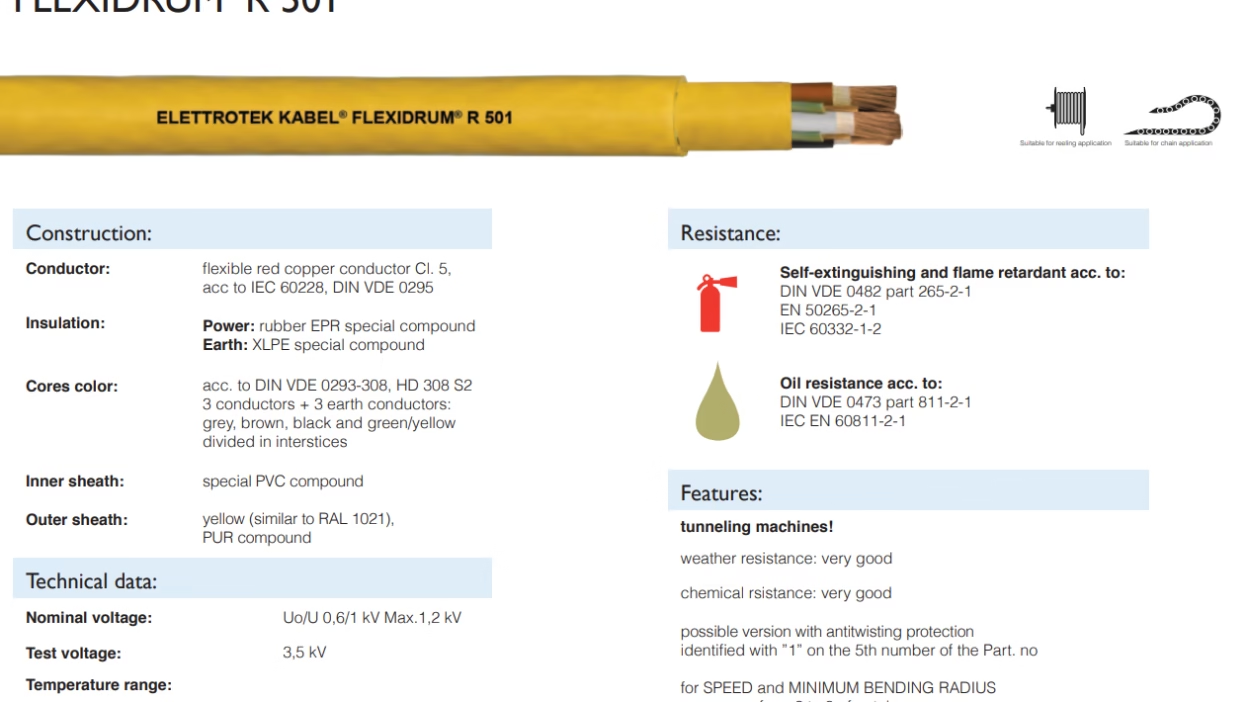
FLEXIDRUM® R 501 employs a unique dual-insulation system: EPR (Ethylene Propylene Rubber) for power conductors and cross-linked polyethylene (XLPE) for protective earth conductors. This architectural choice—uncommon in commercial reeling cables—reflects FeiChun's engineering solution to the demanding mechanical and thermal environment of underground mining.

Полиуретановый Барабанный Кабель (N)GRDGOEU 4×50 Feichun: Аналог NEOPRENE Нового Поколения для Портовых Электролебёдок

Исследование высокопроизводительного полиуретанового рукавного кабеля (N)GRDGOEU 4×50 компании Feichun — современной альтернативы классическому NEOPRENE для морских портовых систем. Четырёхжильный кабель сечением 50 мм² с полиуретановой изоляцией (PUR) повышенной прочности, номинальное напряжение 1000 В переменного тока (450 В постоянного тока), морская коррозия класса C4-M и C5-M с испытанием солевым туманом 500–720 часов, исключительная гибкость R=2.5×D для барабанных систем портовых электролебёдок, механический ресурс 20+ млн циклов, удлинение при разрыве 400–500%, озонная стойкость 4–5 баллов, работа в диапазоне температур -40…+80°C, сертификация IEC 60245-2-11 (PUR кабели), EAC, DNV, ABS. Экономия совокупной стоимости владения 30–45% в сравнении с традиционным NEOPRENE.
FLEXIDRUM® MEDIUM RS (N)TSCGEWÖU:高柔性盐雾防护港口电缆 专业级高柔性盐雾防护电源电缆,专为恶劣海洋环境设计。采用最小12×D鼓面弯曲半径、超强盐雾腐蚀防护、UV/臭氧/湿度防护,跨越3.6/6kV至12/20kV完整电压平台。专用于挖泥船、海洋泵站和港口设备,15年+服役期验证。 港口电缆技术革新:恶劣海洋环境的专业防腐蚀工程 传统电源电缆部署在盐雾海洋环境中会遭遇加速退化机制:卤化物诱导的铜导体电化学腐蚀、渗透水通过外护套微裂纹、光化学紫外线降解聚合物基质、臭氧氧化聚合物交链脆化。标准FLEXIDRUM®电缆(非专化聚合物护套)在持续港口运行的7-10年内经历~35-50%的机械抗张强度损失,导致提前更换周期和港口设备运行中的意外维护中断。 FLEXIDRUM® MEDIUM RS (N)TSCGEWÖU代表材料化学和护套架构的突破性进展,整合:(1)专化PCP外护套化合物,具有专有防盐雾化学物质(氯化钠渗透防护比标准PCP配方高2倍,符合IEC测试规程),(2)先进多层半导电屏障界面,具有疏水分子结构,防止锡铜导体上的电化学腐蚀途径,(3)集成UV/臭氧吸收添加剂,在15年以上服务周期内减少聚合物链断裂退化约60%,(4)优化柔性架构,支持12×D鼓面部署半径(相比常规专化电缆的15×D及更高),对需要跨地理分布港口设施频繁再部署的移动挖泥设备至关重要。

Замена Nexans PANZERFLEX в России: Аналоги по ГОСТ и ТР ТС

Полное техническое руководство по замене европейских барабанных кабелей Nexans PANZERFLEX на производство Feichun — соответствие российским стандартам ГОСТ и техническим регламентам ТР ТС, сокращение сроков поставки на 50–65%, экономия затрат 30–40% от цен европейских поставщиков, логистическая гибкость и долгосрочное партнерство с российскими горнодобывающими операциями.
Серия TENAX® представляет собой семейство высокопроизводительных тяговых кабелей среднего напряжения, разработанных в соответствии со стандартом DIN VDE 0250, часть 813 для подключения крупного мобильного оборудования в условиях экстремальных механических нагрузок. Базовая конструкция TENAX-T является стандартным решением для барабанной намотки, на основе которой разработаны специализированные модификации для конкретных условий эксплуатации.

Что такое тяговые кабели серии TENAX® — T, TT, TZ, N (NTS…WOEU)?

Серия TENAX® представляет собой семейство высокопроизводительных тяговых кабелей среднего напряжения, разработанных в соответствии со стандартом DIN VDE 0250, часть 813 для подключения крупного мобильного оборудования в условиях экстремальных механических нагрузок. Базовая конструкция TENAX-T является стандартным решением для барабанной намотки, на основе которой разработаны специализированные модификации для конкретных условий эксплуатации.