Trailing Cables

IT earthing—where "I" stands for Isolated and "T" represents Terre (earth/ground)—refers to an electrical power distribution system where the transformer's neutral point is either completely isolated from ground or connected to ground through a high-impedance resistor or inductor. This design philosophy is fundamentally different from the TN earthing systems dominant in Europe and North America, where the neutral is directly grounded at low impedance (typically

IT Earthing Systems: Why Australian Mining Cables Must Be Rated for Phase-to-Phase Voltage (Uo=U)

IT earthing system, Australian mining cables, Uo=U voltage rating, phase-to-phase voltage, AS/NZS 2802, AS/NZS 1802, AS/NZS 3007, underground mining cables, surface mining cables, trailing cables, reeling cables, heavy duty flexible cables, mining electrical engineering, ungrounded power systems, single phase to earth fault, earth fault overvoltage, insulation stress, cable dielectric strength, power cable specifications, mining cable cross section, AWG to mm2, cable outer diameter, copper weight, cable weight, current carrying capacity, cable ampacity, EPR insulated cable, PCP sheathed cable, TPU mining cable, medium voltage mining, low voltage mining, mine power distribution, continuous mine operation, fault tolerant power, mine safety standards, Australian mine safety, electrical hazards mining, Type 275 trailing cable, Type 241 reeling cable, Type 441 cable, Type 209 cable, earth continuity conductor, pilot core mining, earth leakage relay, neutral point earthing, isolated neutral system, mine electrical design, flexible power transmission, heavy industrial cables, mining infrastructure
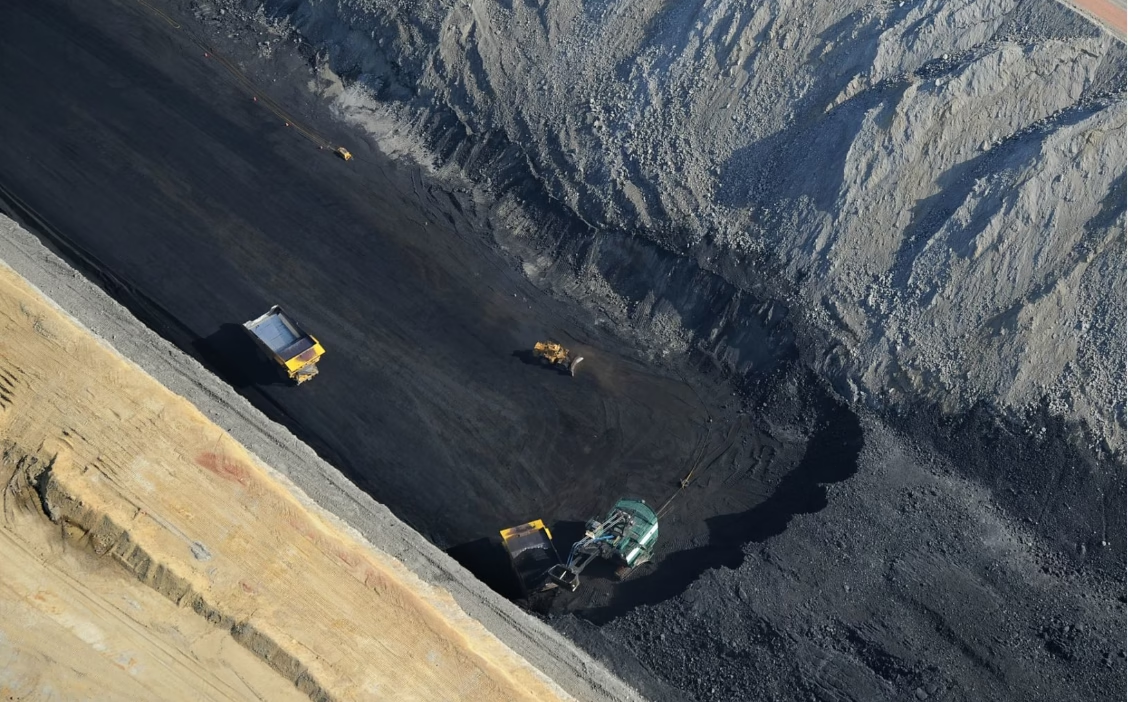
Underground mining operations require strict adherence to Mine Safety and Health Administration (MSHA) regulations for cable repair and splicing to ensure worker safety and equipment reliability. The distinction between permanent and temporary cable repairs is critical, as improper splicing is a leading cause of electrical hazards in mining environments. This technical guide examines the regulatory framework under Title 30 Code of Federal Regulations (CFR), specifically addressing trailing cable splice requirements for underground coal and metal/nonmetal mines. 地下采矿作业必须严格遵守矿山安全与健康管理局(MSHA)的电缆修复和接线规定,以确保工人安全和设备可靠性。永久性和临时性电缆修复之间的区别至关重要,因为不当的接线是采矿环境中电气危险的主要原因。本技术指南研究了《联邦法规》第30篇(CFR)下的监管框架,特别针对地下煤矿和金属/非金属矿山的拖曳电缆接线要求。

MSHA Splice Kits: Rules for Permanent vs. Temporary Cable Repairs Underground

Underground mining operations require strict adherence to Mine Safety and Health Administration (MSHA) regulations for cable repair and splicing to ensure worker safety and equipment reliability. The distinction between permanent and temporary cable repairs is critical, as improper splicing is a leading cause of electrical hazards in mining environments. This technical guide examines the regulatory framework under Title 30 Code of Federal Regulations (CFR), specifically addressing trailing cable splice requirements for underground coal and metal/nonmetal mines. 地下采矿作业必须严格遵守矿山安全与健康管理局(MSHA)的电缆修复和接线规定,以确保工人安全和设备可靠性。永久性和临时性电缆修复之间的区别至关重要,因为不当的接线是采矿环境中电气危险的主要原因。本技术指南研究了《联邦法规》第30篇(CFR)下的监管框架,特别针对地下煤矿和金属/非金属矿山的拖曳电缆接线要求。
TYPE 209 and TYPE 210 mining cables represent critical power distribution infrastructure specifically engineered for the demanding environments of underground coal mining and surface mining operations throughout Australia and New Zealand.

TYPE 209 & TYPE 210 Australian Mining Cables

TYPE 209 and TYPE 210 mining cables represent critical power distribution infrastructure specifically engineered for the demanding environments of underground coal mining and surface mining operations throughout Australia and New Zealand.