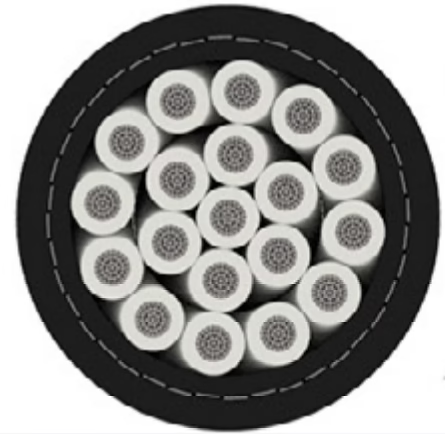
tinned copper marine cable

AquaGlow® LED-illuminated trailing cable is engineered specifically for the practical realities of dredging operations, floating platform power systems, and submersible pump installation. Unlike theoretical self-powered LED solutions, AquaGlow is designed around real-world operational features: cables are dragged across gravel and rocky bottoms, bent repeatedly around pulleys and drums, exposed to saltwater spray and corrosive sewage chemicals, and must remain functional after years of intense mechanical stress.

AquaGlow® LED-Illuminated Trailing Cable

AquaGlow® LED-illuminated trailing cable is engineered specifically for the practical realities of dredging operations, floating platform power systems, and submersible pump installation. Unlike theoretical self-powered LED solutions, AquaGlow is designed around real-world operational features: cables are dragged across gravel and rocky bottoms, bent repeatedly around pulleys and drums, exposed to saltwater spray and corrosive sewage chemicals, and must remain functional after years of intense mechanical stress.
(N)TSCGEWOEU MT SUB E PLUS cable is purpose-engineered to thrive in this hostile marine environment. Through specialized materials (tinned copper, chloroprene rubber), innovative architecture (per-phase copper braid shielding), and rigorous testing protocols, this cable delivers reliable 10–20 year operational lifespan in continuous 300-metre seawater immersion—a performance envelope that standard cables cannot achieve.

(N)TSCGEWOEU MT SUB E PLUS

(N)TSCGEWOEU MT SUB E PLUS cable is purpose-engineered to thrive in this hostile marine environment. Through specialized materials (tinned copper, chloroprene rubber), innovative architecture (per-phase copper braid shielding), and rigorous testing protocols, this cable delivers reliable 10–20 year operational lifespan in continuous 300-metre seawater immersion—a performance envelope that standard cables cannot achieve.
Type MMV 8kV 3/C #2 AWG marine and mining medium voltage cable is designed to withstand brief exposure to 250°C (482°F) emergency fault temperatures, specifically for fault durations not exceeding 5 seconds as defined in IEEE 45 and IEC 60092-502 international standards. This 250°C specification represents the absolute maximum temperature that the EPR (ethylene propylene rubber) insulation can tolerate without experiencing irreversible chemical degradation, mechanical property loss, or immediate failure. The cable will remain mechanically and electrically intact during this emergency thermal exposure provided the fault is cleared by protective devices (circuit breakers, fuses, or automatic shutdown systems) before the five-second threshold is exceeded. However, this specification does not mean the cable is unaffected by this thermal stress—even brief exposure to 250°C causes permanent changes to the EPR insulation chemistry, partial annealing of the tinned copper conductors, and measurable loss of mechanical properties. A cable that has experienced a 250°C fault event and survived instantaneous rupture is not necessarily suitable for continued service at full ampacity without comprehensive testing and damage assessment. Understanding what the 250°C specification guarantees and what it does not guarantee is essential for engineers making repair versus replacement decisions following fault events in mining and offshore applications.

Short-Circuit Temperature Limit: Can Type MMV 8kV 3/C #2 AWG Withstand a 250°C Fault?

Type MMV 8kV 3/C #2 AWG marine and mining medium voltage cable is designed to withstand brief exposure to 250°C (482°F) emergency fault temperatures, specifically for fault durations not exceeding 5 seconds as defined in IEEE 45 and IEC 60092-502 international standards. This 250°C specification represents the absolute maximum temperature that the EPR (ethylene propylene rubber) insulation can tolerate without experiencing irreversible chemical degradation, mechanical property loss, or immediate failure. The cable will remain mechanically and electrically intact during this emergency thermal exposure provided the fault is cleared by protective devices (circuit breakers, fuses, or automatic shutdown systems) before the five-second threshold is exceeded. However, this specification does not mean the cable is unaffected by this thermal stress—even brief exposure to 250°C causes permanent changes to the EPR insulation chemistry, partial annealing of the tinned copper conductors, and measurable loss of mechanical properties. A cable that has experienced a 250°C fault event and survived instantaneous rupture is not necessarily suitable for continued service at full ampacity without comprehensive testing and damage assessment. Understanding what the 250°C specification guarantees and what it does not guarantee is essential for engineers making repair versus replacement decisions following fault events in mining and offshore applications.
在海上石油与天然气开采环境中,电缆系统必须承受极端的机械应力、化学腐蚀与温度波动。MOR® Polyrad® XT-125 系列的设计理念便是从这一现实需求出发,通过多层次的材料创新与严格的标准认证体系,为海上平台提供可靠的动力与控制方案。当电气工程师审核技术规格书(Datasheet)时,通常会严格核对以下几个维度以确保系统的安全性、合规性与长期稳定性。

MOR® Polyrad® XT-125: 600V Non-Armored Flexible Marine Power Cables with Superior Mud Oil Resistance and 125°C Continuous Rating for Offshore Drilling Platforms, Mud Motor Drive Systems, and Subsea Power Distribution

Comprehensive technical guide to MOR® Polyrad® XT-125 non-armored flexible marine power cables: Mud Oil-Resistant insulation, 125°C continuous rating, XLPO cross-linked polyolefin, tinned copper braided armor, platform power distribution, and mud motor drive systems for offshore drilling platforms and subsea intervention.
Technical deep-dive into MPRXCX and MGCH medium-voltage marine cables for floating production storage and offloading vessels: XLPE vs. EPR insulation systems, DNV type-approval, ampacity calculations, EMI shielding design, and flame-retardant jacket specifications for FPSO electrical systems.

MPRXCX / MGCH Equivalents: Finding DNV Approved Medium Voltage Cables for FPSOs with Optimized XLPE and EPR Insulation Systems

Technical deep-dive into MPRXCX and MGCH medium-voltage marine cables for floating production storage and offloading vessels: XLPE vs. EPR insulation systems, DNV type-approval, ampacity calculations, EMI shielding design, and flame-retardant jacket specifications for FPSO electrical systems.
When a marine electrical engineer opens a cable specification document for a 15 kV Type MMV cable, among the first technical parameters to be scrutinized is the notation of insulation level: either 100% or 133%. To the uninitiated, these seemingly abstract percentages might appear to be arbitrary marketing designations. In reality, they represent a profound engineering distinction rooted in power system grounding philosophy and the way electrical stress distributes across the cable insulation during both normal operation and fault conditions. Understanding this distinction is essential for anyone responsible for specifying cables for offshore platforms, FPSOs, or dynamic positioning vessels, because choosing the wrong insulation level can result in premature cable failures, cascading electrical faults, and operational disasters.

Understanding 100% vs. 133% Insulation Levels in Type MMV 15kV Marine Cables

When a marine electrical engineer opens a cable specification document for a 15 kV Type MMV cable, among the first technical parameters to be scrutinized is the notation of insulation level: either 100% or 133%. To the uninitiated, these seemingly abstract percentages might appear to be arbitrary marketing designations. In reality, they represent a profound engineering distinction rooted in power system grounding philosophy and the way electrical stress distributes across the cable insulation during both normal operation and fault conditions. Understanding this distinction is essential for anyone responsible for specifying cables for offshore platforms, FPSOs, or dynamic positioning vessels, because choosing the wrong insulation level can result in premature cable failures, cascading electrical faults, and operational disasters.
British Standard BS6883 covers the specifications for elastomer insulated cables for fixed wiring in ships (shipwiring) and on mobile and fixed offshore marine units. This standard specifies the requirements and test methods for shipboard fixed wiring of lighting, power, control, instrumentation and propulsion circuits with a voltage rating of up to 8.7/15kV.

What is BS6883 Cable?

BS6883電纜, BS6883船用電纜, 船用電纜, 海上電纜, 船用佈線電纜, 船舶電纜, LSZH電纜, LSHF電纜, 低煙無鹵電纜, EPR船用電纜, 海上電力電纜, 船用電纜, 657TQ電纜, 658TQ電纜, SW4型電纜, SW3型電纜, SW2型電纜, 鎧裝船用電纜, 非鎧裝船用電纜, 鋼絲編織電纜, HOFR電纜, 無鹵電纜, 阻燃船用電纜, 勞氏船級社電纜, DNV電纜, UKOOA電纜, 600/1000V船用電纜, 船用儀表電纜, 海上平台電纜, 鑽井平台電纜, 石油平台電纜, FPSO電纜, 耐火電纜, BS7917電纜, 彈性體絕緣電纜, EPR絕緣電纜, 鍍錫銅船用電纜,BS6883, BS6883 cable, marine cable, offshore cable, shipwiring cable, ship cable, LSZH cable, LSHF cable, low smoke halogen free cable, EPR marine cable, offshore power cable, shipboard cable, 657TQ cable, 658TQ cable, Type SW4 cable, Type SW3 cable, Type SW2 cable, armoured marine cable, unarmoured marine cable, GSWB cable, steel wire braid cable, HOFR cable, halogen free cable, flame retardant marine cable