screened mining cable

Российская Федерация эксплуатирует ~200 действующих угольных шахт с подземной добычей, расположенных в пяти основных угольных бассейнах: Кузбасс (Кемеровская область, ~50% подземной добычи), Печорский бассейн (Республика Коми, ~15%), Донбасс (Луганская и Донецкая области, контролируемая часть), Южно-Якутский бассейн (Сахалин, малая доля), и экспортно-ориентированные шахты Сахалина. Суммарное потребление гибких электрических кабелей среднего напряжения 1.14–6.3kV в подземных выработках оценивается в 800–1 200 отрезков в год — производство сосредоточено на трёх заводах: Кольчугинский завод (Владимирская область), Камкабель (Пермь), и ЗАО «Уралкабель» (Екатеринбург). Логистическое плечо от центральных заводов до шахт Кузбасса составляет 3 500–4 500 км по железной дороге, добавляя 10–14 дней к сроку поставки. В критические периоды (предоплановые ремонты, аварийные замены) срок ожидания кабеля КГЭШ 1.14kV достигает 18–26 недель.

VDE 0250 Part 812 vs ГОСТ: Может ли (N)SSHÖU 1.14kV заменить российский КГЭШ 1.14kV в подземных угольных шахтах?Полное инженерно-закупочное руководство

Российская Федерация эксплуатирует ~200 действующих угольных шахт с подземной добычей, расположенных в пяти основных угольных бассейнах: Кузбасс (Кемеровская область, ~50% подземной добычи), Печорский бассейн (Республика Коми, ~15%), Донбасс (Луганская и Донецкая области, контролируемая часть), Южно-Якутский бассейн (Сахалин, малая доля), и экспортно-ориентированные шахты Сахалина. Суммарное потребление гибких электрических кабелей среднего напряжения 1.14–6.3kV в подземных выработках оценивается в 800–1 200 отрезков в год — производство сосредоточено на трёх заводах: Кольчугинский завод (Владимирская область), Камкабель (Пермь), и ЗАО «Уралкабель» (Екатеринбург). Логистическое плечо от центральных заводов до шахт Кузбасса составляет 3 500–4 500 км по железной дороге, добавляя 10–14 дней к сроку поставки. В критические периоды (предоплановые ремонты, аварийные замены) срок ожидания кабеля КГЭШ 1.14kV достигает 18–26 недель.
If your Central Asian underground coal mining project operates within an engineering and procurement ecosystem dominated by Australian consulting firms, English-language design specifications, AS/NZS standards documentation, and requires compatibility with continuous mining equipment protected by pilot-core-dependent relays, then Type 241 (AS/NZS 1802) is your correct choice. Type 241 provides the electrical architecture, pilot conductor continuity, and protective logic integration that Australian mining engineers expect. If your project operates in Kazakhstan, Mongolia, Uzbekistan, or Kyrgyzstan with Russian or Russian-influenced technical standards, local certification bodies that recognize GOST compliance, local maintenance teams trained on GOST equipment, Russian-language technical documentation, and primary focus on cost-effective 6kV power delivery in extreme cold environments, then КГЭ-ХЛ (GOST 31945-2012) is likely the more practical choice. КГЭ-ХЛ integrates seamlessly into Russian-standard electrical systems and is purpose-engineered for the minus forty to minus sixty degree Celsius temperatures endemic to Central Asian winters. 如果您的中亚地下煤矿项目由澳洲咨询公司主导、英文设计规范、AS/NZS标准文件和对连续采煤机保护逻辑兼容性有特殊要求,那么 Type 241(AS/NZS 1802)是正确选择。如果您的项目在哈萨克斯坦、蒙古、乌兹别克斯坦或吉尔吉斯斯坦,采用俄标或俄标影响的技术体系,本地认证机构认可GOST合规,本地维护团队熟悉GOST设备,主要关注极寒下的成本有效6kV供电,那么КГЭ-ХЛ(ГОСТ 31945-2012)是更实用的选择。

AS/NZS Type 241 vs. GOST КГЭ-ХЛ: Choosing the Right Standard for Underground Coal Mines in Central Asia

If your Central Asian underground coal mining project operates within an engineering and procurement ecosystem dominated by Australian consulting firms, English-language design specifications, AS/NZS standards documentation, and requires compatibility with continuous mining equipment protected by pilot-core-dependent relays, then Type 241 (AS/NZS 1802) is your correct choice. Type 241 provides the electrical architecture, pilot conductor continuity, and protective logic integration that Australian mining engineers expect. If your project operates in Kazakhstan, Mongolia, Uzbekistan, or Kyrgyzstan with Russian or Russian-influenced technical standards, local certification bodies that recognize GOST compliance, local maintenance teams trained on GOST equipment, Russian-language technical documentation, and primary focus on cost-effective 6kV power delivery in extreme cold environments, then КГЭ-ХЛ (GOST 31945-2012) is likely the more practical choice. КГЭ-ХЛ integrates seamlessly into Russian-standard electrical systems and is purpose-engineered for the minus forty to minus sixty degree Celsius temperatures endemic to Central Asian winters. 如果您的中亚地下煤矿项目由澳洲咨询公司主导、英文设计规范、AS/NZS标准文件和对连续采煤机保护逻辑兼容性有特殊要求,那么 Type 241(AS/NZS 1802)是正确选择。如果您的项目在哈萨克斯坦、蒙古、乌兹别克斯坦或吉尔吉斯斯坦,采用俄标或俄标影响的技术体系,本地认证机构认可GOST合规,本地维护团队熟悉GOST设备,主要关注极寒下的成本有效6kV供电,那么КГЭ-ХЛ(ГОСТ 31945-2012)是更实用的选择。
The central pilot core in an AS/NZS 1802 Type 241 6.6/6.6kV 3x120mm² cable should exhibit a measured DC resistance of approximately 0.350 to 1.050 ohms per kilometer at 20°C, depending on the pilot conductor's specific cross-sectional area (typically 16mm² or 25mm² in this cable class). For a typical 1,000-meter installation cable segment, the measured resistance across the entire pilot conductor pair (measuring between one end and the remote end, or using a calculated pro-rata method for field acceptance) should not exceed 1.050 ohms for a 16mm² pilot, or approximately 0.690 ohms for a 25mm² pilot. These resistance values serve as acceptance criteria for cable deliveries and provide a baseline against which future field testing can detect degradation caused by moisture ingress, oxidation, mechanical damage, or other environmental stress. The pilot core must demonstrate electrical continuity (resistance approaching zero would indicate an open circuit) while remaining within the specified upper bound (excessive resistance would indicate partial failure or contamination). Testing is performed using a standard digital multimeter set to resistance/ohms mode or using a dedicated cable tester with DC ohmmeter functionality, applied across the pilot conductor terminals at each cable end.

Type 241 6.6/6.6kV 3x120mm² Pilot Core Resistance Testing: Complete Continuity Verification and Field Acceptance Procedures for Underground Mining Cables

The central pilot core in an AS/NZS 1802 Type 241 6.6/6.6kV 3x120mm² cable should exhibit a measured DC resistance of approximately 0.350 to 1.050 ohms per kilometer at 20°C, depending on the pilot conductor’s specific cross-sectional area (typically 16mm² or 25mm² in this cable class). For a typical 1,000-meter installation cable segment, the measured resistance across the entire pilot conductor pair (measuring between one end and the remote end, or using a calculated pro-rata method for field acceptance) should not exceed 1.050 ohms for a 16mm² pilot, or approximately 0.690 ohms for a 25mm² pilot. These resistance values serve as acceptance criteria for cable deliveries and provide a baseline against which future field testing can detect degradation caused by moisture ingress, oxidation, mechanical damage, or other environmental stress. The pilot core must demonstrate electrical continuity (resistance approaching zero would indicate an open circuit) while remaining within the specified upper bound (excessive resistance would indicate partial failure or contamination). Testing is performed using a standard digital multimeter set to resistance/ohms mode or using a dedicated cable tester with DC ohmmeter functionality, applied across the pilot conductor terminals at each cable end.
(N)TMCGEH3S矿用电缆介绍 The (N)TMCGEH3S represents a sophisticated medium voltage trailing cable specifically engineered for demanding open-pit mining operations. Developed in accordance with DIN VDE 0250 Part 813 standards and Nexans specifications, this polyurethane-sheathed cable combines exceptional mechanical durability with advanced electrical performance characteristics. The integration of self-illuminating LED visual monitoring technology transforms this cable into an intelligent power transmission solution that provides real-time operational status indication. (N)TMCGEH3S是一种专为苛刻露天采矿作业设计的复杂中压拖曳电缆。该电缆按照DIN VDE 0250第813部分标准和Nexans规范开发,聚氨酯护套电缆将卓越的机械耐久性与先进的电气性能特性相结合。集成自发光LED视觉监测技术使该电缆成为能够提供实时运行状态指示的智能电力传输解决方案。

(N)TMCGEH3S Self-Illuminating Mining Cable: Can LED Brightness Indicate Voltage Level or Load Status?

(N)TMCGEH3S represents a sophisticated medium voltage trailing cable specifically engineered for demanding open-pit mining operations. Developed in accordance with DIN VDE 0250 Part 813 standards and Nexans specifications, this polyurethane-sheathed cable combines exceptional mechanical durability with advanced electrical performance characteristics. The integration of self-illuminating LED visual monitoring technology transforms this cable into an intelligent power transmission solution that provides real-time operational status indication. (N)TMCGEH3S是一种专为苛刻露天采矿作业设计的复杂中压拖曳电缆。该电缆按照DIN VDE 0250第813部分标准和Nexans规范开发,聚氨酯护套电缆将卓越的机械耐久性与先进的电气性能特性相结合。集成自发光LED视觉监测技术使该电缆成为能够提供实时运行状态指示的智能电力传输解决方案。
Before we dive into the technical differences between Type 241 and Type 260 cables, let's take a moment to understand shuttle cars themselves and why cable selection matters so much for these critical mining vehicles. Think of shuttle cars as the workhorses of underground coal mining operations. These are large, heavy-duty battery-electric or trailing-cable powered vehicles designed to transport coal from the continuous miner working at the coal face to either feeder breakers, mine cars, or belt conveyor systems located some distance away. The shuttle car essentially acts as a mobile bridge between the mining equipment that's actively cutting coal and the permanent conveying infrastructure that will carry that coal to the surface. 在深入了解241型和260型电缆之间的技术差异之前,让我们花点时间了解穿梭车本身,以及为什么电缆选择对这些关键采矿车辆如此重要。可以将穿梭车视为地下煤矿作业的主力。这些是大型重型电池电动或拖缆供电车辆,设计用于将煤炭从在煤层工作面工作的连续采煤机运输到位于一定距离外的给料破碎机、矿车或带式输送机系统。穿梭车本质上充当正在切割煤炭的采矿设备与将煤炭运送到地面的永久输送基础设施之间的移动桥梁。

Type 241 vs. Type 260 Mining Cables: Understanding Construction Differences and Application Selection for Shuttle Car Operations

Before we dive into the technical differences between Type 241 and Type 260 cables, let’s take a moment to understand shuttle cars themselves and why cable selection matters so much for these critical mining vehicles. Think of shuttle cars as the workhorses of underground coal mining operations. These are large, heavy-duty battery-electric or trailing-cable powered vehicles designed to transport coal from the continuous miner working at the coal face to either feeder breakers, mine cars, or belt conveyor systems located some distance away. The shuttle car essentially acts as a mobile bridge between the mining equipment that’s actively cutting coal and the permanent conveying infrastructure that will carry that coal to the surface. 在深入了解241型和260型电缆之间的技术差异之前,让我们花点时间了解穿梭车本身,以及为什么电缆选择对这些关键采矿车辆如此重要。可以将穿梭车视为地下煤矿作业的主力。这些是大型重型电池电动或拖缆供电车辆,设计用于将煤炭从在煤层工作面工作的连续采煤机运输到位于一定距离外的给料破碎机、矿车或带式输送机系统。穿梭车本质上充当正在切割煤炭的采矿设备与将煤炭运送到地面的永久输送基础设施之间的移动桥梁。
When international cable manufacturers consider entering the Colombian market, particularly for mining applications, they encounter a comprehensive regulatory framework that may initially seem complex but serves a vital purpose. The Reglamento Técnico de Instalaciones Eléctricas, universally known by its Spanish acronym RETIE, represents Colombia's mandatory technical regulation governing all electrical installations and products. 当国际电缆制造商考虑进入哥伦比亚市场时,特别是针对矿业应用,他们会遇到一个全面的监管框架 Understanding RETIE is not merely a bureaucratic exercise but rather the foundation for successfully participating in one of South America's most dynamic electrical markets.

RETIE Compliance: Are These Mining Cables Certified for Use in Colombia (RETIE) Electrical Projects?

When international cable manufacturers consider entering the Colombian market, particularly for mining applications, they encounter a comprehensive regulatory framework that may initially seem complex but serves a vital purpose. The Reglamento Técnico de Instalaciones Eléctricas, universally known by its Spanish acronym RETIE, represents Colombia’s mandatory technical regulation governing all electrical installations and products. 当国际电缆制造商考虑进入哥伦比亚市场时,特别是针对矿业应用,他们会遇到一个全面的监管框架 Understanding RETIE is not merely a bureaucratic exercise but rather the foundation for successfully participating in one of South America’s most dynamic electrical markets.
(N)TSCGEWÖU cable series represents a category of medium voltage flexible mining, drilling and tunneling cables primarily designed to meet DIN VDE 0250-813 specifications. (N)TSCGEWÖU电缆系列代表一类中压柔性采矿、钻井和隧道电缆,主要设计满足DIN VDE 0250-813规范 These cables are widely used internationally for power distribution to heavy-duty mining equipment in surface and underground installations. However, exporting these cables to the Russian Federation and other CIS countries requires compliance with GOST-R certification standards, which operate under a distinct regulatory framework from European DIN VDE standards.

GOST-R: Do (N)TSCGEWÖU Cables Meet the GOST-R Certification Requirements for the Russian/CIS Mining Market?

(N)TSCGEWÖU cable series represents a category of medium voltage flexible mining, drilling and tunneling cables primarily designed to meet DIN VDE 0250-813 specifications. (N)TSCGEWÖU电缆系列代表一类中压柔性采矿、钻井和隧道电缆,主要设计满足DIN VDE 0250-813规范 These cables are widely used internationally for power distribution to heavy-duty mining equipment in surface and underground installations. However, exporting these cables to the Russian Federation and other CIS countries requires compliance with GOST-R certification standards, which operate under a distinct regulatory framework from European DIN VDE standards.
N3GHSSYCY cable designation represents a sophisticated medium voltage mining cable specifically engineered for hazardous underground environments. This nomenclature follows the German VDE (Verband der Elektrotechnik) standardization system, where each letter and number conveys critical information about the cable's construction and intended application. Understanding this designation system is essential for engineers, procurement specialists, and safety officers working in mining and tunneling operations. N3GHSSYCY电缆名称代表专门为危险地下环境设计的复杂中压矿用电缆。该命名法遵循德国VDE(电气工程协会)标准化系统,其中每个字母和数字都传达有关电缆结构和预期应用的关键信息。了解该命名系统对于从事采矿和隧道作业的工程师、采购专家和安全官员至关重要。

N3GHSSYCY Cable Datasheet: Technical Specification Downloads & Resources

N3GHSSYCY cable designation represents a sophisticated medium voltage mining cable specifically engineered for hazardous underground environments. This nomenclature follows the German VDE (Verband der Elektrotechnik) standardization system, where each letter and number conveys critical information about the cable’s construction and intended application. Understanding this designation system is essential for engineers, procurement specialists, and safety officers working in mining and tunneling operations. N3GHSSYCY电缆名称代表专门为危险地下环境设计的复杂中压矿用电缆。该命名法遵循德国VDE(电气工程协会)标准化系统,其中每个字母和数字都传达有关电缆结构和预期应用的关键信息。了解该命名系统对于从事采矿和隧道作业的工程师、采购专家和安全官员至关重要。
The proper application of tightening torque to phase connectors in high-voltage cable terminations is one of the most critical yet frequently overlooked aspects of electrical installation work. When terminating Type 450 cables at 33kV, the connector torque directly determines the quality and reliability of the electrical connection, affecting both the immediate performance and long-term service life of the installation. Understanding the correct torque specifications and their underlying principles is essential for ensuring safe, code-compliant, and maintenance-free operation in demanding mining and industrial environments. 在高压电缆终端中对相连接器施加正确的紧固扭矩是电气安装工作中最关键但经常被忽视的方面之一。在33kV终接Type 450电缆时,连接器扭矩直接决定电气连接的质量和可靠性。

Torque Settings: What is the Recommended Tightening Torque for Phase Connectors in a Type 450 33kV Termination?

The proper application of tightening torque to phase connectors in high-voltage cable terminations is one of the most critical yet frequently overlooked aspects of electrical installation work. When terminating Type 450 cables at 33kV, the connector torque directly determines the quality and reliability of the electrical connection, affecting both the immediate performance and long-term service life of the installation. Understanding the correct torque specifications and their underlying principles is essential for ensuring safe, code-compliant, and maintenance-free operation in demanding mining and industrial environments. 在高压电缆终端中对相连接器施加正确的紧固扭矩是电气安装工作中最关键但经常被忽视的方面之一。在33kV终接Type 450电缆时,连接器扭矩直接决定电气连接的质量和可靠性。
H07RN-F to NSSHÖU represents not just a viable replacement but potentially a significant improvement in pump system reliability. This technical analysis will guide you through each aspect of this decision-making process, providing the engineering knowledge needed to make an informed choice for your specific dewatering application.

Can I Replace Standard H07RN-F Cable with NSSHÖU for Heavy-Duty Mining Dewatering Pumps?

H07RN-F to NSSHÖU represents not just a viable replacement but potentially a significant improvement in pump system reliability. This technical analysis will guide you through each aspect of this decision-making process, providing the engineering knowledge needed to make an informed choice for your specific dewatering application.
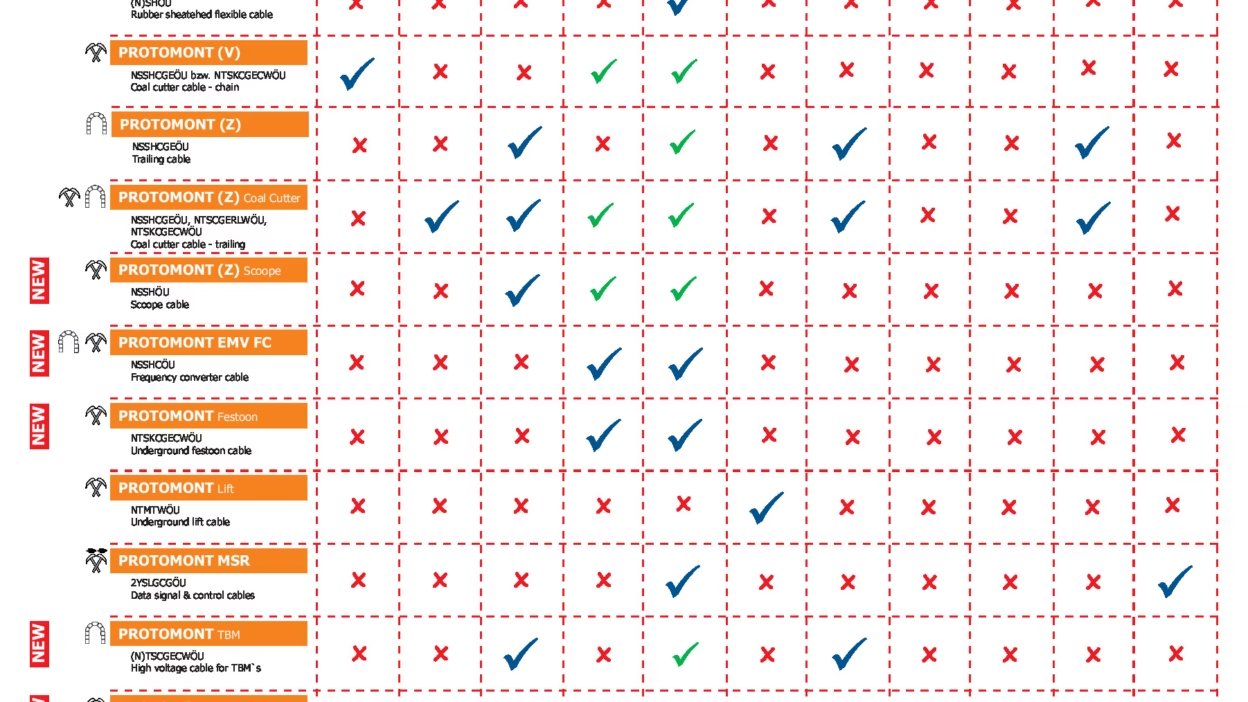
Prysmian Mining Application Systems represent a comprehensive portfolio of specialized cables engineered for the demanding environments of underground mining, tunneling operations, and opencast mining facilities. Developed by Prysmian Group, the world's largest cable manufacturer with over 140 years of expertise, these systems encompass multiple product families including PROTOLON (medium voltage flexible cables), PROTOMONT (rubber-sheathed flexible cables), OPTOFLEX (fiber optic cables), and CORDAFLEX (scraper cables).

What is Prysmian Mining Application systems ?

矿用电缆, 采煤机电缆, 拖曳电缆, 橡套电缆, 中压柔性电缆, 煤矿电缆, 隧道掘进机电缆, горнодобывающий кабель, шахтный кабель, гибкий кабель для шахт, кабель для угольных комбайнов, тянущийся кабель PROTOLON cable, PROTOMONT cable, OPTOFLEX mining cable, CORDAFLEX scraper cable, SUPROMONT power feeder cable, NTMCGCWÖU cable, NTSCGEWÖU cable, NTSCGCEWÖU cable, NSSHÖU cable, NSHÖU mining cable, NSSHCGEÖU coal cutter cable, NSHTÖU scraper cable, NYHSSYCY feeder cable, N3GHSSYCY rubber cable, NTSKGCFCWÖU festoon cable, NTMHWÖU lift cable, ZYSLGCGÖU MSR cable
What is PROTOMONT EMV-FC (N)SSHCOEU 1 kV for Variable Frequency Converter? Complete technical guide to EMC-optimized motor power supply cables for frequency converter controlled drives in mining, construction, and industrial applications | Anhui Feichun Special Cable Co., Ltd. (安徽飞纯特种电缆有限公司)

What is PROTOMONT EMV-FC (N)SSHCOEU (-45°C) 1 kV for Variable Frequency Converter?

PROTOMONT EMV-FC (N)SSHCOEU represents a specialized category of EMC-optimized rubber-sheathed flexible cables engineered specifically for motor power supply applications in Variable Frequency Drive (VFD) controlled systems. These cables address one of the most significant challenges in modern industrial power distribution: electromagnetic compatibility in high-frequency switching environments. Variable Frequency Drives have revolutionized motor control in mining, construction, and industrial applications by providing precise speed regulation and energy efficiency. However, VFDs also introduce unique electrical challenges. As noted by cable engineering specialists, VFDs require specialized cabling to ensure reliable operation, minimize electromagnetic interference, and maintain safety for the system as a whole, because selecting the right cables and proper installation directly impact performance and equipment longevity (source: KEB America). The PROTOMONT EMV-FC series specifically addresses these challenges through its EMC-optimized concentric braid screen design, making it the ideal choice for frequency converter controlled drives in the mining industry, on construction sites, and similar applications with heavy mechanical stresses.
What is PROTOMONT EMV-FC (N)SSHCOEU 1 kV for Variable Frequency Converter? Complete technical guide to EMC-optimized motor power supply cables for frequency converter controlled drives in mining, construction, and industrial applications | Anhui Feichun Special Cable Co., Ltd. (安徽飞纯特种电缆有限公司)

What is PROTOMONT EMV-FC (N)SSHCOEU 1 kV for Variable Frequency Converter?

PROTOMONT EMV-FC (N)SSHCOEU represents a specialized category of EMC-optimized rubber-sheathed flexible cables engineered specifically for motor power supply applications in Variable Frequency Drive (VFD) controlled systems. These cables address one of the most significant challenges in modern industrial power distribution: electromagnetic compatibility in high-frequency switching environments. Variable Frequency Drives have revolutionized motor control in mining, construction, and industrial applications by providing precise speed regulation and energy efficiency. However, VFDs also introduce unique electrical challenges. As noted by cable engineering specialists, VFDs require specialized cabling to ensure reliable operation, minimize electromagnetic interference, and maintain safety for the system as a whole, because selecting the right cables and proper installation directly impact performance and equipment longevity (source: KEB America). The PROTOMONT EMV-FC series specifically addresses these challenges through its EMC-optimized concentric braid screen design, making it the ideal choice for frequency converter controlled drives in the mining industry, on construction sites, and similar applications with heavy mechanical stresses.
Type 7 Mining Cable to BS 6708

What is Type 7 Mining Cable to BS 6708?

Type 7 mining cables represent a critical category of flexible trailing cables designed specifically for the demanding conditions encountered in underground coal mining operations. These cables conform to the rigorous requirements established by British Standard BS 6708, which has become an internationally recognized benchmark for mining cable safety and performance. The standard was developed through decades of mining industry experience and addresses the unique electrical and mechanical challenges present in potentially explosive underground environments. According to BSI Knowledge, BS 6708 specifications establish comprehensive requirements for flexible cables used at mines and quarries, ensuring that these critical power transmission components meet stringent safety and performance criteria. The Type 7 designation specifically identifies non-armoured cables with individually metallic screened cores rated at 640/1100V, engineered for both fixed installation and flexible operation in coal face cutting equipment.