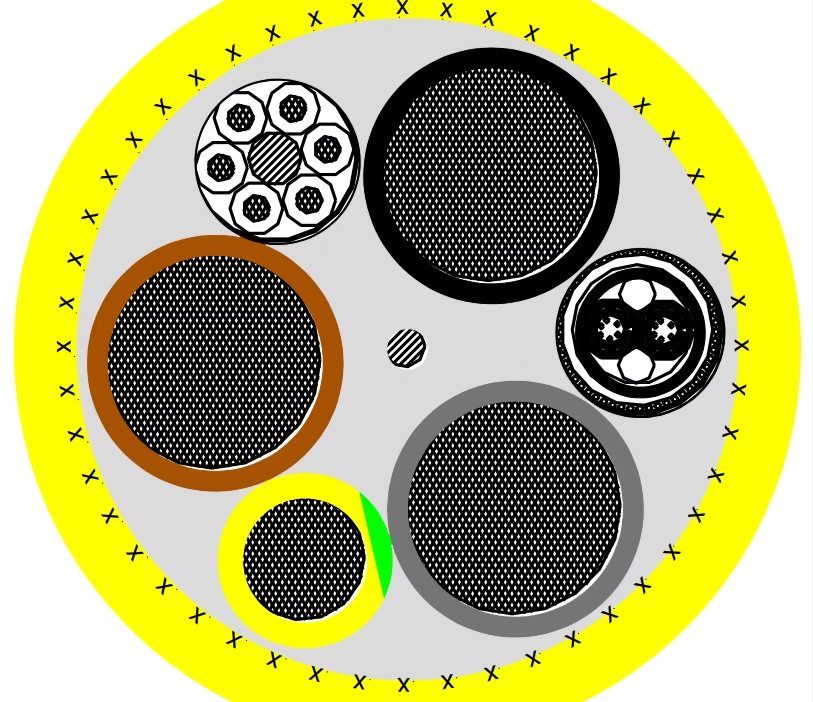
(N)TSCGEWÖU-FO: Preventing Fiber Optic Breakage in High-Stress Reeling Environments
For the past several decades, industrial equipment operators have maintained strict separation between two completely different cable systems: power cables to deliver electrical energy, and data/communication cables to transmit control signals, telemetry, and monitoring information. A large mining excavator, for example, might require a 50 mm² power trailing cable and a separate, smaller-diameter communication cable running in parallel through the same cable tray. This separation imposed logistical inefficiencies, redundancy in installation labor, and increased complexity when coordinating maintenance or upgrades.
Modern industrial automation, predictive maintenance systems, and real-time equipment monitoring have created a compelling case for convergence: combining power and high-speed data transmission within a single cable. This is precisely what (N)TSCGEWÖU-FO cables accomplish. The designation “-FO” (Fiber Optic) indicates that this cable carries not only the three-phase medium-voltage power (typically 6/10 kV or 12/20 kV) that the equipment needs to operate, but also 6, 12, or even 18 channels of high-speed optical fiber that can transmit control signals, sensor data, and video feeds from the excavator, stacker-reclaimer, or other equipment back to a central control station at the shore or mining office. 现代工业自动化推动了电力与数据传输的融合,(N)TSCGEWÖU-FO电缆在单一电缆中结合了中压电力和高速光纤通信。