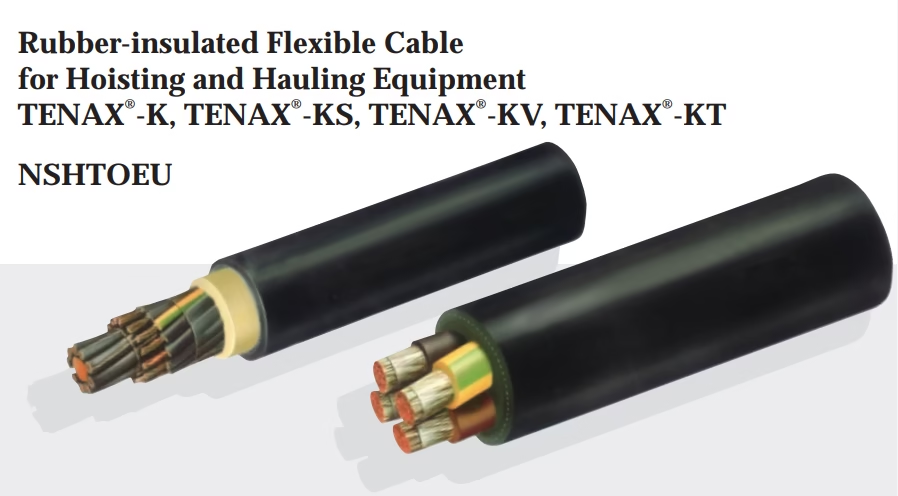
Nexans TORERO® vs. NSSHÖU: Why TORERO Is Often Specified for LHD Loaders
Underground LHD (Load-Haul-Dump) loaders — also called scooptrams — rely on a flexible trailing cable that is continuously reeled and unreeled as the machine travels between muck piles and ore passes. The cable must survive thousands of reeling cycles, simultaneous tensile and torsional loads, crushing from rock debris, and exposure to water, oil, and abrasive dust. Two cable families dominate this niche: the Nexans TORERO® series (type designation NSHTOEU) and the more generic NSSHÖU heavy-duty rubber cable.
井下 LHD(铲运机/Scooptram)依靠持续收放的柔性拖曳电缆供电。该电缆需承受数千次卷绕循环、拉伸与扭转同时作用的载荷、岩石碾压以及水、油与粉尘侵蚀。两大系列电缆在此领域占据主导:Nexans TORERO®(型号 NSHTOEU)与通用的 NSSHÖU 重型橡套电缆。
This article explains the structural, electrical, and mechanical differences between the two, examines why many OEMs and mine operators specify the TORERO type for LHD duty, and introduces Feichun’s comparable alternative manufactured in Anhui, China.
本文将阐明二者在结构、电气与机械性能上的差异,分析 OEM 与矿方为何为 LHD 工况指定 TORERO 型,并介绍飞纯在安徽制造的同等替代方案。