drum winding cable

КГ-ХЛ (Кабель Гибкий, исполнение ХЛ — flexible cable, cold-rated variant) per GOST 24334-80 is Russia's ubiquitous heavy-duty flexible rubber-sheathed cable, deployed across every sector of Russian heavy industry from mining to oil & gas to port operations. The ХЛ suffix designates the cold-rated compound formulation, enabling dynamic operation down to −60°C — a specification born from the operational reality of Murmansk, Norilsk, Dudinka, and Vladivostok. In its intended application — powering portable industrial equipment via manual cable handling or simple festoon systems — КГ-ХЛ performs admirably. But on the motorized reeling drums of portal cranes, ship-to-shore (STS) cranes, rail-mounted gantry (RMG) cranes, and rubber-tyred gantry (RTG) cranes, КГ-ХЛ fails prematurely and catastrophically through a specific mechanism: corkscrewing — the progressive helical deformation of the cable caused by core migration under combined axial tension and cyclic bending. Typical service life of КГ-ХЛ on a portal crane drum: 4–8 months. Typical service life of NSHTÖU-J on the same drum: 18–36 months. The difference is the anti-torsion braid — a single structural layer that КГ-ХЛ does not have and cannot be retrofitted with.
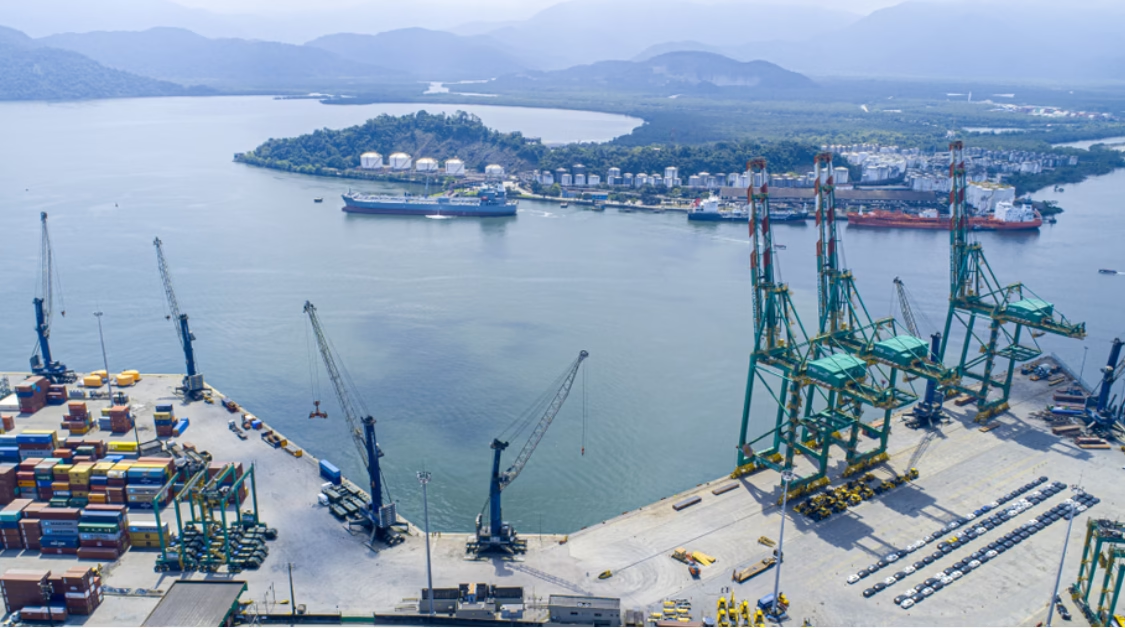
Reeling Cable Upgrade: Swapping КГ-ХЛ (KG-HL) for VDE 0250 NSHTÖU-J on Russian Portal CranesComplete Engineering & Procurement Guide

КГ-ХЛ (Кабель Гибкий, исполнение ХЛ — flexible cable, cold-rated variant) per GOST 24334-80 is Russia’s ubiquitous heavy-duty flexible rubber-sheathed cable, deployed across every sector of Russian heavy industry from mining to oil & gas to port operations. The ХЛ suffix designates the cold-rated compound formulation, enabling dynamic operation down to −60°C — a specification born from the operational reality of Murmansk, Norilsk, Dudinka, and Vladivostok. In its intended application — powering portable industrial equipment via manual cable handling or simple festoon systems — КГ-ХЛ performs admirably. But on the motorized reeling drums of portal cranes, ship-to-shore (STS) cranes, rail-mounted gantry (RMG) cranes, and rubber-tyred gantry (RTG) cranes, КГ-ХЛ fails prematurely and catastrophically through a specific mechanism: corkscrewing — the progressive helical deformation of the cable caused by core migration under combined axial tension and cyclic bending. Typical service life of КГ-ХЛ on a portal crane drum: 4–8 months. Typical service life of NSHTÖU-J on the same drum: 18–36 months. The difference is the anti-torsion braid — a single structural layer that КГ-ХЛ does not have and cannot be retrofitted with.
(N)TSCGEWÖU cable type represents a specialized category of medium-voltage power cables designed for demanding applications in mining, tunneling, harbor cranes, and heavy-duty industrial environments. These cables feature 3GI3 grade Ethylene-Propylene Rubber (EPR) insulation, which must maintain dielectric integrity under extreme mechanical stress, moisture exposure, and electrical field conditions. Understanding the aging behavior of the dielectric loss factor (tan delta, tan δ) is critical for predictive maintenance and ensuring operational safety in these mission-critical applications.

Tan Delta Aging: How does the dielectric loss factor (Tan Delta) of 3GI3 insulation in (N)TSCGEWÖU cables change with long-term aging?

(N)TSCGEWÖU cable type represents a specialized category of medium-voltage power cables designed for demanding applications in mining, tunneling, harbor cranes, and heavy-duty industrial environments. These cables feature 3GI3 grade Ethylene-Propylene Rubber (EPR) insulation, which must maintain dielectric integrity under extreme mechanical stress, moisture exposure, and electrical field conditions. Understanding the aging behavior of the dielectric loss factor (tan delta, tan δ) is critical for predictive maintenance and ensuring operational safety in these mission-critical applications.
PROTOMONT TBM cable, TSCGECWHXOEU halogen-free, tunnel boring machine cable, TBM reeling cable, 6/10 kV tunneling cable, halogen-free mining cable, EVA sheath cable, fire resistant TBM cable, underground tunneling power

PROTOMONT TBM (N)TSCGECWHXOEU 6/10 kV

PROTOMONT TBM cable, TSCGECWHXOEU halogen-free, tunnel boring machine cable, TBM reeling cable, 6/10 kV tunneling cable, halogen-free mining cable, EVA sheath cable, fire resistant TBM cable, underground tunneling power
TENAX-HTT (N)TSCGEWOEU 10 kV – 30 kV: Technical Guide for Extreme Duty High-Voltage Mining Cables for Underground Transformers and Tunneling Equipment

TENAX-HTT (N)TSCGEWOEU 10 kV – 30 kV

TENAX-HTT TSCGEWOEU, 10kV 30kV mining cable, high voltage underground cable, extreme duty mining cable, slow reeling cable, transformer connection cable, hazardous environment cable, VDE 0250-813, tunneling MV cable
Class 3 6600V Ethylene Propylene Rubber Insulated Polychloroprene Rubber Sheath Cable - JIS C 4353 Standard

What is 6600V 3PNCT Crane Cable? 

The 6600V 3PNCT crane cable represents a specialized class of high-voltage power cables specifically engineered for demanding industrial applications where continuous flexing, high mechanical stress, and environmental exposure are constant operational realities. This cable designation indicates a Class 3 flexible conductor construction rated for 6600 volts AC, featuring ethylene propylene rubber insulation and a polychloroprene rubber outer sheath, manufactured in accordance with the rigorous requirements of JIS C 4353 Japanese Industrial Standard.
Polish Mining Cable

What is YHKGXSekyn, YHKGXSekFtZnyn, YHKGXSekFtyn, YHKGXSekFitlyn, YHKGXSekFoyn, and YHKGXSekFpyn Polish Mining Cable ?

Polish Mining Cable Code Designation System represents a comprehensive nomenclature standard used extensively throughout European mining operations, particularly in Poland’s extensive coal, copper, and mineral extraction industries. This systematic coding methodology enables engineers and procurement specialists to precisely specify cable configurations through alphanumeric designations that encode critical construction parameters, material specifications, and performance characteristics.