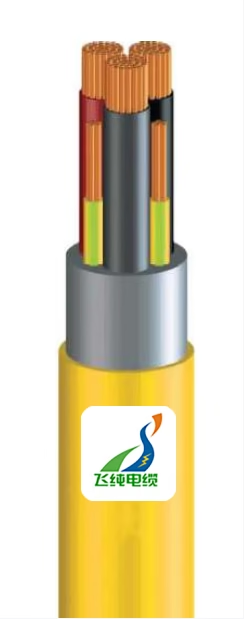
drag cable

This distinction is not academic. Every year, mining operations, port facilities, and industrial plants experience cable failures because an engineer or procurement team specified a trailing cable where a reeling cable was needed, or vice versa. The cables may share similar voltage ratings, conductor sizes, and even visual appearance—but they are engineered to solve fundamentally different mechanical problems. A trailing cable installed on a reeling drum will fatigue and fail within weeks. A reeling cable dragged across a mine floor will be cut, crushed, and destroyed within days. Understanding the engineering rationale behind each cable type is essential for anyone involved in cable specification, procurement, or installation for mining and heavy industrial applications. 这一区别绝非学术问题。每年都有矿山、港口和工业厂房因在需要卷筒电缆的场合错误使用了拖曳电缆(或反之)而发生电缆失效。两种电缆可能共享相似的电压等级、导体截面甚至外观——但它们的工程设计解决的是截然不同的机械问题。将拖曳电缆安装在卷筒上会在数周内导致疲劳断裂;将卷筒电缆在矿井地面拖拽会在数天内被切割和压碎。 This article provides the complete engineering foundation for understanding the differences. It is written for electrical engineers, mine electrical supervisors, procurement specialists, and equipment operators who must select the correct cable type for their specific application. Every comparison, every specification value, and every material choice described below is grounded in the physical reality of how these cables operate—and fail—in the field.

Reeling Cable vs Trailing Cable: Complete Engineering Comparison for Mining & Heavy Industry

This distinction is not academic. Every year, mining operations, port facilities, and industrial plants experience cable failures because an engineer or procurement team specified a trailing cable where a reeling cable was needed, or vice versa. The cables may share similar voltage ratings, conductor sizes, and even visual appearance—but they are engineered to solve fundamentally different mechanical problems. A trailing cable installed on a reeling drum will fatigue and fail within weeks. A reeling cable dragged across a mine floor will be cut, crushed, and destroyed within days. Understanding the engineering rationale behind each cable type is essential for anyone involved in cable specification, procurement, or installation for mining and heavy industrial applications. 这一区别绝非学术问题。每年都有矿山、港口和工业厂房因在需要卷筒电缆的场合错误使用了拖曳电缆(或反之)而发生电缆失效。两种电缆可能共享相似的电压等级、导体截面甚至外观——但它们的工程设计解决的是截然不同的机械问题。将拖曳电缆安装在卷筒上会在数周内导致疲劳断裂;将卷筒电缆在矿井地面拖拽会在数天内被切割和压碎。 This article provides the complete engineering foundation for understanding the differences. It is written for electrical engineers, mine electrical supervisors, procurement specialists, and equipment operators who must select the correct cable type for their specific application. Every comparison, every specification value, and every material choice described below is grounded in the physical reality of how these cables operate—and fail—in the field.
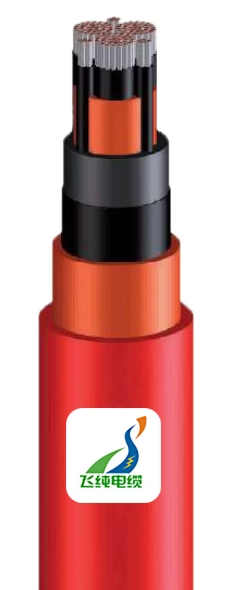
(N)TSCGEWÖU 3x120+3x70/3 12/20kV cable is the correct choice for most tunnel boring machine main cutterhead power supplies operating at medium voltage with cutterhead thrust loads in the range of 8,000 to 12,000 kilonewtons, featuring three 120 mm² phase conductors providing approximately 350 to 380 amperes current capacity in free-air installation at 30°C ambient and 90°C conductor operating temperature. The cable's nominal outer diameter is 73 to 81 millimeters, with total weight of approximately 9,800 to 10,500 kilograms per kilometer, making it manageable for most standard cable spools while still providing sufficient conductor cross-section to limit voltage drop to acceptable levels over tunnel distances extending several kilometers. The cable features Class 5 tinned copper conductors engineered for fatigue resistance in continuously flexing applications, EPR insulation maintaining exceptional thermal stability even when subjected to the 90°C conductor temperature that results from high-current excavation duty, semi-conductive shielding layers that uniformly distribute electric stress and prevent partial discharge initiation in the high-voltage environment, and a heavy-duty CPE jacket providing abrasion resistance in the confined underground spaces where the cable is routed. However, the critical distinction between simply selecting a cable model and properly sizing a cable for your specific tunnel boring installation lies in understanding the difference between the cable's theoretical free-air current capacity and its actual safe operating current when coiled on a cable drum—a difference that can reduce safe current by 30 to 50 percent depending on the spooling configuration. For tunnel boring machines operating in continental European or Asian tunneling projects with tunnel lengths of 5 to 15 kilometers and cutterhead thrust loads in the moderate to high range, the 3x120+3x70/3 12/20kV cable provides excellent balance between current capacity, voltage drop performance, mechanical durability, and cost. However, for shorter tunnels where voltage drop is not a concern, smaller conductor sizes (such as 3x95 mm²) may provide adequate performance at lower material cost, while for exceptionally long tunnels or extremely high thrust conditions, larger sizes (such as 3x150 mm² or 3x185 mm²) become necessary to maintain safe operating currents and acceptable voltage drop. Proper cable sizing requires engineering analysis specific to your tunnel length, expected cutterhead current demand, acceptable voltage drop limits, available cable drum diameters, and operational duty cycle.

Tunnel Boring Machines (TBM): Sizing (N)TSCGEWÖU 3×120+3×70/3 12/20kV for the Main Cutterhead Power Supply

(N)TSCGEWÖU 3×120+3×70/3 12/20kV cable is the correct choice for most tunnel boring machine main cutterhead power supplies operating at medium voltage with cutterhead thrust loads in the range of 8,000 to 12,000 kilonewtons, featuring three 120 mm² phase conductors providing approximately 350 to 380 amperes current capacity in free-air installation at 30°C ambient and 90°C conductor operating temperature. The cable’s nominal outer diameter is 73 to 81 millimeters, with total weight of approximately 9,800 to 10,500 kilograms per kilometer, making it manageable for most standard cable spools while still providing sufficient conductor cross-section to limit voltage drop to acceptable levels over tunnel distances extending several kilometers. The cable features Class 5 tinned copper conductors engineered for fatigue resistance in continuously flexing applications, EPR insulation maintaining exceptional thermal stability even when subjected to the 90°C conductor temperature that results from high-current excavation duty, semi-conductive shielding layers that uniformly distribute electric stress and prevent partial discharge initiation in the high-voltage environment, and a heavy-duty CPE jacket providing abrasion resistance in the confined underground spaces where the cable is routed. However, the critical distinction between simply selecting a cable model and properly sizing a cable for your specific tunnel boring installation lies in understanding the difference between the cable’s theoretical free-air current capacity and its actual safe operating current when coiled on a cable drum—a difference that can reduce safe current by 30 to 50 percent depending on the spooling configuration. For tunnel boring machines operating in continental European or Asian tunneling projects with tunnel lengths of 5 to 15 kilometers and cutterhead thrust loads in the moderate to high range, the 3×120+3×70/3 12/20kV cable provides excellent balance between current capacity, voltage drop performance, mechanical durability, and cost. However, for shorter tunnels where voltage drop is not a concern, smaller conductor sizes (such as 3×95 mm²) may provide adequate performance at lower material cost, while for exceptionally long tunnels or extremely high thrust conditions, larger sizes (such as 3×150 mm² or 3×185 mm²) become necessary to maintain safe operating currents and acceptable voltage drop. Proper cable sizing requires engineering analysis specific to your tunnel length, expected cutterhead current demand, acceptable voltage drop limits, available cable drum diameters, and operational duty cycle.
The Type W 4/C 2/0 AWG 2000V portable power cable features a heavy-duty CPE (chlorinated polyethylene) outer jacket that demonstrates exceptional resistance to both ozone and ultraviolet radiation across the typical operating life of outdoor industrial equipment. The cable meets MSHA requirements and passes ASTM D1149 ozone resistance testing, demonstrating no cracking or surface crazing when exposed to 50 parts-per-hundred-million (pphm) of ozone concentration for extended periods. The cable's UV resistance performance, when evaluated according to ASTM G154 accelerated UV aging procedures using UVA-340 lamps at 60°C for 1,000 hours of exposure, results in retention of approximately 80–90% of original tensile strength and maintains mechanical flexibility adequate for normal cable handling and deployment. This performance level, combined with the inherent flame retardant properties of the CPE compound formulation, means that Type W cable can remain in outdoor service for extended periods—typically 5 to 10 years of continuous or frequent outdoor exposure—without experiencing the surface cracking, brittleness, or loss of mechanical properties that would render the cable unsafe or unsuitable for reeling operations. The black color of the CPE formulation, while primarily selected for aesthetic reasons in industrial equipment, also serves a secondary protective function by absorbing and dissipating ultraviolet radiation rather than transmitting it to the inner EPR insulation layers. Understanding how the CPE jacket maintains its protective properties under outdoor exposure requires appreciation for both the chemistry of weathering processes and the engineering of additive packages that extend the cable's useful service life far beyond what conventional rubber compounds could achieve.

Ozone and UV Resistance: Weathering Parameters for Outer Sheath of Type W 4/C 2/0 AWG 2000V Cable

The Type W 4/C 2/0 AWG 2000V portable power cable features a heavy-duty CPE (chlorinated polyethylene) outer jacket that demonstrates exceptional resistance to both ozone and ultraviolet radiation across the typical operating life of outdoor industrial equipment. The cable meets MSHA requirements and passes ASTM D1149 ozone resistance testing, demonstrating no cracking or surface crazing when exposed to 50 parts-per-hundred-million (pphm) of ozone concentration for extended periods. The cable’s UV resistance performance, when evaluated according to ASTM G154 accelerated UV aging procedures using UVA-340 lamps at 60°C for 1,000 hours of exposure, results in retention of approximately 80–90% of original tensile strength and maintains mechanical flexibility adequate for normal cable handling and deployment. This performance level, combined with the inherent flame retardant properties of the CPE compound formulation, means that Type W cable can remain in outdoor service for extended periods—typically 5 to 10 years of continuous or frequent outdoor exposure—without experiencing the surface cracking, brittleness, or loss of mechanical properties that would render the cable unsafe or unsuitable for reeling operations. The black color of the CPE formulation, while primarily selected for aesthetic reasons in industrial equipment, also serves a secondary protective function by absorbing and dissipating ultraviolet radiation rather than transmitting it to the inner EPR insulation layers. Understanding how the CPE jacket maintains its protective properties under outdoor exposure requires appreciation for both the chemistry of weathering processes and the engineering of additive packages that extend the cable’s useful service life far beyond what conventional rubber compounds could achieve.
High-performance polyurethane sheathed flexible power cables for mining and tunneling applications. Available in two variants: standard version without anti-twisting protection (TUNNELFLEX-PUR) and enhanced version with synthetic mesh anti-twisting protection (TUNNELFLEX-R/PUR).

What is TUNNELFLEX-PUR&TUNNELFLEX-R/PUR 0.6/1kV Cable?

TUNNELFLEX-PUR and TUNNELFLEX-R/PUR are specialized 0.6/1kV flexible power cables engineered for mining and tunneling applications. These cables provide reliable power supply to mobile equipment operating in harsh underground environments where there is a high risk of mechanical damage. The TUNNELFLEX cable series is suitable for applications where it is deflected in one plane only, with a maximum operating speed of 60 m/min.
FG7ORPu-TUNNELFLEX is a specialized 0.6/1kV flexible power cable engineered specifically for mining and tunneling applications. This cable provides reliable power supply to mobile equipment operating in harsh underground environments where there is a high risk of mechanical damage. The TUNNELFLEX cable is suitable for applications where it is deflected in one plane only, with a maximum operating speed of 60 m/min.

What is FG7ORPu-TUNNELFLEX 0.6/1kV Cable?

FG7ORPu-TUNNELFLEX is a specialized 0.6/1kV flexible power cable engineered specifically for mining and tunneling applications. This cable provides reliable power supply to mobile equipment operating in harsh underground environments where there is a high risk of mechanical damage. The TUNNELFLEX cable is suitable for applications where it is deflected in one plane only, with a maximum operating speed of 60 m/min.