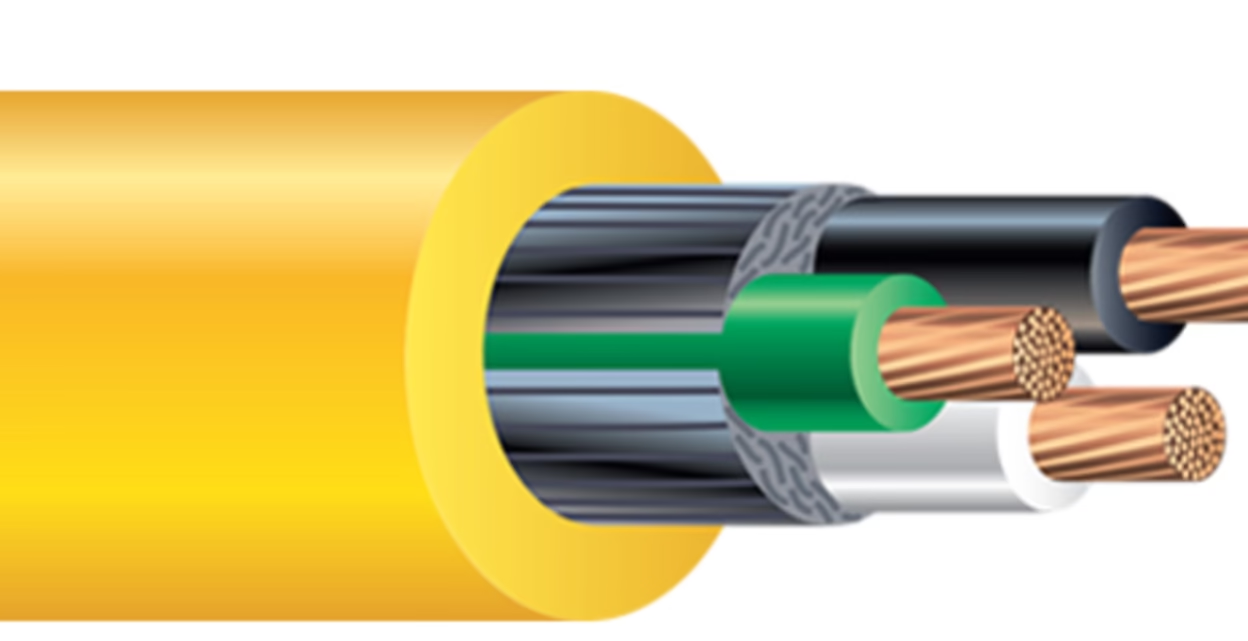
CPE jacket cable

The Type W 4/C 2/0 AWG 2000V cable features a heavy-duty thermoset CPE (chlorinated polyethylene) jacket that is specifically formulated with UV stabilizers and ozone-resistant additives, providing robust protection against continuous direct sunlight and high ozone concentrations found in desert port environments. The cable is rated to withstand prolonged outdoor exposure in desert conditions, typically maintaining 80 to 90 percent of its physical properties after 5 to 10 years of continuous unshaded sunlight exposure, compared to standard elastomeric jackets that degrade to 50 to 70 percent property retention under identical conditions. The nominal outer diameter of this cable is 46.8 to 49.1 mm (1.845 to 1.935 inches), with approximate weight of 4,390 to 5,133 kg per kilometer. The cable features 259-strand rope-lay copper conductors (2/0 AWG per core), four 67.4 mm² cores, EPDM insulation rated for 90°C conductor temperature, and current carrying capacity of 237 amperes (based on 30°C ambient, 90°C conductor temperature). However, the critical distinction that separates viable long-term desert service from premature field failures lies in understanding the difference between a cable jacket that merely resists UV degradation and a comprehensively designed system where all exposed components—including terminal connections, stripped insulation, and mechanical attachment points—receive appropriate protection from direct sunlight. In actual desert port applications, failures are as frequently caused by UV damage at unprotected termination points as by jacket degradation itself, making installation and maintenance procedures as important as material selection. For typical desert port power systems, RTG (rubber-tired gantry) crane power leads, shore-to-ship power cables, and fixed deck-mounted power distribution systems operating in Middle Eastern, North African, and Australian port environments, the Type W 4/C 2/0 AWG cable with standard CPE jacket provides reliable field-proven performance when properly installed and maintained, but premium UV-resistant cable variants should be considered for applications where service life extension beyond 7 to 10 years is critical or where inspection and maintenance infrastructure is limited.

UV & Ozone Resistance of Type W 4/C 2/0 AWG 2000V: Is the CPE Jacket Durable Enough for Constant Direct Sunlight in Desert Ports?

The Type W 4/C 2/0 AWG 2000V cable features a heavy-duty thermoset CPE (chlorinated polyethylene) jacket that is specifically formulated with UV stabilizers and ozone-resistant additives, providing robust protection against continuous direct sunlight and high ozone concentrations found in desert port environments. The cable is rated to withstand prolonged outdoor exposure in desert conditions, typically maintaining 80 to 90 percent of its physical properties after 5 to 10 years of continuous unshaded sunlight exposure, compared to standard elastomeric jackets that degrade to 50 to 70 percent property retention under identical conditions. The nominal outer diameter of this cable is 46.8 to 49.1 mm (1.845 to 1.935 inches), with approximate weight of 4,390 to 5,133 kg per kilometer. The cable features 259-strand rope-lay copper conductors (2/0 AWG per core), four 67.4 mm² cores, EPDM insulation rated for 90°C conductor temperature, and current carrying capacity of 237 amperes (based on 30°C ambient, 90°C conductor temperature). However, the critical distinction that separates viable long-term desert service from premature field failures lies in understanding the difference between a cable jacket that merely resists UV degradation and a comprehensively designed system where all exposed components—including terminal connections, stripped insulation, and mechanical attachment points—receive appropriate protection from direct sunlight. In actual desert port applications, failures are as frequently caused by UV damage at unprotected termination points as by jacket degradation itself, making installation and maintenance procedures as important as material selection. For typical desert port power systems, RTG (rubber-tired gantry) crane power leads, shore-to-ship power cables, and fixed deck-mounted power distribution systems operating in Middle Eastern, North African, and Australian port environments, the Type W 4/C 2/0 AWG cable with standard CPE jacket provides reliable field-proven performance when properly installed and maintained, but premium UV-resistant cable variants should be considered for applications where service life extension beyond 7 to 10 years is critical or where inspection and maintenance infrastructure is limited.
The Type W 4/C 2/0 AWG 2000V portable power cable features a heavy-duty CPE (chlorinated polyethylene) outer jacket that demonstrates exceptional resistance to both ozone and ultraviolet radiation across the typical operating life of outdoor industrial equipment. The cable meets MSHA requirements and passes ASTM D1149 ozone resistance testing, demonstrating no cracking or surface crazing when exposed to 50 parts-per-hundred-million (pphm) of ozone concentration for extended periods. The cable's UV resistance performance, when evaluated according to ASTM G154 accelerated UV aging procedures using UVA-340 lamps at 60°C for 1,000 hours of exposure, results in retention of approximately 80–90% of original tensile strength and maintains mechanical flexibility adequate for normal cable handling and deployment. This performance level, combined with the inherent flame retardant properties of the CPE compound formulation, means that Type W cable can remain in outdoor service for extended periods—typically 5 to 10 years of continuous or frequent outdoor exposure—without experiencing the surface cracking, brittleness, or loss of mechanical properties that would render the cable unsafe or unsuitable for reeling operations. The black color of the CPE formulation, while primarily selected for aesthetic reasons in industrial equipment, also serves a secondary protective function by absorbing and dissipating ultraviolet radiation rather than transmitting it to the inner EPR insulation layers. Understanding how the CPE jacket maintains its protective properties under outdoor exposure requires appreciation for both the chemistry of weathering processes and the engineering of additive packages that extend the cable's useful service life far beyond what conventional rubber compounds could achieve.

Ozone and UV Resistance: Weathering Parameters for Outer Sheath of Type W 4/C 2/0 AWG 2000V Cable

The Type W 4/C 2/0 AWG 2000V portable power cable features a heavy-duty CPE (chlorinated polyethylene) outer jacket that demonstrates exceptional resistance to both ozone and ultraviolet radiation across the typical operating life of outdoor industrial equipment. The cable meets MSHA requirements and passes ASTM D1149 ozone resistance testing, demonstrating no cracking or surface crazing when exposed to 50 parts-per-hundred-million (pphm) of ozone concentration for extended periods. The cable’s UV resistance performance, when evaluated according to ASTM G154 accelerated UV aging procedures using UVA-340 lamps at 60°C for 1,000 hours of exposure, results in retention of approximately 80–90% of original tensile strength and maintains mechanical flexibility adequate for normal cable handling and deployment. This performance level, combined with the inherent flame retardant properties of the CPE compound formulation, means that Type W cable can remain in outdoor service for extended periods—typically 5 to 10 years of continuous or frequent outdoor exposure—without experiencing the surface cracking, brittleness, or loss of mechanical properties that would render the cable unsafe or unsuitable for reeling operations. The black color of the CPE formulation, while primarily selected for aesthetic reasons in industrial equipment, also serves a secondary protective function by absorbing and dissipating ultraviolet radiation rather than transmitting it to the inner EPR insulation layers. Understanding how the CPE jacket maintains its protective properties under outdoor exposure requires appreciation for both the chemistry of weathering processes and the engineering of additive packages that extend the cable’s useful service life far beyond what conventional rubber compounds could achieve.
The selection of industrial power cables represents one of the most critical engineering decisions in drilling operations, whether on land or offshore. Two cable types dominate this application space: the Type SHD-GC (重型屏蔽接地检查电缆), designed primarily for mobile mining and terrestrial drilling equipment, and the Type P (海洋平台电缆), engineered specifically for harsh offshore and fixed platform environments. Though both cables operate at similar voltage ratings, they embody fundamentally different design philosophies that reflect the distinct mechanical, electrical, and safety demands of their respective application domains.

Type SHD-GC vs. Type P: Selecting the Right Trailing Cable for Land and Offshore Drilling 

The selection of industrial power cables represents one of the most critical engineering decisions in drilling operations, whether on land or offshore. Two cable types dominate this application space: the Type SHD-GC (重型屏蔽接地检查电缆), designed primarily for mobile mining and terrestrial drilling equipment, and the Type P (海洋平台电缆), engineered specifically for harsh offshore and fixed platform environments. Though both cables operate at similar voltage ratings, they embody fundamentally different design philosophies that reflect the distinct mechanical, electrical, and safety demands of their respective application domains.
Underground room-and-pillar mining operations present unique challenges for trailing cables. The Komatsu Joy 12HM series continuous miners must navigate through tight corners and confined spaces while maintaining continuous power supply. The trailing cable—connecting the miner to the power distribution system—must bend around right-angle turns, withstand crushing forces from equipment run-over, and maintain electrical integrity through thousands of flexing cycles without failure. 地下房柱式采矿作业对拖缆提出了独特的挑战。小松Joy 12HM系列连续采煤机必须在保持连续供电的同时穿越紧凑的转角和狭窄空间。连接采煤机与配电系统的拖缆必须能够绑过直角弯道,承受设备碾压的压力,并在数千次弯曲循环中保持电气完整性而不发生故障。

Komatsu Joy 12HM31 Continuous Miner: High-Flexibility Trailing Cables for Tight Corners

Underground room-and-pillar mining operations present unique challenges for trailing cables. The Komatsu Joy 12HM series continuous miners must navigate through tight corners and confined spaces while maintaining continuous power supply. The trailing cable—connecting the miner to the power distribution system—must bend around right-angle turns, withstand crushing forces from equipment run-over, and maintain electrical integrity through thousands of flexing cycles without failure. 地下房柱式采矿作业对拖缆提出了独特的挑战。小松Joy 12HM系列连续采煤机必须在保持连续供电的同时穿越紧凑的转角和狭窄空间。连接采煤机与配电系统的拖缆必须能够绑过直角弯道,承受设备碾压的压力,并在数千次弯曲循环中保持电气完整性而不发生故障。
Type W and Type G-GC cables represent two of the most critical portable power cable designs for mining and heavy industrial applications. Both cable types are engineered to withstand extreme mechanical stress, chemical exposure, and demanding electrical requirements while maintaining safety compliance with the Mine Safety and Health Administration (MSHA) regulations under 30 CFR Part 75 and Part 77. Type W和Type G-GC电缆是矿业和重工业应用中最关键的两种便携式电力电缆设计。这两种电缆均经过工程设计,能够承受极端的机械应力、化学暴露和苛刻的电气要求,同时保持符合美国矿山安全与健康管理局(MSHA)根据30 CFR第75和77部分制定的安全合规要求。

Type W vs. Type G-GC: The Definitive Guide to Ground Check Conductors for MSHA Compliance

Type W and Type G-GC cables represent two of the most critical portable power cable designs for mining and heavy industrial applications. Both cable types are engineered to withstand extreme mechanical stress, chemical exposure, and demanding electrical requirements while maintaining safety compliance with the Mine Safety and Health Administration (MSHA) regulations under 30 CFR Part 75 and Part 77. Type W和Type G-GC电缆是矿业和重工业应用中最关键的两种便携式电力电缆设计。这两种电缆均经过工程设计,能够承受极端的机械应力、化学暴露和苛刻的电气要求,同时保持符合美国矿山安全与健康管理局(MSHA)根据30 CFR第75和77部分制定的安全合规要求。
AmerCable, now part of the Prysmian Group following the 2016 acquisition of General Cable (which had acquired AmerCable in 2011), has manufactured the Tiger Brand line since the 1970s. Tiger Brand cables have earned their reputation through consistent performance in the harshest mining environments, including underground coal mines, surface mining operations, and heavy industrial facilities. AmerCable自1970年代开始生产虎牌系列电缆,现已成为普睿司曼集团的一部分(2016年普睿司曼收购了通用电缆公司,后者于2011年收购了AmerCable)。虎牌电缆因在最恶劣的采矿环境中表现出色而赢得声誉,包括地下煤矿、露天采矿作业和重型工业设施。

AmerCable Tiger Brand: Can I Interchange AmerCable Tiger Brand Type W with Standard Type W Portable Power Cable?

AmerCable, now part of the Prysmian Group following the 2016 acquisition of General Cable (which had acquired AmerCable in 2011), has manufactured the Tiger Brand line since the 1970s. Tiger Brand cables have earned their reputation through consistent performance in the harshest mining environments, including underground coal mines, surface mining operations, and heavy industrial facilities. AmerCable自1970年代开始生产虎牌系列电缆,现已成为普睿司曼集团的一部分(2016年普睿司曼收购了通用电缆公司,后者于2011年收购了AmerCable)。虎牌电缆因在最恶劣的采矿环境中表现出色而赢得声誉,包括地下煤矿、露天采矿作业和重型工业设施。
Proper cable gland selection for Type W mining cables requires precise understanding of outer diameter tolerances and dimensional specifications. The outer diameter of a cable is subject to manufacturing variations that must be accounted for when selecting cable glands to ensure proper sealing, strain relief, and mechanical protection. For Type W 4/0 AWG cables, which are commonly used in mining and heavy industrial applications, understanding these tolerances is critical for reliable installation and long-term performance. Type W矿用电缆的正确电缆接头选型需要精确了解外径公差和尺寸规格。电缆的外径受制造变化的影响,在选择电缆接头时必须考虑这些因素,以确保正确的密封、应变释放和机械保护。对于Type W 4/0 AWG电缆(通常用于采矿和重工业应用),了解这些公差对于可靠安装和长期性能至关重要。

Type W 4/0 AWG Cable: Diameter Tolerance & Gland Selection Technical Guide

Proper cable gland selection for Type W mining cables requires precise understanding of outer diameter tolerances and dimensional specifications. The outer diameter of a cable is subject to manufacturing variations that must be accounted for when selecting cable glands to ensure proper sealing, strain relief, and mechanical protection. For Type W 4/0 AWG cables, which are commonly used in mining and heavy industrial applications, understanding these tolerances is critical for reliable installation and long-term performance. Type W矿用电缆的正确电缆接头选型需要精确了解外径公差和尺寸规格。电缆的外径受制造变化的影响,在选择电缆接头时必须考虑这些因素,以确保正确的密封、应变释放和机械保护。对于Type W 4/0 AWG电缆(通常用于采矿和重工业应用),了解这些公差对于可靠安装和长期性能至关重要。
When working with Type G-GC portable power cables, one of the most frequently asked questions by installers and maintenance technicians concerns the proper connection of the ground check conductor, often called the pilot wire. This seemingly simple question touches on one of the most critical safety systems in mining and heavy industrial electrical installations. Understanding not just where this wire connects, but why it exists and how it functions as part of a comprehensive ground fault protection system, is essential for anyone working with mining equipment electrical systems. 在使用Type G-GC便携式电源电缆时,安装人员和维护技术人员最常问的问题之一是关于接地检查导体(通常称为导线)的正确连接。这个看似简单的问题涉及到采矿和重工业电气安装中最关键的安全系统之一。

Connection Guide: Wiring a Type G-GC Plug – Where Does the Ground Check Wire Go?

When working with Type G-GC portable power cables, one of the most frequently asked questions by installers and maintenance technicians concerns the proper connection of the ground check conductor, often called the pilot wire. This seemingly simple question touches on one of the most critical safety systems in mining and heavy industrial electrical installations. Understanding not just where this wire connects, but why it exists and how it functions as part of a comprehensive ground fault protection system, is essential for anyone working with mining equipment electrical systems. 在使用Type G-GC便携式电源电缆时,安装人员和维护技术人员最常问的问题之一是关于接地检查导体(通常称为导线)的正确连接。这个看似简单的问题涉及到采矿和重工业电气安装中最关键的安全系统之一。
Type SHD-GC cables represent a specialized category of shielded medium voltage mining cables designed for the most demanding industrial applications. These cables are specifically engineered for use in mining operations where they must withstand extensive abrasion, impact, vibration, tension, and cut-through conditions that commonly cause standard cable failures. The designation "SHD-GC" indicates Super Heavy Duty with Ground Check capability, making them essential for applications such as continuous mining machines, longwall systems, blast hole drillers, shovels, draglines, and other mobile mining equipment.

What is the correct Pothead compound filling procedure for Type SHD-GC medium voltage couplers?

Type SHD-GC cables represent a specialized category of shielded medium voltage mining cables designed for the most demanding industrial applications. These cables are specifically engineered for use in mining operations where they must withstand extensive abrasion, impact, vibration, tension, and cut-through conditions that commonly cause standard cable failures. The designation “SHD-GC” indicates Super Heavy Duty with Ground Check capability, making them essential for applications such as continuous mining machines, longwall systems, blast hole drillers, shovels, draglines, and other mobile mining equipment.
(N)SHTÖU cable designation represents a specific family of German-engineered flexible power cables manufactured according to the rigorous requirements established in DIN VDE 0250-814 standard. The nomenclature itself conveys critical information about the cable's construction and intended application environment. The letter designation "SHTÖU" is derived from the German technical specifications where "SH" indicates heavy-duty rubber insulation (Schwergummi), "T" denotes textile reinforcement embedded within the cable structure, "Ö" signifies oil resistance of the outer sheath material, and "U" represents the rugged outer jacket suitable for demanding industrial environments.

What is the Maximum Permissible Tensile Load (N/mm²) for (N)SHTÖU Vertical Suspension Cables?

(N)SHTÖU cable designation represents a specific family of German-engineered flexible power cables manufactured according to the rigorous requirements established in DIN VDE 0250-814 standard. The nomenclature itself conveys critical information about the cable’s construction and intended application environment. The letter designation “SHTÖU” is derived from the German technical specifications where “SH” indicates heavy-duty rubber insulation (Schwergummi), “T” denotes textile reinforcement embedded within the cable structure, “Ö” signifies oil resistance of the outer sheath material, and “U” represents the rugged outer jacket suitable for demanding industrial environments.
Type SHD-GC cable represents a critical component in mining and heavy industrial applications, designed specifically for environments where both flexibility and maximum protection are paramount. This shielded mining cable features Ethylene Propylene Diene Monomer (EPDM) or Ethylene Propylene Rubber (EPR) insulation, providing exceptional resistance to moisture, heat, and abrasion. The cable is commonly deployed in mobile mining equipment, continuous mining machines, longwall mining systems, and other demanding industrial settings where power reliability and safety cannot be compromised.

Minimum Bending Radius: How Tight Can You Bend a Type SHD-GC Cable Without Damaging the EPDM Insulation?

Type SHD-GC cable represents a critical component in mining and heavy industrial applications, designed specifically for environments where both flexibility and maximum protection are paramount. This shielded mining cable features Ethylene Propylene Diene Monomer (EPDM) or Ethylene Propylene Rubber (EPR) insulation, providing exceptional resistance to moisture, heat, and abrasion. The cable is commonly deployed in mobile mining equipment, continuous mining machines, longwall mining systems, and other demanding industrial settings where power reliability and safety cannot be compromised.
cable selection directly impacts equipment reliability, operational safety, and cost efficiency. While Diesel Locomotive Cable (DLO) and Type W cables share similar voltage ratings and environmental resistance, their fundamental design philosophies serve distinctly different operational requirements. This technical analysis examines why DLO cable, despite its robust construction and premium materials, is frequently rejected for dynamic mining applications involving continuous movement equipment such as shuttle cars, draglines, and continuous miners.

DLO Cable vs. Type W: Why is Diesel Locomotive Cable often rejected for dynamic mining applications?

cable selection directly impacts equipment reliability, operational safety, and cost efficiency. While Diesel Locomotive Cable (DLO) and Type W cables share similar voltage ratings and environmental resistance, their fundamental design philosophies serve distinctly different operational requirements. This technical analysis examines why DLO cable, despite its robust construction and premium materials, is frequently rejected for dynamic mining applications involving continuous movement equipment such as shuttle cars, draglines, and continuous miners.
DLO TORSIONFLEX RHH/RHW-2 represents an advanced category of portable power cables specifically engineered for demanding industrial applications, including wind turbine installations where torsional flexibility and multi-environment performance are critical requirements. This cable type combines the proven durability of Diesel Locomotive (DLO) construction with enhanced torsion resistance, making it uniquely suited for wind energy systems where cables must accommodate continuous nacelle rotation while maintaining electrical integrity.

What is DLO TORSIONFLEX RHH/RHW-2 2000V Wind Turbine Cable?

DLO TORSIONFLEX RHH/RHW-2 represents an advanced category of portable power cables specifically engineered for demanding industrial applications, including wind turbine installations where torsional flexibility and multi-environment performance are critical requirements. This cable type combines the proven durability of Diesel Locomotive (DLO) construction with enhanced torsion resistance, making it uniquely suited for wind energy systems where cables must accommodate continuous nacelle rotation while maintaining electrical integrity.
Complete Guide to UL 1650:2025 Portable Power Cable Type G, Type G-GC, Type W, MP-GC & SHD-GC Mining Cables — Technical Specifications, Compliance Standards, Safety Guidelines and Applications

Complete Guide to UL 1650:2025 Portable Power Cable

UL 1650, UL 1650:2025, portable power cable, mining cable, Type G cable, Type G-GC cable, Type W cable, MP-GC cable, SHD-GC cable, MSHA approved cable, EPR insulation, CPE jacket, trailing cable, mining equipment cable UL 1650 is the primary safety standard for portable power cables used in industrial and mining applications across North America. The UL 1650:2025 edition, published by Underwriters Laboratories and ANSI approved in November 2025, establishes comprehensive requirements for portable power cables designed for use in accordance with the National Electrical Code (NFPA 70).[1] This standard covers various types of portable power cables including Type G, Type G-GC, Type W, MP-GC, and SHD-GC cables that are essential for powering mobile and stationary mining equipment in both surface and underground operations. The cables manufactured under UL 1650 must undergo rigorous testing per UL 2556 (Wire and Cable Test Methods) to ensure safety and reliability in demanding industrial environments.[2]
CSA C22.2 NO. 96:23 - Portable Power Cables Comprehensive Technical Analysis and Application Guide

CSA C22.2 NO. 96:23 – Portable Power Cables

CSA C22.2 NO. 96:23 represents the twelfth edition of the Canadian portable power cable standard, published as a National Standard of Canada by CSA Group under the Canadian Electrical Code, Part II. This standard supersedes all previous editions dating back to 1951, with the 2023 edition incorporating significant technical updates and expanded cable categories to address evolving industrial requirements.
ANSI/NEMA WC 58 / ICEA S-75-381: Portable and Power Feeder Cables for Mining Applications

ANSI/NEMA WC 58 / ICEA S-75-381: Portable and Power Feeder Cables for Mining Applications

ANSI/NEMA WC 58 / ICEA S-75-381 standard represents one of the most comprehensive specifications for portable and power feeder cables used in mining environments. According to industry analysis, this standard represents one of the most rigorous cable specifications ever developed, specifically addressing the unique challenges encountered in both surface and underground mining operations where equipment reliability directly impacts production efficiency and worker safety.
NEC Article 400, Table 400.4 Cable

Understanding NEC Article 400, Table 400.4: Complete Technical Guide to Flexible Cord and Cable Specifications

National Electrical Code (NEC) Article 400 establishes comprehensive requirements for flexible cords and flexible cables used in electrical installations throughout North America. According to the National Fire Protection Association (NFPA), Article 400 specifically covers general requirements, applications, and construction specifications for flexible cords and flexible cables rated up to 600 volts maximum, with special provisions for electric vehicle cables rated up to 1000 volts maximum.