copper mine cables

The fundamental difference between mold-cured and continuous vulcanization processes lies in the physical pressure and thermal constraints applied to the rubber jacket during the cross-linking (vulcanization) phase. In continuous vulcanization, the extruded cable jacket enters a pressurized tube where steam or nitrogen provides only ambient fluid pressure (typically 20 to 100 psi), allowing microscopic air voids to persist within the rubber matrix—a manufacturing-efficient but mechanically compromising approach. In contrast, Nexans AmerCable's proprietary lead-mold curing process encloses the entire extruded cable within a continuous solid lead sheath that subjects the expanding rubber to extreme physical confinement pressure (1,000 to 3,000 psi or higher), forcing virtually all microscopic air voids out of the rubber and enabling optimal cross-linking of polymer chains. The resulting mold-cured jacket exhibits tensile strength 15 to 25 percent higher, tear resistance 20 to 40 percent superior, and abrasion resistance 25 to 50 percent greater than equivalent continuous vulcanization designs—advantages that justify the Tiger Brand's premium positioning and explain its dominant market share in high-altitude Chilean and Peruvian copper mining where cables endure continuous abrasion on jagged rocks, mechanical crushing from heavy loads, and environmental stress from sulfide ore compounds.
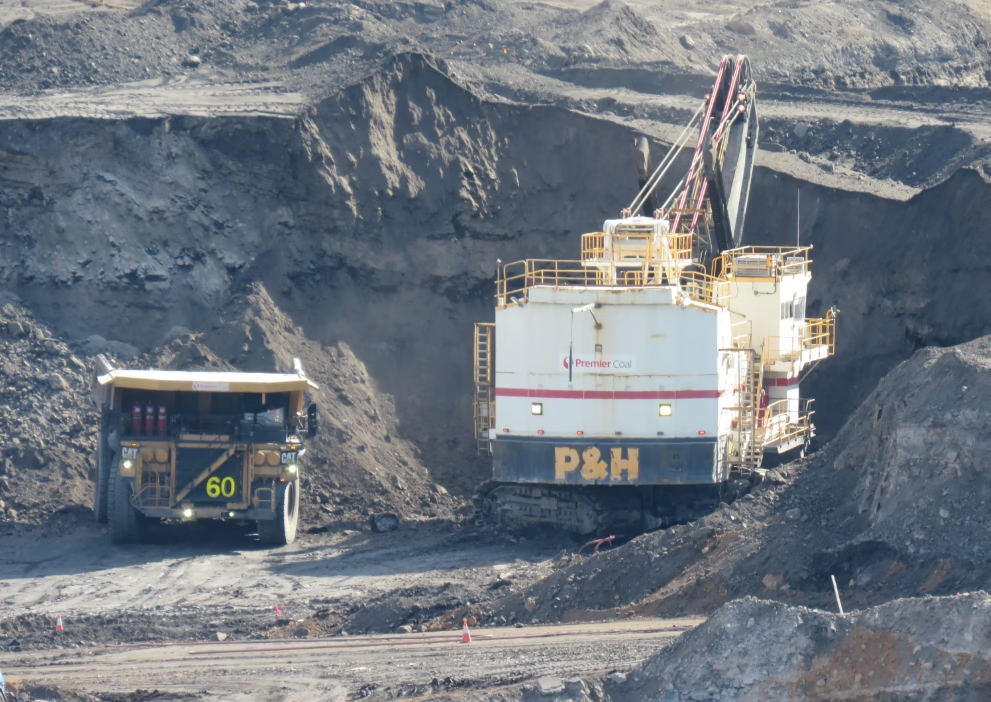
Mold-Cured Jacket: AmerCable Tiger Brand vs. Continuous Vulcanization – Why Is Mold-Cured Considered Tougher?

The fundamental difference between mold-cured and continuous vulcanization processes lies in the physical pressure and thermal constraints applied to the rubber jacket during the cross-linking (vulcanization) phase. In continuous vulcanization, the extruded cable jacket enters a pressurized tube where steam or nitrogen provides only ambient fluid pressure (typically 20 to 100 psi), allowing microscopic air voids to persist within the rubber matrix—a manufacturing-efficient but mechanically compromising approach. In contrast, Nexans AmerCable’s proprietary lead-mold curing process encloses the entire extruded cable within a continuous solid lead sheath that subjects the expanding rubber to extreme physical confinement pressure (1,000 to 3,000 psi or higher), forcing virtually all microscopic air voids out of the rubber and enabling optimal cross-linking of polymer chains. The resulting mold-cured jacket exhibits tensile strength 15 to 25 percent higher, tear resistance 20 to 40 percent superior, and abrasion resistance 25 to 50 percent greater than equivalent continuous vulcanization designs—advantages that justify the Tiger Brand’s premium positioning and explain its dominant market share in high-altitude Chilean and Peruvian copper mining where cables endure continuous abrasion on jagged rocks, mechanical crushing from heavy loads, and environmental stress from sulfide ore compounds.
Acid Mine Drainage represents one of the most challenging environmental conditions for electrical infrastructure in mining operations. AMD occurs when sulfide minerals, particularly pyrite, are exposed to oxygen and water during mining activities, producing sulfuric acid through oxidation reactions. According to research from the United States Geological Survey, AMD environments typically exhibit pH levels ranging from 2 to 4, with extreme cases documented as low as pH 0.5 to 0.9 at facilities such as the Richmond Mine in California. 酸性矿井排水(AMD)是采矿作业中电气基础设施面临的最具挑战性的环境条件之一。当硫化矿物(特别是黄铁矿)在采矿活动中暴露于氧气和水中时,通过氧化反应产生硫酸,从而形成AMD。

Acid Mine Drainage (AMD): Cables that Withstand pH < 3.0 Sulfuric Acid Exposure

Acid Mine Drainage represents one of the most challenging environmental conditions for electrical infrastructure in mining operations. AMD occurs when sulfide minerals, particularly pyrite, are exposed to oxygen and water during mining activities, producing sulfuric acid through oxidation reactions. According to research from the United States Geological Survey, AMD environments typically exhibit pH levels ranging from 2 to 4, with extreme cases documented as low as pH 0.5 to 0.9 at facilities such as the Richmond Mine in California. 酸性矿井排水(AMD)是采矿作业中电气基础设施面临的最具挑战性的环境条件之一。当硫化矿物(特别是黄铁矿)在采矿活动中暴露于氧气和水中时,通过氧化反应产生硫酸,从而形成AMD。