cable temperature rise

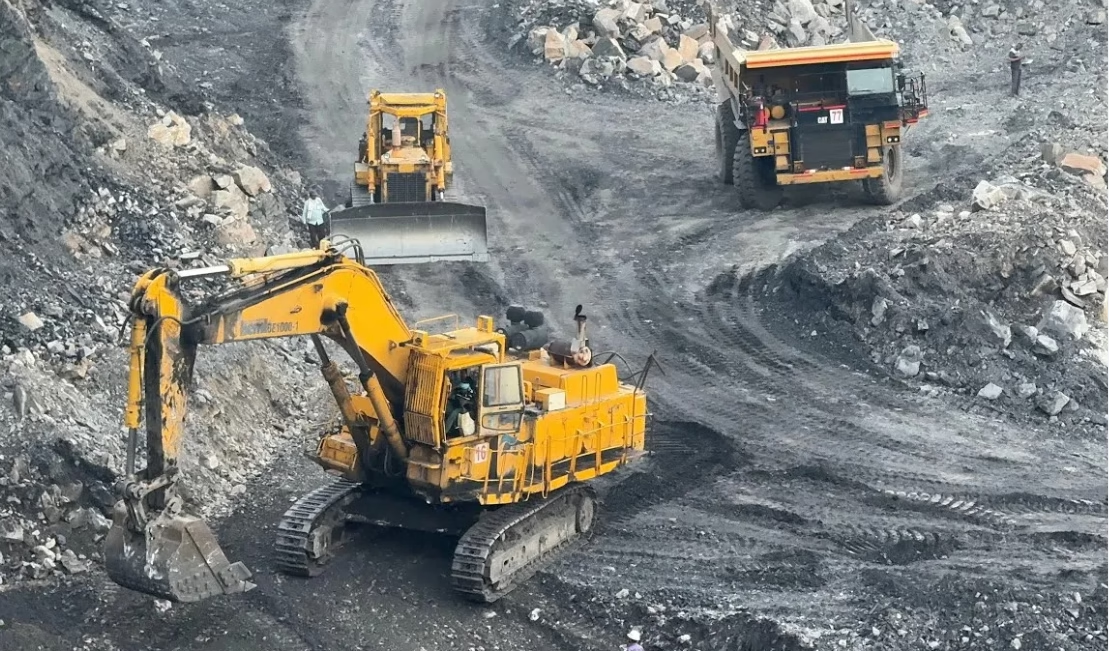
Mining operations in extreme high-altitude environments such as the Andes Mountains and the Tibetan Plateau present unique challenges for electrical cable systems. At elevations around 4000 meters (13,123 feet) above sea level, reduced atmospheric pressure significantly affects the thermal performance and current-carrying capacity of power cables. This technical document provides engineering guidance on proper cable derating calculations for mining installations operating under these demanding conditions. 安第斯山脉和青藏高原等极端高海拔环境中的采矿作业对电缆系统提出了独特挑战。在海拔约4000米处,大气压力降低显著影响电力电缆的热性能和载流能力。本技术文件为在这些苛刻条件下运行的采矿设施提供关于适当电缆降额计算的工程指导。

High Altitude Mining Cable Systems: De-rating Calculations for Operations at 4000m Above Sea Level

Mining operations in extreme high-altitude environments such as the Andes Mountains and the Tibetan Plateau present unique challenges for electrical cable systems. At elevations around 4000 meters (13,123 feet) above sea level, reduced atmospheric pressure significantly affects the thermal performance and current-carrying capacity of power cables. This technical document provides engineering guidance on proper cable derating calculations for mining installations operating under these demanding conditions. 安第斯山脉和青藏高原等极端高海拔环境中的采矿作业对电缆系统提出了独特挑战。在海拔约4000米处,大气压力降低显著影响电力电缆的热性能和载流能力。本技术文件为在这些苛刻条件下运行的采矿设施提供关于适当电缆降额计算的工程指导。
(N)TSCGEWÖU cable designation represents a specialized category of medium-voltage flexible power cables manufactured according to the stringent requirements of German standard DIN VDE 0250-813. These cables are specifically engineered for demanding applications in underground mining operations, tunnelling projects, and heavy industrial installations where conventional power cables would fail under the combined stresses of mechanical loading, chemical exposure, and harsh environmental conditions. The nomenclature follows German cable designation conventions where "T" indicates fine-stranded conductors for maximum flexibility, "SC" denotes semiconductive screening layers, "G" represents flexible insulation compound, "E" signifies earth conductors, "W" indicates oil-resistant properties, and "Ö" confirms oil and chemical resistance of the outer sheath.

Ampacity Derating: How Much Current Can (N)TSCGEWÖU Carry When Wound in 3 Layers on a Drum?

(N)TSCGEWÖU cable designation represents a specialized category of medium-voltage flexible power cables manufactured according to the stringent requirements of German standard DIN VDE 0250-813. These cables are specifically engineered for demanding applications in underground mining operations, tunnelling projects, and heavy industrial installations where conventional power cables would fail under the combined stresses of mechanical loading, chemical exposure, and harsh environmental conditions. The nomenclature follows German cable designation conventions where “T” indicates fine-stranded conductors for maximum flexibility, “SC” denotes semiconductive screening layers, “G” represents flexible insulation compound, “E” signifies earth conductors, “W” indicates oil-resistant properties, and “Ö” confirms oil and chemical resistance of the outer sheath.