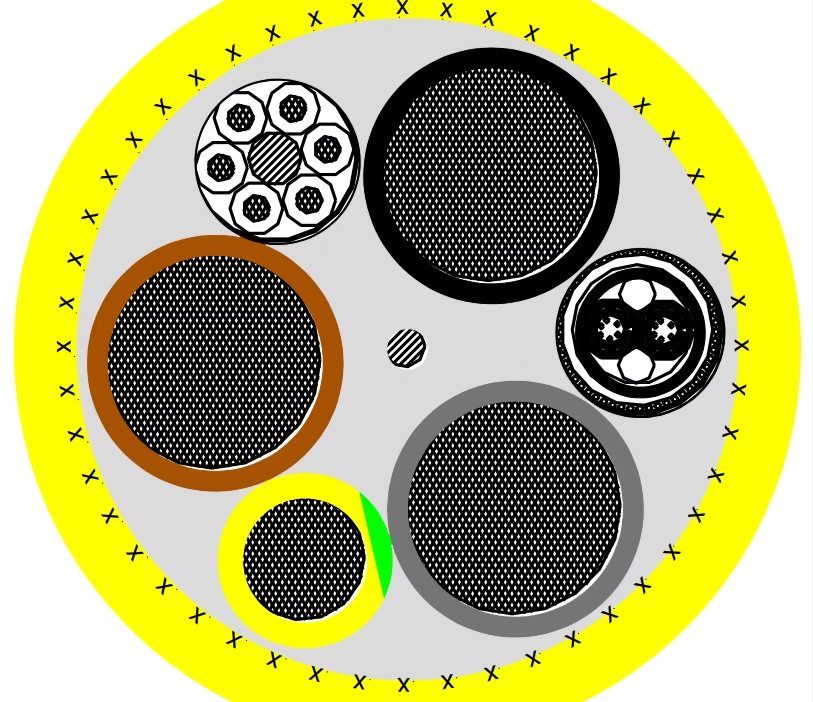
AS/NZS 2802 mining cable

New Zealand's mining, quarrying, and port operations operate under a fundamentally different electrical paradigm than most of the global industrial market. While the international standard for general-purpose industrial flexible cables is 0.6/1kV (defined in IEC 60811 and IEC 60332), New Zealand's local standards—specifically AS/NZS 1802 (Underground Trailing Cables) and AS/NZS 2802 (Reeling and Trailing Cables)—mandate 1.1/1.1kV voltage rating for any cable subject to repeated mechanical stress, flexing, or dynamic operation. This voltage upgrade is not a marketing preference or a conservative over-specification. It is a regulatory requirement rooted in decades of practical experience managing cable failure rates in New Zealand's harsh mining and industrial environments. 新西兰的采矿、采石和港口运营在根本上遵循与全球工业市场不同的电气范式。虽然通用工业柔性电缆的国际标准是0.6/1kV(由IEC 60811和IEC 60332定义),但新西兰的本地标准——特别是AS/NZS 1802(地下拖曳电缆)和AS/NZS 2802(卷筒和拖曳电缆)——对任何受重复机械应力、弯曲或动态操作的电缆都要求1.1/1.1kV电压等级。这种电压升级不是营销偏好或保守的过度规格。这是一项监管要求,基于数十年管理新西兰恶劣采矿和工业环境中电缆失效率的实际经验。

1.1/1.1kV vs 0.6/1kV: The Crucial Voltage Difference for Reeling Cables in New Zealand

New Zealand’s mining, quarrying, and port operations operate under a fundamentally different electrical paradigm than most of the global industrial market. While the international standard for general-purpose industrial flexible cables is 0.6/1kV (defined in IEC 60811 and IEC 60332), New Zealand’s local standards—specifically AS/NZS 1802 (Underground Trailing Cables) and AS/NZS 2802 (Reeling and Trailing Cables)—mandate 1.1/1.1kV voltage rating for any cable subject to repeated mechanical stress, flexing, or dynamic operation. This voltage upgrade is not a marketing preference or a conservative over-specification. It is a regulatory requirement rooted in decades of practical experience managing cable failure rates in New Zealand’s harsh mining and industrial environments. 新西兰的采矿、采石和港口运营在根本上遵循与全球工业市场不同的电气范式。虽然通用工业柔性电缆的国际标准是0.6/1kV(由IEC 60811和IEC 60332定义),但新西兰的本地标准——特别是AS/NZS 1802(地下拖曳电缆)和AS/NZS 2802(卷筒和拖曳电缆)——对任何受重复机械应力、弯曲或动态操作的电缆都要求1.1/1.1kV电压等级。这种电压升级不是营销偏好或保守的过度规格。这是一项监管要求,基于数十年管理新西兰恶劣采矿和工业环境中电缆失效率的实际经验。
Modern mining operations increasingly rely on self-illuminating cables to improve safety visibility in underground environments. By embedding LED strip lights directly within the transparent or translucent thermoplastic polyurethane (TPU) outer jacket of a trailing or reeling cable, operators gain continuous visual confirmation of cable routing, reduce tripping hazards, and can detect cable damage more readily. Anhui Feichun Special Cable Co., Ltd. has pioneered this approach in its SHD-GC LED Mining Cable series, integrating constant-current LED strips into cables rated from 2 kV to 25 kV for both underground and open-pit operations. 现代矿山作业越来越依赖于自发光电缆来提高地下环境的安全可见度。通过将LED灯带直接嵌入拖曳或卷缆的透明/半透明热塑性聚氨酯(TPU)外护套中,操作人员可持续确认电缆走向路线、降低绊倒风险,并更容易检测电缆损坏。安徽飞纯特种电缆有限公司在其SHD-GC LED矿用电缆系列中率先采用了该技术。

Service Life: What Is the Expected Lifespan of Embedded LED Strips Inside a Mining Cable Under Constant Flexing?

Modern mining operations increasingly rely on self-illuminating cables to improve safety visibility in underground environments. By embedding LED strip lights directly within the transparent or translucent thermoplastic polyurethane (TPU) outer jacket of a trailing or reeling cable, operators gain continuous visual confirmation of cable routing, reduce tripping hazards, and can detect cable damage more readily. Anhui Feichun Special Cable Co., Ltd. has pioneered this approach in its SHD-GC LED Mining Cable series, integrating constant-current LED strips into cables rated from 2 kV to 25 kV for both underground and open-pit operations. 现代矿山作业越来越依赖于自发光电缆来提高地下环境的安全可见度。通过将LED灯带直接嵌入拖曳或卷缆的透明/半透明热塑性聚氨酯(TPU)外护套中,操作人员可持续确认电缆走向路线、降低绊倒风险,并更容易检测电缆损坏。安徽飞纯特种电缆有限公司在其SHD-GC LED矿用电缆系列中率先采用了该技术。
The cable selection debate between premium branded products like Nexans Olex Versolex and generic alternatives such as Type 441 cables represents a critical decision point for electrical contractors, mining operators, and industrial facility managers. This technical analysis examines whether the higher initial investment in Versolex flexible cables delivers measurable value through extended service life, reduced maintenance costs, and superior operational reliability. Both cable types serve different primary markets—Versolex targets commercial and industrial flexible power applications compliant with AS/NZS 5000.1, while Type 441 cables are specifically engineered for harsh mining environments under AS/NZS 2802 standards. 在Nexans Olex Versolex等高端品牌产品与Type 441等通用电缆之间的选择,对电气承包商、矿业运营商和工业设施管理人员来说是一个关键决策点。本技术分析探讨了对Versolex柔性电缆的更高初始投资是否通过延长使用寿命、降低维护成本和卓越的运行可靠性提供可衡量的价值。两种电缆类型服务于不同的主要市场——Versolex针对符合AS/NZS 5000.1标准的商业和工业柔性电力应用,而Type 441电缆专门为AS/NZS 2802标准下的恶劣矿业环境设计。

Nexans Olex Versolex vs. Generic Type 441: Is the Premium Price Justified by Longer Service Life?

The cable selection debate between premium branded products like Nexans Olex Versolex and generic alternatives such as Type 441 cables represents a critical decision point for electrical contractors, mining operators, and industrial facility managers. This technical analysis examines whether the higher initial investment in Versolex flexible cables delivers measurable value through extended service life, reduced maintenance costs, and superior operational reliability. Both cable types serve different primary markets—Versolex targets commercial and industrial flexible power applications compliant with AS/NZS 5000.1, while Type 441 cables are specifically engineered for harsh mining environments under AS/NZS 2802 standards. 在Nexans Olex Versolex等高端品牌产品与Type 441等通用电缆之间的选择,对电气承包商、矿业运营商和工业设施管理人员来说是一个关键决策点。本技术分析探讨了对Versolex柔性电缆的更高初始投资是否通过延长使用寿命、降低维护成本和卓越的运行可靠性提供可衡量的价值。两种电缆类型服务于不同的主要市场——Versolex针对符合AS/NZS 5000.1标准的商业和工业柔性电力应用,而Type 441电缆专门为AS/NZS 2802标准下的恶劣矿业环境设计。
Corkscrewing — also referred to as Z-kinking or the "pigtail" effect — is among the most frequently encountered failure modes in dynamic reeling applications. When a Type 440 cable repeatedly exhibits helical deformation after even modest operating hours, the root cause almost never lies in a single variable. It is instead a compounding interaction of design, installation, and operating conditions. (软电缆在卷盘运行中出现螺旋变形,通常称为"软木塞效应"或Z型褶皱,是Type 440型动态卷盘电缆最常见的失效模式之一。)

Why Your Reeling Cable Keeps “Corkscrewing”:Diagnosis & Solutions for Type 440

Corkscrewing — also referred to as Z-kinking or the “pigtail” effect — is among the most frequently encountered failure modes in dynamic reeling applications. When a Type 440 cable repeatedly exhibits helical deformation after even modest operating hours, the root cause almost never lies in a single variable. It is instead a compounding interaction of design, installation, and operating conditions. (软电缆在卷盘运行中出现螺旋变形,通常称为”软木塞效应”或Z型褶皱,是Type 440型动态卷盘电缆最常见的失效模式之一。)
Mining operations worldwide face a critical procurement decision when selecting medium voltage reeling and trailing cables for mobile equipment such as excavators, draglines, and continuous miners. The choice between premium brand-name cables like PROTOLON and generic alternatives conforming to the same NTSCGEWÖU specification represents a significant investment decision with long-term operational and safety implications.

PROTOLON (Proprietary) vs. Generic NTSCGEWÖU: Is the Premium Price for Brand-Name Mining Cables Justified?

Mining operations worldwide face a critical procurement decision when selecting medium voltage reeling and trailing cables for mobile equipment such as excavators, draglines, and continuous miners. The choice between premium brand-name cables like PROTOLON and generic alternatives conforming to the same NTSCGEWÖU specification represents a significant investment decision with long-term operational and safety implications.
Mining, drilling, and tunnelling cables are specialized heavy-duty electrical cables engineered specifically for the harsh conditions found in underground mining operations, drilling sites, and tunnel construction facilities. These industrial-grade cables are designed to withstand extreme mechanical stress, chemical exposure, moisture, and temperature variations while maintaining reliable power transmission and ensuring safety in demanding underground environments. According to international standards including IEC 60502 and MSHA regulations, these cables form the electrical backbone of modern mining and underground construction operations.

ما هي كابلات التعدين والحفر والأنفاق؟ وأين تُستخدم تحت الأرض؟

Mining, drilling, and tunnelling cables are specialized heavy-duty electrical cables engineered specifically for the harsh conditions found in underground mining operations, drilling sites, and tunnel construction facilities. These industrial-grade cables are designed to withstand extreme mechanical stress, chemical exposure, moisture, and temperature variations while maintaining reliable power transmission and ensuring safety in demanding underground environments. According to international standards including IEC 60502 and MSHA regulations, these cables form the electrical backbone of modern mining and underground construction operations.
N2XCEYRRGY cable, N2XCEHRRGH mining cable, N2XCEYFFGY shaft cable, N2XCEHFFGH 35kV cable, N3GSEYRRGY EPR cable, N3GSEHRRGH rubber sheath cable, N3GSEYFFGY mine cable, N3GSEHFFGH underground cable, N3GHSSHCH gallery cable, DM2N mining cable, NSHOEU trailing cable, SSHOEU flexible cable, POWERMINE XP cable, NSSHCGEOEU-Z reeling cable, BUFLEX-M mining cable, TSKCGECWOEUSS cable, SHT trailing cable

What is Mining Shaft, Gallery, Trailing and Reeling Cable?

N2XCEYRRGY cable, N2XCEHRRGH mining cable, N2XCEYFFGY shaft cable, N2XCEHFFGH 35kV cable, N3GSEYRRGY EPR cable, N3GSEHRRGH rubber sheath cable, N3GSEYFFGY mine cable, N3GSEHFFGH underground cable, N3GHSSHCH gallery cable, DM2N mining cable, NSHOEU trailing cable, SSHOEU flexible cable, POWERMINE XP cable, NSSHCGEOEU-Z reeling cable, BUFLEX-M mining cable, TSKCGECWOEUSS cable, SHT trailing cable