oil resistant cable jacket

The Type W 4/C 2/0 AWG 2000V cable features a heavy-duty thermoset CPE (chlorinated polyethylene) jacket that is specifically formulated with UV stabilizers and ozone-resistant additives, providing robust protection against continuous direct sunlight and high ozone concentrations found in desert port environments. The cable is rated to withstand prolonged outdoor exposure in desert conditions, typically maintaining 80 to 90 percent of its physical properties after 5 to 10 years of continuous unshaded sunlight exposure, compared to standard elastomeric jackets that degrade to 50 to 70 percent property retention under identical conditions. The nominal outer diameter of this cable is 46.8 to 49.1 mm (1.845 to 1.935 inches), with approximate weight of 4,390 to 5,133 kg per kilometer. The cable features 259-strand rope-lay copper conductors (2/0 AWG per core), four 67.4 mm² cores, EPDM insulation rated for 90°C conductor temperature, and current carrying capacity of 237 amperes (based on 30°C ambient, 90°C conductor temperature). However, the critical distinction that separates viable long-term desert service from premature field failures lies in understanding the difference between a cable jacket that merely resists UV degradation and a comprehensively designed system where all exposed components—including terminal connections, stripped insulation, and mechanical attachment points—receive appropriate protection from direct sunlight. In actual desert port applications, failures are as frequently caused by UV damage at unprotected termination points as by jacket degradation itself, making installation and maintenance procedures as important as material selection. For typical desert port power systems, RTG (rubber-tired gantry) crane power leads, shore-to-ship power cables, and fixed deck-mounted power distribution systems operating in Middle Eastern, North African, and Australian port environments, the Type W 4/C 2/0 AWG cable with standard CPE jacket provides reliable field-proven performance when properly installed and maintained, but premium UV-resistant cable variants should be considered for applications where service life extension beyond 7 to 10 years is critical or where inspection and maintenance infrastructure is limited.
UV & Ozone Resistance of Type W 4/C 2/0 AWG 2000V: Is the CPE Jacket Durable Enough for Constant Direct Sunlight in Desert Ports?

The Type W 4/C 2/0 AWG 2000V cable features a heavy-duty thermoset CPE (chlorinated polyethylene) jacket that is specifically formulated with UV stabilizers and ozone-resistant additives, providing robust protection against continuous direct sunlight and high ozone concentrations found in desert port environments. The cable is rated to withstand prolonged outdoor exposure in desert conditions, typically maintaining 80 to 90 percent of its physical properties after 5 to 10 years of continuous unshaded sunlight exposure, compared to standard elastomeric jackets that degrade to 50 to 70 percent property retention under identical conditions. The nominal outer diameter of this cable is 46.8 to 49.1 mm (1.845 to 1.935 inches), with approximate weight of 4,390 to 5,133 kg per kilometer. The cable features 259-strand rope-lay copper conductors (2/0 AWG per core), four 67.4 mm² cores, EPDM insulation rated for 90°C conductor temperature, and current carrying capacity of 237 amperes (based on 30°C ambient, 90°C conductor temperature). However, the critical distinction that separates viable long-term desert service from premature field failures lies in understanding the difference between a cable jacket that merely resists UV degradation and a comprehensively designed system where all exposed components—including terminal connections, stripped insulation, and mechanical attachment points—receive appropriate protection from direct sunlight. In actual desert port applications, failures are as frequently caused by UV damage at unprotected termination points as by jacket degradation itself, making installation and maintenance procedures as important as material selection. For typical desert port power systems, RTG (rubber-tired gantry) crane power leads, shore-to-ship power cables, and fixed deck-mounted power distribution systems operating in Middle Eastern, North African, and Australian port environments, the Type W 4/C 2/0 AWG cable with standard CPE jacket provides reliable field-proven performance when properly installed and maintained, but premium UV-resistant cable variants should be considered for applications where service life extension beyond 7 to 10 years is critical or where inspection and maintenance infrastructure is limited.
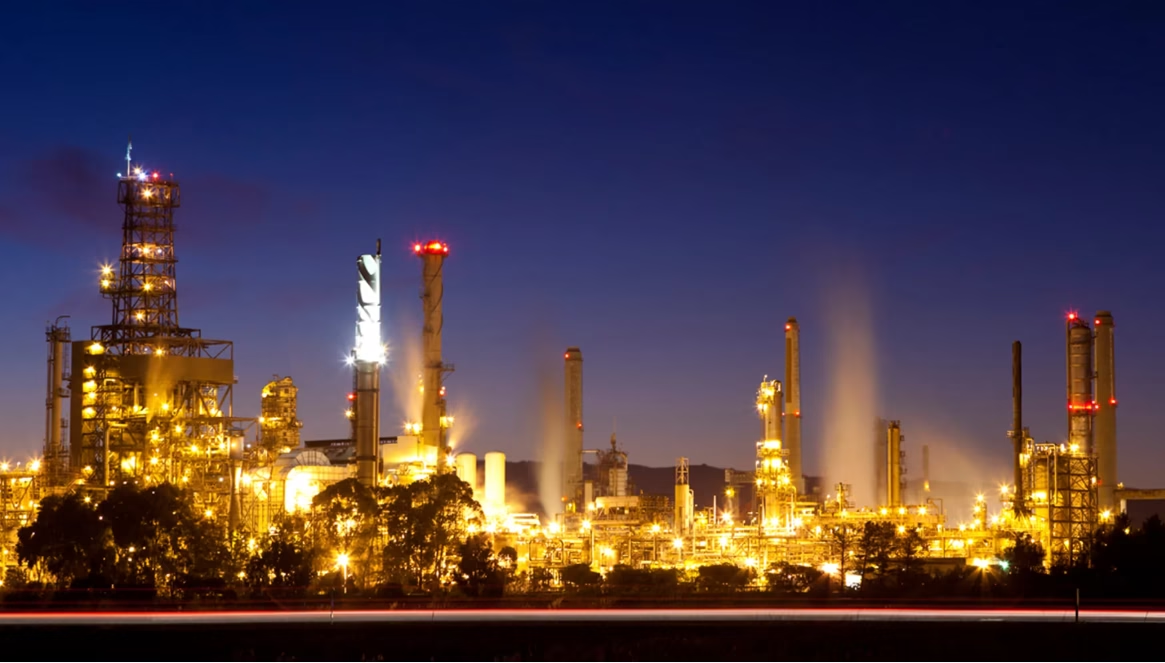
The oil, gas, and petrochemical industries operate in some of the most demanding environments on Earth. From deep-sea drilling platforms exposed to corrosive saltwater and extreme pressures, to onshore refineries processing volatile hydrocarbons at elevated temperatures, the cables connecting these critical systems must deliver unwavering reliability. According to the International Energy Agency (IEA), global oil demand reached approximately 101.7 million barrels per day in 2023, with petrochemical feedstock demand driving significant growth in downstream processing infrastructure.

Oil, Gas & Petrochemical Cables

BS5308 Part 1 Type 1 cable, BS5308 Part 1 Type 2 SWA cable, BS5308 Part 2 instrumentation cable, EN 50288-7 RE-2X(st)H cable, RE-2X(st)Y PVC instrumentation cable, RE-2X(st)H SWAH LSZH armoured cable, RE-T2X(st)H mica fire resistant cable, NF M 87-202 EGFA cable, NF M 87-202 EGSF cable, NF M 87-202 EIFA stainless steel armour, NF M 87-202 EISF cable, THHN THWN-2 600V cable, TFN screened cable, RZ1-K 0.6/1kV cable, RZ1-K (AS) 1.8/3kV cable, RZ1MZ1-K fire resistant cable, U-1000 R2V cable, U-1000 RVFV armoured cable, BS 6883 657TQ Type SW4 cable, BS 6883 658TQ armoured cable, SiHF-J silicone cable, SiF silicone 180 cable, SIAF-GL glass fiber cable, SANS 1507-3 PVC SWA cable, SANS 1507-4 XLPE SWA cable, 石油天然氣電纜, 石化電纜, 海上平台電纜, 煉油廠儀表電纜, 低煙無鹵電纜, 鋼絲鎧裝電纜, 耐火電纜, 防爆電纜, 本質安全電纜, 熱電偶延長電纜, 高溫矽膠電纜, 儀表控制電纜, 安徽飛純特種電纜