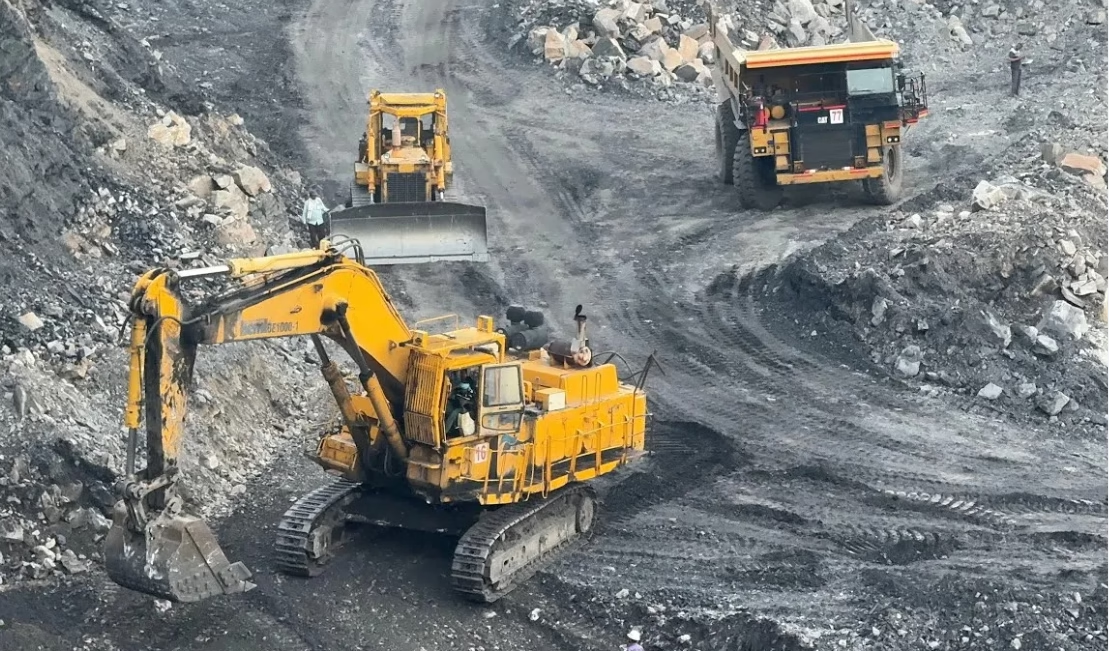
mining cable systems

Mining operations in extreme high-altitude environments such as the Andes Mountains and the Tibetan Plateau present unique challenges for electrical cable systems. At elevations around 4000 meters (13,123 feet) above sea level, reduced atmospheric pressure significantly affects the thermal performance and current-carrying capacity of power cables. This technical document provides engineering guidance on proper cable derating calculations for mining installations operating under these demanding conditions. 安第斯山脉和青藏高原等极端高海拔环境中的采矿作业对电缆系统提出了独特挑战。在海拔约4000米处,大气压力降低显著影响电力电缆的热性能和载流能力。本技术文件为在这些苛刻条件下运行的采矿设施提供关于适当电缆降额计算的工程指导。

High Altitude Mining Cable Systems: De-rating Calculations for Operations at 4000m Above Sea Level

Mining operations in extreme high-altitude environments such as the Andes Mountains and the Tibetan Plateau present unique challenges for electrical cable systems. At elevations around 4000 meters (13,123 feet) above sea level, reduced atmospheric pressure significantly affects the thermal performance and current-carrying capacity of power cables. This technical document provides engineering guidance on proper cable derating calculations for mining installations operating under these demanding conditions. 安第斯山脉和青藏高原等极端高海拔环境中的采矿作业对电缆系统提出了独特挑战。在海拔约4000米处,大气压力降低显著影响电力电缆的热性能和载流能力。本技术文件为在这些苛刻条件下运行的采矿设施提供关于适当电缆降额计算的工程指导。
The question of whether a Type 450 33kV cable requires a bending radius of twelve times or fifteen times its overall diameter when installed on a monospiral reel is not merely an academic exercise but a critical consideration that directly impacts cable longevity, system reliability, and operational safety in medium-voltage power distribution networks. Understanding the correct specification requires examining the interplay between international standards, cable construction characteristics, and the specific mechanical conditions imposed by monospiral reel systems. Type 450 33kV电缆在单螺旋卷筒上安装时,其弯曲半径是需要12倍还是15倍外径,这不仅仅是一个学术问题,而是直接影响电缆寿命、系统可靠性和中压配电网络运行安全的关键考虑因素。理解正确的规范需要研究国际标准、电缆结构特性以及单螺旋卷筒系统施加的特定机械条件之间的相互作用。

Bending Radius for Type 450 33kV Cables on Monospiral Reels: 12xOD or 15xOD?

The question of whether a Type 450 33kV cable requires a bending radius of twelve times or fifteen times its overall diameter when installed on a monospiral reel is not merely an academic exercise but a critical consideration that directly impacts cable longevity, system reliability, and operational safety in medium-voltage power distribution networks. Understanding the correct specification requires examining the interplay between international standards, cable construction characteristics, and the specific mechanical conditions imposed by monospiral reel systems. Type 450 33kV电缆在单螺旋卷筒上安装时,其弯曲半径是需要12倍还是15倍外径,这不仅仅是一个学术问题,而是直接影响电缆寿命、系统可靠性和中压配电网络运行安全的关键考虑因素。理解正确的规范需要研究国际标准、电缆结构特性以及单螺旋卷筒系统施加的特定机械条件之间的相互作用。