EAC certified mining cable for Russia

KGE-HL (КГЭ-ХЛ) 3x35+1x10 6kV Siberian mining cable, which represents a three-conductor power cable with a 1×10 mm² uninsulated grounding conductor, achieves a maximum static operating temperature of -60°C (−76°F) and undergoes dynamic cold bend testing at -40°C (−40°F) according to GOST 24334-80 specifications. This testing temperature of -40°C represents a critical threshold: at this temperature, the synthetic rubber jacketing remains flexible enough to withstand the mechanical stress of being wound on cable drums, reeled and unreeled by excavator equipment, and subjected to dynamic bending without developing cracks or permanent deformation. The designation "HL" (ХЛ in Cyrillic) stands for "Kholodostoyky" or "Cold-Resistant," indicating that the cable has been specifically engineered and tested to maintain electrical integrity and mechanical durability in the extreme Arctic and sub-Arctic conditions found in Siberian mining operations. The cable's maximum allowable continuous operating temperature is +50°C (122°F) under normal installation conditions, with the three copper power conductors rated for a maximum continuous conductor temperature of +75°C (167°F). These temperature ratings define the envelope within which the cable can operate safely over its service life without degradation of the insulation, jacketing, or shielding materials. The 3×35 mm² designation refers to the three power conductors, each with a cross-sectional area of 35 square millimeters, providing substantial current-carrying capacity suitable for powering large excavation equipment. The 1×10 mm² component designates an uninsulated grounding conductor that runs directly in contact with the cable's semiconductive shielding layer, enabling rapid grounding and fault protection. Understanding how this cable maintains mechanical flexibility at temperatures where conventional industrial cables become dangerously brittle is essential for mining engineers, equipment operators, and safety managers evaluating cable selection for Arctic operations.
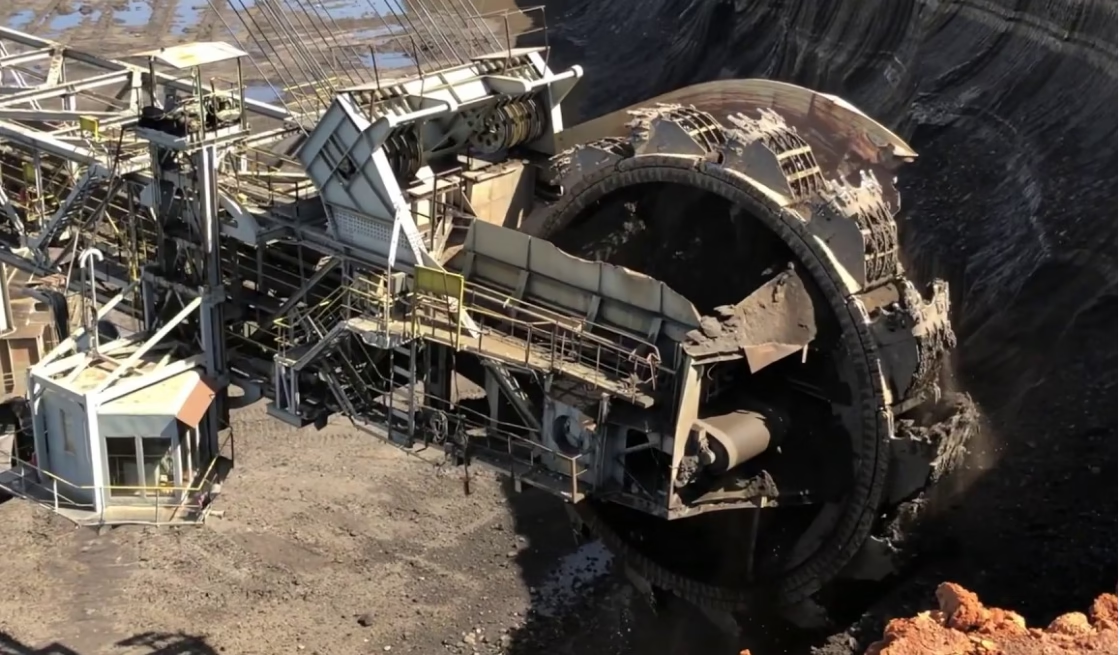
Cold Bend Testing (-40°C): Minimum Operating Temperature for KGE-HL 3×35+1×10 6kV Siberian Mining Cable

KGE-HL (КГЭ-ХЛ) 3×35+1×10 6kV Siberian mining cable, which represents a three-conductor power cable with a 1×10 mm² uninsulated grounding conductor, achieves a maximum static operating temperature of -60°C (−76°F) and undergoes dynamic cold bend testing at -40°C (−40°F) according to GOST 24334-80 specifications. This testing temperature of -40°C represents a critical threshold: at this temperature, the synthetic rubber jacketing remains flexible enough to withstand the mechanical stress of being wound on cable drums, reeled and unreeled by excavator equipment, and subjected to dynamic bending without developing cracks or permanent deformation. The designation “HL” (ХЛ in Cyrillic) stands for “Kholodostoyky” or “Cold-Resistant,” indicating that the cable has been specifically engineered and tested to maintain electrical integrity and mechanical durability in the extreme Arctic and sub-Arctic conditions found in Siberian mining operations. The cable’s maximum allowable continuous operating temperature is +50°C (122°F) under normal installation conditions, with the three copper power conductors rated for a maximum continuous conductor temperature of +75°C (167°F). These temperature ratings define the envelope within which the cable can operate safely over its service life without degradation of the insulation, jacketing, or shielding materials. The 3×35 mm² designation refers to the three power conductors, each with a cross-sectional area of 35 square millimeters, providing substantial current-carrying capacity suitable for powering large excavation equipment. The 1×10 mm² component designates an uninsulated grounding conductor that runs directly in contact with the cable’s semiconductive shielding layer, enabling rapid grounding and fault protection. Understanding how this cable maintains mechanical flexibility at temperatures where conventional industrial cables become dangerously brittle is essential for mining engineers, equipment operators, and safety managers evaluating cable selection for Arctic operations.
The Liebherr R 9800 is one of the world's largest hydraulic mining excavators, manufactured by Liebherr Mining Equipment in Colmar, France. With an operating weight of approximately 810 metric tons and bucket capacities ranging from 42 m³ (backhoe) to 47.5 m³ (face shovel), this machine is designed for the most demanding open-pit mining operations worldwide, including extreme cold regions such as Siberia, Yakutia, and Northern Russia where temperatures can plunge to -50°C or below. 利勃海尔R 9800是全球最大的液压采矿挖掘机之一,运行重量约810公吨,铲斗容量从42立方米到47.5立方米。该设备专为全球最苛刻的露天采矿作业设计,包括西伯利亚、雅库特和俄罗斯北部等极寒地区,那里的温度可降至-50°C或更低。

Liebherr R 9800: Cold-Weather Cable Requirements for Russian Winter Operations (-50°C)

The Liebherr R 9800 is one of the world’s largest hydraulic mining excavators, manufactured by Liebherr Mining Equipment in Colmar, France. With an operating weight of approximately 810 metric tons and bucket capacities ranging from 42 m³ (backhoe) to 47.5 m³ (face shovel), this machine is designed for the most demanding open-pit mining operations worldwide, including extreme cold regions such as Siberia, Yakutia, and Northern Russia where temperatures can plunge to -50°C or below. 利勃海尔R 9800是全球最大的液压采矿挖掘机之一,运行重量约810公吨,铲斗容量从42立方米到47.5立方米。该设备专为全球最苛刻的露天采矿作业设计,包括西伯利亚、雅库特和俄罗斯北部等极寒地区,那里的温度可降至-50°C或更低。