cable reel equipment

UNE 22511 — formally titled "Cables flexibles para minería subterránea con tensiones de 1,8/3 kV con aislamiento de caucho, sin armadura" (Flexible cables for underground mining, 1.8/3 kV, rubber-insulated, unarmoured) — is the definitive Spanish standard for heavy-duty power cables connecting underground mobile mining equipment to fixed electrical distribution networks. Published and maintained by AENOR (Asociación Española de Normalización y Certificación), it operates as a specialized overlay on IEC 60502-1, extending that base standard's electrical requirements with the stringent mechanical, safety, and flame-retardancy requirements specific to enclosed underground environments. Despite its Spanish origin, UNE 22511 enjoys a geographic reach far exceeding Iberia. The standard has been adopted — formally or by reference — across the major Spanish-speaking mining economies: Chile, Peru, Colombia, Bolivia, and Mexico, where AENOR-certified cables are accepted by national mining safety regulators as the primary qualification pathway for underground mobile equipment power supply cables. In Chile alone, UNE 22511 cables are installed across dozens of operations including major copper and coal mines. The standard's engineering DNA can be described in a single imperative: extreme dynamic flexibility combined with superior resistance to combined torsional and bending fatigue. This is not merely a performance aspiration — it is a structural requirement that shapes every material choice and geometric decision in the cable's construction. The logic proceeds as follows: Underground mobile equipment (continuous miners, shearers, shuttle cars) moves continuously and repeatedly during operation, dragging its power cable behind it or winding and unwinding it from a cable reel. This motion imposes cyclic bending, axial tension, and torsional loads on the cable simultaneously — a multi-axis fatigue regime of a severity not encountered in any other industrial cable application. Standard fixed-installation cables, even those classified as "flexible," are not designed for this loading regime and will fail in fatigue within weeks to months when installed in drag duty. Therefore, every structural element of a UNE 22511 cable — conductor wire diameter, insulation compound, earth core geometry, armour exclusion, sheath specification — is selected to maximize multi-axis fatigue endurance, not any single performance parameter. ⛏ The Founding Engineering Principle UNE 22511 is an unarmoured drag cable standard. The deliberate absence of any metallic armour — which might superficially seem to reduce robustness — is in fact the defining engineering choice that makes the standard viable. Steel wire or tape armour in a continuously torsionally-loaded cable acts as a progressive-failure torsional spring: each twist cycle accumulates irreversible plastic strain in the armour wires, leading to wire fractures within 10,000–30,000 cycles. For a shuttle car cable experiencing 80,000+ torsional cycles per year, armour represents not additional protection but a built-in scheduled failure mechanism. The UNE 22511 design eliminates this failure mode at source.

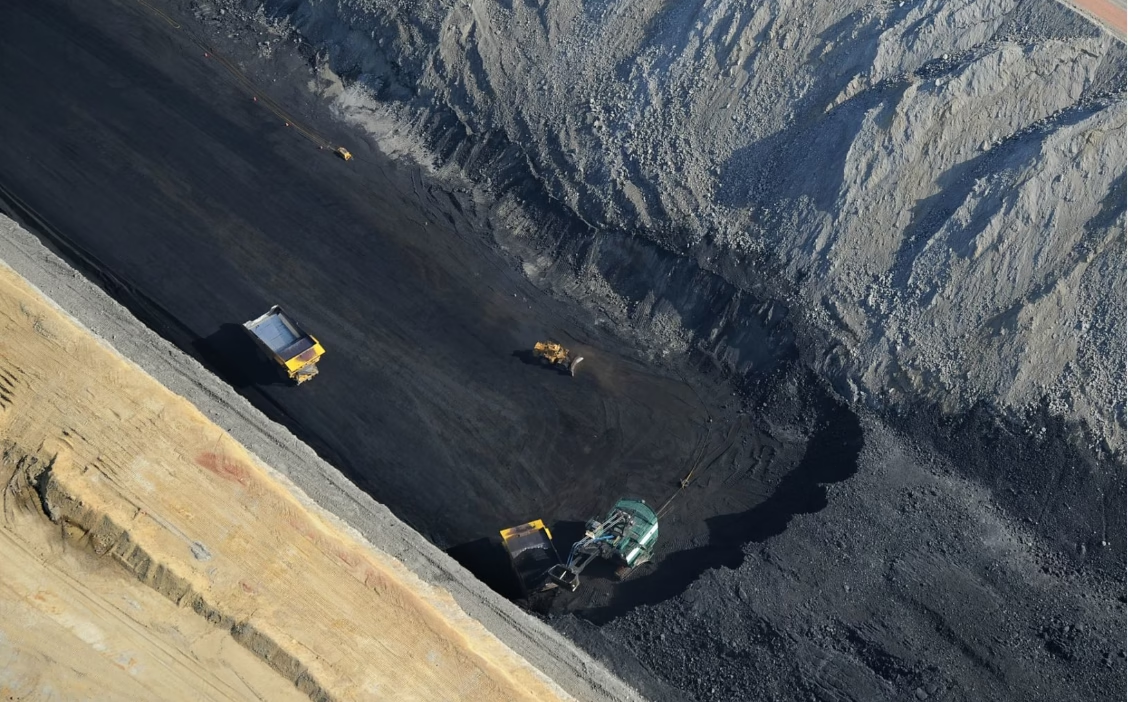
UNE 22511 Mining Cable

UNE 22511 — formally titled “Cables flexibles para minería subterránea con tensiones de 1,8/3 kV con aislamiento de caucho, sin armadura” (Flexible cables for underground mining, 1.8/3 kV, rubber-insulated, unarmoured) — is the definitive Spanish standard for heavy-duty power cables connecting underground mobile mining equipment to fixed electrical distribution networks. Published and maintained by AENOR (Asociación Española de Normalización y Certificación), it operates as a specialized overlay on IEC 60502-1, extending that base standard’s electrical requirements with the stringent mechanical, safety, and flame-retardancy requirements specific to enclosed underground environments. Despite its Spanish origin, UNE 22511 enjoys a geographic reach far exceeding Iberia. The standard has been adopted — formally or by reference — across the major Spanish-speaking mining economies: Chile, Peru, Colombia, Bolivia, and Mexico, where AENOR-certified cables are accepted by national mining safety regulators as the primary qualification pathway for underground mobile equipment power supply cables. In Chile alone, UNE 22511 cables are installed across dozens of operations including major copper and coal mines. The standard’s engineering DNA can be described in a single imperative: extreme dynamic flexibility combined with superior resistance to combined torsional and bending fatigue. This is not merely a performance aspiration — it is a structural requirement that shapes every material choice and geometric decision in the cable’s construction. The logic proceeds as follows: Underground mobile equipment (continuous miners, shearers, shuttle cars) moves continuously and repeatedly during operation, dragging its power cable behind it or winding and unwinding it from a cable reel. This motion imposes cyclic bending, axial tension, and torsional loads on the cable simultaneously — a multi-axis fatigue regime of a severity not encountered in any other industrial cable application. Standard fixed-installation cables, even those classified as “flexible,” are not designed for this loading regime and will fail in fatigue within weeks to months when installed in drag duty. Therefore, every structural element of a UNE 22511 cable — conductor wire diameter, insulation compound, earth core geometry, armour exclusion, sheath specification — is selected to maximize multi-axis fatigue endurance, not any single performance parameter. ⛏ The Founding Engineering Principle UNE 22511 is an unarmoured drag cable standard. The deliberate absence of any metallic armour — which might superficially seem to reduce robustness — is in fact the defining engineering choice that makes the standard viable. Steel wire or tape armour in a continuously torsionally-loaded cable acts as a progressive-failure torsional spring: each twist cycle accumulates irreversible plastic strain in the armour wires, leading to wire fractures within 10,000–30,000 cycles. For a shuttle car cable experiencing 80,000+ torsional cycles per year, armour represents not additional protection but a built-in scheduled failure mechanism. The UNE 22511 design eliminates this failure mode at source.
The selection of industrial power cables represents one of the most critical engineering decisions in drilling operations, whether on land or offshore. Two cable types dominate this application space: the Type SHD-GC (重型屏蔽接地检查电缆), designed primarily for mobile mining and terrestrial drilling equipment, and the Type P (海洋平台电缆), engineered specifically for harsh offshore and fixed platform environments. Though both cables operate at similar voltage ratings, they embody fundamentally different design philosophies that reflect the distinct mechanical, electrical, and safety demands of their respective application domains.

Type SHD-GC vs. Type P: Selecting the Right Trailing Cable for Land and Offshore Drilling 

The selection of industrial power cables represents one of the most critical engineering decisions in drilling operations, whether on land or offshore. Two cable types dominate this application space: the Type SHD-GC (重型屏蔽接地检查电缆), designed primarily for mobile mining and terrestrial drilling equipment, and the Type P (海洋平台电缆), engineered specifically for harsh offshore and fixed platform environments. Though both cables operate at similar voltage ratings, they embody fundamentally different design philosophies that reflect the distinct mechanical, electrical, and safety demands of their respective application domains.
Underground mining operations require strict adherence to Mine Safety and Health Administration (MSHA) regulations for cable repair and splicing to ensure worker safety and equipment reliability. The distinction between permanent and temporary cable repairs is critical, as improper splicing is a leading cause of electrical hazards in mining environments. This technical guide examines the regulatory framework under Title 30 Code of Federal Regulations (CFR), specifically addressing trailing cable splice requirements for underground coal and metal/nonmetal mines. 地下采矿作业必须严格遵守矿山安全与健康管理局(MSHA)的电缆修复和接线规定,以确保工人安全和设备可靠性。永久性和临时性电缆修复之间的区别至关重要,因为不当的接线是采矿环境中电气危险的主要原因。本技术指南研究了《联邦法规》第30篇(CFR)下的监管框架,特别针对地下煤矿和金属/非金属矿山的拖曳电缆接线要求。

MSHA Splice Kits: Rules for Permanent vs. Temporary Cable Repairs Underground

Underground mining operations require strict adherence to Mine Safety and Health Administration (MSHA) regulations for cable repair and splicing to ensure worker safety and equipment reliability. The distinction between permanent and temporary cable repairs is critical, as improper splicing is a leading cause of electrical hazards in mining environments. This technical guide examines the regulatory framework under Title 30 Code of Federal Regulations (CFR), specifically addressing trailing cable splice requirements for underground coal and metal/nonmetal mines. 地下采矿作业必须严格遵守矿山安全与健康管理局(MSHA)的电缆修复和接线规定,以确保工人安全和设备可靠性。永久性和临时性电缆修复之间的区别至关重要,因为不当的接线是采矿环境中电气危险的主要原因。本技术指南研究了《联邦法规》第30篇(CFR)下的监管框架,特别针对地下煤矿和金属/非金属矿山的拖曳电缆接线要求。
Cable spooling technology represents a critical engineering discipline focused on how wire rope, electrical cables, and other flexible conductors are wound onto drums, reels, or spools. The manner in which cable is spooled directly impacts its service life, handling efficiency, storage capacity, and operational reliability. Since the development of multi-strand wire rope in the industrial era, engineers have grappled with the technical challenges of spooling: upper layers tend to crush lower layers, lower layers may pinch upper layers, and rope-against-rope friction accelerates wear. 电缆绕线技术代表了一个关键的工程学科,专注于钢丝绳、电缆和其他柔性导体如何缠绕到滚筒、线盘或线轴上。电缆的绕线方式直接影响其使用寿命、处理效率、存储容量和运行可靠性。自工业时代多股钢丝绳发展以来,工程师一直在努力解决绕线的技术挑战:上层往往会压坏下层,下层可能会夹住上层,绳索之间的摩擦会加速磨损。

Spooling Tech: Monospiral vs. Random Winding – Which Cable Structure Fits Best?

Cable spooling technology represents a critical engineering discipline focused on how wire rope, electrical cables, and other flexible conductors are wound onto drums, reels, or spools. The manner in which cable is spooled directly impacts its service life, handling efficiency, storage capacity, and operational reliability. Since the development of multi-strand wire rope in the industrial era, engineers have grappled with the technical challenges of spooling: upper layers tend to crush lower layers, lower layers may pinch upper layers, and rope-against-rope friction accelerates wear. 电缆绕线技术代表了一个关键的工程学科,专注于钢丝绳、电缆和其他柔性导体如何缠绕到滚筒、线盘或线轴上。电缆的绕线方式直接影响其使用寿命、处理效率、存储容量和运行可靠性。自工业时代多股钢丝绳发展以来,工程师一直在努力解决绕线的技术挑战:上层往往会压坏下层,下层可能会夹住上层,绳索之间的摩擦会加速磨损。