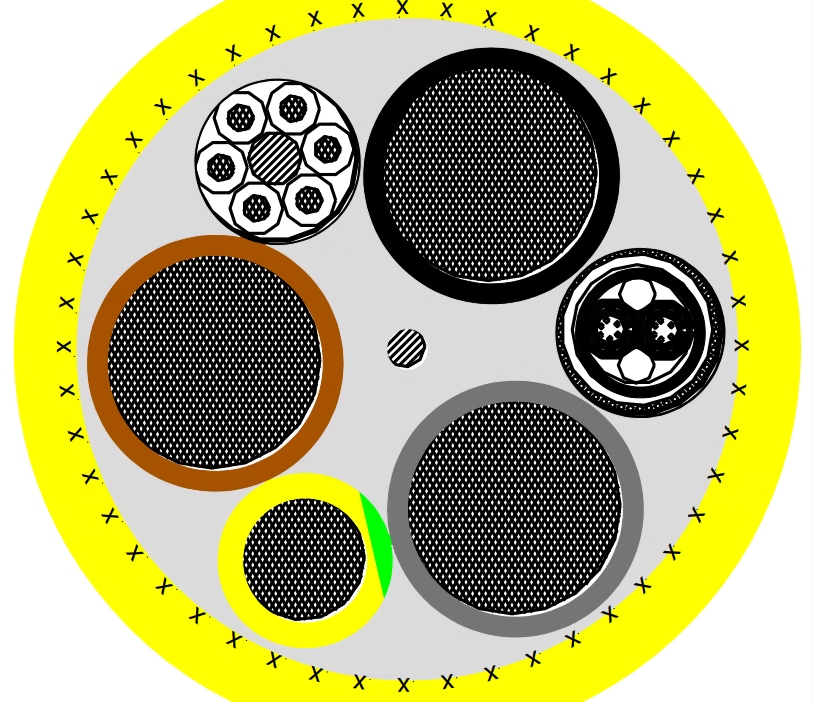
Australian standard cable

Derating is one of the most important — and most frequently misunderstood — concepts in electrical cable engineering. Many engineers view derating as an administrative requirement imposed by standards, something to be looked up in a table and applied mechanically. In reality, derating exists because of a fundamental physical law: the rate at which a cable can dissipate heat is directly proportional to the surface area exposed to the surrounding air or cooling medium, and inversely proportional to the thermal resistance of the insulating materials surrounding the conductors.

Derating Factors: Calculating Ampacity for Multi-Layer Type 441 Cables

Derating is one of the most important — and most frequently misunderstood — concepts in electrical cable engineering. Many engineers view derating as an administrative requirement imposed by standards, something to be looked up in a table and applied mechanically. In reality, derating exists because of a fundamental physical law: the rate at which a cable can dissipate heat is directly proportional to the surface area exposed to the surrounding air or cooling medium, and inversely proportional to the thermal resistance of the insulating materials surrounding the conductors.
Australia's iron ore ports operate under some of the world's most challenging environmental conditions for electrical equipment. Along the western coast where iron ore handling facilities concentrate — particularly in the Pilbara region and ports such as Port Hedland and Port Dampier — outdoor equipment is exposed to intense ultraviolet (UV) radiation, salt spray, high humidity, and atmospheric ozone generated by photochemical reactions in the air. Unlike mechanical damage, which operators can see and immediately respond to, UV and ozone degradation of cable outer sheaths occurs invisibly and progressively, weakening the insulation and mechanical integrity of trailing and reeling cables over months or years until catastrophic failure occurs. A 22 kV reeling cable serving a quayside crane, electric rope shovel, or dragline in an Australian iron ore port may spend 80 to 100 percent of its operational life outdoors, unshaded, with only brief periods of protection during maintenance shutdowns or storage. Prysmian Group and other leading cable manufacturers have documented that in tropical and subtropical coastal environments, conventional black polychloroprene (PCP) or chlorinated polyethylene (CPE) sheaths can lose 30 to 50 percent of their original tensile strength within 12 to 24 months of continuous outdoor exposure, while tearing energy and elongation-at-break characteristics degrade even more rapidly. This degradation directly translates to increased risk of cable cracking, puncture, and sheath failure during flexing, dragging, or impact — precisely the stresses experienced by reeling cables on active port machinery. 在澳洲铁矿港口,传统PCP或CPE护套的抗拉强度可在12至24个月内下降30至50%。

Protolon® (SM) vs. Type 450: Which 22kV Reeling Cable Offers Superior UV and Ozone Resistance for Australian Iron Ore Ports?

Australia’s iron ore ports operate under some of the world’s most challenging environmental conditions for electrical equipment. Along the western coast where iron ore handling facilities concentrate — particularly in the Pilbara region and ports such as Port Hedland and Port Dampier — outdoor equipment is exposed to intense ultraviolet (UV) radiation, salt spray, high humidity, and atmospheric ozone generated by photochemical reactions in the air. Unlike mechanical damage, which operators can see and immediately respond to, UV and ozone degradation of cable outer sheaths occurs invisibly and progressively, weakening the insulation and mechanical integrity of trailing and reeling cables over months or years until catastrophic failure occurs. A 22 kV reeling cable serving a quayside crane, electric rope shovel, or dragline in an Australian iron ore port may spend 80 to 100 percent of its operational life outdoors, unshaded, with only brief periods of protection during maintenance shutdowns or storage. Prysmian Group and other leading cable manufacturers have documented that in tropical and subtropical coastal environments, conventional black polychloroprene (PCP) or chlorinated polyethylene (CPE) sheaths can lose 30 to 50 percent of their original tensile strength within 12 to 24 months of continuous outdoor exposure, while tearing energy and elongation-at-break characteristics degrade even more rapidly. This degradation directly translates to increased risk of cable cracking, puncture, and sheath failure during flexing, dragging, or impact — precisely the stresses experienced by reeling cables on active port machinery. 在澳洲铁矿港口,传统PCP或CPE护套的抗拉强度可在12至24个月内下降30至50%。
The Australian and New Zealand electrical cable markets have been historically dominated by two major premium brands that established strong reputations over decades of operation. Olex Versolex, manufactured by Nexans Australia (formerly Olex Cables), represents a flagship line of flexible single-core and multicore power cables that comply fully with AS/NZS 5000.1 standards. These cables feature Class 5 flexible copper conductors, X-90 XLPE (Cross-Linked Polyethylene) insulation rated for 90 degrees Celsius continuous operation, and TPE-90 or PVC sheathing suitable for a wide range of commercial, industrial, and mining applications. The Versolex range has earned recognition for its robustness, durability, and suitability for submersible applications up to 500 meters depth, making it a preferred choice for demanding installations where reliability is paramount. 澳大利亚和新西兰电缆市场历来由两个在数十年运营中建立了强大声誉的主要高端品牌主导。由Nexans澳大利亚(前身为Olex电缆)制造的Olex Versolex代表了一系列旗舰柔性单芯和多芯电力电缆,完全符合AS/NZS 5000.1标准。这些电缆采用5类柔性铜导体、额定90摄氏度连续运行的X-90 XLPE(交联聚乙烯)绝缘以及适用于各种商业、工业和采矿应用的TPE-90或PVC护套。

Cost-Effective Generic Alternatives to Olex Versolex and Prysmian Cables

The Australian and New Zealand electrical cable markets have been historically dominated by two major premium brands that established strong reputations over decades of operation. Olex Versolex, manufactured by Nexans Australia (formerly Olex Cables), represents a flagship line of flexible single-core and multicore power cables that comply fully with AS/NZS 5000.1 standards. These cables feature Class 5 flexible copper conductors, X-90 XLPE (Cross-Linked Polyethylene) insulation rated for 90 degrees Celsius continuous operation, and TPE-90 or PVC sheathing suitable for a wide range of commercial, industrial, and mining applications. The Versolex range has earned recognition for its robustness, durability, and suitability for submersible applications up to 500 meters depth, making it a preferred choice for demanding installations where reliability is paramount. 澳大利亚和新西兰电缆市场历来由两个在数十年运营中建立了强大声誉的主要高端品牌主导。由Nexans澳大利亚(前身为Olex电缆)制造的Olex Versolex代表了一系列旗舰柔性单芯和多芯电力电缆,完全符合AS/NZS 5000.1标准。这些电缆采用5类柔性铜导体、额定90摄氏度连续运行的X-90 XLPE(交联聚乙烯)绝缘以及适用于各种商业、工业和采矿应用的TPE-90或PVC护套。
Type 441 cables represent a critical category of mining power cables designed for demanding applications in surface and underground mining environments. These cables are specifically engineered to withstand extreme mechanical stress, including trailing, reeling, crushing forces, and environmental hazards encountered in heavy-duty industrial operations. The sheath hardness specification is a fundamental parameter that directly affects the cable's mechanical performance, durability, and service life under harsh operational conditions. 441型电缆是专为地表和地下采矿环境中的苛刻应用而设计的关键矿用电力电缆类别。这些电缆经过专门设计,能够承受极端的机械应力,包括拖拽、卷筒、挤压力以及在重型工业作业中遇到的环境危害。护套硬度规范是直接影响电缆在苛刻操作条件下的机械性能、耐久性和使用寿命的基本参数。

Type 441 Cable Sheath Hardness Standards

Type 441 cables represent a critical category of mining power cables designed for demanding applications in surface and underground mining environments. These cables are specifically engineered to withstand extreme mechanical stress, including trailing, reeling, crushing forces, and environmental hazards encountered in heavy-duty industrial operations. The sheath hardness specification is a fundamental parameter that directly affects the cable’s mechanical performance, durability, and service life under harsh operational conditions. 441型电缆是专为地表和地下采矿环境中的苛刻应用而设计的关键矿用电力电缆类别。这些电缆经过专门设计,能够承受极端的机械应力,包括拖拽、卷筒、挤压力以及在重型工业作业中遇到的环境危害。护套硬度规范是直接影响电缆在苛刻操作条件下的机械性能、耐久性和使用寿命的基本参数。Type 441 cables represent a critical category of mining power cables designed for demanding applications in surface and underground mining environments. These cables are specifically engineered to withstand extreme mechanical stress, including trailing, reeling, crushing forces, and environmental hazards encountered in heavy-duty industrial operations. The sheath hardness specification is a fundamental parameter that directly affects the cable’s mechanical performance, durability, and service life under harsh operational conditions. 441型电缆是专为地表和地下采矿环境中的苛刻应用而设计的关键矿用电力电缆类别。这些电缆经过专门设计,能够承受极端的机械应力,包括拖拽、卷筒、挤压力以及在重型工业作业中遇到的环境危害。护套硬度规范是直接影响电缆在苛刻操作条件下的机械性能、耐久性和使用寿命的基本参数。
The Australian AS/NZS 2802 Type 440 cable and the German DIN VDE 0250-813 (N)TSCGEWÖU cable both serve draglines, excavators, and mobile mining equipment. However, their ultraviolet resistance characteristics differ significantly based on sheath material composition and regional design priorities. Understanding these differences enables mining engineers to select optimal cables for Pilbara mining operations where equipment operates continuously under intense solar radiation. 本对比分析研究了两种领先的露天采矿用卷筒电缆标准。澳大利亚AS/NZS 2802 440型电缆和德国DIN VDE 0250-813 (N)TSCGEWÖU电缆都适用于拉铲、挖掘机和移动采矿设备。然而,它们的抗紫外线特性基于护套材料成分和区域设计优先级存在显著差异。

Type 440 (Australia) vs. (N)TSCGEWÖU (VDE): Which reeling cable offers better UV resistance for the Pilbara region?

The Australian AS/NZS 2802 Type 440 cable and the German DIN VDE 0250-813 (N)TSCGEWÖU cable both serve draglines, excavators, and mobile mining equipment. However, their ultraviolet resistance characteristics differ significantly based on sheath material composition and regional design priorities. Understanding these differences enables mining engineers to select optimal cables for Pilbara mining operations where equipment operates continuously under intense solar radiation. 本对比分析研究了两种领先的露天采矿用卷筒电缆标准。澳大利亚AS/NZS 2802 440型电缆和德国DIN VDE 0250-813 (N)TSCGEWÖU电缆都适用于拉铲、挖掘机和移动采矿设备。然而,它们的抗紫外线特性基于护套材料成分和区域设计优先级存在显著差异。
Variable Speed Drive Cable with Copper Tape Screening for Superior Electromagnetic Compatibility in Industrial Motor Control Applications

What is VAROLEX® VSD/EMC 3C+3E Cable?

The VAROLEX® VSD/EMC cable represents a specialized engineering solution designed specifically for variable speed drive (VSD) applications where electromagnetic compatibility (EMC) is a critical operational requirement. Manufactured by Anhui Feichun Special Cable Co., Ltd (安徽飞纯特种电缆有限公司), this cable incorporates a symmetrical 3C+3E (three core plus three earth) configuration with copper tape screening to effectively mitigate electromagnetic interference (EMI) emissions that are inherent to modern pulse-width modulation (PWM) drive systems.
SINGLE CORE represents an advanced low smoke zero halogen (LSZH) power cable engineered by Anhui Feichun Special Cable Co., Ltd. for demanding industrial applications where fire safety, thermal performance, and electrical reliability are paramount. This cable series is manufactured in full compliance with Australian and New Zealand standards

What is ENVIROLEX® 110°C  SINGLE CORE?

SINGLE CORE cable is specifically engineered for applications requiring enhanced thermal performance and superior fire safety characteristics. The 110°C continuous operating temperature rating provides a significant thermal margin compared to standard 90°C rated cables, allowing for higher current density and more compact installations.