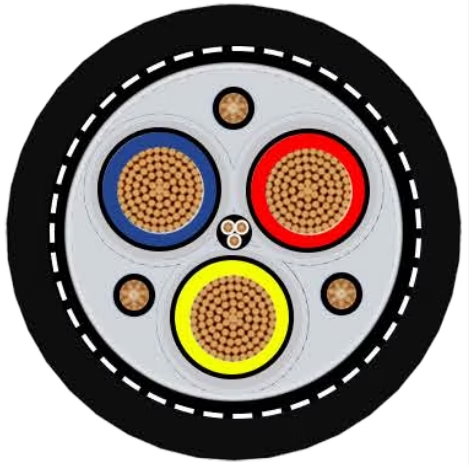
TYPE 450 cable

Australia's iron ore ports operate under some of the world's most challenging environmental conditions for electrical equipment. Along the western coast where iron ore handling facilities concentrate — particularly in the Pilbara region and ports such as Port Hedland and Port Dampier — outdoor equipment is exposed to intense ultraviolet (UV) radiation, salt spray, high humidity, and atmospheric ozone generated by photochemical reactions in the air. Unlike mechanical damage, which operators can see and immediately respond to, UV and ozone degradation of cable outer sheaths occurs invisibly and progressively, weakening the insulation and mechanical integrity of trailing and reeling cables over months or years until catastrophic failure occurs. A 22 kV reeling cable serving a quayside crane, electric rope shovel, or dragline in an Australian iron ore port may spend 80 to 100 percent of its operational life outdoors, unshaded, with only brief periods of protection during maintenance shutdowns or storage. Prysmian Group and other leading cable manufacturers have documented that in tropical and subtropical coastal environments, conventional black polychloroprene (PCP) or chlorinated polyethylene (CPE) sheaths can lose 30 to 50 percent of their original tensile strength within 12 to 24 months of continuous outdoor exposure, while tearing energy and elongation-at-break characteristics degrade even more rapidly. This degradation directly translates to increased risk of cable cracking, puncture, and sheath failure during flexing, dragging, or impact — precisely the stresses experienced by reeling cables on active port machinery. 在澳洲铁矿港口,传统PCP或CPE护套的抗拉强度可在12至24个月内下降30至50%。

Protolon® (SM) vs. Type 450: Which 22kV Reeling Cable Offers Superior UV and Ozone Resistance for Australian Iron Ore Ports?

Australia’s iron ore ports operate under some of the world’s most challenging environmental conditions for electrical equipment. Along the western coast where iron ore handling facilities concentrate — particularly in the Pilbara region and ports such as Port Hedland and Port Dampier — outdoor equipment is exposed to intense ultraviolet (UV) radiation, salt spray, high humidity, and atmospheric ozone generated by photochemical reactions in the air. Unlike mechanical damage, which operators can see and immediately respond to, UV and ozone degradation of cable outer sheaths occurs invisibly and progressively, weakening the insulation and mechanical integrity of trailing and reeling cables over months or years until catastrophic failure occurs. A 22 kV reeling cable serving a quayside crane, electric rope shovel, or dragline in an Australian iron ore port may spend 80 to 100 percent of its operational life outdoors, unshaded, with only brief periods of protection during maintenance shutdowns or storage. Prysmian Group and other leading cable manufacturers have documented that in tropical and subtropical coastal environments, conventional black polychloroprene (PCP) or chlorinated polyethylene (CPE) sheaths can lose 30 to 50 percent of their original tensile strength within 12 to 24 months of continuous outdoor exposure, while tearing energy and elongation-at-break characteristics degrade even more rapidly. This degradation directly translates to increased risk of cable cracking, puncture, and sheath failure during flexing, dragging, or impact — precisely the stresses experienced by reeling cables on active port machinery. 在澳洲铁矿港口,传统PCP或CPE护套的抗拉强度可在12至24个月内下降30至50%。
Australia's mining industry operates under some of the world's most demanding conditions, requiring specialised electrical infrastructure that meets rigorous safety and performance standards. As the largest supplier of medium voltage cables in Australia, Nexans Olex has an extensive range of cables from 3.8/6.6kV to 19/33kV manufactured in Victoria to Australian Standard AS/NZS 1429.1. This technical guide examines both fixed installation XLPE cables and flexible Type 275 mining cables for applications in underground and surface mining operations. 澳大利亚采矿业在全球最严苛的条件下运营,需要符合严格安全和性能标准的专业电气基础设施。本技术指南对比分析固定安装XLPE电缆与柔性Type 275矿用电缆在地下及露天采矿中的应用。

Single Core Cables: Nexans Olex Instalex vs Alternative Type 275 Cables

Australia’s mining industry operates under some of the world’s most demanding conditions, requiring specialised electrical infrastructure that meets rigorous safety and performance standards. As the largest supplier of medium voltage cables in Australia, Nexans Olex has an extensive range of cables from 3.8/6.6kV to 19/33kV manufactured in Victoria to Australian Standard AS/NZS 1429.1. This technical guide examines both fixed installation XLPE cables and flexible Type 275 mining cables for applications in underground and surface mining operations. 澳大利亚采矿业在全球最严苛的条件下运营,需要符合严格安全和性能标准的专业电气基础设施。本技术指南对比分析固定安装XLPE电缆与柔性Type 275矿用电缆在地下及露天采矿中的应用。
Type 450 cables are Australian-standard reeling and trailing cables designed specifically for mining applications. Defined under AS/NZS 1802 (formerly AS 1802), these cables feature robust construction capable of withstanding the harsh conditions of underground and surface mining environments. The "Type 450" designation indicates cables rated for 450/750V operation in mining applications.

Ampcontrol Protection Relays: Required Pilot Core Resistance for Type 450 Cables

Type 450 cables are Australian-standard reeling and trailing cables designed specifically for mining applications. Defined under AS/NZS 1802 (formerly AS 1802), these cables feature robust construction capable of withstanding the harsh conditions of underground and surface mining environments. The “Type 450” designation indicates cables rated for 450/750V operation in mining applications.
Type 441 cables represent a critical category of mining power cables designed for demanding applications in surface and underground mining environments. These cables are specifically engineered to withstand extreme mechanical stress, including trailing, reeling, crushing forces, and environmental hazards encountered in heavy-duty industrial operations. The sheath hardness specification is a fundamental parameter that directly affects the cable's mechanical performance, durability, and service life under harsh operational conditions. 441型电缆是专为地表和地下采矿环境中的苛刻应用而设计的关键矿用电力电缆类别。这些电缆经过专门设计,能够承受极端的机械应力,包括拖拽、卷筒、挤压力以及在重型工业作业中遇到的环境危害。护套硬度规范是直接影响电缆在苛刻操作条件下的机械性能、耐久性和使用寿命的基本参数。

Type 441 Cable Sheath Hardness Standards

Type 441 cables represent a critical category of mining power cables designed for demanding applications in surface and underground mining environments. These cables are specifically engineered to withstand extreme mechanical stress, including trailing, reeling, crushing forces, and environmental hazards encountered in heavy-duty industrial operations. The sheath hardness specification is a fundamental parameter that directly affects the cable’s mechanical performance, durability, and service life under harsh operational conditions. 441型电缆是专为地表和地下采矿环境中的苛刻应用而设计的关键矿用电力电缆类别。这些电缆经过专门设计,能够承受极端的机械应力,包括拖拽、卷筒、挤压力以及在重型工业作业中遇到的环境危害。护套硬度规范是直接影响电缆在苛刻操作条件下的机械性能、耐久性和使用寿命的基本参数。Type 441 cables represent a critical category of mining power cables designed for demanding applications in surface and underground mining environments. These cables are specifically engineered to withstand extreme mechanical stress, including trailing, reeling, crushing forces, and environmental hazards encountered in heavy-duty industrial operations. The sheath hardness specification is a fundamental parameter that directly affects the cable’s mechanical performance, durability, and service life under harsh operational conditions. 441型电缆是专为地表和地下采矿环境中的苛刻应用而设计的关键矿用电力电缆类别。这些电缆经过专门设计,能够承受极端的机械应力,包括拖拽、卷筒、挤压力以及在重型工业作业中遇到的环境危害。护套硬度规范是直接影响电缆在苛刻操作条件下的机械性能、耐久性和使用寿命的基本参数。
The question of whether a Type 450 33kV cable requires a bending radius of twelve times or fifteen times its overall diameter when installed on a monospiral reel is not merely an academic exercise but a critical consideration that directly impacts cable longevity, system reliability, and operational safety in medium-voltage power distribution networks. Understanding the correct specification requires examining the interplay between international standards, cable construction characteristics, and the specific mechanical conditions imposed by monospiral reel systems. Type 450 33kV电缆在单螺旋卷筒上安装时,其弯曲半径是需要12倍还是15倍外径,这不仅仅是一个学术问题,而是直接影响电缆寿命、系统可靠性和中压配电网络运行安全的关键考虑因素。理解正确的规范需要研究国际标准、电缆结构特性以及单螺旋卷筒系统施加的特定机械条件之间的相互作用。

Bending Radius for Type 450 33kV Cables on Monospiral Reels: 12xOD or 15xOD?

The question of whether a Type 450 33kV cable requires a bending radius of twelve times or fifteen times its overall diameter when installed on a monospiral reel is not merely an academic exercise but a critical consideration that directly impacts cable longevity, system reliability, and operational safety in medium-voltage power distribution networks. Understanding the correct specification requires examining the interplay between international standards, cable construction characteristics, and the specific mechanical conditions imposed by monospiral reel systems. Type 450 33kV电缆在单螺旋卷筒上安装时,其弯曲半径是需要12倍还是15倍外径,这不仅仅是一个学术问题,而是直接影响电缆寿命、系统可靠性和中压配电网络运行安全的关键考虑因素。理解正确的规范需要研究国际标准、电缆结构特性以及单螺旋卷筒系统施加的特定机械条件之间的相互作用。
In the global cable manufacturing industry, voltage ratings represent a fundamental specification that determines a cable's safe operating parameters and application suitability. When examining low-voltage mining cables, a notable discrepancy emerges between international standards and those used in Australia and New Zealand. While the International Electrotechnical Commission (IEC) designates low-voltage power cables with a rating of 0.6/1kV under IEC 60502-1, Australian mining standards specify a 1.1/1.1kV rating for equivalent applications. This distinction is not arbitrary but reflects careful consideration of mining-specific operational requirements, safety margins, and the unique characteristics of Australia's mining infrastructure. 在全球电缆制造行业中,电压等级是决定电缆安全运行参数和应用适用性的基本规格。在研究低压矿用电缆时,国际标准与澳大利亚和新西兰使用的标准之间存在明显差异。国际电工委员会(IEC)根据IEC 60502-1标准将低压电力电缆的额定值指定为0.6/1kV,而澳大利亚矿用标准对于同等应用规定了1.1/1.1kV的额定值。这种区别并非随意,而是反映了对矿山特定运行要求、安全裕度以及澳大利亚矿业基础设施独特特征的仔细考虑。

Voltage Rating: Why Australian Standards Use 1.1/1.1kV Rating for LV Mining Cables Instead of the IEC Standard 0.6/1kV?

In the global cable manufacturing industry, voltage ratings represent a fundamental specification that determines a cable’s safe operating parameters and application suitability. When examining low-voltage mining cables, a notable discrepancy emerges between international standards and those used in Australia and New Zealand. While the International Electrotechnical Commission (IEC) designates low-voltage power cables with a rating of 0.6/1kV under IEC 60502-1, Australian mining standards specify a 1.1/1.1kV rating for equivalent applications. This distinction is not arbitrary but reflects careful consideration of mining-specific operational requirements, safety margins, and the unique characteristics of Australia’s mining infrastructure. 在全球电缆制造行业中,电压等级是决定电缆安全运行参数和应用适用性的基本规格。在研究低压矿用电缆时,国际标准与澳大利亚和新西兰使用的标准之间存在明显差异。国际电工委员会(IEC)根据IEC 60502-1标准将低压电力电缆的额定值指定为0.6/1kV,而澳大利亚矿用标准对于同等应用规定了1.1/1.1kV的额定值。这种区别并非随意,而是反映了对矿山特定运行要求、安全裕度以及澳大利亚矿业基础设施独特特征的仔细考虑。
The maximum allowable pilot loop resistance for Type 450 mining cables operating with Ampcontrol earth continuity relays represents a critical electrical parameter that directly impacts mine safety and operational reliability. This comprehensive technical analysis examines the interaction between AS/NZS 2802:2000 Type 450 cable specifications and Ampcontrol relay requirements, providing mining engineers and electrical designers with authoritative guidance for proper system design and selection. 与Ampcontrol地电连续继电器配合使用的Type 450矿用电缆的最大允许导向回路电阻是一个直接影响矿山安全和运行可靠性的关键电气参数。本全面技术分析检查了AS/NZS 2802:2000 Type 450电缆规格与Ampcontrol继电器要求之间的相互作用,为矿业工程师和电气设计师提供了正确系统设计和选择的权威指导。

Pilot Core Resistance: What is the Maximum Allowable Pilot Loop Resistance (Ohms) for a Type 450 Cable to Function with Ampcontrol Relays?

The maximum allowable pilot loop resistance for Type 450 mining cables operating with Ampcontrol earth continuity relays represents a critical electrical parameter that directly impacts mine safety and operational reliability. This comprehensive technical analysis examines the interaction between AS/NZS 2802:2000 Type 450 cable specifications and Ampcontrol relay requirements, providing mining engineers and electrical designers with authoritative guidance for proper system design and selection. 与Ampcontrol地电连续继电器配合使用的Type 450矿用电缆的最大允许导向回路电阻是一个直接影响矿山安全和运行可靠性的关键电气参数。本全面技术分析检查了AS/NZS 2802:2000 Type 450电缆规格与Ampcontrol继电器要求之间的相互作用,为矿业工程师和电气设计师提供了正确系统设计和选择的权威指导。
Type 409 cables represent a specialized category of flexible mining cables designed specifically for demanding applications in material handling equipment, surface mining operations, and industrial environments. These cables are manufactured according to the Australian and New Zealand Standard AS/NZS 2802:2000, which establishes rigorous requirements for reeling and trailing cables used in mining and general industrial applications outside underground coal mining environments. (409型电缆是专为物料搬运设备、露天采矿作业和工业环境中的高要求应用而设计的一类特种柔性矿用电缆。这些电缆按照澳大利亚和新西兰标准AS/NZS 2802:2000制造,该标准对用于煤矿井下以外的采矿和一般工业应用的卷筒电缆和拖曳电缆制定了严格要求。)

Stacker Reclaimers: What is the Minimum Bending Radius for Type 409 Cables Used on High-Speed Stacker-Reclaimer Drums?

Type 409 cables represent a specialized category of flexible mining cables designed specifically for demanding applications in material handling equipment, surface mining operations, and industrial environments. These cables are manufactured according to the Australian and New Zealand Standard AS/NZS 2802:2000, which establishes rigorous requirements for reeling and trailing cables used in mining and general industrial applications outside underground coal mining environments. (409型电缆是专为物料搬运设备、露天采矿作业和工业环境中的高要求应用而设计的一类特种柔性矿用电缆。这些电缆按照澳大利亚和新西兰标准AS/NZS 2802:2000制造,该标准对用于煤矿井下以外的采矿和一般工业应用的卷筒电缆和拖曳电缆制定了严格要求。)
Underground coal mining operations in Australia present unique electrical safety challenges that require specialized cable systems and protection strategies. The presence of methane gas, coal dust, confined spaces, and high humidity creates an environment where electrical faults can potentially trigger catastrophic explosions. To mitigate these risks, Australian coal mines employ earth fault limitation systems that restrict fault currents to very low levels, typically 5 amperes (5A) for systems below 4,000 volts. 澳大利亚地下煤矿作业面临独特的电气安全挑战,需要专门的电缆系统和保护策略。甲烷气体、煤尘、狭窄空间和高湿度的存在造就了一个电气故障可能引发灾难性爆炸的环境。为降低这些风险,澳大利亚煤矿采用接地故障限制系统,将故障电流限制在非常低的水平,对于4000伏以下的系统,通常为5安培(5A)。

Earth Fault Limitation: How Does the 5A Earth Fault Limit in Australian Coal Mines Affect the Sizing of Earth Conductors in Type 241 Cables?

Underground coal mining operations in Australia present unique electrical safety challenges that require specialized cable systems and protection strategies. The presence of methane gas, coal dust, confined spaces, and high humidity creates an environment where electrical faults can potentially trigger catastrophic explosions. To mitigate these risks, Australian coal mines employ earth fault limitation systems that restrict fault currents to very low levels, typically 5 amperes (5A) for systems below 4,000 volts. 澳大利亚地下煤矿作业面临独特的电气安全挑战,需要专门的电缆系统和保护策略。甲烷气体、煤尘、狭窄空间和高湿度的存在造就了一个电气故障可能引发灾难性爆炸的环境。为降低这些风险,澳大利亚煤矿采用接地故障限制系统,将故障电流限制在非常低的水平,对于4000伏以下的系统,通常为5安培(5A)。
The proper application of tightening torque to phase connectors in high-voltage cable terminations is one of the most critical yet frequently overlooked aspects of electrical installation work. When terminating Type 450 cables at 33kV, the connector torque directly determines the quality and reliability of the electrical connection, affecting both the immediate performance and long-term service life of the installation. Understanding the correct torque specifications and their underlying principles is essential for ensuring safe, code-compliant, and maintenance-free operation in demanding mining and industrial environments. 在高压电缆终端中对相连接器施加正确的紧固扭矩是电气安装工作中最关键但经常被忽视的方面之一。在33kV终接Type 450电缆时,连接器扭矩直接决定电气连接的质量和可靠性。

Torque Settings: What is the Recommended Tightening Torque for Phase Connectors in a Type 450 33kV Termination?

The proper application of tightening torque to phase connectors in high-voltage cable terminations is one of the most critical yet frequently overlooked aspects of electrical installation work. When terminating Type 450 cables at 33kV, the connector torque directly determines the quality and reliability of the electrical connection, affecting both the immediate performance and long-term service life of the installation. Understanding the correct torque specifications and their underlying principles is essential for ensuring safe, code-compliant, and maintenance-free operation in demanding mining and industrial environments. 在高压电缆终端中对相连接器施加正确的紧固扭矩是电气安装工作中最关键但经常被忽视的方面之一。在33kV终接Type 450电缆时,连接器扭矩直接决定电气连接的质量和可靠性。
Type 440 reeling cables represent a critical component in mining and industrial power distribution systems, specifically designed for flexible trailing applications according to AS/NZS 2802:2000 standards. These metal-screened power cables feature three pilot cores and operate across voltage ratings from 1.1 kilovolts to 11 kilovolts, supplying reliable electrical power to mobile mining equipment such as draglines, excavators, and materials handling machinery. Despite their robust construction with EPR insulation and high abrasion resistance, these cables remain vulnerable to a particularly destructive failure mode known as corkscrewing, which can compromise both electrical performance and mechanical integrity during operation.

How does “Corkscrewing” destroy Type 440 reeling cables, and how to prevent it during installation?

Type 440 reeling cables represent a critical component in mining and industrial power distribution systems, specifically designed for flexible trailing applications according to AS/NZS 2802:2000 standards. These metal-screened power cables feature three pilot cores and operate across voltage ratings from 1.1 kilovolts to 11 kilovolts, supplying reliable electrical power to mobile mining equipment such as draglines, excavators, and materials handling machinery. Despite their robust construction with EPR insulation and high abrasion resistance, these cables remain vulnerable to a particularly destructive failure mode known as corkscrewing, which can compromise both electrical performance and mechanical integrity during operation.
Mining, drilling, and tunnelling cables represent the most demanding category of industrial cables, designed to operate in some of the harshest environments on earth. These heavy-duty power, control, and instrumentation cables serve mine operators worldwide for both static infrastructure and dynamic equipment applications. Manufactured in accordance with international standards including IEC 60502, BS EN 60332, BS EN 60811, BS EN 60754, and VDE 0295, mining cables must withstand mechanical stress, oil and grease exposure, water immersion, and in underground applications, provide critical fire safety through reduced smoke and fume emissions.

What are Mining, Drilling & Tunnelling Cables?

NSSHÖU cable, NSSHOU cable, NSHÖU cable, NSHOU cable, NSSCHOU cable, NSHTÖU cable, NTSCGEWÖU cable, NTSCGEWOU cable, NTMCGEWÖU cable, N3GHSSYCY cable, N3GHSSHCH cable,Type 61 cable, Type 63 cable, Type 611 cable, Type 622 cable, Type 633 cable, Type 66 cable,Type 240 cable, Type 241 cable, Type 245 cable, Type 450 cable, Type 455 cable, Type 260 cable, Type 275 cable, Type 409 cable, Type 440 cable, Type 441 cable,
TYPE 209 and TYPE 210 mining cables represent critical power distribution infrastructure specifically engineered for the demanding environments of underground coal mining and surface mining operations throughout Australia and New Zealand.

TYPE 209 & TYPE 210 Australian Mining Cables

TYPE 209 and TYPE 210 mining cables represent critical power distribution infrastructure specifically engineered for the demanding environments of underground coal mining and surface mining operations throughout Australia and New Zealand.