rubber sheathed cable

PANZERFLEX-S / ELX (N)TSCGEWÖU: Micro-Filtered HEPR Rubber Insulation Chemistry, Red Polychloroprene (PCP) 5GM5-Grade Salt-Fog Resistant Outer Sheath, Semiconductive Field-Control Architecture, High-Flexibility Design for Port Reeling & Festoon Systems, Split Protective Earth Cores, Anti-Torsion Textile Braid, 3.6/6 kV through 12/20 kV Voltage Classes (18/30 kV Available on Request), Thermal Stability (-30°C to +90°C Flexible Operation), Environmental Durability (Salt-Fog, UV, Oil, Moisture Resistance), STS Container Cranes, Ship-to-Shore Cranes, Ship Loaders, Stacker Reclaimers, Excavators, Cable Reel Systems, Festoon Systems, High-Speed Reeling, Comparative Analysis vs. TENAX TTS and PROTOLON(SMK) Designs, European Port Terminal Field Performance Validation, and Complete Technical Specification Guidance

PANZERFLEX-S / ELX (N)TSCGEWÖU

PANZERFLEX-S / ELX (N)TSCGEWÖU: Micro-Filtered HEPR Rubber Insulation Chemistry, Red Polychloroprene (PCP) 5GM5-Grade Salt-Fog Resistant Outer Sheath, Semiconductive Field-Control Architecture, High-Flexibility Design for Port Reeling & Festoon Systems, Split Protective Earth Cores, Anti-Torsion Textile Braid, 3.6/6 kV through 12/20 kV Voltage Classes (18/30 kV Available on Request), Thermal Stability (-30°C to +90°C Flexible Operation), Environmental Durability (Salt-Fog, UV, Oil, Moisture Resistance), STS Container Cranes, Ship-to-Shore Cranes, Ship Loaders, Stacker Reclaimers, Excavators, Cable Reel Systems, Festoon Systems, High-Speed Reeling, Comparative Analysis vs. TENAX TTS and PROTOLON(SMK) Designs, European Port Terminal Field Performance Validation, and Complete Technical Specification Guidance
600V 2TC Light-SB (600V 2PNCT-SB) cable solves this problem. Built on the same proven JIS C 3327 platform as the unshielded 2TC Light, it adds a critical engineering layer: a tinned copper wire braided combined with cotton yarn shielding that surrounds the insulated conductor bundle. This hybrid metallic/textile braid provides effective EMI containment across the full VFD emission spectrum, preventing radiated noise from escaping power cables and protecting control cables from external interference. Combined with the Kevlar® para-aramid fibre braided tensile reinforcement for mechanical load bearing, the 2TC Light-SB delivers both electromagnetic cleanliness and structural durability in a single cable design purpose-built for the electrical and mechanical demands of modern VFD-controlled port cranes.

600V 2TC Light-SB (2PNCT-SB) Shielded Crane Cable

600V 2TC Light-SB (600V 2PNCT-SB) cable solves this problem. Built on the same proven JIS C 3327 platform as the unshielded 2TC Light, it adds a critical engineering layer: a tinned copper wire braided combined with cotton yarn shielding that surrounds the insulated conductor bundle. This hybrid metallic/textile braid provides effective EMI containment across the full VFD emission spectrum, preventing radiated noise from escaping power cables and protecting control cables from external interference. Combined with the Kevlar® para-aramid fibre braided tensile reinforcement for mechanical load bearing, the 2TC Light-SB delivers both electromagnetic cleanliness and structural durability in a single cable design purpose-built for the electrical and mechanical demands of modern VFD-controlled port cranes.
The 600V 2TC Light (600V 2PNCT) cable, manufactured to the Japanese Industrial Standard JIS C 3327, represents one of the most proven and widely deployed cable designs for port crane and ship unloader applications worldwide. This cable combines ethylene propylene (EP) rubber insulation for superior dielectric performance, polychloroprene rubber sheathing for environmental protection, and—critically—a Kevlar® para-aramid fibre braided tensile reinforcement layer that transforms the cable from a simple electrical conductor into a load-bearing mechanical component capable of supporting its own weight and absorbing the extreme dynamic forces generated by crane operation.

600V 2TC Light (2PNCT) Kevlar®-Reinforced Crane Cable

The 600V 2TC Light (600V 2PNCT) cable, manufactured to the Japanese Industrial Standard JIS C 3327, represents one of the most proven and widely deployed cable designs for port crane and ship unloader applications worldwide. This cable combines ethylene propylene (EP) rubber insulation for superior dielectric performance, polychloroprene rubber sheathing for environmental protection, and—critically—a Kevlar® para-aramid fibre braided tensile reinforcement layer that transforms the cable from a simple electrical conductor into a load-bearing mechanical component capable of supporting its own weight and absorbing the extreme dynamic forces generated by crane operation.
Full equivalent to Prysmian TROMMELFLEX® / Draka NSHTÖU-J (also searched as NSHTOEU-J or NSHTOU-J) 4G95 0.6/1 kV — heavy-duty LV reeling cable for STS/RTG port cranes, bridge/gantry cranes, grab operations, steel mills, mining plants. Letter-by-letter decoding of NSHTÖU-J per DIN VDE 0250-814. Specs: 4×95 mm² (3L+PE), OD 47–51.5 mm, weight ~5,200 kg/km, Cu ~3,648 kg/km, current 296 A (30°C), short-circuit 11.59 kA (1s), bend 10–12×OD, speed 120 m/min, tensile ~5,700 N, -25/+80°C. Tinned Cu class 5, EPR ≥3GI3, chloroprene 5GM5 sheath. Derating factors for multi-layer winding per VDE 0298-4. Pricing: Prysmian €18–35/m vs Feichun FC-TRM €8–16/m (50–60% savings). Ships 3–7 days from stock (confirmed March 2026). EAC, GOST-R, CE.

Китайский аналог Draka/Prysmian: барабанный кабель NSHTÖU-J 4G95 0.6/1 kV в наличии — расшифровка, характеристики, цена

Full equivalent to Prysmian TROMMELFLEX® / Draka NSHTÖU-J (also searched as NSHTOEU-J or NSHTOU-J) 4G95 0.6/1 kV — heavy-duty LV reeling cable for STS/RTG port cranes, bridge/gantry cranes, grab operations, steel mills, mining plants. Letter-by-letter decoding of NSHTÖU-J per DIN VDE 0250-814. Specs: 4×95 mm² (3L+PE), OD 47–51.5 mm, weight ~5,200 kg/km, Cu ~3,648 kg/km, current 296 A (30°C), short-circuit 11.59 kA (1s), bend 10–12×OD, speed 120 m/min, tensile ~5,700 N, -25/+80°C. Tinned Cu class 5, EPR ≥3GI3, chloroprene 5GM5 sheath. Derating factors for multi-layer winding per VDE 0298-4. Pricing: Prysmian €18–35/m vs Feichun FC-TRM €8–16/m (50–60% savings). Ships 3–7 days from stock (confirmed March 2026). EAC, GOST-R, CE.
Complete decoding of (N)TSCGEWÖU / (N)TSCGEWOEU per DIN VDE 0250: (N) VDE-compliant normtype, T Tagebau/trailing, S semiconductive screen, C concentric copper screen, G rubber, E EPR insulation, W weather/abrasion-resistant sheath, Ö oil-resistant, U flame-retardant. Layer-by-layer construction, notation variants, size table 3×16–3×185 mm² at 3.6/6–8.7/15 kV, comparison with PROTOLON (SB)/(SMK) and Russian КГЭШ-Т, applications in BWE excavators, STS/RTG cranes, TBM. 50-keyword procurement reference table.

Расшифровка маркировки кабеля (N)TSCGEWÖU: каждая буква — инженерный анализ по DIN VDE

Complete decoding of (N)TSCGEWÖU / (N)TSCGEWOEU per DIN VDE 0250: (N) VDE-compliant normtype, T Tagebau/trailing, S semiconductive screen, C concentric copper screen, G rubber, E EPR insulation, W weather/abrasion-resistant sheath, Ö oil-resistant, U flame-retardant. Layer-by-layer construction, notation variants, size table 3×16–3×185 mm² at 3.6/6–8.7/15 kV, comparison with PROTOLON (SB)/(SMK) and Russian КГЭШ-Т, applications in BWE excavators, STS/RTG cranes, TBM. 50-keyword procurement reference table.
Complete technical datasheet Chinese equivalent Prysmian PROTOLON (SB) NTSCGEWOEU 6/10 kV: reeling cable mobile heavy-duty equipment — port gantry cranes (RTG/STS/RMG), open-pit excavators, stacker-reclaimers, spreaders, draglines, bucket-wheel excavators. Configuration 3×50 mm² power + 2×(25/2) mm² earth + 1×16 mm² control (st). Rated voltage 6/10 kV (max. 7.2/12 kV). Outer diameter ~45.0–49.5 mm, weight ~3,650–3,800 kg/km, copper index ~1,834 kg/km. Current capacity ~183 A @ 30°C. Min. bending radius 12–15×OD. Travel speed up to 120–240 m/min. Max. tensile force ~2,250 N (15 N/mm² copper, up to 30 N/mm² acceleration per DIN VDE 0298-3). Temperature -35°C to +80°C flexing, -50°C to +80°C fixed. EPR/HEPR insulation with semiconductive field-control screens 6/10 kV, dual outer sheath PCP/PUR — abrasion/oil/UV/ozone/flame resistant (EN 60332-1-2). Additional testing: reversed bending, torsional stress, roller bending per DIN VDE 0250-813. Russian GOST equivalent КГЭШ-Т 6/10 kV. EAC, GOST-R/-K/-B, Fire Certificate certified.

Аналог PROTOLON (SB): кабель барабанный 3×50+2×25/2+1×16st 6/10 kV — полный технический паспорт (Feichun Cable, Китай)

Complete technical datasheet Chinese equivalent Prysmian PROTOLON (SB) NTSCGEWOEU 6/10 kV: reeling cable mobile heavy-duty equipment — port gantry cranes (RTG/STS/RMG), open-pit excavators, stacker-reclaimers, spreaders, draglines, bucket-wheel excavators. Configuration 3×50 mm² power + 2×(25/2) mm² earth + 1×16 mm² control (st). Rated voltage 6/10 kV (max. 7.2/12 kV). Outer diameter ~45.0–49.5 mm, weight ~3,650–3,800 kg/km, copper index ~1,834 kg/km. Current capacity ~183 A @ 30°C. Min. bending radius 12–15×OD. Travel speed up to 120–240 m/min. Max. tensile force ~2,250 N (15 N/mm² copper, up to 30 N/mm² acceleration per DIN VDE 0298-3). Temperature -35°C to +80°C flexing, -50°C to +80°C fixed. EPR/HEPR insulation with semiconductive field-control screens 6/10 kV, dual outer sheath PCP/PUR — abrasion/oil/UV/ozone/flame resistant (EN 60332-1-2). Additional testing: reversed bending, torsional stress, roller bending per DIN VDE 0250-813. Russian GOST equivalent КГЭШ-Т 6/10 kV. EAC, GOST-R/-K/-B, Fire Certificate certified.
The (N)SSHÖU designation represents a family of European rubber-insulated cables designed and manufactured to German VDE standards, specifically VDE 0250-812. The designation encodes the cable's fundamental characteristics: flexible power transmission cable suitable for mining and industrial applications. The baseline European design is optimized for 0.6/1kV operation, representing the standard voltage rating for TN earthing systems prevalent throughout Europe and North America. (N)SSHÖU代表一系列欧洲橡胶绝缘电缆,按照德国VDE标准(特别是VDE 0250-812)设计和制造。该名称编码了电缆的基本特征:适合采矿和工业应用的灵活电力传输电缆。欧洲基线设计针对0.6/1kV运行进行了优化,代表了欧洲和北美普遍存在的TN接地系统的标准电压额定值。

Insulation Thickness Differences: How AS/NZS 1.1/1.1kV Modifies (N)SSHÖU Cable Structure

The (N)SSHÖU designation represents a family of European rubber-insulated cables designed and manufactured to German VDE standards, specifically VDE 0250-812. The designation encodes the cable’s fundamental characteristics: flexible power transmission cable suitable for mining and industrial applications. The baseline European design is optimized for 0.6/1kV operation, representing the standard voltage rating for TN earthing systems prevalent throughout Europe and North America. (N)SSHÖU代表一系列欧洲橡胶绝缘电缆,按照德国VDE标准(特别是VDE 0250-812)设计和制造。该名称编码了电缆的基本特征:适合采矿和工业应用的灵活电力传输电缆。欧洲基线设计针对0.6/1kV运行进行了优化,代表了欧洲和北美普遍存在的TN接地系统的标准电压额定值。
To understand reeling cables and why the ÖLFLEX CRANE NSHTÖU design is fundamentally different from standard control or power cables, let me start with a basic distinction about how cables experience mechanical stress. When we discussed drag chain cables in previous technical guides, we focused on cables that bend repeatedly in a predictable path—the cable enters the chain at one end, navigates tight curves, and exits the other end. The stress is primarily bending stress, and the cable's design is optimized for flexing along a fixed path millions of times. Reeling cables experience a completely different mechanical environment. A reeling cable is wound around a rotating drum, and as the drum rotates, the cable either winds onto the drum (spooling) or unwinds from the drum (unreeling). This seemingly simple mechanical action creates a unique set of stresses that standard cables cannot tolerate. First, imagine the cable as it winds onto a rotating drum. The first wrap of cable lies directly against the drum surface. The second wrap lies on top of the first wrap. The third wrap lies on top of the second wrap. This layering continues until the drum is completely spooled. Now here is the critical insight: cables on the outer layers of a spooled drum experience completely different mechanical stress than cables on the inner layers. A cable on the inner layer, wrapped tightly against the drum, experiences primarily circumferential compression and bending. A cable on the outer layer, wrapped loosely over all the inner layers, experiences tension (pulling force) as the drum rotates. More importantly, as the outer-layer cable unwinds, it must rotate to accommodate the unwinding motion. This rotation creates torsional stress—twisting forces that attempt to rotate the cable around its central axis. Standard control cables or drag chain cables are not engineered to tolerate torsional stress. They fail when subjected to this twisting motion, typically through a mechanism called the corkscrew effect where the cable's multi-conductor core separates and twists relative to the outer sheath. The ÖLFLEX CRANE NSHTÖU cable is specifically engineered to prevent this failure through sophisticated mechanical design including a supporting braid with Aramid fibers that maintains conductor bundle cohesion even during intense torsional stress. This is why the distinction between standard cables and specialized reeling cables is not merely academic—it is the difference between equipment that functions reliably for years versus equipment that experiences cable failure every few months.

Spreader Basket Standard: Equivalent to LAPP ÖLFLEX CRANE NSHTÖU 30G1.5 Reeling Cable

To understand reeling cables and why the ÖLFLEX CRANE NSHTÖU design is fundamentally different from standard control or power cables, let me start with a basic distinction about how cables experience mechanical stress. When we discussed drag chain cables in previous technical guides, we focused on cables that bend repeatedly in a predictable path—the cable enters the chain at one end, navigates tight curves, and exits the other end. The stress is primarily bending stress, and the cable’s design is optimized for flexing along a fixed path millions of times. Reeling cables experience a completely different mechanical environment. A reeling cable is wound around a rotating drum, and as the drum rotates, the cable either winds onto the drum (spooling) or unwinds from the drum (unreeling). This seemingly simple mechanical action creates a unique set of stresses that standard cables cannot tolerate. First, imagine the cable as it winds onto a rotating drum. The first wrap of cable lies directly against the drum surface. The second wrap lies on top of the first wrap. The third wrap lies on top of the second wrap. This layering continues until the drum is completely spooled. Now here is the critical insight: cables on the outer layers of a spooled drum experience completely different mechanical stress than cables on the inner layers. A cable on the inner layer, wrapped tightly against the drum, experiences primarily circumferential compression and bending. A cable on the outer layer, wrapped loosely over all the inner layers, experiences tension (pulling force) as the drum rotates. More importantly, as the outer-layer cable unwinds, it must rotate to accommodate the unwinding motion. This rotation creates torsional stress—twisting forces that attempt to rotate the cable around its central axis. Standard control cables or drag chain cables are not engineered to tolerate torsional stress. They fail when subjected to this twisting motion, typically through a mechanism called the corkscrew effect where the cable’s multi-conductor core separates and twists relative to the outer sheath. The ÖLFLEX CRANE NSHTÖU cable is specifically engineered to prevent this failure through sophisticated mechanical design including a supporting braid with Aramid fibers that maintains conductor bundle cohesion even during intense torsional stress. This is why the distinction between standard cables and specialized reeling cables is not merely academic—it is the difference between equipment that functions reliably for years versus equipment that experiences cable failure every few months.
(N)TSCGEWÖU 3x120+3x70/3 12/20kV cable is the correct choice for most tunnel boring machine main cutterhead power supplies operating at medium voltage with cutterhead thrust loads in the range of 8,000 to 12,000 kilonewtons, featuring three 120 mm² phase conductors providing approximately 350 to 380 amperes current capacity in free-air installation at 30°C ambient and 90°C conductor operating temperature. The cable's nominal outer diameter is 73 to 81 millimeters, with total weight of approximately 9,800 to 10,500 kilograms per kilometer, making it manageable for most standard cable spools while still providing sufficient conductor cross-section to limit voltage drop to acceptable levels over tunnel distances extending several kilometers. The cable features Class 5 tinned copper conductors engineered for fatigue resistance in continuously flexing applications, EPR insulation maintaining exceptional thermal stability even when subjected to the 90°C conductor temperature that results from high-current excavation duty, semi-conductive shielding layers that uniformly distribute electric stress and prevent partial discharge initiation in the high-voltage environment, and a heavy-duty CPE jacket providing abrasion resistance in the confined underground spaces where the cable is routed. However, the critical distinction between simply selecting a cable model and properly sizing a cable for your specific tunnel boring installation lies in understanding the difference between the cable's theoretical free-air current capacity and its actual safe operating current when coiled on a cable drum—a difference that can reduce safe current by 30 to 50 percent depending on the spooling configuration. For tunnel boring machines operating in continental European or Asian tunneling projects with tunnel lengths of 5 to 15 kilometers and cutterhead thrust loads in the moderate to high range, the 3x120+3x70/3 12/20kV cable provides excellent balance between current capacity, voltage drop performance, mechanical durability, and cost. However, for shorter tunnels where voltage drop is not a concern, smaller conductor sizes (such as 3x95 mm²) may provide adequate performance at lower material cost, while for exceptionally long tunnels or extremely high thrust conditions, larger sizes (such as 3x150 mm² or 3x185 mm²) become necessary to maintain safe operating currents and acceptable voltage drop. Proper cable sizing requires engineering analysis specific to your tunnel length, expected cutterhead current demand, acceptable voltage drop limits, available cable drum diameters, and operational duty cycle.

Tunnel Boring Machines (TBM): Sizing (N)TSCGEWÖU 3×120+3×70/3 12/20kV for the Main Cutterhead Power Supply

(N)TSCGEWÖU 3×120+3×70/3 12/20kV cable is the correct choice for most tunnel boring machine main cutterhead power supplies operating at medium voltage with cutterhead thrust loads in the range of 8,000 to 12,000 kilonewtons, featuring three 120 mm² phase conductors providing approximately 350 to 380 amperes current capacity in free-air installation at 30°C ambient and 90°C conductor operating temperature. The cable’s nominal outer diameter is 73 to 81 millimeters, with total weight of approximately 9,800 to 10,500 kilograms per kilometer, making it manageable for most standard cable spools while still providing sufficient conductor cross-section to limit voltage drop to acceptable levels over tunnel distances extending several kilometers. The cable features Class 5 tinned copper conductors engineered for fatigue resistance in continuously flexing applications, EPR insulation maintaining exceptional thermal stability even when subjected to the 90°C conductor temperature that results from high-current excavation duty, semi-conductive shielding layers that uniformly distribute electric stress and prevent partial discharge initiation in the high-voltage environment, and a heavy-duty CPE jacket providing abrasion resistance in the confined underground spaces where the cable is routed. However, the critical distinction between simply selecting a cable model and properly sizing a cable for your specific tunnel boring installation lies in understanding the difference between the cable’s theoretical free-air current capacity and its actual safe operating current when coiled on a cable drum—a difference that can reduce safe current by 30 to 50 percent depending on the spooling configuration. For tunnel boring machines operating in continental European or Asian tunneling projects with tunnel lengths of 5 to 15 kilometers and cutterhead thrust loads in the moderate to high range, the 3×120+3×70/3 12/20kV cable provides excellent balance between current capacity, voltage drop performance, mechanical durability, and cost. However, for shorter tunnels where voltage drop is not a concern, smaller conductor sizes (such as 3×95 mm²) may provide adequate performance at lower material cost, while for exceptionally long tunnels or extremely high thrust conditions, larger sizes (such as 3×150 mm² or 3×185 mm²) become necessary to maintain safe operating currents and acceptable voltage drop. Proper cable sizing requires engineering analysis specific to your tunnel length, expected cutterhead current demand, acceptable voltage drop limits, available cable drum diameters, and operational duty cycle.
The NSHTÖU-J 4G95 0.6/1kV heavy-duty reeling cable has a nominal 1-second short-circuit current rating of 9,000 amperes, with typical field variations ranging between 8,500 and 10,200 amperes depending on conductor material purity, cable geometry variations, and reference test conditions. This rating represents the maximum instantaneous fault current the cable can safely withstand for exactly one second of duration before the copper conductor temperature exceeds the absolute thermal limit of 250°C, at which point irreversible thermal damage to the EPR insulation and conductor structure begins. The cable features four 95 mm² conductors (including one integrated green/yellow earth core) of Class 5 tinned copper, an outer diameter of approximately 53–57.5 mm, and a total weight of approximately 7,600 kg/km. Under normal continuous operation at 30°C ambient temperature in free air, the cable safely carries 301 amperes without exceeding 90°C conductor temperature. However, when a short circuit occurs and fault current reaches 9,000 amperes, the same conductor experiences a 100-fold increase in current density, generating extreme Joule heating that raises conductor temperature from the pre-fault state (typically 50–70°C under load) to 250°C within one second. The underlying calculation governing this short-circuit rating is the adiabatic heating formula, a fundamental electrical engineering principle that engineers must understand to properly coordinate protection devices and prevent cable failure during electrical faults.

Short-Circuit Rating: What is the 1-Second Short-Circuit Current for NSHTÖU-J 4G95 0.6/1kV?

The NSHTÖU-J 4G95 0.6/1kV heavy-duty reeling cable has a nominal 1-second short-circuit current rating of 9,000 amperes, with typical field variations ranging between 8,500 and 10,200 amperes depending on conductor material purity, cable geometry variations, and reference test conditions. This rating represents the maximum instantaneous fault current the cable can safely withstand for exactly one second of duration before the copper conductor temperature exceeds the absolute thermal limit of 250°C, at which point irreversible thermal damage to the EPR insulation and conductor structure begins. The cable features four 95 mm² conductors (including one integrated green/yellow earth core) of Class 5 tinned copper, an outer diameter of approximately 53–57.5 mm, and a total weight of approximately 7,600 kg/km. Under normal continuous operation at 30°C ambient temperature in free air, the cable safely carries 301 amperes without exceeding 90°C conductor temperature. However, when a short circuit occurs and fault current reaches 9,000 amperes, the same conductor experiences a 100-fold increase in current density, generating extreme Joule heating that raises conductor temperature from the pre-fault state (typically 50–70°C under load) to 250°C within one second. The underlying calculation governing this short-circuit rating is the adiabatic heating formula, a fundamental electrical engineering principle that engineers must understand to properly coordinate protection devices and prevent cable failure during electrical faults.
The maximum pulling tension for NSHTÖU-J 5G16 0.6/1kV cable is absolutely limited to 1,200 newtons of axial tensile load under the VDE 0250-814 standard specification. This maximum is calculated as 15 N/mm² tensile stress multiplied by the total cross-sectional area of the five main copper conductors (five cores × 16 mm² = 80 mm² total), yielding 15 × 80 = 1,200 newtons. This is not a casual guideline or general recommendation—it is the absolute mechanical failure point beyond which the copper conductors begin plastic deformation and eventual rupture. For practical field deployment, however, the safe operating pulling tension should be substantially lower, typically in the range of 600–900 newtons depending on the specific installation scenario, representing a safety factor of 1.3–2.0 applied against the 1,200 newton absolute maximum. The reasoning is straightforward: you never want to operate consistently at the edge of mechanical failure, where even small unanticipated additional loads could cause catastrophic failure. Instead, you design systems to operate comfortably within safe margins where occasional transient overloads can be tolerated without damage.

Maximum Pulling Tension: What is the exact maximum safe pulling load and tensile strength specification for NSHTÖU-J 5G16 0.6/1kV low-voltage reeling cables in heavy machinery and port crane applications?

The maximum pulling tension for NSHTÖU-J 5G16 0.6/1kV cable is absolutely limited to 1,200 newtons of axial tensile load under the VDE 0250-814 standard specification. This maximum is calculated as 15 N/mm² tensile stress multiplied by the total cross-sectional area of the five main copper conductors (five cores × 16 mm² = 80 mm² total), yielding 15 × 80 = 1,200 newtons. This is not a casual guideline or general recommendation—it is the absolute mechanical failure point beyond which the copper conductors begin plastic deformation and eventual rupture. For practical field deployment, however, the safe operating pulling tension should be substantially lower, typically in the range of 600–900 newtons depending on the specific installation scenario, representing a safety factor of 1.3–2.0 applied against the 1,200 newton absolute maximum. The reasoning is straightforward: you never want to operate consistently at the edge of mechanical failure, where even small unanticipated additional loads could cause catastrophic failure. Instead, you design systems to operate comfortably within safe margins where occasional transient overloads can be tolerated without damage.
The dielectric constant of the 3GI3 elastomeric insulation used in (N)3GHSSYCY 3x150+3x25/3 cable is approximately 6.2 to 6.8 at standard reference frequency of 1 kHz, with typical measured value around 6.5 for new cable material. The insulation breakdown voltage (also called dielectric strength or withstand voltage) exceeds 30 kV when measured under controlled laboratory conditions on fresh cable samples with 8 mm insulation thickness, typically achieving 32–38 kV before electrical breakdown occurs.

Dielectric Constant Specs: What is the exact dielectric constant and insulation breakdown voltage for (N)3GHSSYCY 3×150+3×25/3 medium-voltage cable in long VFD motor runs? 

The dielectric constant of the 3GI3 elastomeric insulation used in (N)3GHSSYCY 3×150+3×25/3 cable is approximately 6.2 to 6.8 at standard reference frequency of 1 kHz, with typical measured value around 6.5 for new cable material. The insulation breakdown voltage (also called dielectric strength or withstand voltage) exceeds 30 kV when measured under controlled laboratory conditions on fresh cable samples with 8 mm insulation thickness, typically achieving 32–38 kV before electrical breakdown occurs.
The continuous current carrying capacity of an (N)TSCGEWÖU 3x50+3x25/3 12/20kV cable wound in three compacted layers on a standard industrial reel is approximately 85 to 110 amperes depending on ambient temperature, mechanical stress conditions, and reel cooling characteristics. This represents a significant reduction from the cable's reference rating of 202 amperes, which is established under ideal laboratory conditions (30°C ambient, single conductor run in free air, no mechanical tension or twisting). The dramatic derating from 202 A to 85–110 A reflects the thermal constraint imposed by the compact three-layer geometry, where the inner layers of wound cable are thermally insulated by outer layers, preventing efficient dissipation of I²R resistive losses to the surrounding environment. The cable features three 50 mm² Class 2 stranded tinned copper main power conductors and a symmetrical 3×25 mm² grounding conductor architecture (the "3+3" design), weighing approximately 1,850 kg/km of copper content and 3,550–3,650 kg/km total weight, with proven torsional twist resistance to ±100°/m and maximum tensile load capability of 3,000 newtons per phase conductor.

Derating Factors: Current carrying capacity of (N)TSCGEWÖU 3×50+3×25/3 12/20kV wound in 3 layers on a reel

The continuous current carrying capacity of an (N)TSCGEWÖU 3×50+3×25/3 12/20kV cable wound in three compacted layers on a standard industrial reel is approximately 85 to 110 amperes depending on ambient temperature, mechanical stress conditions, and reel cooling characteristics. This represents a significant reduction from the cable’s reference rating of 202 amperes, which is established under ideal laboratory conditions (30°C ambient, single conductor run in free air, no mechanical tension or twisting). The dramatic derating from 202 A to 85–110 A reflects the thermal constraint imposed by the compact three-layer geometry, where the inner layers of wound cable are thermally insulated by outer layers, preventing efficient dissipation of I²R resistive losses to the surrounding environment. The cable features three 50 mm² Class 2 stranded tinned copper main power conductors and a symmetrical 3×25 mm² grounding conductor architecture (the “3+3” design), weighing approximately 1,850 kg/km of copper content and 3,550–3,650 kg/km total weight, with proven torsional twist resistance to ±100°/m and maximum tensile load capability of 3,000 newtons per phase conductor.
(N)TSKCGEWÖU 3x150+3x25/3 3.6/6kV cable with split three-part earth conductor is approximately 65 mm (2.56 inches), with a standard tolerance window of ±3.0 mm producing a permissible range of 62.0–68.0 mm. The inner jacket (the intermediate protective layer between the insulation and outer sheath) typically has a nominal thickness of approximately 0.8–1.0 mm, contributing to overall diameter build-up but not typically measured as a separate "inner diameter" in engineering specifications because the inner jacket is not a defined outer boundary—it is a layer embedded within the cable structure. The outer jacket (the final thermosetting rubber compound layer) has a nominal thickness of approximately 2.5–3.0 mm, providing the cable's mechanical interface with the environment. The approximate total weight of this cable is 8,200 kg/km (5,510 lbs/1000 ft), with copper content approximately 4,560 kg/km. It features three 150 mm² Class 5 tinned copper main phase conductors, three strategically distributed 25/3 mm² split earth conductors for electromagnetic symmetry, a 3GI3 high-dielectric EPR insulation system rated for continuous 90°C operation, an anti-torsion braid reinforcement layer, and a 5GM5 thermosetting halogen-free outer sheath providing extreme abrasion and tear resistance.

What is the Inner and Outer Jacket Diameter of (N)TSKCGEWÖU 3×150+3×25/3 3.6/6kV Splittable Earth Cable?

(N)TSKCGEWÖU 3×150+3×25/3 3.6/6kV cable with split three-part earth conductor is approximately 65 mm (2.56 inches), with a standard tolerance window of ±3.0 mm producing a permissible range of 62.0–68.0 mm. The inner jacket (the intermediate protective layer between the insulation and outer sheath) typically has a nominal thickness of approximately 0.8–1.0 mm, contributing to overall diameter build-up but not typically measured as a separate “inner diameter” in engineering specifications because the inner jacket is not a defined outer boundary—it is a layer embedded within the cable structure. The outer jacket (the final thermosetting rubber compound layer) has a nominal thickness of approximately 2.5–3.0 mm, providing the cable’s mechanical interface with the environment. The approximate total weight of this cable is 8,200 kg/km (5,510 lbs/1000 ft), with copper content approximately 4,560 kg/km. It features three 150 mm² Class 5 tinned copper main phase conductors, three strategically distributed 25/3 mm² split earth conductors for electromagnetic symmetry, a 3GI3 high-dielectric EPR insulation system rated for continuous 90°C operation, an anti-torsion braid reinforcement layer, and a 5GM5 thermosetting halogen-free outer sheath providing extreme abrasion and tear resistance.
Type W 4/C 2/0 AWG 2000V portable power cables represent the heavy-duty backbone of North American mining operations, temporary power distribution systems, and construction equipment supply chains. These cables deliver 237 amperes continuously while withstanding the mechanical abuse, thermal cycling, oil exposure, and moisture ingress endemic to underground mining, drilling rig operations, and industrial emergency power applications. The designation "Type W" codifies a specific engineering philosophy: maximum flexibility through extreme copper stranding (259 to 342 fine wires per conductor), robust outer sheathing rated for tractor drag and ground abrasion, and flame-retardant chemistry meeting the rigorous MSHA standards that govern underground coal mining environments.

Sourcing Type W 4/C 2/0 AWG 2000V: Generic Equivalents Meeting MSHA Standards

Type W 4/C 2/0 AWG 2000V portable power cables represent the heavy-duty backbone of North American mining operations, temporary power distribution systems, and construction equipment supply chains. These cables deliver 237 amperes continuously while withstanding the mechanical abuse, thermal cycling, oil exposure, and moisture ingress endemic to underground mining, drilling rig operations, and industrial emergency power applications. The designation “Type W” codifies a specific engineering philosophy: maximum flexibility through extreme copper stranding (259 to 342 fine wires per conductor), robust outer sheathing rated for tractor drag and ground abrasion, and flame-retardant chemistry meeting the rigorous MSHA standards that govern underground coal mining environments.
Nexans RHEYFIRM (RS) 12/20kV is a premium-tier medium-voltage reeling cable specifically engineered for high-speed, high-stress port machinery and industrial heavy-load applications. The cable's design reflects Nexans' deep expertise in marine and dockside equipment, incorporating proprietary RHEYCLEAN insulation chemistry and reinforced anti-torsion braid architecture that together enable reliable operation in environments where cable flexing occurs thousands of times per day at speeds exceeding 200 meters per minute. However, RHEYFIRM cables command premium pricing that reflects both their proven field performance and Nexans' brand positioning. For procurement teams managing large cable quantities, facing extended supply lead times, or constrained by budget limitations, the search for a functionally equivalent alternative is not a search for a compromise. Rather, it is a systematic evaluation of competing engineering approaches that achieve the same electrical safety, mechanical durability, and environmental resilience through different manufacturing philosophies. This guide addresses the practical reality that excellent medium-voltage reeling cables are manufactured by multiple established European and global suppliers. Helukabel (Germany), SAB Kabel (Germany), Prysmian (Italy/France), Feichun (China), and other manufacturers produce cables that meet or exceed RHEYFIRM's performance specifications while offering cost savings between 15–35%, faster regional delivery, or better availability for Asia-Pacific projects.

Cost-Effective Replacement for Nexans RHEYFIRM (RS) 3×50+3×25/3 12/20kV

Nexans RHEYFIRM (RS) 12/20kV is a premium-tier medium-voltage reeling cable specifically engineered for high-speed, high-stress port machinery and industrial heavy-load applications. The cable’s design reflects Nexans’ deep expertise in marine and dockside equipment, incorporating proprietary RHEYCLEAN insulation chemistry and reinforced anti-torsion braid architecture that together enable reliable operation in environments where cable flexing occurs thousands of times per day at speeds exceeding 200 meters per minute. However, RHEYFIRM cables command premium pricing that reflects both their proven field performance and Nexans’ brand positioning. For procurement teams managing large cable quantities, facing extended supply lead times, or constrained by budget limitations, the search for a functionally equivalent alternative is not a search for a compromise. Rather, it is a systematic evaluation of competing engineering approaches that achieve the same electrical safety, mechanical durability, and environmental resilience through different manufacturing philosophies. This guide addresses the practical reality that excellent medium-voltage reeling cables are manufactured by multiple established European and global suppliers. Helukabel (Germany), SAB Kabel (Germany), Prysmian (Italy/France), Feichun (China), and other manufacturers produce cables that meet or exceed RHEYFIRM’s performance specifications while offering cost savings between 15–35%, faster regional delivery, or better availability for Asia-Pacific projects.
A bucket wheel excavator is a remarkable piece of mining equipment: a massive rotating wheel fitted with buckets that continuously scoops material from a mining face, lifts it high into the air, and deposits it onto a conveyor system. The electrical cables that power such equipment face challenges that are fundamentally different from the cables used in stationary equipment or even in traditional draglines and shovels. As the main bucket wheel rotates continuously — sometimes for 12 to 20 hours per day — the flexible power cables that deliver electricity to drive motors must rotate with the wheel while simultaneously being wound and unwound through the cable reel system that connects the mobile equipment to the fixed power supply. This simultaneous rotation and reeling creates torsional stress — twisting force — that attempts to spiral the cable around its own axis. A standard single-sheath cable, designed primarily to withstand tension and bending, will gradually degrade under this torsional loading, with internal conductors ultimately fracturing and failing. A properly designed double-sheath cable with an anti-torsion braid can withstand decades of this continuous torsional punishment without degradation. Understanding why this distinction matters is the key to extending cable life and preventing expensive equipment failures.

(N)TSKCGEWÖU Double-Sheath Design: Why Anti-Torsion Braid is Critical for Bucket Wheel Excavators

A bucket wheel excavator is a remarkable piece of mining equipment: a massive rotating wheel fitted with buckets that continuously scoops material from a mining face, lifts it high into the air, and deposits it onto a conveyor system. The electrical cables that power such equipment face challenges that are fundamentally different from the cables used in stationary equipment or even in traditional draglines and shovels. As the main bucket wheel rotates continuously — sometimes for 12 to 20 hours per day — the flexible power cables that deliver electricity to drive motors must rotate with the wheel while simultaneously being wound and unwound through the cable reel system that connects the mobile equipment to the fixed power supply. This simultaneous rotation and reeling creates torsional stress — twisting force — that attempts to spiral the cable around its own axis. A standard single-sheath cable, designed primarily to withstand tension and bending, will gradually degrade under this torsional loading, with internal conductors ultimately fracturing and failing. A properly designed double-sheath cable with an anti-torsion braid can withstand decades of this continuous torsional punishment without degradation. Understanding why this distinction matters is the key to extending cable life and preventing expensive equipment failures.
Single core cables are engineered for distribution of electrical power with nominal voltages ranging from 1.8/3kV to 36kV and beyond. From a design point of view, medium-voltage cables are of three types: single-core cable, three single-core cables laid-up, and three-core cable. This technical guide examines two prominent cable solutions for demanding industrial applications requiring high flexibility and electrical performance. 单芯电缆专为输配电系统设计,额定电压从1.8/3kV至36kV及以上。本技术指南对比分析两种适用于高柔性工业应用的电缆方案。

Single Core Cables: Nexans RHEYCLEAN® (MV) vs. (N)TSCGEWÖU Single Core

Single core cables are engineered for distribution of electrical power with nominal voltages ranging from 1.8/3kV to 36kV and beyond. From a design point of view, medium-voltage cables are of three types: single-core cable, three single-core cables laid-up, and three-core cable. This technical guide examines two prominent cable solutions for demanding industrial applications requiring high flexibility and electrical performance. 单芯电缆专为输配电系统设计,额定电压从1.8/3kV至36kV及以上。本技术指南对比分析两种适用于高柔性工业应用的电缆方案。
RHEYFIRM® cable series, developed by Nexans, represents the industry benchmark for high-voltage reeling cables in demanding crane and material handling applications. Within this series, the distinction between splittable earth configurations (designated with "S" variants) and standard configurations using the (N)TSKCGEWÖU designation has significant technical and operational implications. This analysis examines whether generic splittable earth reeling cables can serve as direct replacements for Nexans' proprietary "S" series cables.

RHEYFIRM® (S) Splittable vs. Standard (N)TSKCGEWÖU: Can Generic Splittable Earth Reeling Cables Replace Nexans “S” Series?

RHEYFIRM® cable series, developed by Nexans, represents the industry benchmark for high-voltage reeling cables in demanding crane and material handling applications. Within this series, the distinction between splittable earth configurations (designated with “S” variants) and standard configurations using the (N)TSKCGEWÖU designation has significant technical and operational implications. This analysis examines whether generic splittable earth reeling cables can serve as direct replacements for Nexans’ proprietary “S” series cables.
Selecting the optimal reeling cable for motor-driven drum applications requires careful evaluation of mechanical properties, particularly tensile strength. This technical document provides an evidence-based comparison between the German-standard (N)TSCGEWÖU flexible reeling cable and the premium Nexans RHEYFIRM-RS heavy-duty reeling cable. Both products serve similar industrial functions but employ distinct engineering approaches that result in measurable performance differences. 为电动卷筒应用选择最佳卷筒电缆需要仔细评估机械性能,尤其是抗拉强度。本技术文档对德国标准(N)TSCGEWÖU柔性卷筒电缆与高端Nexans RHEYFIRM-RS重载卷筒电缆进行循证对比。两种产品服务于相似工业功能,但采用不同工程方法,产生可量化的性能差异。

Nexans RHEYFIRM Series: (N)TSCGEWÖU vs. RHEYFIRM-RS — Tensile Strength Analysis

Selecting the optimal reeling cable for motor-driven drum applications requires careful evaluation of mechanical properties, particularly tensile strength. This technical document provides an evidence-based comparison between the German-standard (N)TSCGEWÖU flexible reeling cable and the premium Nexans RHEYFIRM-RS heavy-duty reeling cable. Both products serve similar industrial functions but employ distinct engineering approaches that result in measurable performance differences. 为电动卷筒应用选择最佳卷筒电缆需要仔细评估机械性能,尤其是抗拉强度。本技术文档对德国标准(N)TSCGEWÖU柔性卷筒电缆与高端Nexans RHEYFIRM-RS重载卷筒电缆进行循证对比。两种产品服务于相似工业功能,但采用不同工程方法,产生可量化的性能差异。
MYP cables must obtain MA (煤安) certification before they can be legally used in Chinese coal mines. The MA mark, administered by the National Coal Mine Safety Mark Office (煤矿安全标志办公室), represents mandatory safety certification for all underground coal mining equipment and materials. MYP cables, as mobile power supply cables for coal mining machinery, fall under the strictly regulated product categories defined in the Mining Product Safety Sign Management Catalog and must comply with Chinese national standards MT 818 series and GB 12972.[1][2] 是的,MYP电缆在中国煤矿使用前必须获得MA(煤安)认证。由国家煤矿安全标志办公室管理的MA标志,代表了所有井下煤矿设备和材料的强制性安全认证。MYP电缆作为煤矿机械的移动电源电缆,属于《矿用产品安全标志管理目录》中严格管制的产品类别,必须符合中国国家标准MT 818系列和GB 12972。

MA Certificate: MYP Cable Certification for Chinese Coal Mines

MYP cables must obtain MA (煤安) certification before they can be legally used in Chinese coal mines. The MA mark, administered by the National Coal Mine Safety Mark Office (煤矿安全标志办公室), represents mandatory safety certification for all underground coal mining equipment and materials. MYP cables, as mobile power supply cables for coal mining machinery, fall under the strictly regulated product categories defined in the Mining Product Safety Sign Management Catalog and must comply with Chinese national standards MT 818 series and GB 12972.[1][2] 是的,MYP电缆在中国煤矿使用前必须获得MA(煤安)认证。由国家煤矿安全标志办公室管理的MA标志,代表了所有井下煤矿设备和材料的强制性安全认证。MYP电缆作为煤矿机械的移动电源电缆,属于《矿用产品安全标志管理目录》中严格管制的产品类别,必须符合中国国家标准MT 818系列和GB 12972。
Hard-rock mining operations present some of the most severe mechanical challenges for cable materials in any industrial environment. Unlike coal mining where the surrounding geology consists of relatively softer sedimentary rock formations, hard-rock mining for metals such as gold, copper, platinum, iron ore, and other valuable minerals involves working with extremely abrasive geological materials. Granite, basalt, quartzite, and metamorphic rocks create an environment where cables are constantly subjected to cutting, gouging, and grinding forces that can rapidly destroy inadequately protected cable sheaths.1 硬岩采矿作业对电缆材料在任何工业环境中都提出了一些最严峻的机械挑战。与煤矿开采周围地质由相对较软的沉积岩层组成不同,开采金、铜、铂、铁矿石和其他贵重矿物的硬岩采矿涉及与极具磨蚀性的地质材料一起工作。

PUR/Polyurethane Sheath vs 5GM3 Rubber: Material Comparison for Abrasive Hard-Rock Mining

Hard-rock mining operations present some of the most severe mechanical challenges for cable materials in any industrial environment. Unlike coal mining where the surrounding geology consists of relatively softer sedimentary rock formations, hard-rock mining for metals such as gold, copper, platinum, iron ore, and other valuable minerals involves working with extremely abrasive geological materials. Granite, basalt, quartzite, and metamorphic rocks create an environment where cables are constantly subjected to cutting, gouging, and grinding forces that can rapidly destroy inadequately protected cable sheaths.1 硬岩采矿作业对电缆材料在任何工业环境中都提出了一些最严峻的机械挑战。与煤矿开采周围地质由相对较软的沉积岩层组成不同,开采金、铜、铂、铁矿石和其他贵重矿物的硬岩采矿涉及与极具磨蚀性的地质材料一起工作。
In the design of medium voltage mining and reeling cables such as the (N)TSCGECEWÖU, the short-circuit temperature rating of the insulation material fundamentally determines the cable's fault current withstand capability. The 3GI3 EPR (Ethylene Propylene Rubber) compound specified in DIN VDE 0207 Part 20 has a maximum permissible short-circuit temperature of 250°C, which directly influences how engineers must size the metallic screen to safely conduct earth fault currents without thermal damage. 在设计诸如(N)TSCGECEWÖU等中压矿用和卷筒电缆时,绝缘材料的短路温度额定值从根本上决定了电缆的故障电流承受能力。DIN VDE 0207第20部分规定的3GI3 EPR(乙丙橡胶)化合物的最大允许短路温度为250°C,这直接影响工程师必须如何确定金属屏蔽层的尺寸,以安全传导接地故障电流而不会造成热损坏。

Short-Circuit Rating: Why is the Short-Circuit Temperature for 3GI3 EPR-Insulated VDE Cables Set at 250°C, and How Does This Impact Screen Sizing for (N)TSCGECEWÖU?

In the design of medium voltage mining and reeling cables such as the (N)TSCGECEWÖU, the short-circuit temperature rating of the insulation material fundamentally determines the cable’s fault current withstand capability. The 3GI3 EPR (Ethylene Propylene Rubber) compound specified in DIN VDE 0207 Part 20 has a maximum permissible short-circuit temperature of 250°C, which directly influences how engineers must size the metallic screen to safely conduct earth fault currents without thermal damage. 在设计诸如(N)TSCGECEWÖU等中压矿用和卷筒电缆时,绝缘材料的短路温度额定值从根本上决定了电缆的故障电流承受能力。DIN VDE 0207第20部分规定的3GI3 EPR(乙丙橡胶)化合物的最大允许短路温度为250°C,这直接影响工程师必须如何确定金属屏蔽层的尺寸,以安全传导接地故障电流而不会造成热损坏。
The (N)TSCGEWÖU cable manufactured to DIN VDE 0250-813 and the standard power cable manufactured to IEC 60502-2 serve fundamentally different purposes despite both being medium voltage cables. The most critical distinction lies in their mechanical durability design philosophy: VDE 0250 mining cables are engineered for continuous dynamic stress in mobile applications, while IEC 60502-2 cables are optimized for static fixed installations. 按照DIN VDE 0250-813标准生产的(N)TSCGEWÖU电缆与按照IEC 60502-2标准生产的标准电力电缆,尽管都是中压电缆,但其根本用途完全不同。最关键的区别在于它们的机械耐久性设计理念:VDE 0250矿用电缆是为移动应用中的持续动态应力而设计的,而IEC 60502-2电缆则针对静态固定安装进行了优化。

(N)TSCGEWÖU vs. IEC 60502-2: What is the Fundamental Difference in Mechanical Durability?

The (N)TSCGEWÖU cable manufactured to DIN VDE 0250-813 and the standard power cable manufactured to IEC 60502-2 serve fundamentally different purposes despite both being medium voltage cables. The most critical distinction lies in their mechanical durability design philosophy: VDE 0250 mining cables are engineered for continuous dynamic stress in mobile applications, while IEC 60502-2 cables are optimized for static fixed installations. 按照DIN VDE 0250-813标准生产的(N)TSCGEWÖU电缆与按照IEC 60502-2标准生产的标准电力电缆,尽管都是中压电缆,但其根本用途完全不同。最关键的区别在于它们的机械耐久性设计理念:VDE 0250矿用电缆是为移动应用中的持续动态应力而设计的,而IEC 60502-2电缆则针对静态固定安装进行了优化。
The tunnelling and underground mining industries have traditionally relied on heavy-duty rubber-sheathed cables manufactured according to DIN VDE 0250 standards. However, a significant shift is occurring as polyurethane (PUR) sheathed cables, designated with the VDE code "11Y" and "12Y" (for TPE-E variants), are increasingly specified for demanding tunnel boring machine (TBM) applications and underground operations. 隧道和地下采矿行业传统上依赖于按照DIN VDE 0250标准生产的重型橡胶护套电缆。然而,随着聚氨酯(PUR)护套电缆(VDE代码为"11Y",TPE-E变体为"12Y")在隧道掘进机(TBM)和地下作业等高要求应用中越来越多被指定使用,一个重大转变正在发生。

Why Are Polyurethane (PUR) Sheathed Cables Becoming Popular Alternatives to Standard VDE Rubber Cables in Tunnelling?

The tunnelling and underground mining industries have traditionally relied on heavy-duty rubber-sheathed cables manufactured according to DIN VDE 0250 standards. However, a significant shift is occurring as polyurethane (PUR) sheathed cables, designated with the VDE code “11Y” and “12Y” (for TPE-E variants), are increasingly specified for demanding tunnel boring machine (TBM) applications and underground operations. 隧道和地下采矿行业传统上依赖于按照DIN VDE 0250标准生产的重型橡胶护套电缆。然而,随着聚氨酯(PUR)护套电缆(VDE代码为”11Y”,TPE-E变体为”12Y”)在隧道掘进机(TBM)和地下作业等高要求应用中越来越多被指定使用,一个重大转变正在发生。
In industrial cable applications involving continuous reeling and unreeling operations, cable integrity under mechanical stress is paramount. One critical structural element that ensures operational reliability is the anti-torsion braid, also known as an embedded textile mesh, positioned within the cable sheath. This technical component plays a vital role in maintaining cable performance in demanding environments such as crane systems, hoists, conveyor belts, and mobile machinery. 在涉及连续收卷和放卷操作的工业电缆应用中,机械应力下的电缆完整性至关重要。确保操作可靠性的一个关键结构元件是反扭转编织层,也称为嵌入式纺织网,位于电缆护套内。该技术组件在起重机系统、提升机、传送带和移动机械等苛刻环境中维护电缆性能方面起着至关重要的作用。

How Does the Anti-Torsion Braid Prevent Cable Twisting During Reeling?

In industrial cable applications involving continuous reeling and unreeling operations, cable integrity under mechanical stress is paramount. One critical structural element that ensures operational reliability is the anti-torsion braid, also known as an embedded textile mesh, positioned within the cable sheath. This technical component plays a vital role in maintaining cable performance in demanding environments such as crane systems, hoists, conveyor belts, and mobile machinery. 在涉及连续收卷和放卷操作的工业电缆应用中,机械应力下的电缆完整性至关重要。确保操作可靠性的一个关键结构元件是反扭转编织层,也称为嵌入式纺织网,位于电缆护套内。该技术组件在起重机系统、提升机、传送带和移动机械等苛刻环境中维护电缆性能方面起着至关重要的作用。
How do you select conductor size for high-current tunnelling equipment and cable reels?

كيفية اختيار مقاس الموصل لمعدات الأنفاق عالية التيار وبكرات الكابلات؟

Selecting the correct conductor size for cables used in tunnel boring equipment and cable reels is critical for ensuring safety and operational efficiency. These cables are subjected to extreme conditions including high currents, mechanical stress, and elevated temperatures. According to International Electrotechnical Commission (IEC) standards, conductor selection must consider ampacity, voltage drop, short-circuit capacity, and environmental factors.
NTSCGEWÖU and NTMCGEWÖU cables represent critical technical solutions for powering mobile machinery in mining, heavy industry, and material handling environments. Both cable types are manufactured according to the German DIN VDE 0250 standard, which is globally recognized as the definitive benchmark for tough rubber-sheathed flexible cables designed for cranes and material handling equipment. The fundamental distinction lies in their sheath construction: the "S" in NTSCGEWÖU indicates a double rubber sheath (Schwer = heavy-duty) providing enhanced mechanical protection for reeling applications, while "M" in NTMCGEWÖU denotes a single sheath with single-core design optimized for short-length medium voltage connections. According to industry specifications, Germany remains the only country to have issued special design regulations for flexible electrical cables covering cranes and material handling equipment, making DIN VDE 0250 the ultimate international standard for these demanding applications.

كيف تختار بين NTSCGEWÖU و NTMCGEWÖU للآلات المتحركة؟

NTSCGEWÖU and NTMCGEWÖU cables represent critical technical solutions for powering mobile machinery in mining, heavy industry, and material handling environments. Both cable types are manufactured according to the German DIN VDE 0250 standard, which is globally recognized as the definitive benchmark for tough rubber-sheathed flexible cables designed for cranes and material handling equipment. The fundamental distinction lies in their sheath construction: the “S” in NTSCGEWÖU indicates a double rubber sheath (Schwer = heavy-duty) providing enhanced mechanical protection for reeling applications, while “M” in NTMCGEWÖU denotes a single sheath with single-core design optimized for short-length medium voltage connections. According to industry specifications, Germany remains the only country to have issued special design regulations for flexible electrical cables covering cranes and material handling equipment, making DIN VDE 0250 the ultimate international standard for these demanding applications.
Mining, drilling, and tunnelling cables are specialized heavy-duty electrical cables engineered specifically for the harsh conditions found in underground mining operations, drilling sites, and tunnel construction facilities. These industrial-grade cables are designed to withstand extreme mechanical stress, chemical exposure, moisture, and temperature variations while maintaining reliable power transmission and ensuring safety in demanding underground environments. According to international standards including IEC 60502 and MSHA regulations, these cables form the electrical backbone of modern mining and underground construction operations.

ما هي كابلات التعدين والحفر والأنفاق؟ وأين تُستخدم تحت الأرض؟

Mining, drilling, and tunnelling cables are specialized heavy-duty electrical cables engineered specifically for the harsh conditions found in underground mining operations, drilling sites, and tunnel construction facilities. These industrial-grade cables are designed to withstand extreme mechanical stress, chemical exposure, moisture, and temperature variations while maintaining reliable power transmission and ensuring safety in demanding underground environments. According to international standards including IEC 60502 and MSHA regulations, these cables form the electrical backbone of modern mining and underground construction operations.
NSSHOEU cable, heavy duty rubber cable, flexible cable with earth conductor, DIN VDE 0250 cable, mining cable, rubber insulated flexible cable, EPR insulation cable, oil resistant cable, flame retardant flexible cable, explosion hazard area cable, construction site cable, mobile equipment cable, conveyor system cable, shielded power cable, tinned copper conductor cable, NSSHOEU 3x2.5, NSSHOEU 3x16, NSSHOEU 3x70, NSSHOEU 3x95, NSSHOEU 3x120, NSSHOEU 3x150, concentric earth conductor KON, 5GM5 sheath cable, GM1b inner sheath, 3GI3 insulation EPR, rubber cable for excavators, cable for loaders, cable for cranes, industrial rubber cable, quarry cable, open pit mining cable, underground mining cable, heavy duty flexible power cable, damp area cable, outdoor installation cable, earth screen cable, spiral earth conductor, chloroprene sheath cable, abrasion resistant cable, tear resistant cable, minimum bending radius 4D cable, temperature range -40°C +80°C cable, high mechanical load cable, provisional installation cable, mobile machinery cable, CIS region cable, China cable manufacturer, Anhui Feichun Special Cable, rubber cable 0.6/1 kV, VDE certified cable, German standard cable, trailing cable mining, reeling cable, festoon cable, drag chain cable, heavy flex cable, rubber sheathed cable, H07RN-F alternative, NSSHÖU cable, mining trailing cable specifications, rubber cable for harsh environments

NSSHOEU — Тяжелый Резиновый Гибкий Кабель с Заземляющим Проводником

NSSHOEU кабель, тяжелый резиновый кабель, гибкий кабель с заземлением, кабель DIN VDE 0250, кабель для горнодобычи, кабель для шахт, резиновый кабель 0.6/1 кВ, кабель с EPR изоляцией, маслостойкий кабель, огнестойкий гибкий кабель, кабель для взрывоопасных зон, кабель для строительных площадок, кабель для мобильного оборудования, кабель для конвейерных систем, экранированный силовой кабель, кабель с лужёной медью, кабель 3×2.5 NSSHOEU, кабель 3×16 NSSHOEU, кабель 3×70 NSSHOEU, кабель 3×95 NSSHOEU, кабель 3×120 NSSHOEU, кабель 3×150 NSSHOEU, кабель с концентрическим заземлением KON, кабель 5GM5 оболочка, кабель GM1b внутренняя оболочка, кабель 3GI3 изоляция, резиновый кабель для экскаваторов, кабель для погрузчиков, кабель для кранов, промышленный резиновый кабель, кабель для карьеров, кабель для открытых шахт, кабель для подземных работ, гибкий силовой кабель для тяжелых условий, кабель для влажных помещений, кабель для наружной прокладки, кабель с заземляющим экраном, спиральный заземляющий проводник, хлоропреновая оболочка кабеля, кабель устойчивый к истиранию, кабель устойчивый к разрыву, кабель минимальный радиус изгиба 4D, кабель температура -40°C +80°C, тяжелонагруженный кабель, кабель для временных установок, кабель для передвижных машин, кабель СНГ, кабель Россия, кабель Казахстан, кабель Беларусь, китайский производитель кабеля, Anhui Feichun кабель
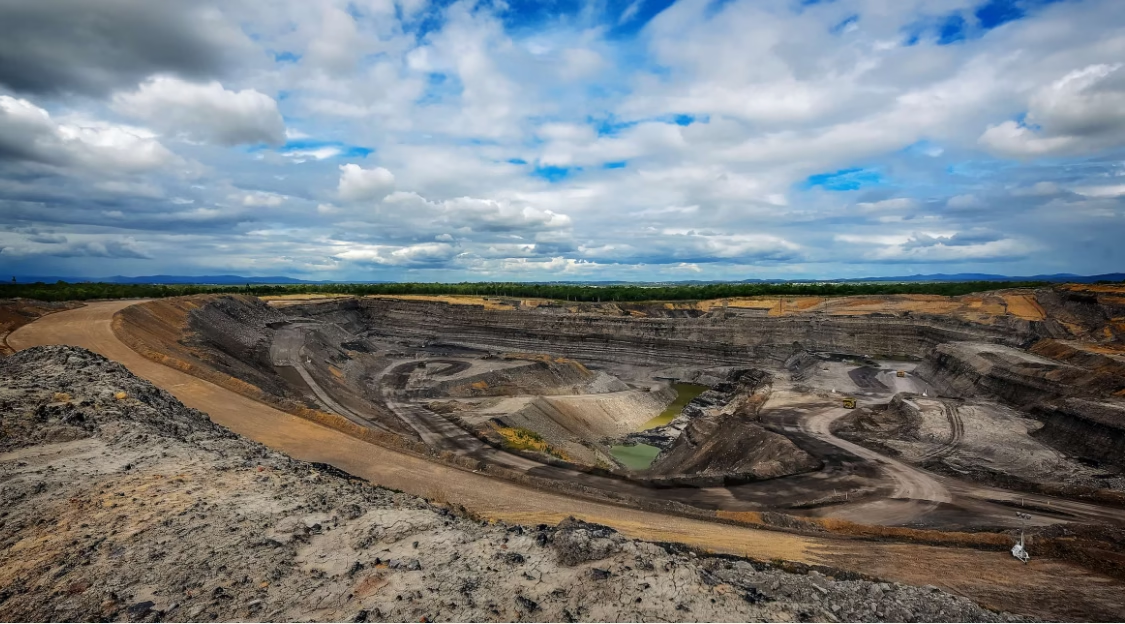
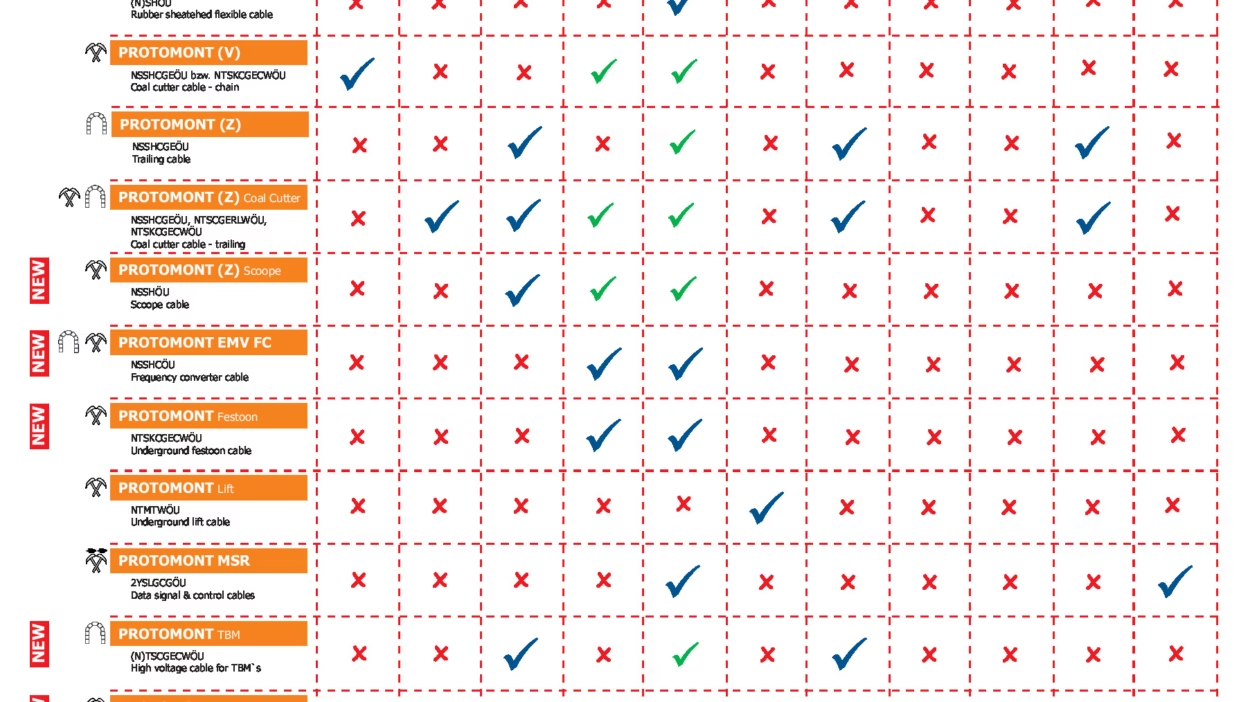
Prysmian Mining Application Systems represent a comprehensive portfolio of specialized cables engineered for the demanding environments of underground mining, tunneling operations, and opencast mining facilities. Developed by Prysmian Group, the world's largest cable manufacturer with over 140 years of expertise, these systems encompass multiple product families including PROTOLON (medium voltage flexible cables), PROTOMONT (rubber-sheathed flexible cables), OPTOFLEX (fiber optic cables), and CORDAFLEX (scraper cables).

What is Prysmian Mining Application systems ?

矿用电缆, 采煤机电缆, 拖曳电缆, 橡套电缆, 中压柔性电缆, 煤矿电缆, 隧道掘进机电缆, горнодобывающий кабель, шахтный кабель, гибкий кабель для шахт, кабель для угольных комбайнов, тянущийся кабель PROTOLON cable, PROTOMONT cable, OPTOFLEX mining cable, CORDAFLEX scraper cable, SUPROMONT power feeder cable, NTMCGCWÖU cable, NTSCGEWÖU cable, NTSCGCEWÖU cable, NSSHÖU cable, NSHÖU mining cable, NSSHCGEÖU coal cutter cable, NSHTÖU scraper cable, NYHSSYCY feeder cable, N3GHSSYCY rubber cable, NTSKGCFCWÖU festoon cable, NTMHWÖU lift cable, ZYSLGCGÖU MSR cable