
NTSCGEWOEU Marine Cable
Underwater Medium Voltage Systems for Marine Operations
Marine Systems Support:
Anhui Feichun Special Cable Co., Ltd.
Advanced Underwater Medium Voltage Cable Technology
The NTSCGEWOEU medium voltage flexible cable for underwater applications represents the pinnacle of marine electrical engineering. Specifically engineered for the harsh realities of underwater operations, this cable delivers reliable power transmission for dredgers, floating docks, submersible pumps, and marine installations operating in sewage, salt water, and brackish water environments at depths up to 500 meters.
Marine & Underwater Applications
- Dredging vessels and floating excavation equipment
- Floating dock power distribution and marina systems
- Submersible pump installations and water management
- Offshore platform and marine structure connections
- Port infrastructure and harbor facility power systems
- Underwater construction and marine engineering projects
Marine-Grade Engineering Features
- VDE 0250 Part 813 marine certification compliance
- Tinned copper conductors for superior corrosion resistance
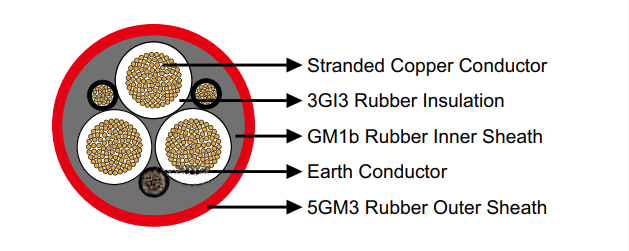
- Waterproof GM1b inner sheath prevents water intrusion
- 500-meter depth rating for deep water applications
- Multiple earth conductor configurations (3-way/concentric/4th core)
- Resistant to sewage, salt water, and brackish water environments
Marine Environmental Performance & Depth Capabilities
Marine Safety Notice
Underwater electrical installations require specialized marine engineering expertise, proper sealing systems, and compliance with maritime safety regulations. All installations must meet applicable marine electrical codes and undergo proper testing before submersion.
Environmental Resistance Specifications
Maximum Operating Depth
Pressure Rating: 50 bar (5 MPa)
Applications: Deep water pumps, subsea equipment
Testing Standard: Hydrostatic pressure resistance
Salt Water Resistance
Salinity: Full oceanic salt concentration
Protection: Tinned copper conductors
Longevity: 20+ year service life in marine environments
Temperature Range
Operating: Continuous duty in marine conditions
Installation: -5°C to +50°C ambient
Materials: Marine-grade rubber compounds
Water Bubble Prevention
Inner Sheath: GM1b waterproof compound
Design: Prevents water bubble formation
Reliability: Maintains electrical integrity underwater
International Marine & Underwater Cable Standards
Marine and underwater electrical installations must comply with specialized maritime safety standards in addition to electrical codes. These regulations ensure safe operation in challenging marine environments and protect both equipment and personnel.
German VDE Marine
VDE 0250-813 underwater cable + marine electrical installation standards
International Maritime
International marine electrical standards + Safety of Life at Sea requirements
American Marine
US marine electrical practices + Coast Guard regulations for vessels
Lloyd’s Register
Classification society standards for marine electrical systems
European Marine
European marine electrical + Recreational Craft Directive compliance
International Standards
Medium voltage cables + subsea production system requirements
Specialized Marine & Underwater Applications
Dredging Operations
Equipment: Cutter suction dredgers, trailing suction hopper dredgers
Power Requirements: High-current motors for dredge pumps and cutters
Challenges: Continuous movement, abrasive environment, salt water exposure
Solution: Flexible construction with superior waterproofing and abrasion resistance
Floating Dock Systems
Infrastructure: Marina power pedestals, floating breakwaters, pontoon systems
Power Distribution: Shore power connections, lighting, navigation aids
Environment: Tidal movement, wave action, salt spray exposure
Benefits: Flexible design accommodates movement while maintaining electrical integrity
Submersible Pump Systems
Applications: Dewatering, sewage handling, ballast systems
Depth Range: Surface to 500 meters operating depth
Media: Fresh water, salt water, sewage, industrial effluent
Construction: Multiple earth conductor options for enhanced safety
Offshore Construction
Projects: Bridge foundations, pier construction, underwater welding
Equipment: Underwater tools, ROV systems, construction platforms
Requirements: High mechanical strength, water ingress protection
Advantages: Robust construction withstands harsh marine construction environments
Comprehensive Marine Cable Specifications
1.8/3kV Marine Applications Configuration
| Main Cores × Cross Section | Earth Configuration | Min Diameter | Max Diameter | Weight | Marine Application |
|---|---|---|---|---|---|
| 3×25 mm² | 3×25/3 Split | 38.6 mm | 41.6 mm | 2480 kg/km | Small Dredgers |
| 3×35 mm² | 3×25/3 Split | 42.5 mm | 45.5 mm | 3090 kg/km | Floating Docks |
| 3×50 mm² | 3×25/3 Split | 46.0 mm | 49.0 mm | 3750 kg/km | Submersible Pumps |
| 3×70 mm² | 3×35/3 Split | 49.2 mm | 52.2 mm | 4620 kg/km | Medium Dredgers |
| 3×95 mm² | 3×50/3 Split | 57.2 mm | 61.2 mm | 6200 kg/km | Large Pumps |
| 3×25 mm² | 3×16/3E Concentric | 41.3 mm | 44.3 mm | 1180 kg/km | Marina Power |
| 3×35 mm² | 3×16/3E Concentric | 43.9 mm | 46.9 mm | 1650 kg/km | Harbor Facilities |
| 3×50 mm² | 3×25/3E Concentric | 47.8 mm | 50.8 mm | 2310 kg/km | Port Equipment |
3.6/6kV Marine Applications Configuration
Medium voltage class for larger marine operations including major dredging vessels, offshore platforms, and high-power submersible systems.
6/10kV Marine Applications Configuration
High voltage marine systems for large-scale dredging operations, major port facilities, and industrial marine applications.
8.7/15kV Marine Applications Configuration
Heavy-duty marine applications for major offshore construction projects and high-power marine industrial systems.
12/20kV Marine Applications Configuration
High-voltage marine installations for major offshore platforms, large dredging fleets, and marine industrial complexes.
14/25kV Marine Applications Configuration
Ultra-high voltage marine systems for the largest dredging operations and major offshore industrial installations.
18/30kV Marine Applications Configuration
Maximum voltage marine applications for major offshore projects and the largest marine industrial operations.
20/35kV Marine Applications Configuration
Specialized ultra-high voltage systems for major offshore energy projects and large-scale marine industrial installations.
Marine Cable Engineering FAQ & Best Practices
What makes tinned copper conductors essential for marine applications?
Tinned copper conductors provide superior corrosion resistance compared to bare copper in marine environments. The tin coating creates a barrier that prevents salt water and moisture from directly contacting the copper, significantly extending cable life. Marine environments contain chlorides and other corrosive elements that rapidly degrade bare copper connections and conductors. Tinned copper maintains electrical conductivity while providing 5-10 times longer service life in marine applications. The tin coating also improves solderability for marine terminations and reduces galvanic corrosion when connected to other metals commonly found in marine systems.
How does the GM1b waterproof inner sheath prevent water bubble formation?
The GM1b waterproof inner sheath utilizes specialized rubber compounds that form a complete moisture barrier around the cable core. This design prevents water ingress that could migrate along the cable length, which would cause electrical failures and dangerous conditions. Water bubble formation occurs when moisture penetrates the cable and vaporizes due to conductor heating, creating pressure that can damage insulation and cause catastrophic failure. The GM1b compound maintains its waterproof properties under hydrostatic pressure up to 500 meters depth while remaining flexible for marine handling requirements. This technology is critical for underwater installations where any water ingress could result in equipment failure or safety hazards.
What are the differences between split earth, concentric earth, and 4th core earth configurations?
Each earth configuration serves specific marine applications: Split earth (3×25/3) places three separate earth conductors in the outer cable interstices, providing redundant earthing paths essential for safety in water where earth fault currents must be quickly cleared. Concentric earth (3E configuration) distributes earth conductors around each phase core, offering superior electromagnetic screening important for sensitive marine electronics. Fourth core earth incorporates earthing as a separate full-size conductor, ideal for equipment requiring high earth fault current capability. Marine applications often require specific earth configurations based on electrical codes – floating installations typically use split earth for safety, while dredgers may use concentric for EMC compliance with navigation equipment.
Can these cables be used for permanent underwater installations vs. temporary deployments?
Yes, these cables are designed for both permanent underwater installations and temporary marine deployments. For permanent installations (subsea pump stations, underwater lighting), the cables can be direct buried in sea bed or installed in protective conduits with proper mechanical protection. The 500-meter depth rating and waterproof construction ensure long-term reliability. For temporary deployments (dredging operations, floating equipment), the flexible construction allows for repeated handling and movement while maintaining electrical integrity. Key considerations include: proper strain relief at connections, appropriate cable support to prevent damage from currents or debris, and regular inspection schedules based on deployment type and environmental conditions. Both applications require proper marine electrical installation practices and compliance with applicable maritime safety codes.
What installation and maintenance practices are critical for underwater cable systems?
Critical practices include: pre-installation electrical testing (insulation resistance, continuity, hi-pot testing) to ensure waterproof integrity, proper sealing of all terminations using marine-grade compounds and environmental sealing systems, installation of adequate mechanical protection (armor, conduit, or burial) to prevent damage from anchors, fishing gear, or debris, and implementation of cathodic protection systems where required to prevent galvanic corrosion. Maintenance requires regular visual inspection of accessible portions, electrical testing including insulation resistance and earth continuity, monitoring of termination seals and environmental protection systems, and underwater inspection of submerged portions using ROV or diving services. Establish emergency response procedures for cable damage, including isolation procedures and temporary power alternatives. Document all installations with accurate as-built drawings including depth charts and GPS coordinates.
How do marine electrical codes differ from standard industrial electrical installations?
Marine electrical codes impose additional safety requirements due to the increased risks of water environments: enhanced earthing requirements with lower impedance paths and faster protective device operation, mandatory residual current device (RCD) protection for all circuits in wet locations, higher IP (Ingress Protection) ratings for all equipment and connections, special isolation requirements for equipment that may be submerged or exposed to salt spray, and stricter requirements for cable routing and protection to prevent mechanical damage. Marine codes also require specialized training and certification for electrical personnel working on underwater systems, mandatory emergency shutdown systems accessible from multiple locations, and enhanced fire protection due to limited escape routes on vessels or offshore platforms. Always consult applicable maritime electrical codes (IEC 60092 series, national marine codes) and classification society requirements for specific installations.


